Published August 17, 2026 by the Triops.me Editorial Team · Back to Articles
Ammonites: 340 Million Years of Coiled Predators in Earth's Ancient Seas
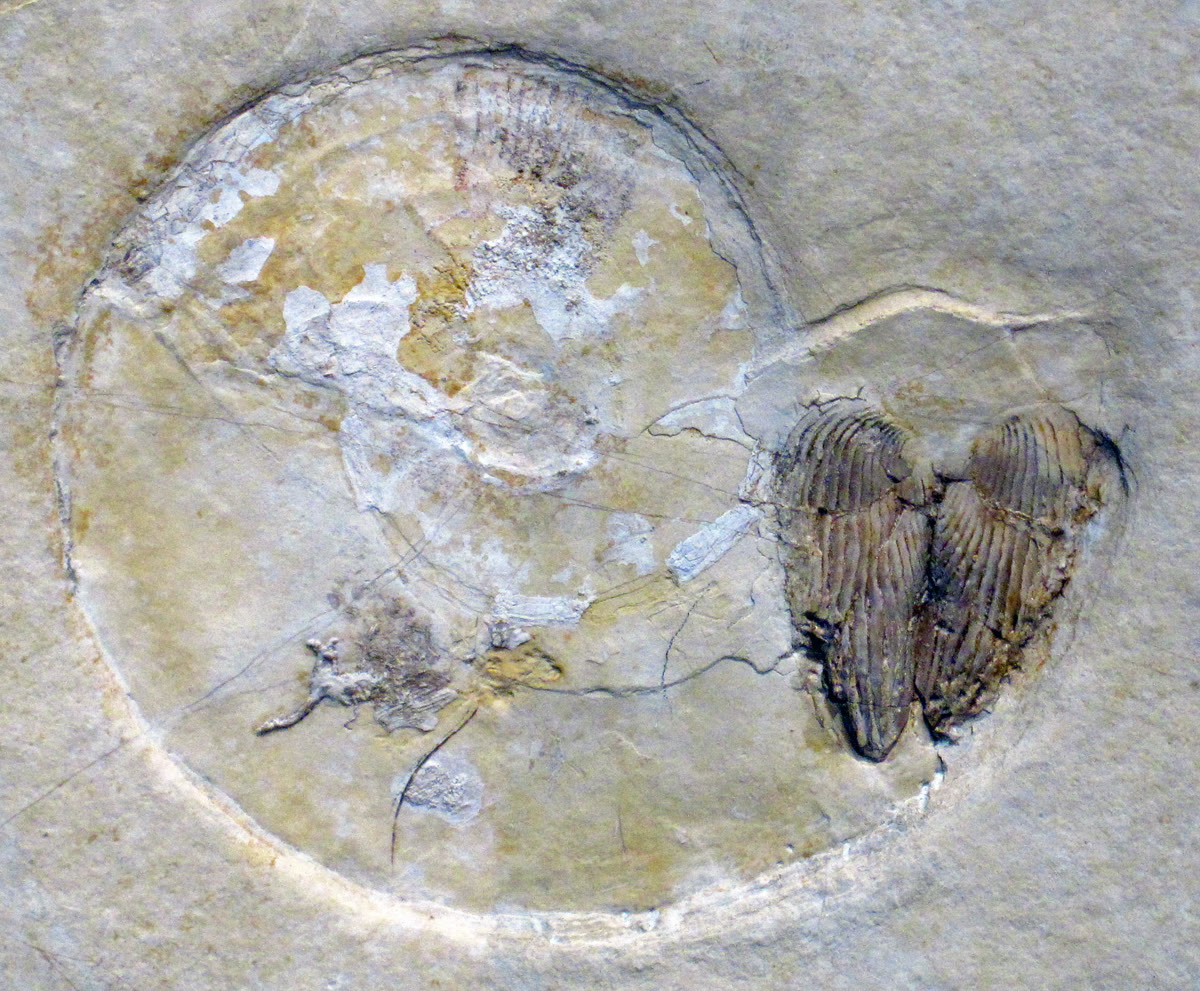
For more than 300 million years, ammonites were among the most successful marine animals on Earth. These shelled cephalopods dominated oceans across every continent, evolving into thousands of species before vanishing in the mass extinction that ended the age of dinosaurs. Their fossils are found on every landmass on the planet, and their story stretches from the Devonian Period to the final days of the Cretaceous.
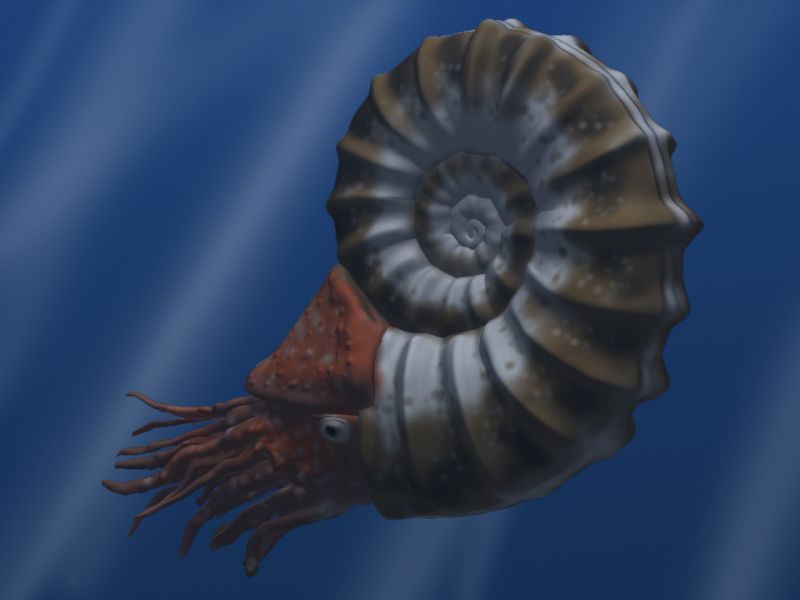
If you have ever picked up a spiral shell on a beach or cracked open a limestone rock and found a perfect coil inside, chances are you were holding an ammonite. These creatures are among the most commonly found fossils in the world, and for good reason. They were everywhere, and they were prolific.
What Exactly Was an Ammonite?
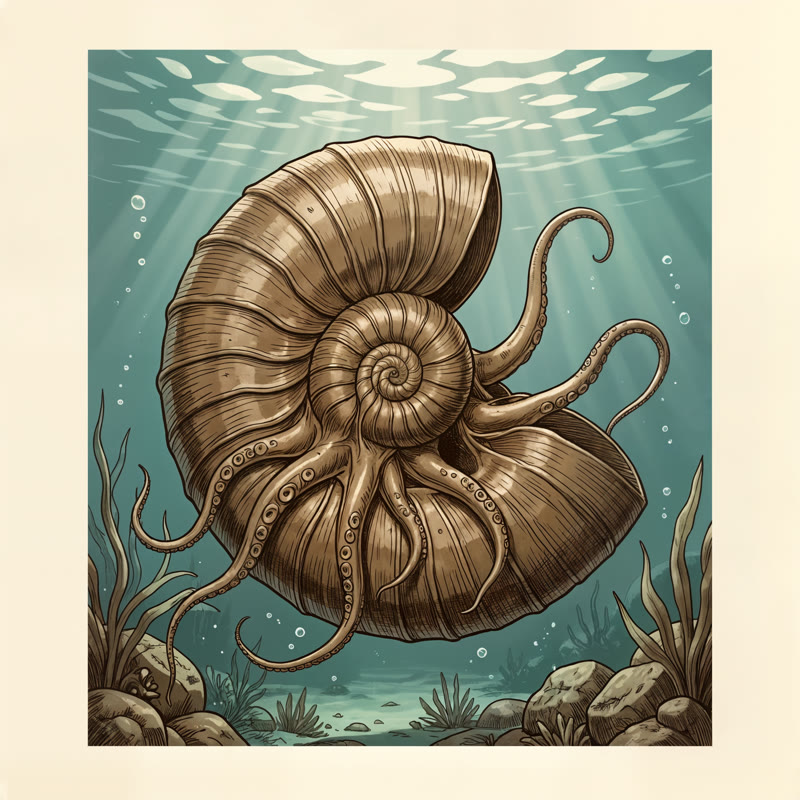
Ammonites belonged to the class Cephalopoda, making them relatives of modern octopuses, squid, and cuttlefish. Despite their shell's resemblance to the living nautilus, ammonites were actually more closely related to soft-bodied cephalopods. The coiled shell is the feature most people recognise, but the living animal inside was a sophisticated predator with well-developed eyes, a beak-like jaw, and up to ten tentacles used to seize prey.
The shell itself was a marvel of biological engineering. Divided into a series of internal chambers separated by thin walls called septa, it functioned as a buoyancy control system. As the animal grew, it moved forward into a new, larger chamber and sealed off the old ones behind it. A tube called the siphuncle connected all chambers, allowing the ammonite to pump gas and liquid in and out to regulate its position in the water column. This is essentially a natural submarine ballast system, refined over hundreds of millions of years of evolution.
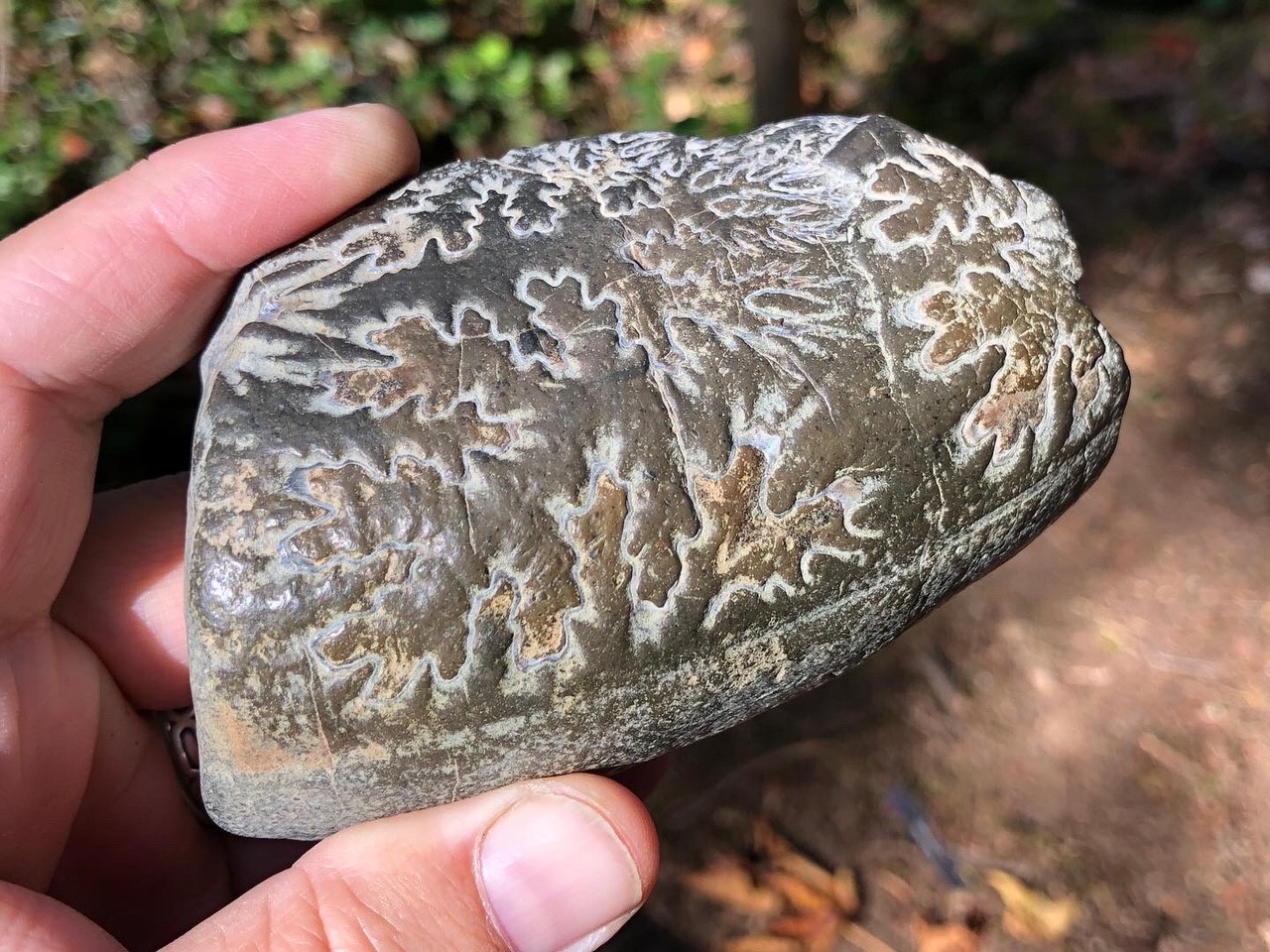
Where the septa met the outer shell wall, they formed intricate suture patterns that are visible on many fossils today. These suture lines range from simple curves in early species to highly complex, leaf-like designs in later ammonites. Palaeontologists use suture patterns as one of the primary tools for identifying and dating ammonite species.
From Straight Shells to Spirals
The earliest ammonoid ancestors did not have coiled shells at all. The group descended from bactritids, straight-shelled cephalopods that first appeared in the Devonian Period around 415 million years ago. Over time, these animals began to curve, and by the early Devonian, the first truly coiled ammonoids had appeared.
The advantage of coiling was significant. A spiral shell is more compact than a straight one, making the animal more hydrodynamic and easier to manoeuvre. The coiled shape also meant the animal's centre of mass stayed closer to its centre of buoyancy, improving stability in the water. These advantages helped ammonoids diversify rapidly and spread across the globe.
Throughout the Mesozoic Era, ammonites evolved into an extraordinary range of forms. Most kept the classic flat spiral, but some lineages developed open coils, loose whorls, and even uncoiled shells. These unusual forms, known as heteromorphs, include species like Nipponites, whose shell twists in a tangled mess that seems to defy the logic of spirals, and Baculites, which reverted to a nearly straight shell while retaining the complex suture patterns of its coiled relatives.
Giants of the Ancient Seas
While most ammonites were modest in size, ranging from a few centimetres to about 15 centimetres across, some species grew to truly impressive dimensions. Parapuzosia seppenradensis, a Late Cretaceous species found in Germany, reached shell diameters of up to 180 centimetres, nearly six feet across. Even more astonishing is Camarotoecchia, which could exceed two metres in diameter in certain populations.
These giant ammonites were likely slow-moving, drifting through deep water and feeding on smaller organisms. Their massive shells would have required enormous amounts of calcium carbonate to build, suggesting they lived in warm, mineral-rich seas where the raw materials were abundant.
The Living Fossil Connection: Nautilus
The modern nautilus is often described as a living fossil because it closely resembles ammonites in its external appearance. Both have coiled shells divided into chambers, and both use a siphuncle to regulate buoyancy. However, the similarities are somewhat superficial. Nautiluses have concave septa that curve inward, while ammonites had convex septa curving outward. Nautiluses also have simpler suture patterns and lack the elaborate ornamentation that many ammonite shells displayed.
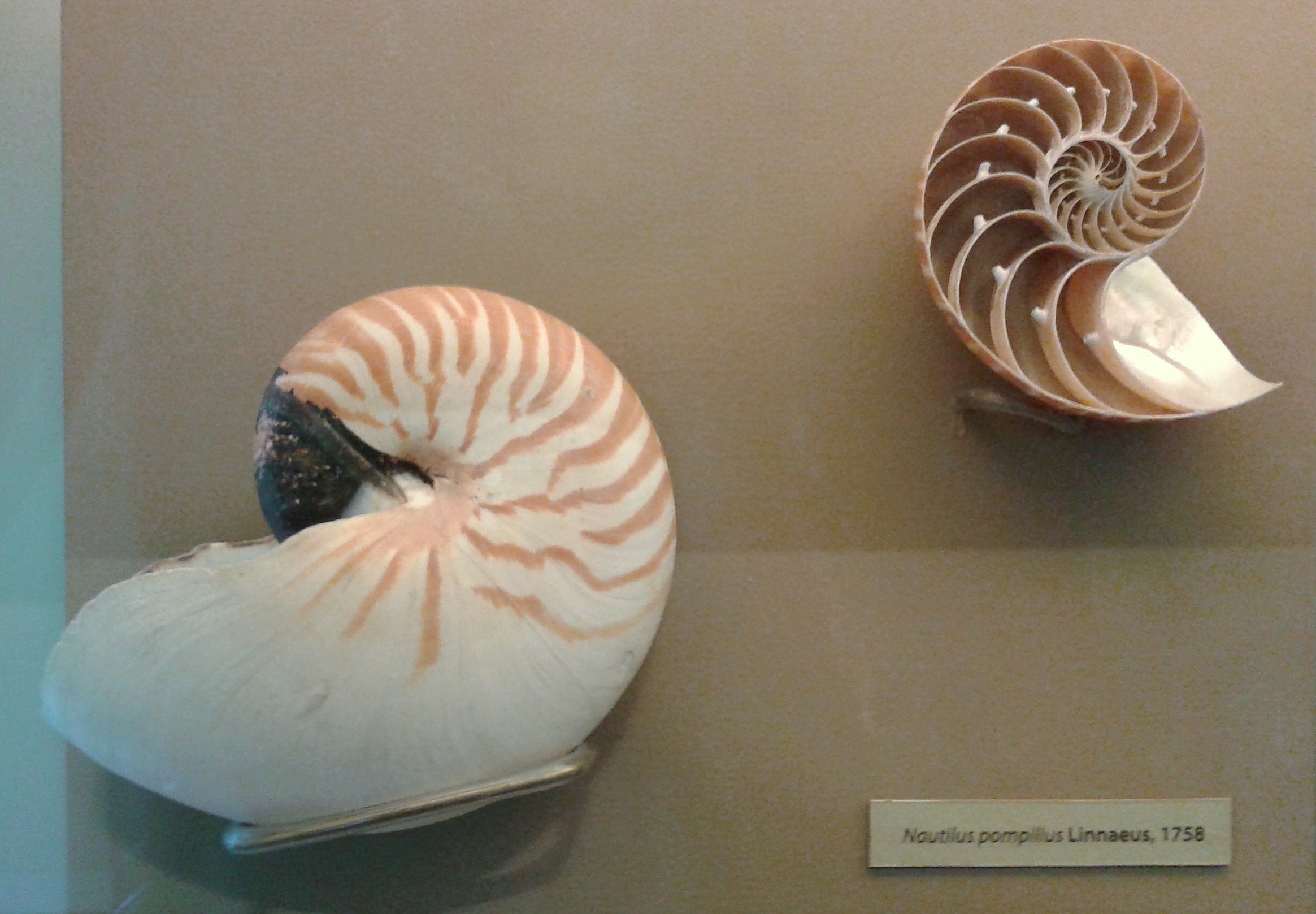
Perhaps most importantly, nautiluses reproduce very differently. While ammonites likely produced vast numbers of tiny eggs, nautiluses lay relatively few, large eggs. This difference in reproductive strategy may be one reason nautiluses survived the mass extinction that killed every ammonite lineage. When the asteroid struck 66 million years ago, the nautiluses' lower reproductive output may have paradoxically helped them by reducing competition among offspring during the long, harsh recovery period.
Index Fossils and Geological Time
Ammonites are among the most valuable index fossils in palaeontology. Because individual species evolved quickly, existed for relatively short periods of geologic time, and were geographically widespread, finding a particular ammonite species in a rock layer tells scientists almost exactly when that rock was deposited. This makes ammonites essential tools for correlating rock layers across continents and reconstructing the timeline of Earth's history.
Entire geological stages have been defined by ammonite zones. The Jurassic and Cretaceous periods, which together span over 180 million years, are subdivided using ammonite biostratigraphy with remarkable precision. Without ammonites, our ability to date sedimentary rocks and understand the timing of events like volcanic eruptions, sea-level changes, and other mass extinctions would be far less detailed.
The Final Extinction
Recent research from the Natural History Museum in London has challenged the long-held assumption that ammonites were already in decline before the asteroid impact at the end of the Cretaceous. Analysing the global ammonite fossil record as a complete dataset, rather than relying on incomplete regional records, scientists found that ammonites remained highly diverse right up until the very end. At least 57 species from six superfamilies were alive in the last 500,000 years of the Cretaceous.
This means the extinction was sudden and total, not a slow fade. The Chicxulub asteroid impact triggered a cascade of environmental catastrophes: darkness, cold, acid rain, and ocean acidification that destroyed the marine food web from the bottom up. Ammonites, as active predators dependent on healthy ocean ecosystems, were caught in the collapse. Their last lineages disappeared alongside the non-avian dinosaurs, plesiosaurs, and mosasaurs.
Ammonites and Triops: Parallel Stories
Ammonites and Triops share a fascinating parallel, though their strategies were opposite. Both are ancient lineages that have persisted across enormous stretches of geological time. But where Triops survived by being small, adaptable, and able to endure drought through cryptobiotic eggs, ammonites survived by being prolific, widespread, and ecologically dominant. Triops hunkered down and waited out catastrophes; ammonites thrived through them until the extinction became too severe for any escape.
Today, ammonite fossils remain among the most commonly collected and studied specimens in the world. They are found in limestone cliffs along the English coast, in the deserts of Morocco, in the mountains of the Himalayas, and on beaches across every continent. Each spiral shell is a snapshot of a creature that once hunted in waters that no longer exist, in a world so different from our own that it might as well be another planet.
Yet the shell design, the buoyancy system, the predatory lifestyle, all of it worked so well that the basic ammonite blueprint persisted for over 300 million years. That is a record of success that few other organisms on Earth can match.