Published 2026-10-03 · by the Triops.me Editorial Team · Back to Articles
Andrewsarchus: The Giant Built From a Single Skull
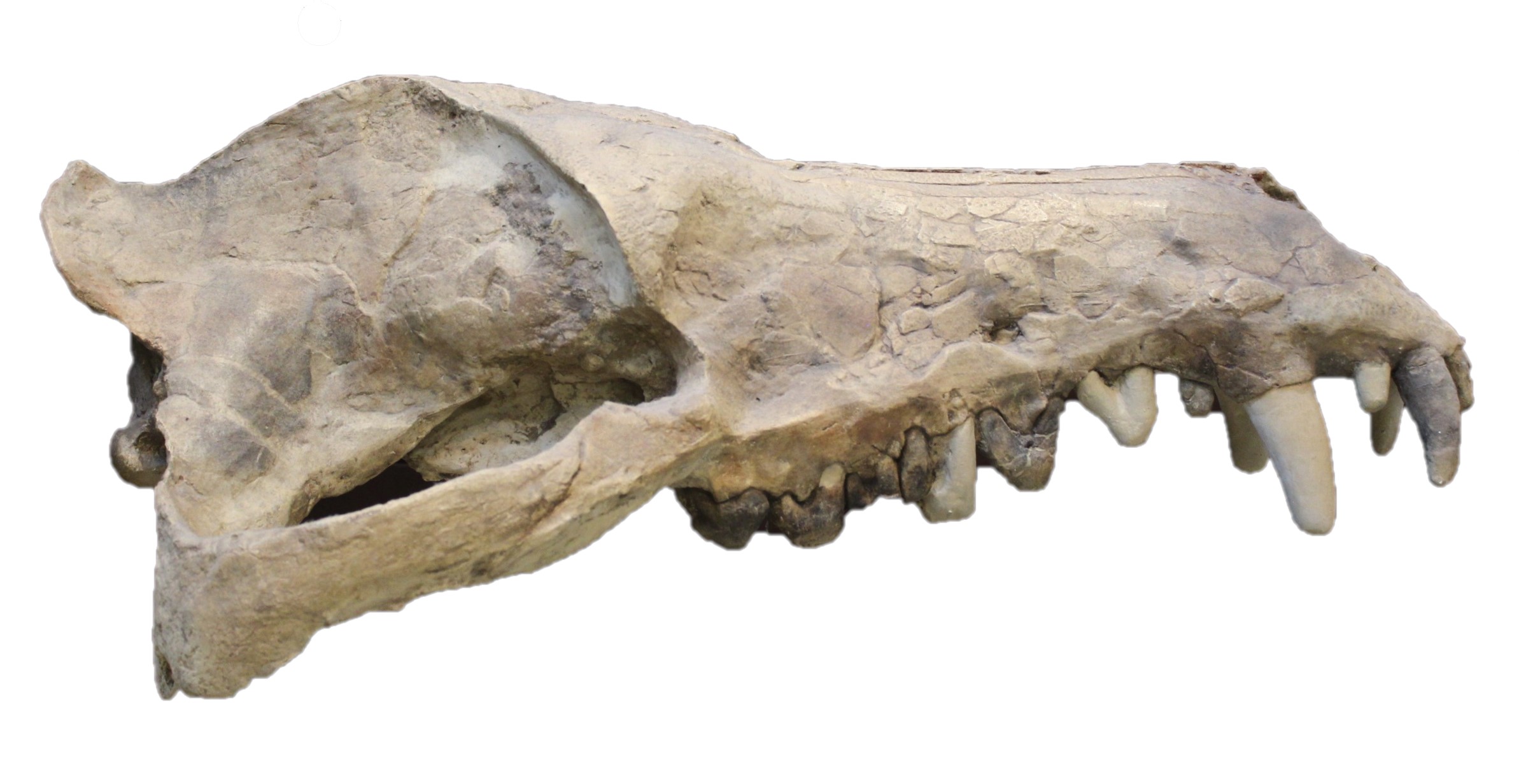
Most extinct animals are known from at least a skeleton, however broken. Andrewsarchus is known from one skull, and a hundred years of arguments have been built on top of it. That single cranium is big enough, 83 centimetres from tip to back, to have launched the claim that this was the largest meat-eating mammal ever to walk the Earth. It is also the only reason we know the animal exists at all.
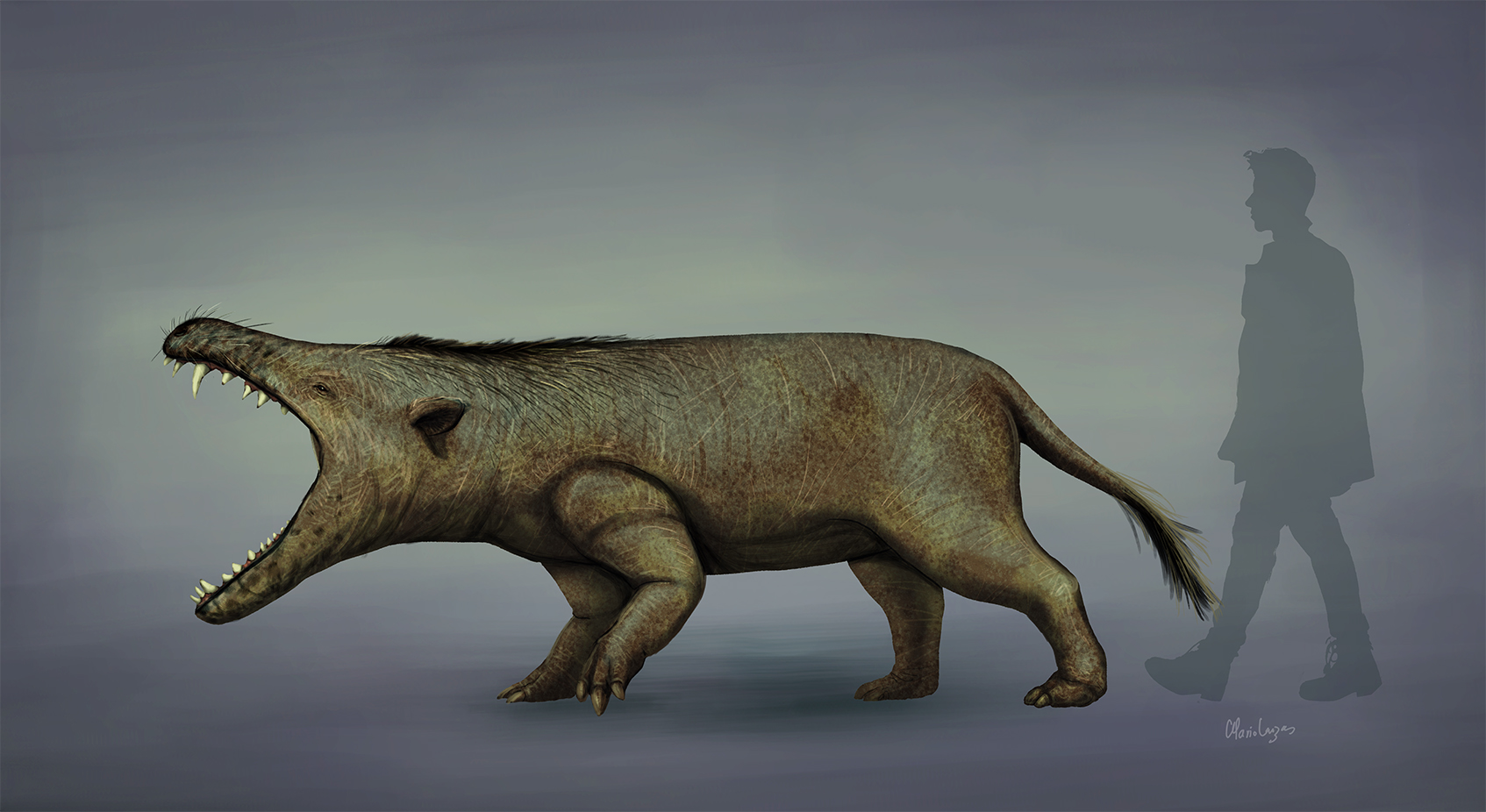
What makes the story interesting is how much of the popular image of Andrewsarchus is reconstruction rather than record. The hulking wolf-pig hybrid you see in documentaries is a guess, drawn from a fossil that no one has ever matched with a body. The real history is stranger, and it starts in the deserts of Inner Mongolia in the 1920s.
One Expedition, One Skull
In 1923 the American Museum of Natural History sent a Central Asiatic Expedition into Inner Mongolia, led by the explorer and organiser Roy Chapman Andrews. The team was hunting for human ancestors and came back with dinosaur eggs, Protoceratops skeletons, and a large, strange mammal skull from the lower Irdin Manha Formation. Henry Fairfield Osborn described it the following year and named it Andrewsarchus mongoliensis, "Andrews' ruler", after the expedition leader.
The specimen, catalogued as AMNH-VP 20135, has never been superseded. A century of fieldwork across Asia has not produced a second cranium of the same species. Everything published about this animal's proportions, diet and relationships traces back to that one fossil, plus a handful of isolated teeth and a jaw from other Chinese formations that were later folded into the genus.
What the Fossil Actually Is
The holotype is a mostly complete cranium, 83.4 centimetres long and 56 centimetres wide across the cheek arches. The snout is extraordinarily elongated, about one and a half times the length of the braincase end of the skull, and the front of the upper jaw looks markedly like that of an entelodont. The hard palate is long and narrow, and the jaw material later referred to the genus is long and shallow rather than deep and powerful.
The teeth follow the standard placental pattern of three incisors, one canine, four premolars and three molars in each upper quadrant. The upper incisors fan out in a semicircle, the second one nearly as large as the canine. The premolars carry a single cusp, and the molars have wrinkled grinding crowns. Hold on to those details, because they decide what kind of animal this was. A second species, A. crassum, was named in 1977 from two worn teeth found in Guangxi, and a jaw once filed under the separate name Paratriisodon is now considered part of the same genus.
How Big Was It Really?
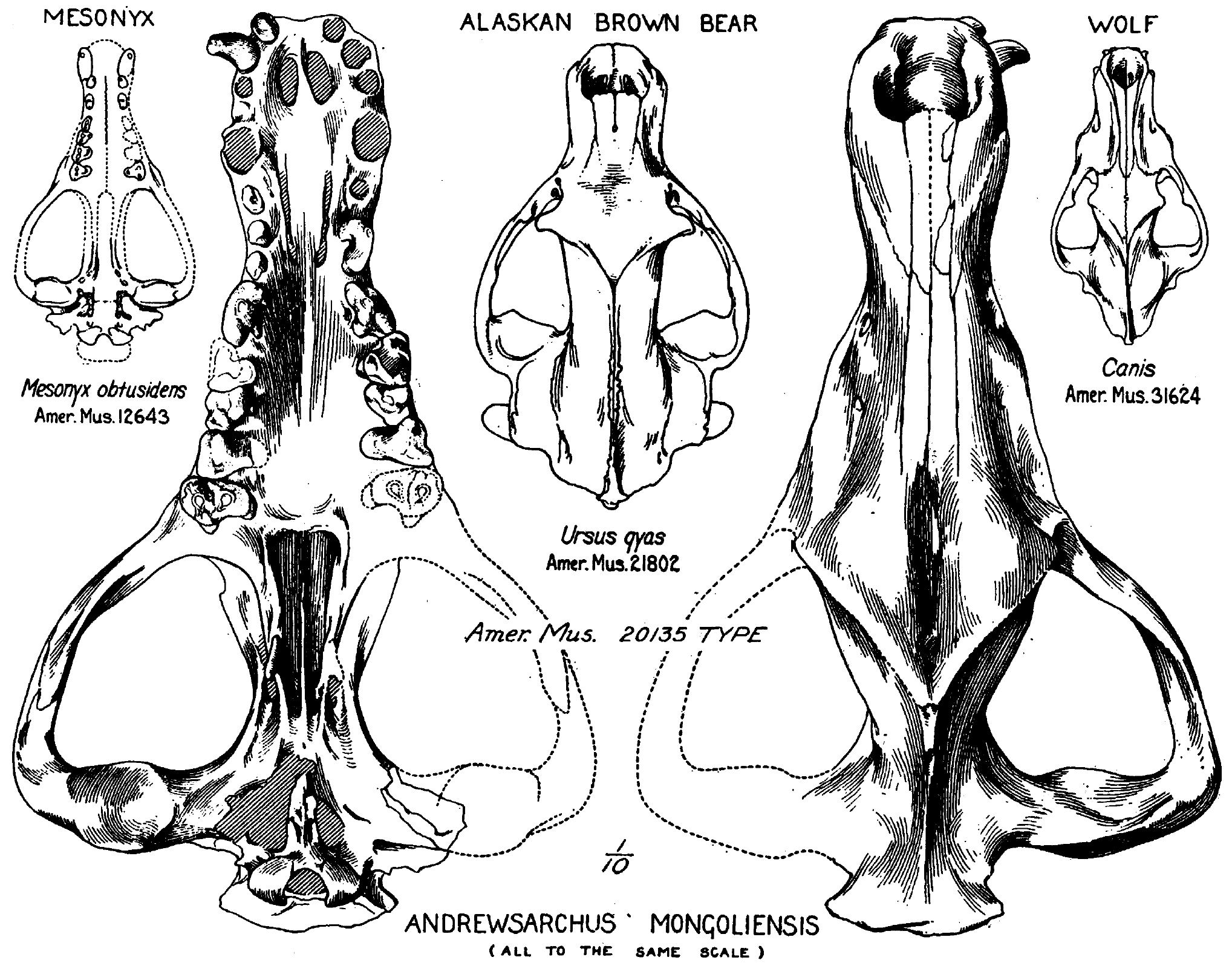
Osborn compared the skull with Mesonyx, an archaic hoofed predator, and extrapolated a body 3.82 metres long standing 1.89 metres at the shoulder. Those numbers made headlines and never fully left them. In 1966 Frederick Szalay and Stephen Jay Gould revisited the anatomy and argued that the skull is built more like an entelodont than a mesonychid, which would mean a different body plan and, very possibly, a smaller animal than Osborn advertised. Later reviews have repeated the warning: the skull length is a hard measurement, the body hanging off it is an assumption.
So the honest summary is that Andrewsarchus had the largest skull of any known land mammal predator, that its body was probably comparable in bulk to a big bear or a small rhino, and that any figure you read for its weight is a model rather than a measurement. The famous comparison drawing, placing its skull next to a brown bear and a wolf, shows how easily the head alone creates an impression of a monster.
A Family Tree That Keeps Moving
Andrewsarchus has been a member of almost every group it could plausibly belong to. Osborn placed it with the mesonychids, the odd hoofed carnivores of the early Age of Mammals. Others filed it among arctocyonids. In 1988 an influential analysis recovered it as the closest relative of whales, a result that made the animal famous a second time, because a giant land predator as the cousin of blue whales is too good a story to ignore. It now sits as the sole member of its own family, Andrewsarchidae, inside the artiodactyl branch that contains entelodonts, hippos and whales. A 2023 analysis of ungulates recovered it next to Achaenodon and Erlianhyus, in a cluster with the entelodonts themselves.
That placement matters for the animal's reputation. If its nearest neighbours are the hell pigs, then the "carnivore" framing needs a rethink, and the whales connection keeps the door open to the story told in when whales walked.
What Kind of Eater Was It?
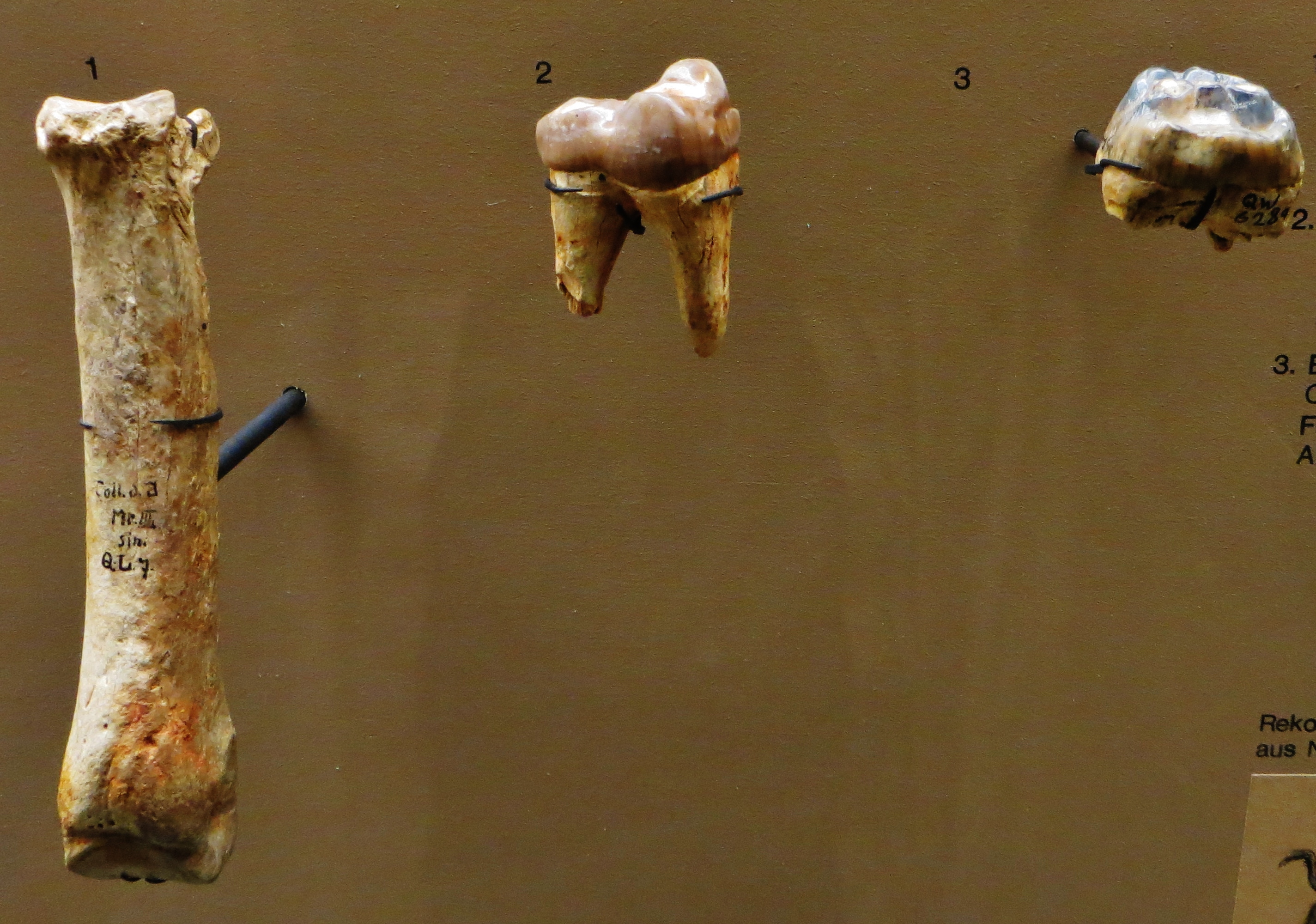
The dentition argues against a hypercarnivore. A specialist meat eater slices flesh with sharp carnassial blades, and Andrewsarchus has none. Its molar crowns are wrinkled in the way seen in pigs and other omnivorous even-toed ungulates, its canines are modest in proportion to the rest of the tooth row, and the chewing apparatus looks built for crushing rather than shearing. Osborn himself suggested an omnivorous diet in the original description, and later workers agreed: one study called it an omnivore-scavenger, while Lars Werdelin proposed scavenging, or possibly predation on the big rhinoceros-like brontotheres of the time.
The skull adds a further limit. The sagittal crest, the ridge where jaw muscles attach, is reduced, and the joint surface is relatively flat, which points to a weaker bite than the size suggests. A more plausible picture is a giant opportunistic feeder that walked in on carcasses, cracked hard food with blunt teeth and bullied smaller animals away from meals, much as its entelodont relatives did.
The World It Lived In
Andrewsarchus roamed Asia during the Middle Eocene, roughly 48 to 38 million years ago, in a hothouse world of humid, forested floodplains. The Irdin Manha beds also produced the hyaenodont Propterodon, the mesonychid Harpagolestes, and early tapir-like and horse-like perissodactyls such as Lophialetes and Deperetella, alongside a scattering of small mammals. Nearby formations of the same age yielded the brontotheres Rhinotitan and Microtitan, the pantodont Eudinoceras, the nimravid sabre-tooth Eusmilus, and Forstercooperia, an early member of the group that includes Paraceratherium. Meat eaters and giant herbivores shared the same ground, which is exactly the mix you would expect to produce a mammal with a skull this size.
What One Specimen Can and Cannot Tell Us
The history of Andrewsarchus is a lesson in how palaeontology actually works. A single fossil enters the record, and the science around it is a shrinking target: measurements get firmer, relationships get retested, and dramatic claims get trimmed. Compare it with Deinocheirus, known for forty years only from a pair of arms before a complete skeleton revealed a humped, duck-billed omnivore, or Therizinosaurus, whose scythe claws first arrived without an animal attached. The skeleton, when it comes, usually changes the story.
Until then, Andrewsarchus remains what it has always been: one enormous skull, a set of grinding teeth, and a gap where the rest of the animal should be. That gap is not a failure of the fossil record. It is an honest reminder that every reconstruction of prehistoric life is an argument from evidence, and that some of the best arguments are still waiting on a single missing bone.
Explore more of the Age of Mammals in our articles archive, or start closer to home with Triops, an animal that has been getting on with life since before any of this began.