Published August 15, 2026, 14:23 by the Triops.me Editorial Team · Back to Articles
Anomalocaris: The Cambrian's First Apex Predator
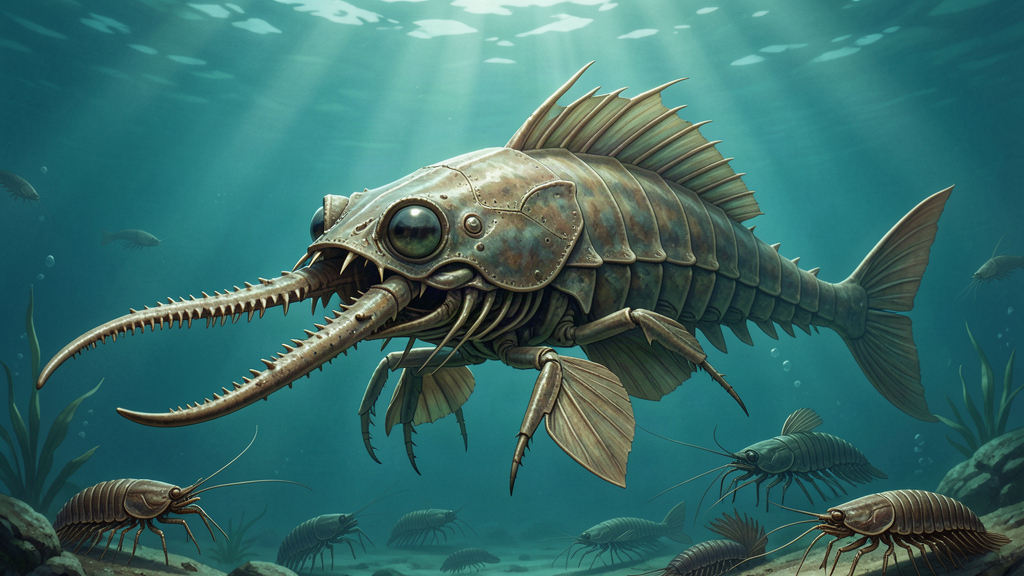
More than 500 million years ago, long before dinosaurs walked the Earth and hundreds of millions of years before Triops first appeared in the fossil record, the Cambrian seas harbored a fearsome predator that would become one of the most iconic creatures in the history of paleontology. Its name is Anomalocaris, meaning "unlike other shrimp," and it was the original apex predator of complex life on Earth.
Discovered in the famous Burgess Shale of British Columbia, Canada, Anomalocaris belonged to an order of early arthropods called Radiodonta. These free-swimming marine animals represent a branch of the arthropod family tree that is more primitive than modern insects, crustaceans, and arachnids. While Triops and its relatives are crown-group crustaceans, Anomalocaris was a stem-group arthropod, making it an evolutionary cousin from a much older lineage. Both groups, however, share the fundamental arthropod blueprint of segmented bodies and jointed appendages, a body plan that has proven remarkably successful across half a billion years.
A Body Built for Predation
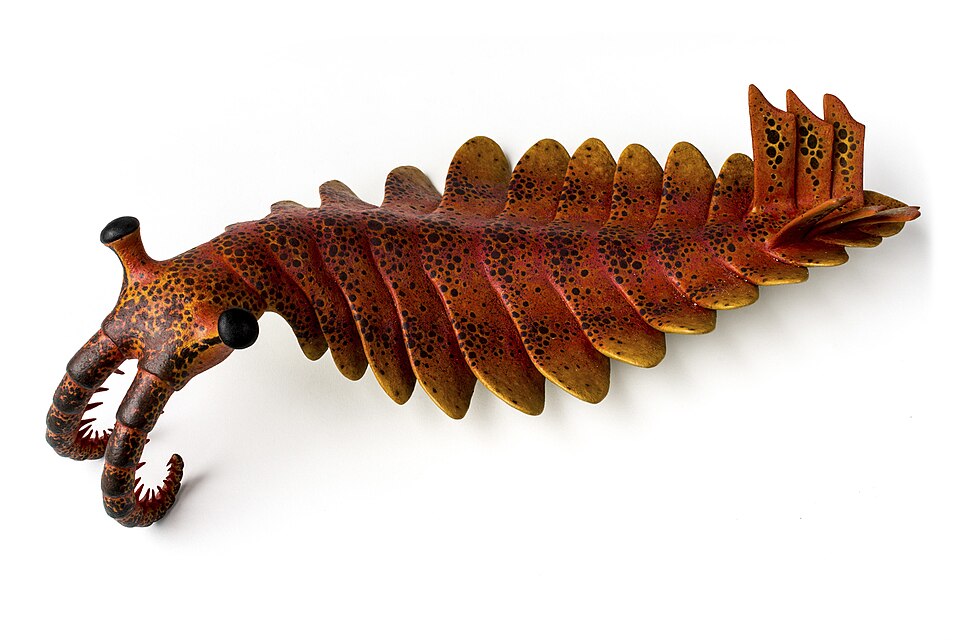
Anomalocaris was enormous by Cambrian standards. Estimates based on fossil specimens put its body length at 34 to 38 centimeters, not counting its long frontal appendages. With those grasping limbs extended, the animal could reach nearly a meter in total length. For an ocean that was still being colonized by complex life, this was a giant.
Its most distinctive features were the two segmented frontal appendages that extended from the front of its head. Each appendage bore 14 segments tipped with curved spines, designed for seizing and holding prey. Below these limbs sat an unusual disk-shaped mouth, composed of plates arranged in a triradial pattern, unlike the more symmetrical mouths of its relatives. Researchers believe Anomalocaris fed primarily by suction, drawing soft-bodied organisms into its oral cone rather than crushing hard shells.
Running along the sides of its flattened body were rows of swimming flaps that allowed it to propel itself through the water with a graceful, undulating motion. A large tail fan at the rear provided steering and stability. Together, these features made Anomalocaris an active, agile swimmer, capable of pursuing prey through open water.
Eyes That Rival a Dragonfly's
Perhaps the most remarkable feature of Anomalocaris was its vision. Fossilized compound eyes from the Emu Bay Shale of South Australia, attributed to the species A. daleyae, reveal eyes packed with an extraordinary number of lenses. A single eye contained over 24,000 individual ommatidia, the tiny lens units that make up compound eyes. This gave Anomalocaris visual acuity roughly 30 times greater than that of trilobites, which were long considered to have the most advanced eyes of any Cambrian animal.
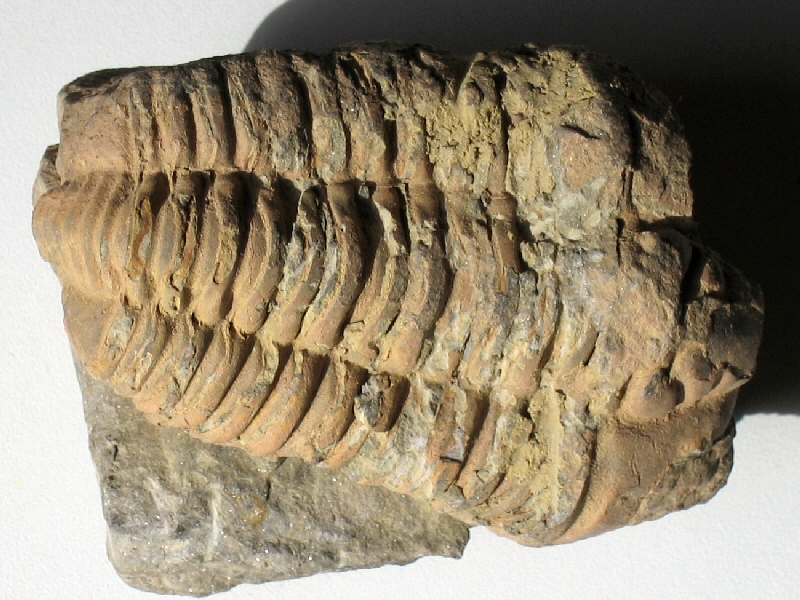
To put this in perspective, modern dragonflies have about 28,000 lenses in each eye and are among the most effective visual predators alive today. Anomalocaris likely used similar strategies, calculating the trajectory of its prey and intercepting them at a predicted future position. Scientists call this "predictive target interception," and it remains one of the most sophisticated hunting strategies in the animal kingdom. Some researchers also suggest that Anomalocaris may have had dichromatic color vision, giving it an additional advantage in the clear, well-lit Cambrian seas.
The Mystery of Its Diet
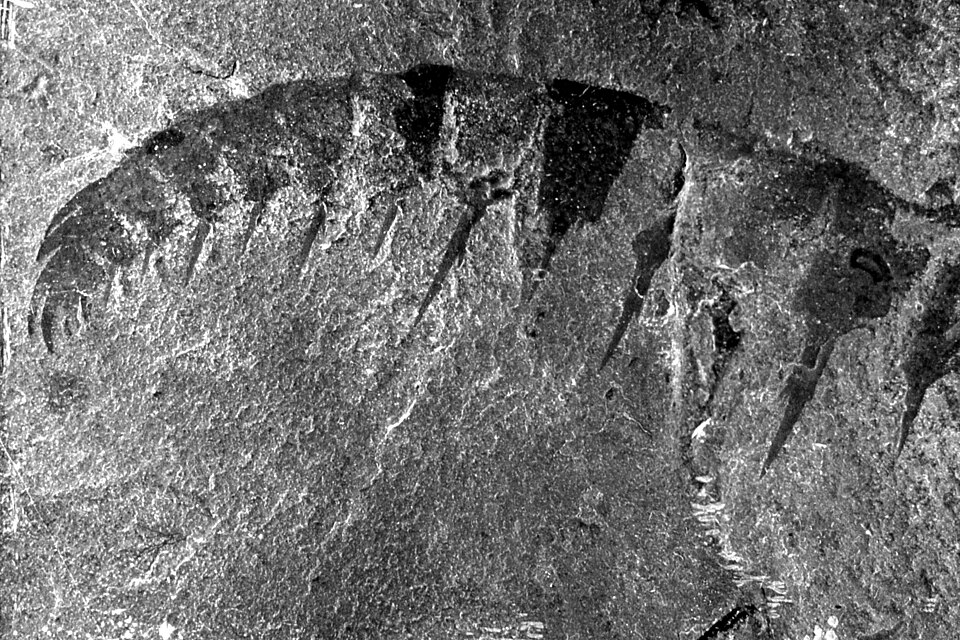
For decades, paleontologists believed Anomalocaris was a trilobite crusher. Trilobite fossils with distinctive round or W-shaped bite marks seemed to confirm this idea. However, modern analysis has cast doubt on the theory. Anomalocaris had no mineralized tissue in its mouthparts, making it structurally unlikely that it could penetrate the hard, calcified exoskeletons of trilobites.
Today, most researchers believe Anomalocaris primarily hunted soft-bodied prey, including small free-swimming arthropods and other vulnerable organisms. Its high-resolution eyes were best suited for hunting in open, well-lit waters rather than probing the seafloor where trilobites lived. Benthic hunting would have risked damaging its delicate frontal appendages on hard substrates. Instead, other radiodonts and larger arthropods likely filled the role of bottom-dwelling predators in Cambrian ecosystems.
Some evidence does point to occasional trilobite consumption. Large coprolites, or fossilized feces, containing trilobite fragments have been attributed to radiodonts, as no other Cambrian animal was large enough to produce them. But these may represent opportunistic feeding rather than a primary dietary strategy.
A Century of Confusion
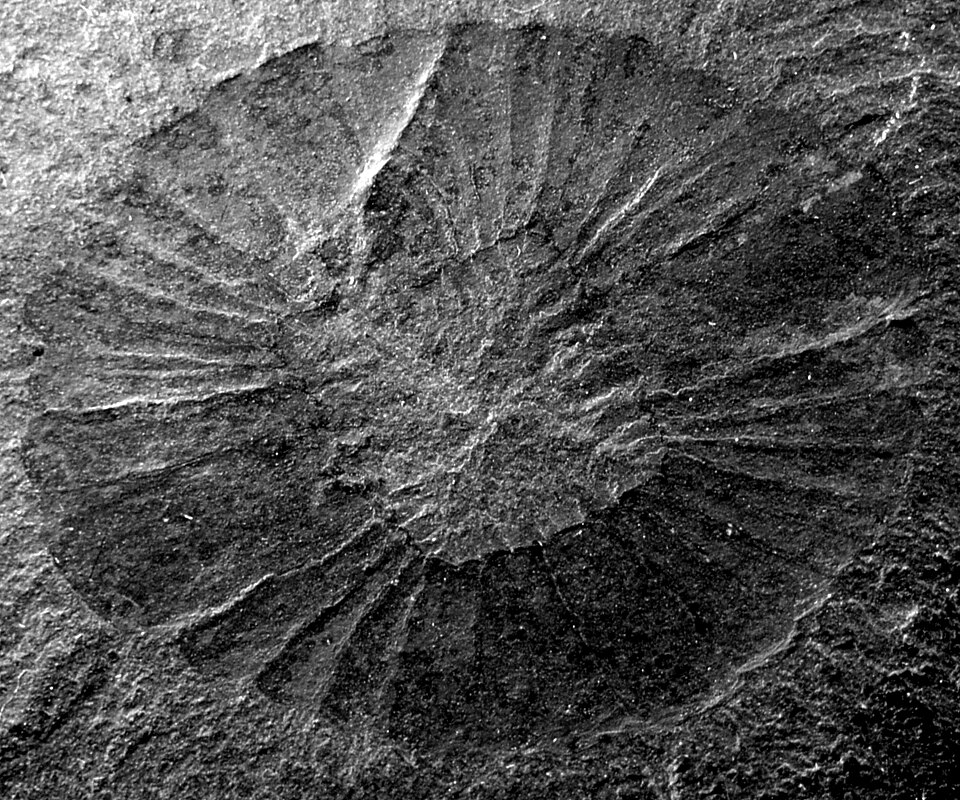
The history of Anomalocaris research is one of the most convoluted tales in paleontology. When the first fossils were collected in 1886 from Mount Stephen in British Columbia, they consisted only of isolated frontal appendages. In 1892, paleontologist Joseph Frederick Whiteaves described these appendages as the body of a shrimp-like crustacean, hence the name "unlike other shrimp."
Worse confusion followed. The circular mouthparts of Anomalocaris were later classified as a separate organism called Peytoia, a supposed jellyfish. The flat body was thought to be a sea cucumber. It was not until the 1980s and 1990s that researchers finally pieced these separate "fossils" together, revealing that they all belonged to one magnificent animal. As Stephen Jay Gould wrote in his bestselling book Wonderful Life, the story of Anomalocaris is "a tale of humor, error, struggle, frustration, and more error, culminating in an extraordinary resolution."
Legacy in the Arthropod Family Tree
Anomalocaris is more than just a fearsome predator from deep time. It represents a pivotal moment in the evolution of arthropods, the group that would eventually produce insects, spiders, crabs, and, of course, Triops. While Anomalocaris itself went extinct by the end of the Cambrian, its lineage left behind the blueprint for arthropod body design. The segmentation, the jointed appendages, the compound eyes, the exoskeleton, all hallmarks of modern arthropods, were already present in primitive form in creatures like Anomalocaris.
Today, Triops carry forward that same ancient body plan, refined and adapted for life in temporary pools and desert floods. When you watch a Triops swimming through a small dish, with its three eyes scanning for food and its many legs working in rhythm, you are seeing the distant echo of a lineage that stretches back to the Cambrian seas where Anomalocaris once reigned. Both are survivors, in their own way, of an evolutionary story that began more than half a billion years ago.
Anomalocaris reminds us that the story of life on Earth is not just about the famous dinosaurs and mammals. The real foundations of biodiversity were laid in the Cambrian, in the bodies of creatures that still astonish paleontologists today. And among those creatures, few are as captivating as the original apex predator of the ancient seas.