Published August 20, 2026, 21:27 by the Triops.me Editorial Team · Back to Articles
Archaeopteryx: The Feathered Dinosaur That Became a Bird
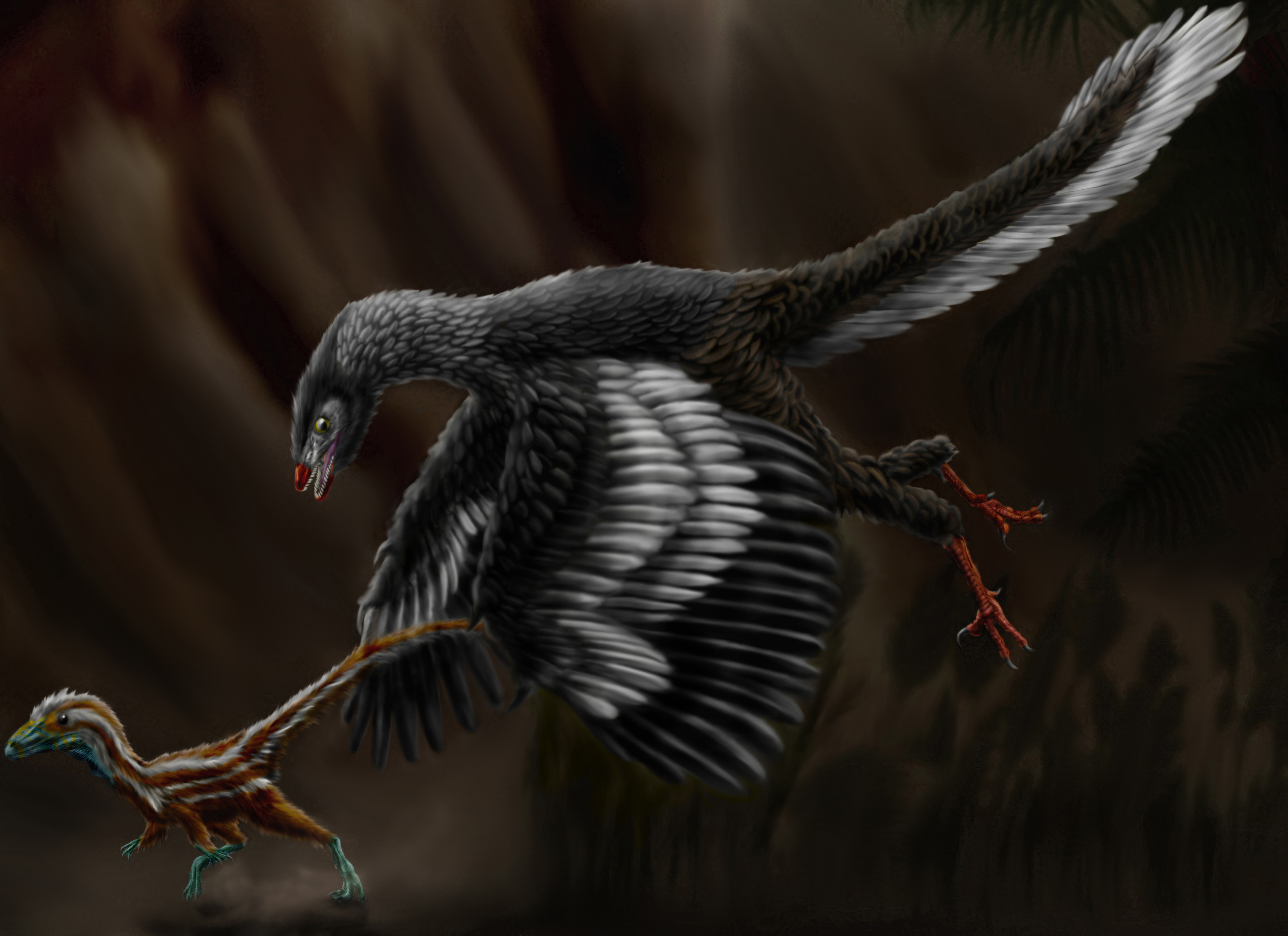
In 1861, a quarry worker in Bavaria pulled a slab of fine limestone from a German quarry and found something that would reshape our understanding of life on Earth. Pressed into the rock was a creature no one had imagined: a small, feathered animal with the unmistakable silhouette of a bird, yet covered in features that belonged unmistakably to a reptile. That creature was Archaeopteryx lithographica, the ancient wing, and it remains one of the most important fossils ever discovered.
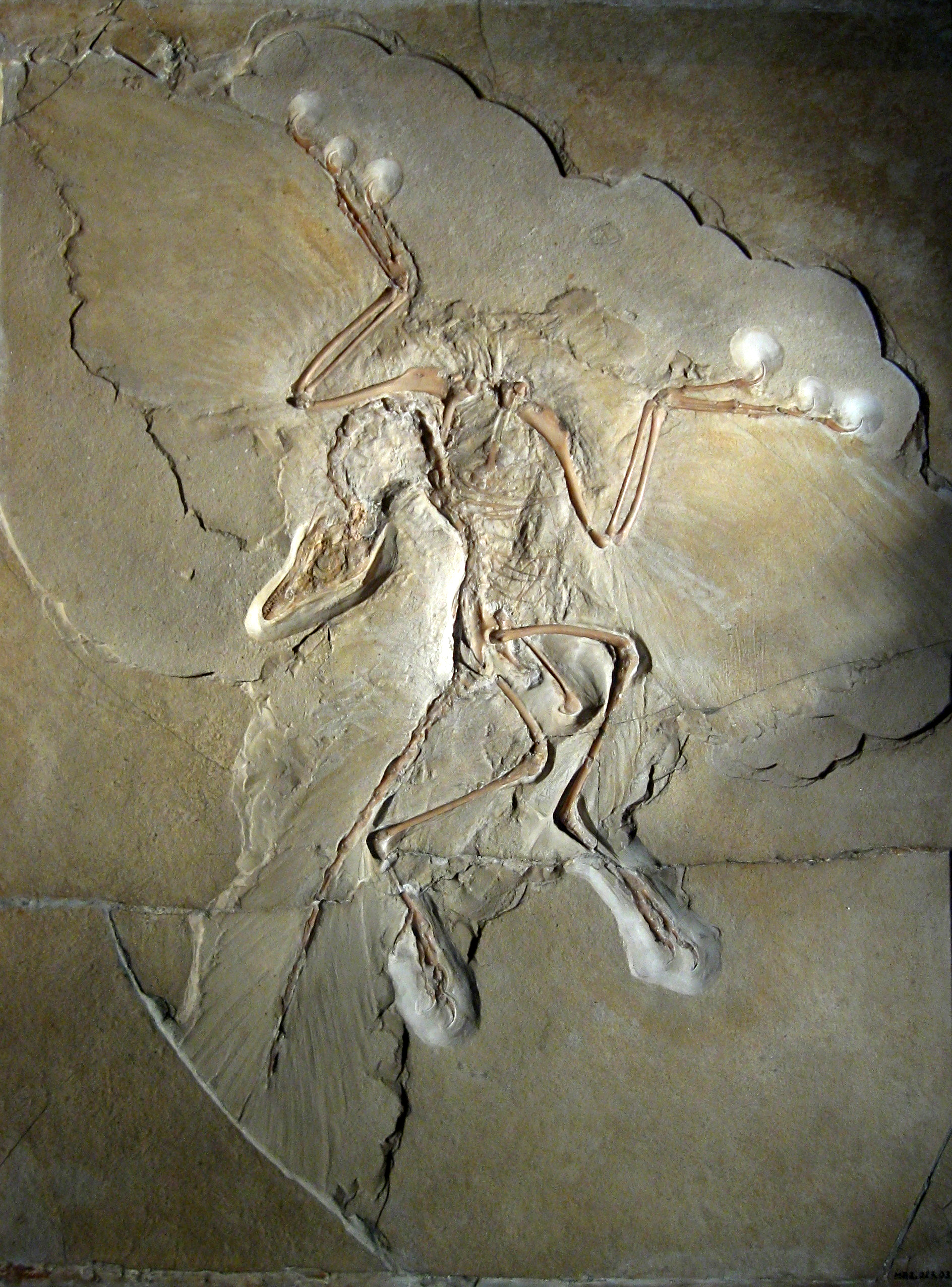
Archaeopteryx lived approximately 150 million years ago during the Late Jurassic period. The world it inhabited bore little resemblance to our own. Europe was a tropical archipelago, and the Solnhofen region of Bavaria was a shallow, warm lagoon ringed by coral reefs. The lagoon's floor was covered in fine calcium carbonate mud that trapped organisms in remarkable detail, creating what paleontologists call a Lagerstätte, a site of extraordinary fossil preservation. Over millions of years, this mud hardened into the Solnhofen Limestone, the same stone used for lithographic printing plates, and the same stone that preserved Archaeopteryx in stunning clarity.
The first specimen, a single isolated feather, was found in 1861 and described by Hermann von Meyer. Just two years later, a more complete specimen appeared, and the scientific world erupted. Charles Darwin had published On the Origin of Species only two years before the feather was found, and Archaeopteryx seemed to hand-deliver the evidence his theory demanded: a transitional form between two major groups of animals. Here was a creature that was neither fully reptile nor fully bird, but something beautifully, undeniably in between.
A Creature of Two Worlds
What makes Archaeopteryx so extraordinary is the combination of features packed into its small body, roughly the size of a modern crow. Its reptilian traits are unmistakable. It had a mouth full of small, sharp teeth rather than a beak. Its hands retained three clawed fingers, separate from the wing, just like a small theropod dinosaur. Its long, bony tail was made up of dozens of vertebrae, unlike the short, fused tail of modern birds. Even its bones were not hollow in the way that later birds' bones would become, though they were lighter than those of many dinosaurs.
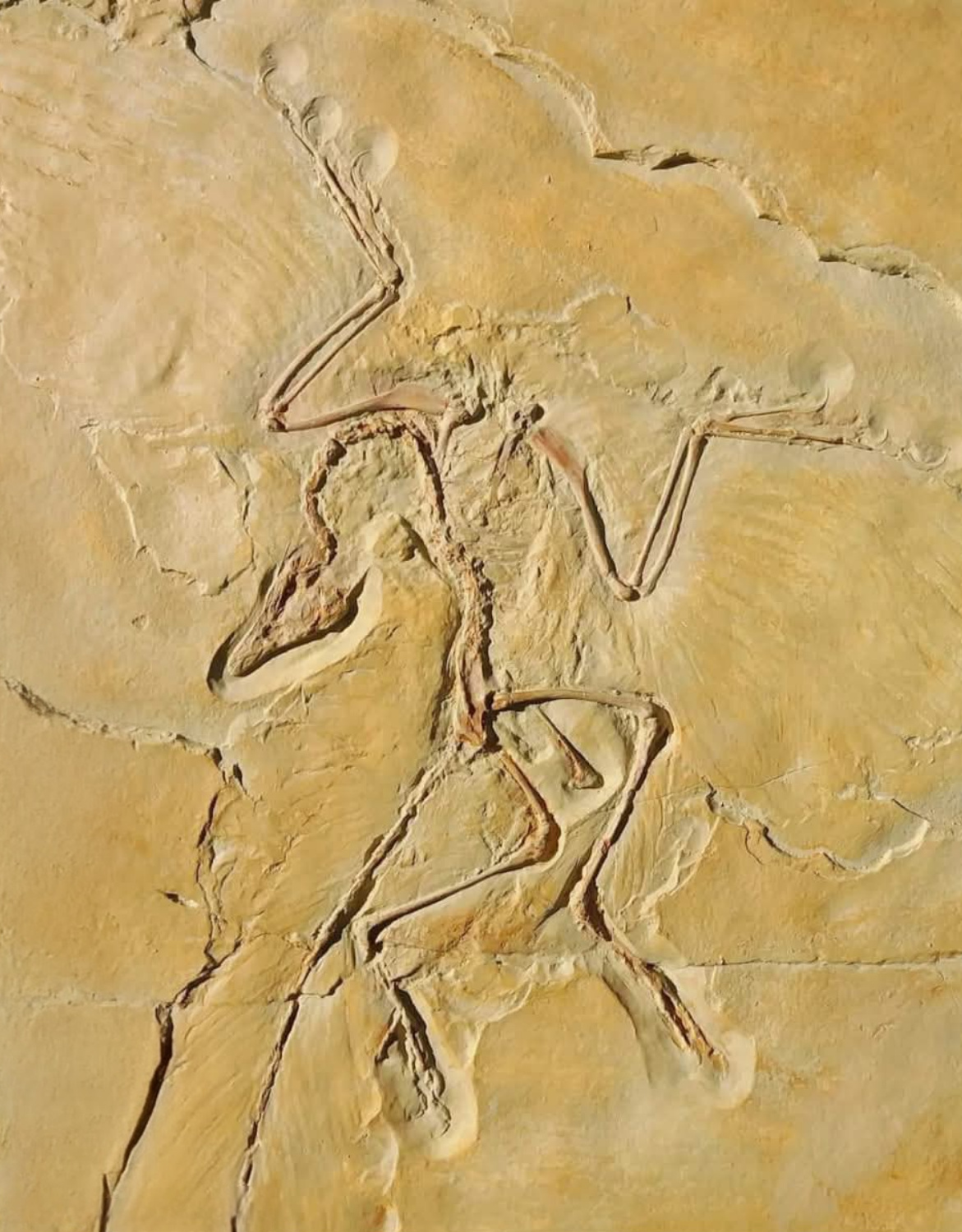
But Archaeopteryx also possessed features that were unmistakably avian. Most famously, it had well-developed flight feathers, asymmetrical in shape, arranged on its wings in a pattern that closely mirrors the feather arrangement of modern flying birds. These were not simple, downy proto-feathers. They were complex, vaned feathers capable of generating aerodynamic lift. The creature also had a wishbone, or furcula, the fused clavicle structure that in modern birds acts as a spring during the flight stroke. Its feet were adapted for perching, with one toe facing backward, a feature called a hallux that allows modern birds to grip branches.
What Could It Actually Do?
Whether Archaeopteryx could truly fly has been debated since its discovery. Its feathers suggest aerodynamic capability, but its skeleton raises questions. It lacked the deeply keeled sternum, or breastbone, that anchors the powerful flight muscles of modern birds. Without this anchor, sustained powered flight would have been difficult. Most paleontologists now believe Archaeopteryx was capable of some form of flight, whether gliding from elevated perches or executing short bursts of powered flight, but it was not the strong, maneuverable flier that modern songbirds or raptors are. Think of it as a early experiment in aerial locomotion, bold and imperfect, a prototype rather than a finished design.
Recent biomechanical studies using CT scanning and computer modeling have added nuance to this picture. Some researchers argue that Archaeopteryx was primarily a ground-runner that occasionally flapped its wings for balance or short glides, while others suggest it was an arboreal climber that launched itself from trees. The truth likely lies somewhere between these extremes, and the debate continues to generate new research and new fossil finds.
The Berlin Specimen and Its Legacy
Of the roughly a dozen Archaeopteryx specimens known, the Berlin specimen, discovered in 1877 and acquired by the Berlin Museum in 1881, is the crown jewel. It is the most complete and best preserved, showing feather impressions in exquisite detail across both wings and the tail. For decades, it was displayed in a glass case at the Museum für Naturkunde in Berlin, where it became one of the most famous fossils in the world and a symbol of evolution itself.
The discovery of Archaeopteryx fundamentally changed how we understand the origin of birds. Before 1861, birds and reptiles were seen as entirely separate creations. After Archaeopteryx, the idea that birds are living dinosaurs became scientifically defensible. In the century and a half since, discoveries of feathered dinosaurs in China, particularly from the Yixian and Jiufotang formations, have confirmed what Archaeopteryx first suggested: feathers did not evolve for flight. They evolved first for insulation and display in small theropod dinosaurs, and were later co-opted for aerial locomotion. Archaeopteryx sits right at that tipping point, where a dinosaur's feathers became a bird's wings.
A Fossil That Changed Everything
Archaeopteryx remains iconic not because it is the oldest bird, or the most complete fossil, but because it captures a moment of transformation with unparalleled clarity. It is a snapshot of evolution in action, frozen in limestone for 150 million years. Every time we see a sparrow on a fence post or a hawk circling overhead, we are looking at the distant descendants of creatures like Archaeopteryx, refined by millions of years of natural selection into the astonishing diversity of modern birds. In a world where Triops remind us that some designs endure unchanged for hundreds of millions of years, Archaeopteryx reminds us that evolution is also capable of breathtaking reinvention.
For those who want to see Archaeopteryx for themselves, the Berlin specimen remains on display at the Museum für Naturkunde in Berlin, Germany, alongside other iconic fossils from the Solnhofen Limestone. It is worth the visit. Few fossils carry the weight of meaning that this small, feathered dinosaur holds. It is, quite literally, the link between worlds.