Published August 30, 2026, 00:51 by the Triops.me Editorial Team · Back to Articles
Archelon: The Largest Sea Turtle That Ever Swam the Earth
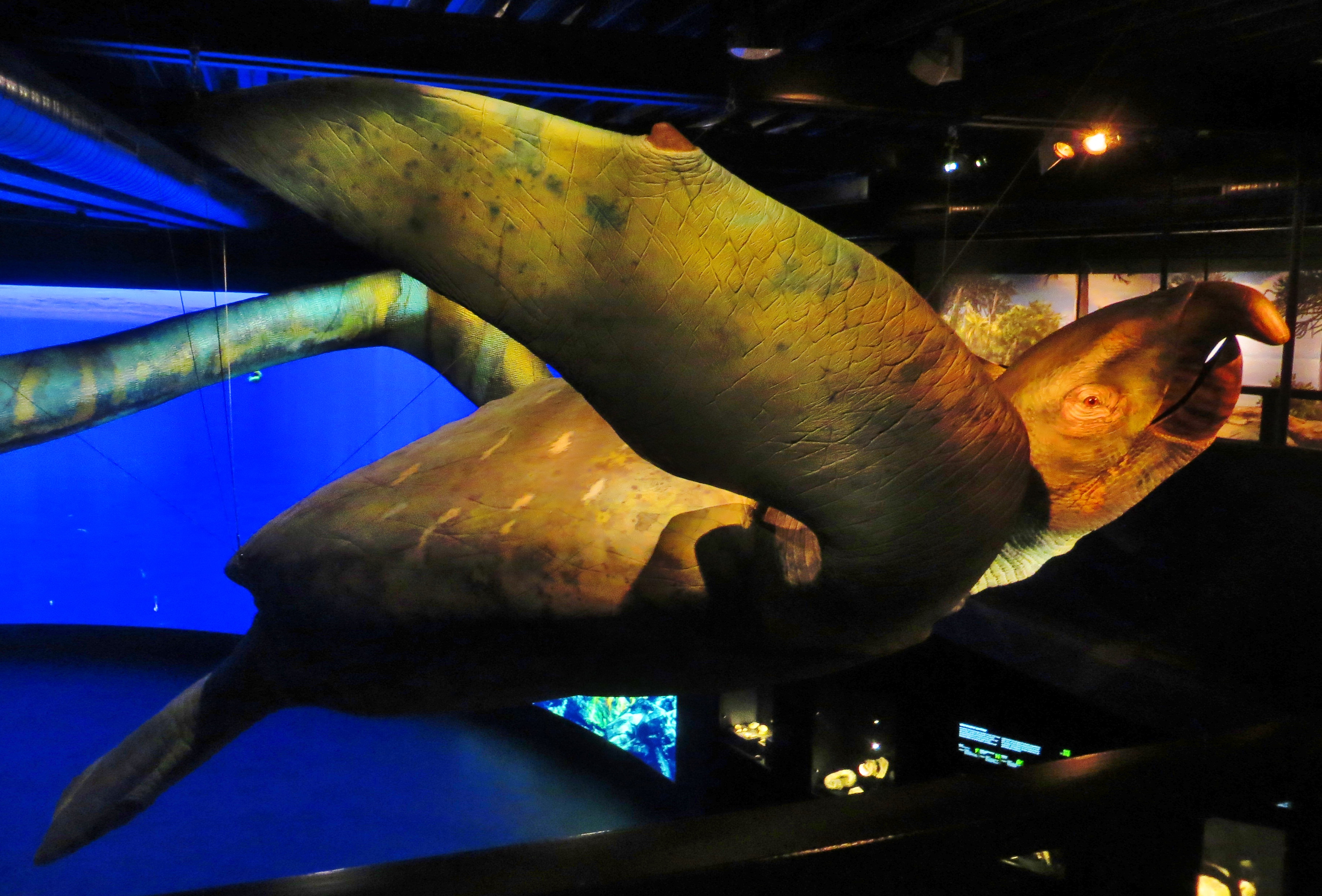
Imagine a sea turtle so large that its shell stretches nearly five metres from tip to tail, weighing as much as a small car. This was Archelon ischyros, the biggest turtle ever documented in the fossil record, and it swam the warm, shallow seas of North America right up until the moment the asteroid hit.
First described in 1895 by Charles R. Eastman from fossils found in South Dakota's Pierre Shale, Archelon belongs to a group called the Protostegidae, an entire family of giant marine turtles that has no living descendants. Unlike the hard-shelled sea turtles we know today, Archelon carried a skeleton covered by leathery skin rather than scutes. Its body plan was built for open water, not for hiding on the seabed. This was a creature that spent its life cruising through the Western Interior Seaway, the vast inland ocean that split North America in two during the Late Cretaceous.
Bigger Than Anything Swimming Today
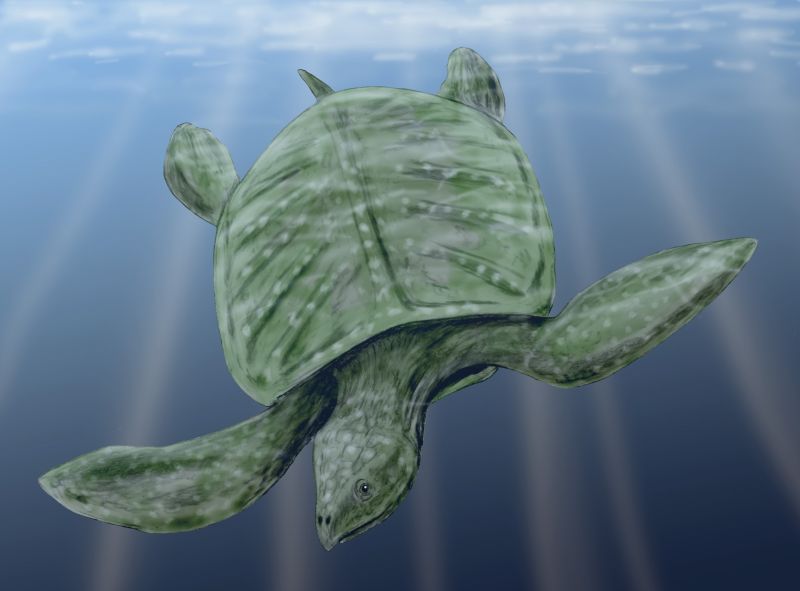
The numbers that define Archelon are staggering. The largest known specimen has a carapace length of 4.6 metres and an estimated weight of over 2,200 kilograms. By comparison, the largest living sea turtle, the leatherback, reaches about two metres and weighs roughly 600 kilograms. Archelon was more than double that size.
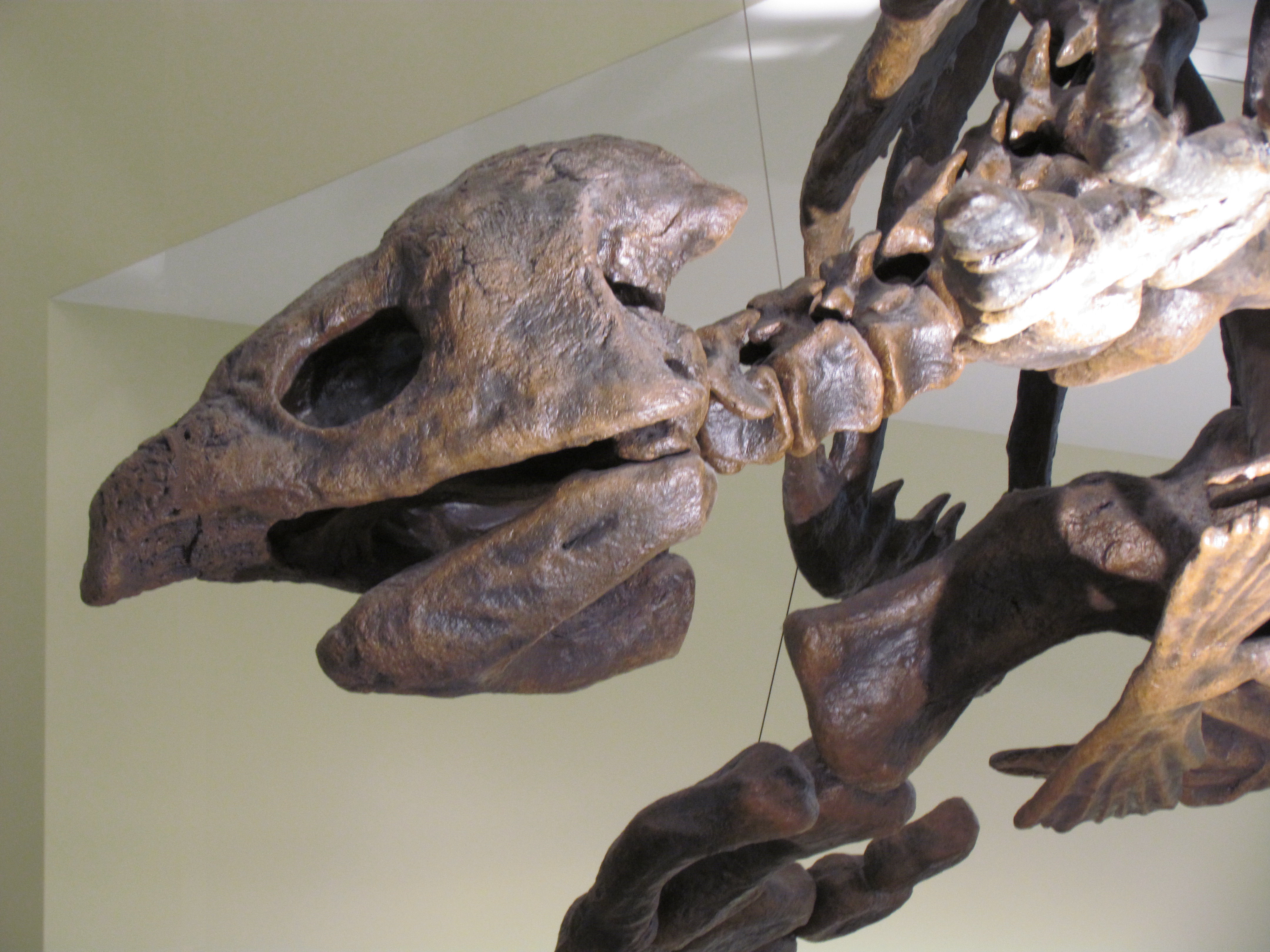
Its skull alone measured over 70 centimetres, dominated by a massive, hooked beak capable of crushing hard-shelled prey. Fossil evidence suggests Archelon fed primarily on jellyfish, cephalopods, and possibly crustaceans. The jaw musculature was extraordinarily powerful, a necessary adaptation for processing gelatinous prey that offered little nutritional value per bite. A giant turtle needed a lot of food, and a crushing beak let it exploit prey sources that smaller animals could not efficiently handle.
The flipper-like limbs were proportionally enormous, reaching nearly two metres in span. These were not paddles for lazy drifting but powerful hydrofoils that propelled Archelon through open water with surprising efficiency. Bone cross-sections reveal dense, compact bone, an adaptation called osteosclerosis that reduced buoyancy and helped the animal maintain depth, similar to the dense bones found in modern manatees and sea cows.
A Leathery Shield, Not a Hard Shell
One of the most distinctive features of Archelon is what it lacked: a hard, bony shell. Modern sea turtles have a carapace covered in keratinous scutes, but Archelon's carapace was a network of bony plates covered by thick, leathery skin. This structure is sometimes compared to the shell of the modern leatherback turtle, though the two are not closely related. The similarity is a case of convergent evolution, where unrelated lineages arrive at similar solutions to the same problem: how to be large, streamlined, and protected in open water without the weight penalty of a fully ossified shell.
This leathery covering would have made Archelon somewhat more flexible than a hard-shelled turtle, potentially allowing it to dive deeper by reducing the rigidity of its torso. However, it also offered less protection from predators. At the time Archelon lived, the Western Interior Seaway was home to some of the most formidable marine predators in Earth's history, including mosasaurs, large sharks like Cretodus, and even giant mosasaurs like Hainosaurus that could exceed 15 metres in length.
The Western Interior Seaway
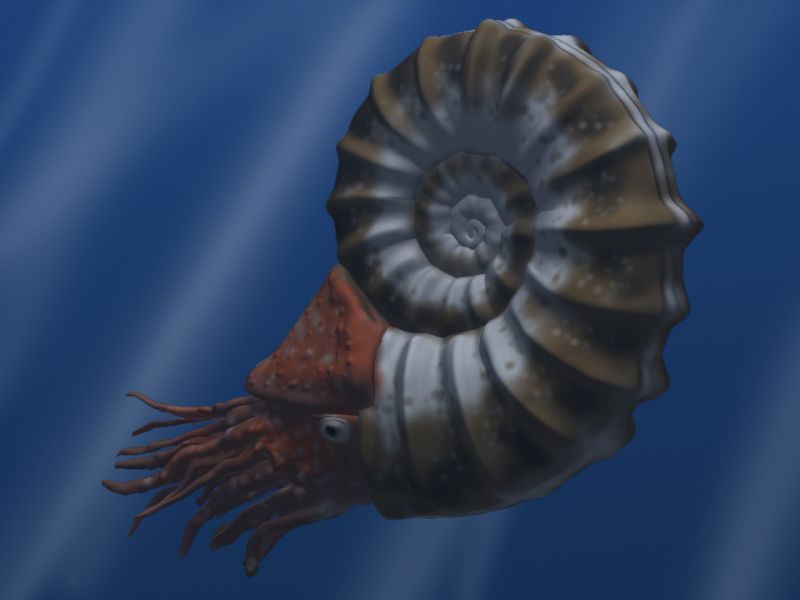
During the Late Cretaceous, roughly 80 to 66 million years ago, a vast inland sea stretched from the Gulf of Mexico to the Arctic Ocean, splitting the North American continent into two landmasses: Laramidia to the west and Appalachia to the east. This seaway was warm, shallow, and teeming with life. Ammonites drifted in vast numbers, plesiosaurs patrolled the deeper waters, and giant fish like Xiphactinus hunted in packs near the surface.
Archelon was one of the largest animals in this ecosystem that was not a marine reptile. Fossils have been found primarily in what is now South Dakota, Nebraska, and Wyoming, areas that were covered by the seaway's western margins. The sediments that preserved these fossils were deposited in relatively shallow, warm waters with occasional oxygen-poor conditions on the seafloor, which aided in the preservation of bone and sometimes soft tissue impressions.
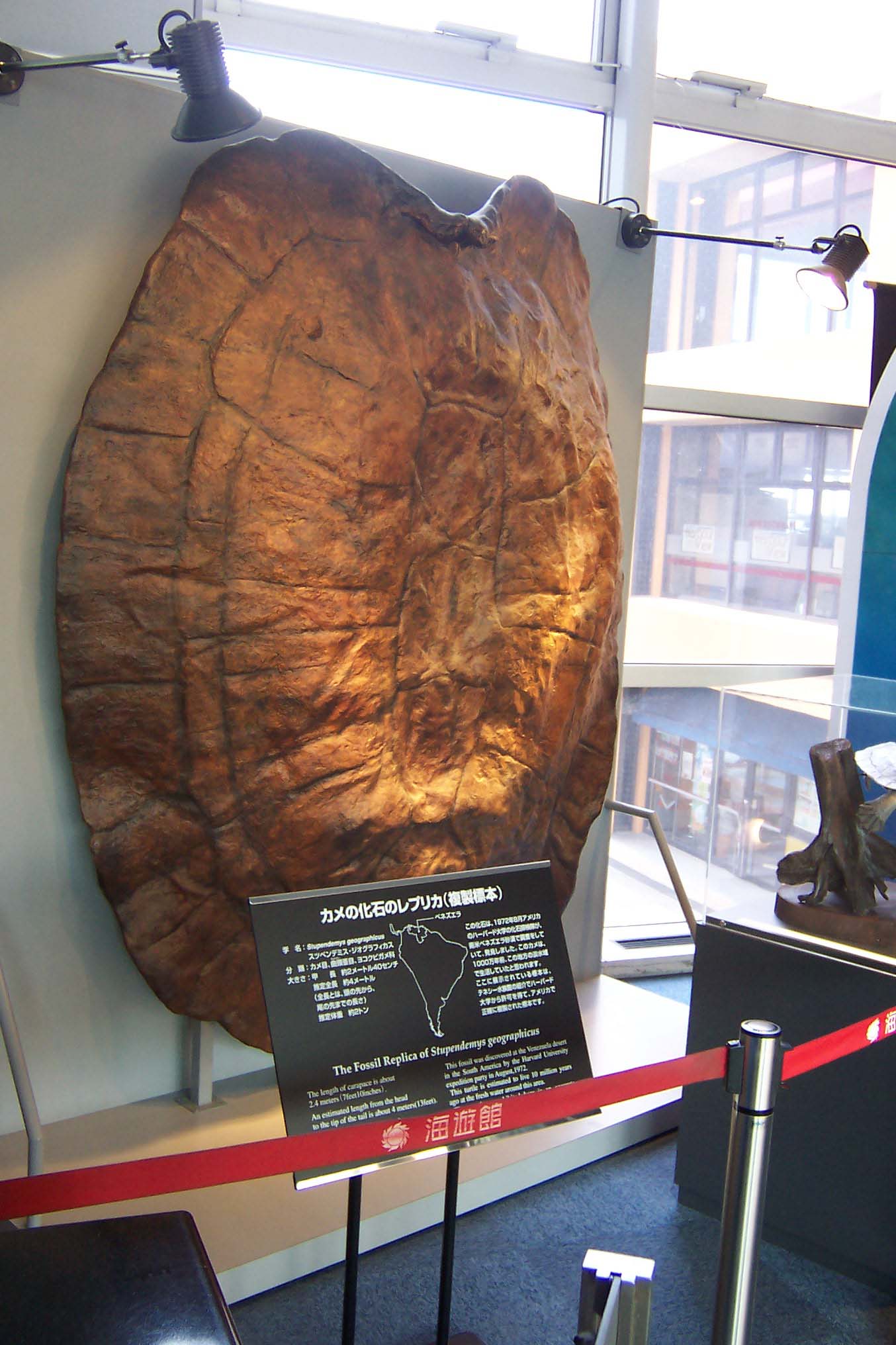
Not the Only Giant Turtle in History
Archelon was not alone in the club of oversized turtles. Its close relative Protostega gigas, described in 1871 from Kansas specimens, reached about three metres in length and was among the first giant fossil turtles to be studied in detail. Though smaller than Archelon, Protostega was still far larger than any living turtle.
Millions of years later, in South America, another giant turtle called Stupendemys geographicus reached even greater dimensions. This freshwater side-necked turtle, which lived about five to ten million years ago in what is now Venezuela and Colombia, had a carapace that exceeded three metres in length. Some estimates place it at nearly four metres wide. Unlike Archelon, Stupendemys was a freshwater animal, inhabiting the vast river systems and floodplains of ancient South America rather than open ocean.
Together, these giants demonstrate that turtles have repeatedly evolved to enormous size across different habitats and time periods, a testament to the success of the basic turtle body plan.
Vanished at the Boundary
Archelon disappeared from the fossil record at the end of the Cretaceous, approximately 66 million years ago, coinciding with the mass extinction event triggered by the Chicxulub asteroid impact. The Protostegidae as a family did not survive the extinction, leaving no living descendants. Modern sea turtles, belonging to the family Cheloniidae and Dermochelyidae, are only distantly related.
The extinction of Archelon and its kin marked the end of an era of giant marine turtles. While today's leatherback turtles are impressive in their own right, reaching lengths of two metres and diving to depths of over 1,000 metres, they are dwarfed by the Cretaceous giants that once ruled the same waters. The story of Archelon is a reminder that the oceans have always produced creatures of astonishing scale, and that even the most successful body plans are not immune to catastrophe.
Next time you see a sea turtle gliding through tropical waters, remember that its ancestors once shared those same oceans with a turtle five times its size, a leathery-shelled giant that patrolled the seas alongside mosasaurs and plesiosaurs, right up until the day the sky fell.