Published August 19, 2026 by the Triops.me Editorial Team · Back to Articles
Arthropleura: Earth's Largest Land Arthropod
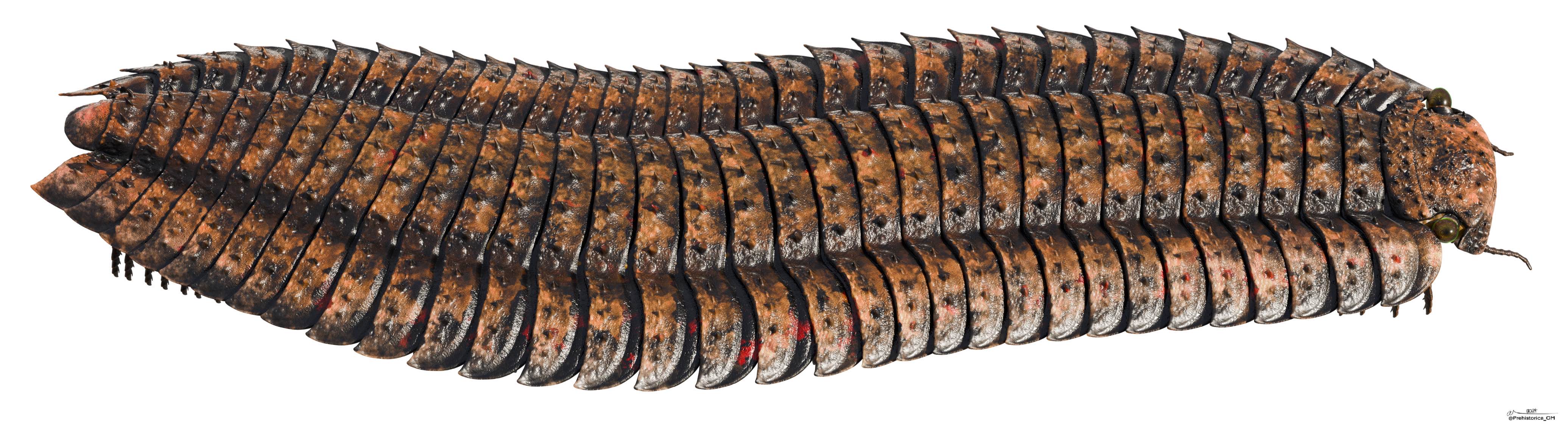
Imagine a creature stretching over two and a half meters from head to tail, rolling across the forest floor on dozens of pairs of legs. That creature was real. Arthropleura, whose name means "ribbed side," was the largest arthropod ever to walk on land. This enormous relative of modern millipedes lived during the Carboniferous period, roughly 340 to 290 million years ago, in the vast coal-forming swamps that once covered much of the Earth.
Arthropleura is one of the most spectacular examples of what happens when atmospheric conditions allow arthropods to grow to extraordinary sizes. Its fossils, found primarily in Europe and North America, have fascinated paleontologists since the early 19th century. Some early discoveries were so large that researchers initially mistook the fossilized body segments for pieces of a fallen tree trunk.
The Carboniferous World
To understand why Arthropleura grew so enormous, you have to understand the world it lived in. The Carboniferous period, spanning from about 359 to 299 million years ago, is sometimes called the Age of Amphibians or the Age of Coal. The latter name comes from the vast swamp forests that covered the tropical regions of Pangaea, the supercontinent. These forests, dominated by giant lycopsid trees like Lepidodendron and Sigillaria, would eventually compress into the coal seams we mine today.
But the most important factor for giant arthropods was atmospheric. During the Carboniferous, oxygen levels reached as high as 35 percent, compared to today's 21 percent. Arthropods breathe through a system of tubes called tracheae, which deliver oxygen directly to their tissues. Higher atmospheric oxygen means more oxygen can diffuse into larger bodies. This simple physical relationship created a window of opportunity for arthropods to evolve to sizes that would be physiologically impossible in today's atmosphere.
The Carboniferous was a paradise for large arthropods. Dragonflies like Meganeura, with wingspans exceeding 70 centimeters, patrolled the skies above the coal swamps. Giant cockroaches scurried through the leaf litter. And Arthropleura, the largest of them all, lumbered across the forest floor like a living armored train.
Size and Anatomy
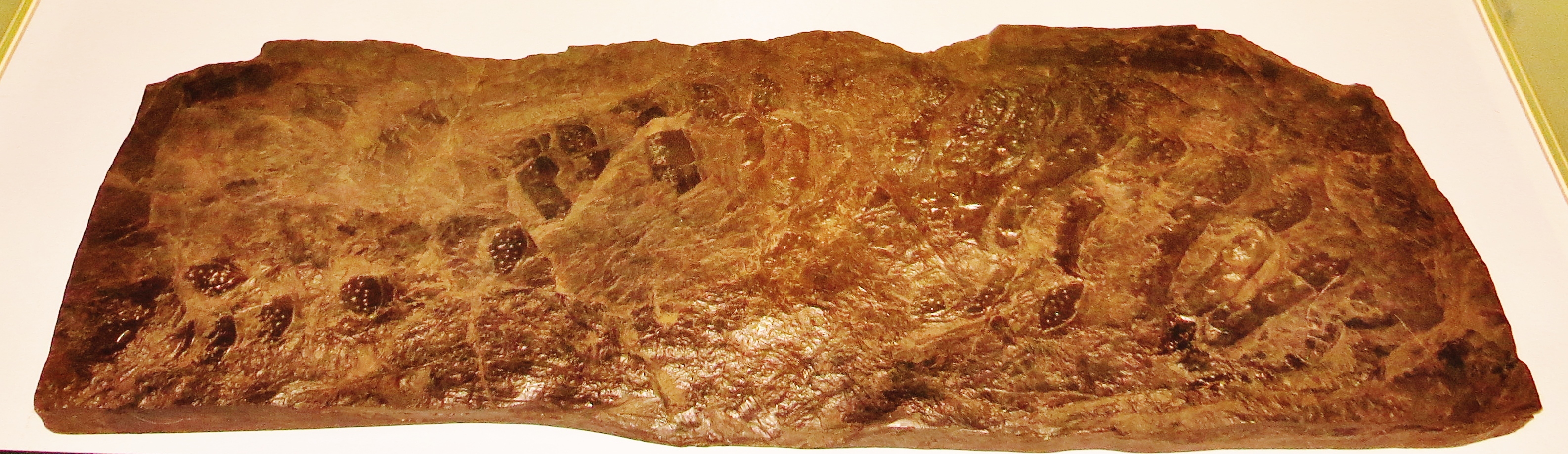
Estimates of Arthropleura's size vary, but most specimens suggest a body length between 1.5 and 2.6 meters. The largest known fossil segments, found in Nova Scotia, Canada, imply a creature at the upper end of that range. Standing on its many legs, Arthropleura may have reached 60 centimeters in height, roughly waist-high to an adult human.
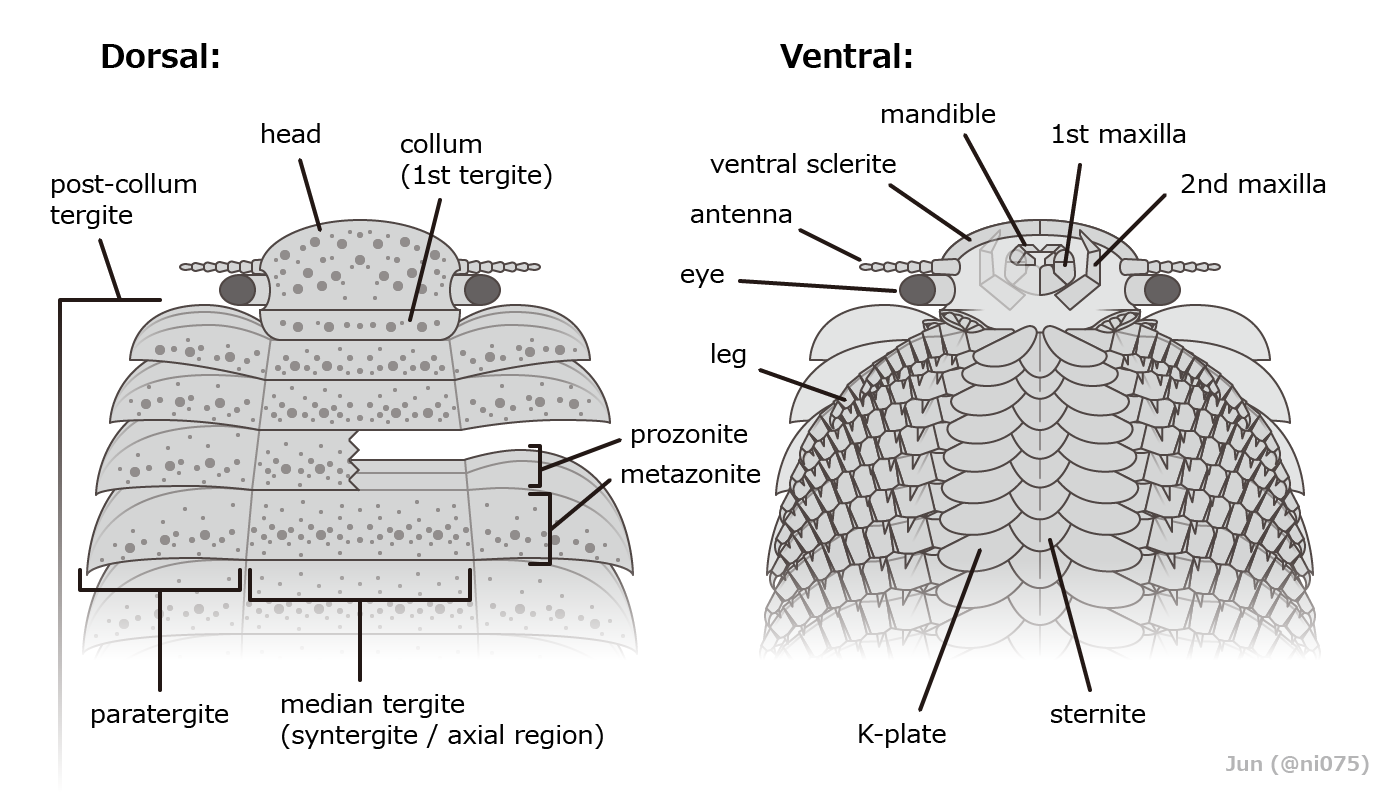
The body was divided into broad, overlapping segments, each bearing a pair of legs. Unlike modern millipedes, which typically have two pairs of legs per segment, Arthropleura appears to have had one pair per segment, more like a giant centipede. The exact number of leg pairs is unknown because soft tissue rarely fossilizes, but extrapolation from preserved segments suggests somewhere around 30 pairs or more.
Each body segment was topped with a wide, flattened tergite, or dorsal plate. Some species bore a raised ridge along the midline, giving the animal a slightly armored appearance. The head is poorly known because Arthropleura's head capsule has never been definitively found. Paleontologists believe it likely resembled the heads of modern millipedes, with short antennae and simple chewing mouthparts suited for processing plant material.
Fossil Trackways: Evidence of Movement
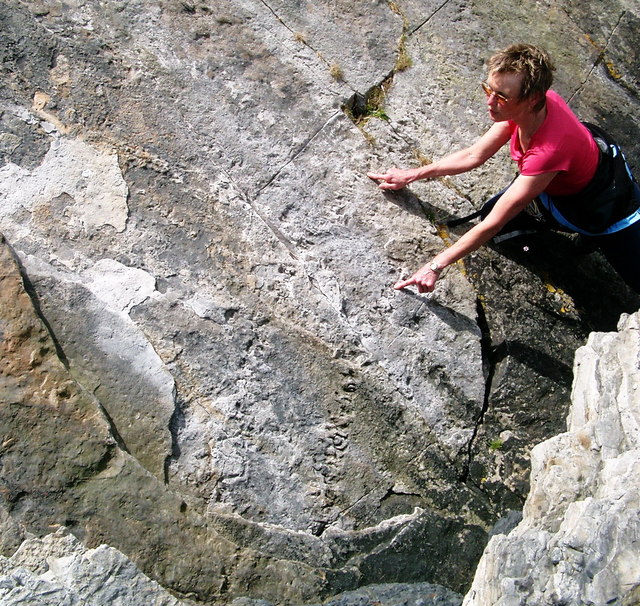
Some of the most compelling evidence for Arthropleura comes not from body fossils but from trace fossils. Fossilized trackways, known as Diplichnites, have been found in sedimentary rocks across the northern hemisphere. These trackways show the distinctive pattern of a large, multi-legged animal walking in a sinusoidal gait, with alternating foot impressions creating a braided pattern in the mud.
The width of these trackways, sometimes exceeding 50 centimeters, matches the body proportions estimated from Arthropleura's fossil segments. Some trackways stretch for several meters, suggesting the animal walked with a smooth, continuous motion, much like modern millipedes. The regularity of the impressions indicates a coordinated, wave-like leg movement that would have been efficient for covering ground in the dense Carboniferous undergrowth.
Interestingly, some trackways show the animal stopping and changing direction, possibly to feed on fallen plant material or to avoid obstacles. A few trace fossils even preserve evidence of the animal burrowing into soft sediment, suggesting Arthropleura may have sheltered underground during dry periods, another behavior seen in modern millipedes.
What Did Arthropleura Eat?
For decades, paleontologists debated whether Arthropleura was a herbivore or a predator. The size of the animal and the abundance of fallen plant material in Carboniferous swamp forests strongly suggested herbivory. More recently, analysis of fossilized gut contents and isotopic studies have confirmed that Arthropleura was indeed a plant-eater.
It likely fed on the abundant leaf litter, fallen bark, and decaying wood that carpeted the Carboniferous forest floor. With its broad, flat body and numerous legs, Arthropleura would have been well-suited to pushing through dense layers of fallen vegetation, processing enormous quantities of plant material as it went. In this role, it would have functioned much like a giant version of the modern millipedes and woodlice that break down dead leaves in our gardens today.
This herbivorous lifestyle was crucial to the Carboniferous ecosystem. By breaking down dead plant material and recycling nutrients, Arthropleura and its relatives helped maintain the nutrient cycles that sustained the great coal swamp forests. In a sense, these giant arthropods were the gardeners of the Carboniferous.
Why Did Arthropleura Disappear?
Arthropleura's reign came to an end as the Carboniferous gave way to the Permian period, around 299 million years ago. Several factors contributed to its extinction. The most significant was a decline in atmospheric oxygen. As the great coal swamp forests shrank and drier conditions spread across Pangaea, oxygen levels dropped from their Carboniferous peak back toward more moderate levels. Without the oxygen surplus that had enabled their gigantism, Arthropleura and other giant arthropods could no longer sustain their enormous body sizes.
Climate change also played a role. The Permian saw increasing aridity, with vast deserts replacing the tropical swamps. Arthropleura, adapted to humid, forested environments, would have found these new landscapes inhospitable. The breakup of the coal forests removed both its habitat and its food source.
Some researchers also point to the rise of early reptiles, which were evolving larger body sizes and more efficient metabolisms during the late Carboniferous and early Permian. While direct evidence of reptiles preying on Arthropleura is lacking, the increasing diversity of terrestrial vertebrates may have added competitive pressure to an already declining lineage.
A Giant Among Arthropods
Arthropleura stands as one of the most remarkable animals to have ever lived on land. It represents the upper limit of what arthropod body design can achieve under favorable conditions, a living demonstration of how oxygen, habitat, and evolutionary time can combine to produce creatures of astonishing scale.
Today, the largest living land arthropod is the coconut crab, Birgus latro, with a leg span of about one meter. The longest is the giant spined millipede, Archispirostreptus gigas, which can reach 38 centimeters. These animals are impressive in their own right, but they are shadows of what their Carboniferous ancestors achieved. Arthropleura reminds us that the history of life on Earth includes chapters of extraordinary ambition, where even the lowliest of body plans could produce giants.
The arthropod blueprint, shared by insects, crustaceans, and myriapods, is among the most successful designs in the history of life. Triops, the living fossil that gives this website its name, is an arthropod too, a crustacean that has survived for over 200 million years with its body plan essentially unchanged. Arthropleura and Triops are distant relatives, separated by hundreds of millions of years of evolution, but they share the fundamental arthropod strategy of an exoskeleton, segmented body, and jointed legs. One grew to monstrous proportions in a world of giant oxygen; the other chose survival through small size, dormant eggs, and ecological flexibility. Both strategies worked.
The story of Arthropleura is ultimately a story about limits. Every body plan has an envelope of conditions within which it can thrive. Push the oxygen too high, and you get giants. Drop it too low, and the giants vanish. In between, life finds a balance. Arthropleura lived at the extreme edge of that balance, and its fossils are a window into a time when the rules of terrestrial life were written in oxygen and coal.