Published August 26, 2026 by the Triops.me Editorial Team · Back to Articles
Basilosaurus: The King Lizard That Was Actually a Whale
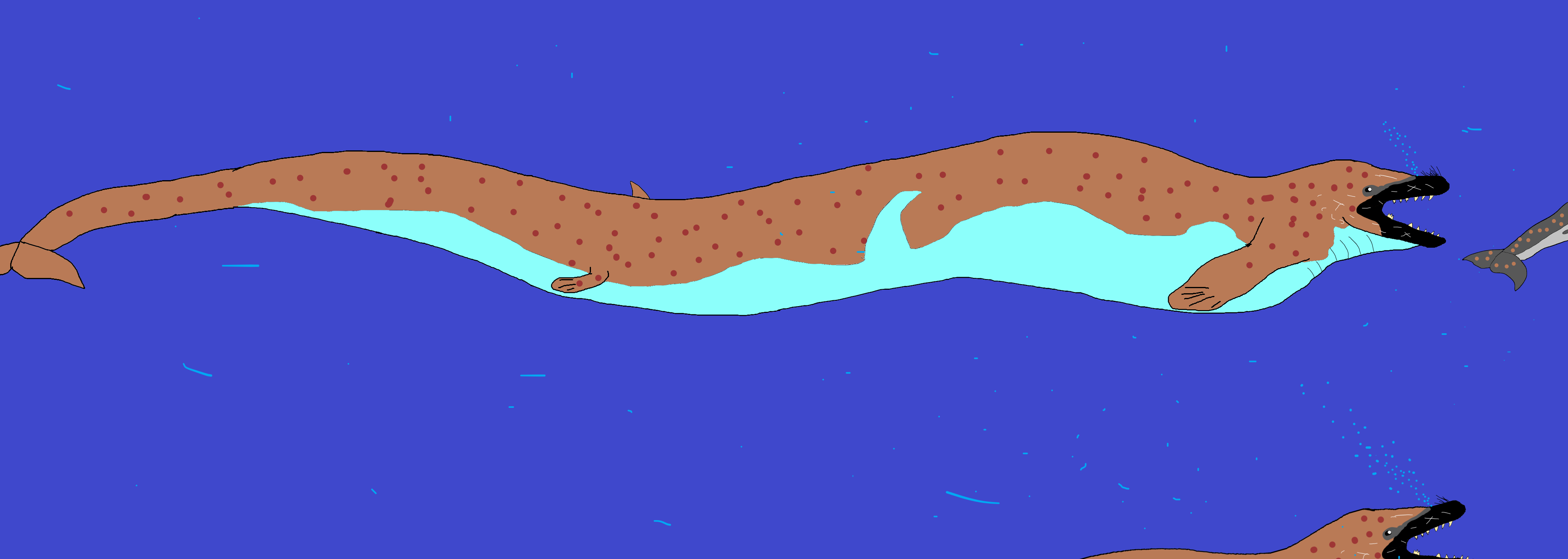
In 1834, American anatomist Richard Harlan described a set of large vertebrae found in the limestone of Alabama. The bones were massive, elongated, and clearly belonged to something enormous. Harlan concluded it must be a giant marine reptile, something akin to a crocodile or sea serpent, and gave it the name Basilosaurus, meaning "king lizard." It was a reasonable guess. It was also completely wrong. The creature was not a reptile at all. It was a whale, and it was one of the most fearsome predators the ancient oceans had ever produced.
The name stuck anyway. Under the strict rules of zoological nomenclature, once a genus is named, it cannot be changed, even if the original classification turns out to be backwards. Richard Owen, the famous British anatomist who later coined the word "dinosaur," proposed renaming the animal Zeuglodon (meaning "yoke tooth," referring to its distinctive molar shape) in 1839. But that name became a junior synonym. Today, every paleontologist who writes about this creature must still call it the "king lizard," despite the fact that it ruled the waves, not the land.
A Giant of the Eocene Seas
Basilosaurus lived during the late Eocene epoch, roughly 41 to 34 million years ago. At that time, the world was very different from today. Global temperatures were much warmer, sea levels were higher, and vast shallow inland seas cut across continents that are now dry land. The southeastern United States, for instance, lay partially beneath the Tethys-connected waters of the Gulf of Mexico, which is precisely where Basilosaurus fossils are most commonly found.
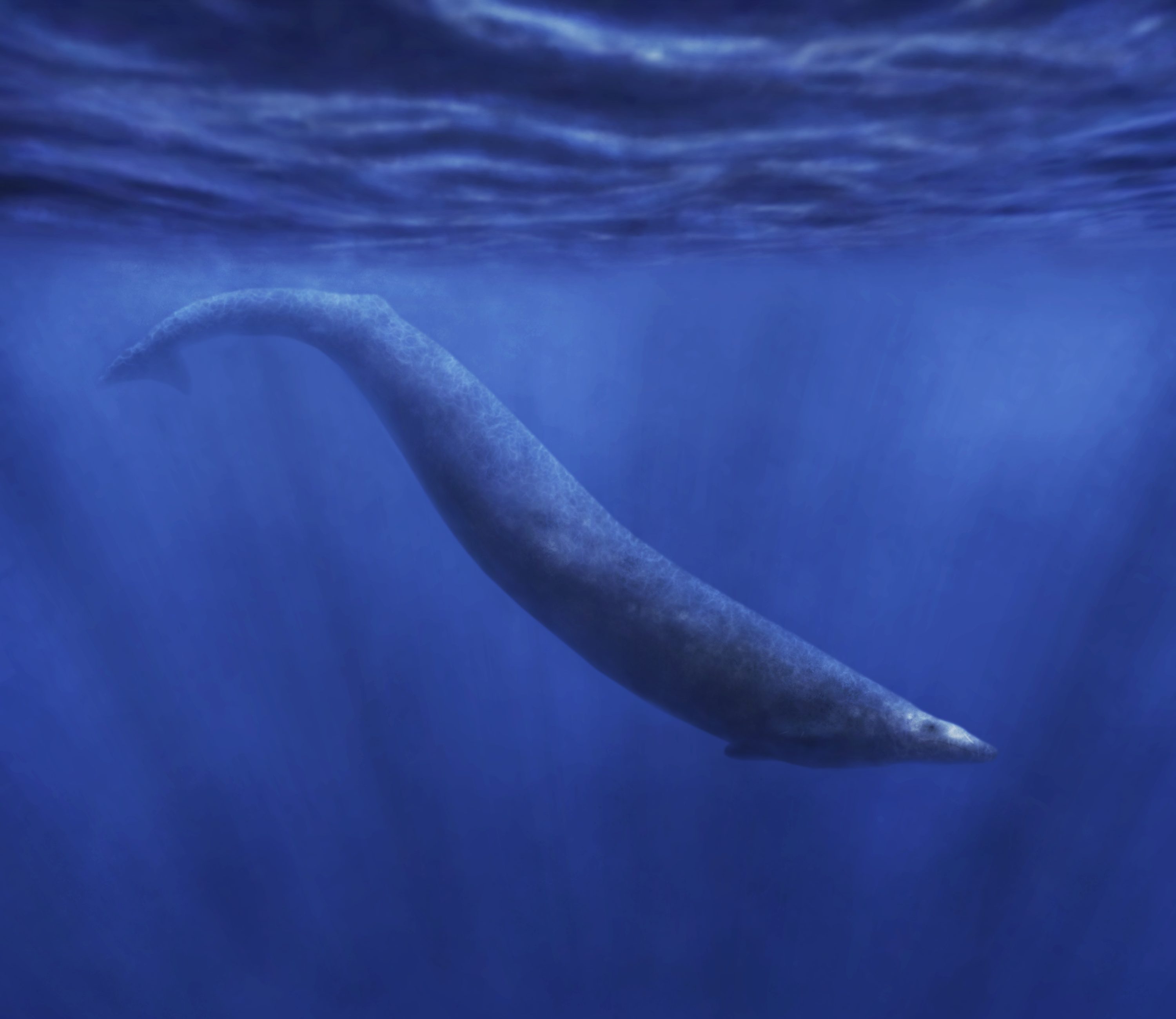
The type species, B. cetoides, could reach lengths of 17 to 20 meters (56 to 66 feet) and weigh up to 15 metric tons. That made it one of the largest animals of the entire Paleogene period. A second species, B. isis, named in 1904 from fossils found in Egypt's Western Desert, lived in what was then the warm, shallow Mediterranean basin. Fossils of both species have been recovered from sites spanning from the American South to North Africa and even Jordan, painting a picture of a genus that dominated tropical and subtropical seas across the globe.
What makes Basilosaurus especially significant in the history of life is its position in whale evolution. It belongs to a group called archaeocetes, the earliest fully aquatic whales. Before Basilosaurus, whales had been making a gradual transition from land to water. Their ancestors had four legs and lived on the shore. By the time Basilosaurus appeared, that transition was essentially complete. This animal never left the ocean.
A Predator With Teeth
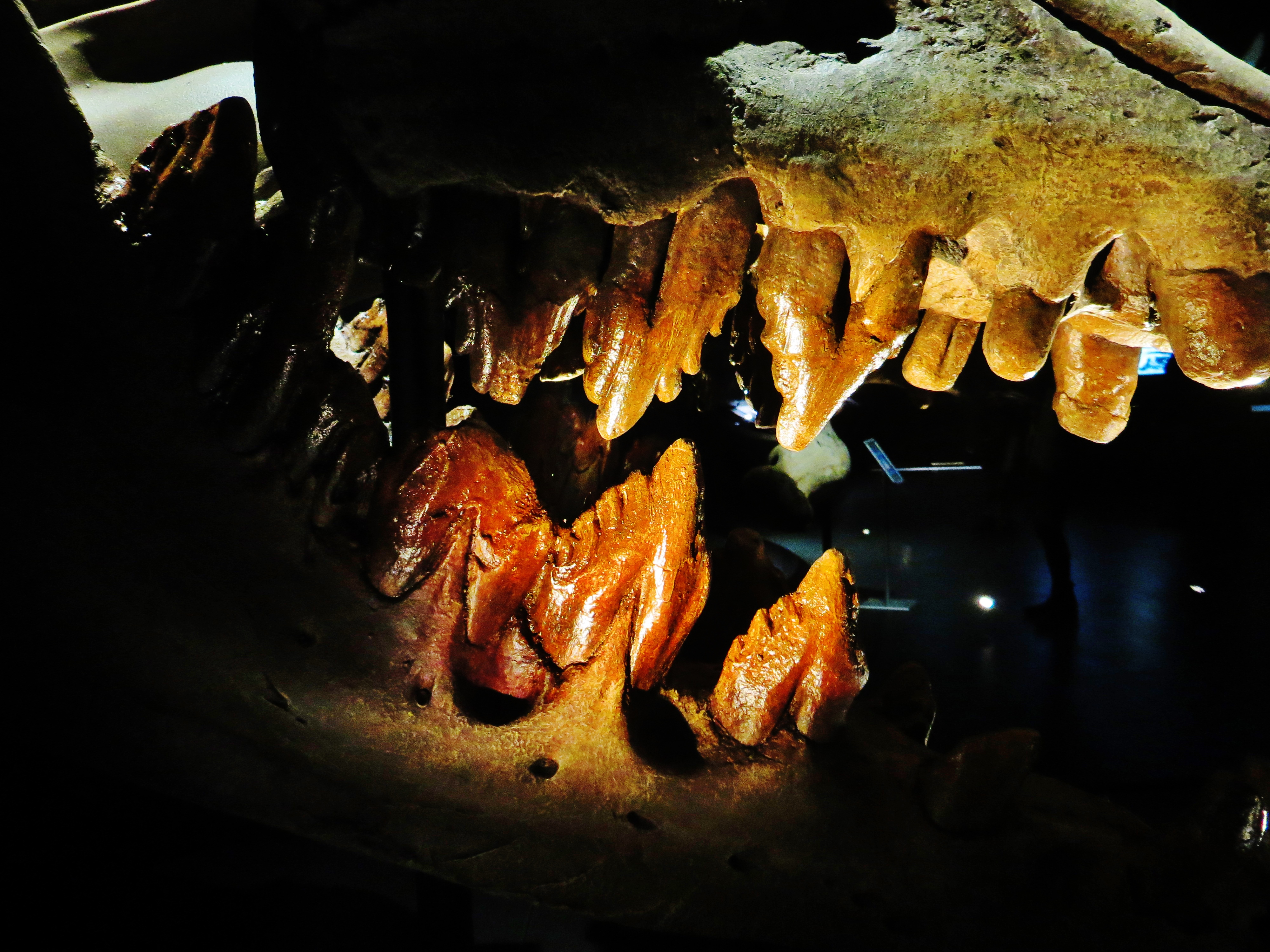
Unlike modern whales, which are divided into baleen whales (filter feeders) and toothed whales (which typically swallow prey whole), Basilosaurus had a mouth full of differentiated teeth. This condition, known as heterodonty, meant it possessed sharp, conical canines at the front of its jaws for seizing prey, and complex, multi-cusped molars further back for shearing and processing flesh. In other words, Basilosaurus could chew its food in a way that no modern whale can.
This dental toolkit points to an active predatory lifestyle. Fossil evidence suggests that Basilosaurus hunted sharks, large fish, and other marine mammals. Its most common prey appears to have been Dorudon, a smaller dolphin-like archaeocete that shared its waters. Bite marks preserved on Dorudon skulls match Basilosaurus teeth, and stomach contents from Basilosaurus specimens include Dorudon bones. These were not gentle giants. They were apex predators at the top of the Eocene marine food chain.
Vestigial Legs and a Whale's Body
Perhaps the most remarkable feature of Basilosaurus is what it still carried from its terrestrial past: tiny, vestigial hind limbs. Measuring roughly 60 centimeters (about two feet) long on an animal that stretched 18 meters, these miniature legs were far too small to support the animal's weight or to be useful for swimming. They had complete femurs, tibias, fibulas, and even toes, but they were functionally useless for locomotion.
Scientists believe these legs may have served a reproductive purpose, possibly helping males grasp females during mating. They are a powerful reminder that evolution does not design from scratch. It modifies what already exists. The ancestors of Basilosaurus walked on land, and even after millions of years in the ocean, the echoes of that terrestrial heritage remained etched into the skeleton.
Wadi Al-Hitan: The Valley of Whales
Some of the most spectacular Basilosaurus fossils come from a remote stretch of the Egyptian desert called Wadi Al-Hitan, or the Valley of Whales. This UNESCO World Heritage Site preserves an astonishing collection of Eocene marine life, with over 400 cetacean skeletons embedded in the sandstone. Walking through Wadi Al-Hitan today, you cross the same ground that was once a warm, shallow sea teeming with Basilosaurus, Dorudon, early sharks, and vast beds of marine invertebrates.
The site has provided paleontologists with unparalleled insights into early whale anatomy, behavior, and ecology. Complete Basilosaurus skeletons found there have revealed the full extent of its elongated body plan, the precise structure of its vestigial limbs, and the composition of its last meals. For a creature that was once mistaken for a reptile, the fossils at Wadi Al-Hitan tell a remarkably complete story of a mammal that conquered the sea.
A Misnamed Marvel
Basilosaurus remains one of paleontology's great ironies. Named "king lizard" by scientists who had never seen a complete skeleton, it turned out to be one of the most advanced marine mammals of its era. It was fully aquatic, possessed the sensory and locomotor adaptations of an ocean predator, and occupied the top of the marine food web for millions of years. It went extinct around the time of the Eocene-Oligocene transition, when global cooling reshuffled marine ecosystems and modern whale groups began their rise.
Yet the name endures, a fossil of a fossil, preserving not just the bones of an ancient whale but also the moment when science first tried to understand what it had found. In the end, Basilosaurus did not need a correct name to earn its place in the history of life. It ruled the Eocene seas, and millions of years later, it still commands attention.