Published September 06, 2026, 13:11 · by the Triops.me Editorial Team · Back to Articles
Belemnites: Thunderbolts of the Mesozoic Seas
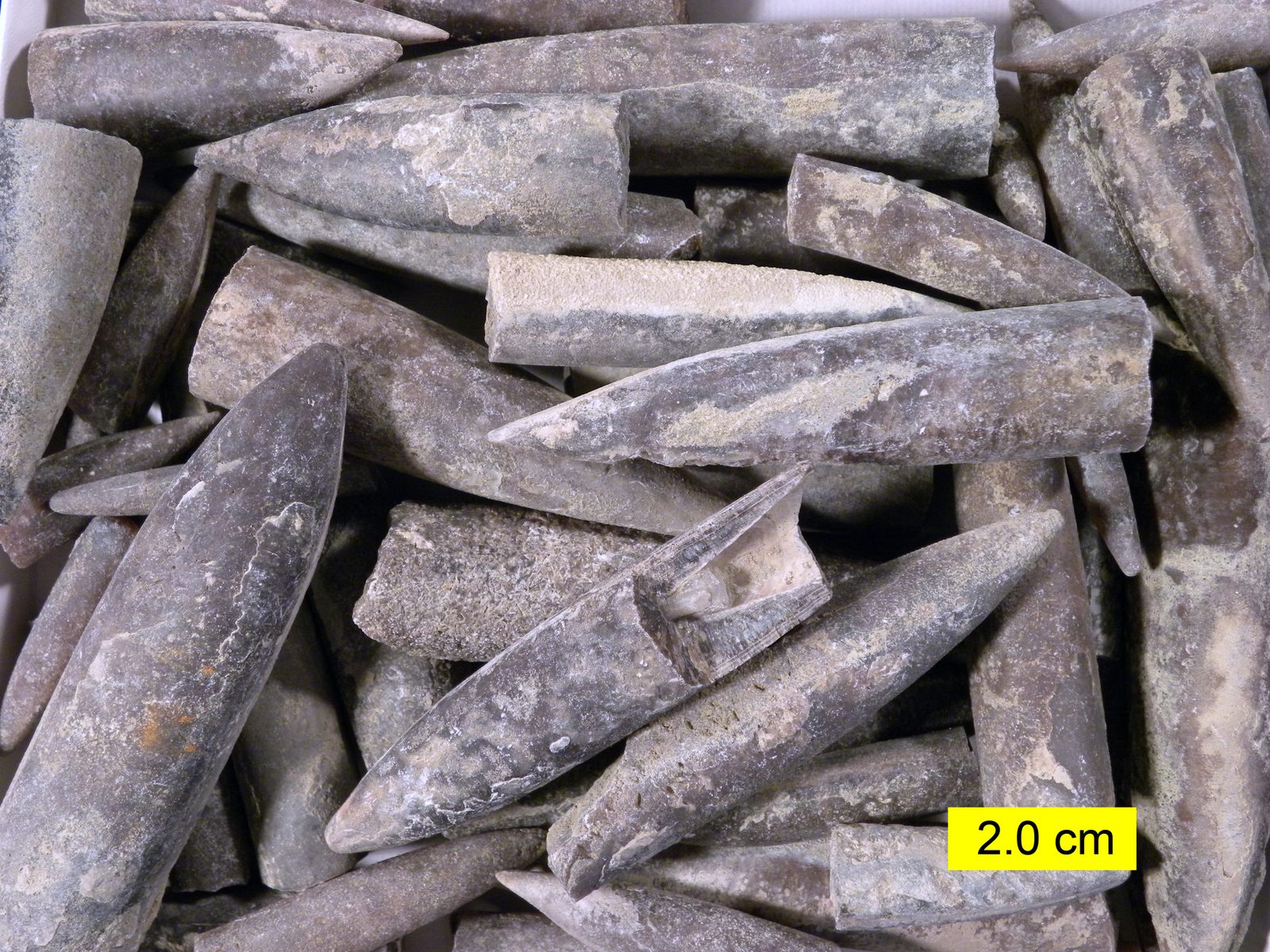
Walk a ploughed field in England or northern Germany after rain and the clods glitter with something strange: polished, bullet shaped stones the length of a finger. Country people once called them thunderbolts, believing they fell from the sky during storms. In Germany they were Donnerkeile, thunder wedges, and farmers kept them in the attic to ward off lightning. They are neither weapons from the clouds nor ordinary stones. They are the fossilized internal shells of belemnites, squid like animals that swarmed the Mesozoic seas for some 180 million years.
An animal built like a dart
A belemnite looked roughly like a modern squid, but with one crucial difference. Behind the soft body stood a long, solid spear of calcite, pointed at the back and chambered toward the front. The front part, the phragmocone, was a cone divided into gas filled chambers, built on the same plan as the shells of nautilus and ammonites. By shifting liquid into and out of those chambers the animal could fine tune its buoyancy and hang weightless in the water. The massive back part, the rostrum, was solid, rock hard mineral: a counterweight balancing the buoyant front end.
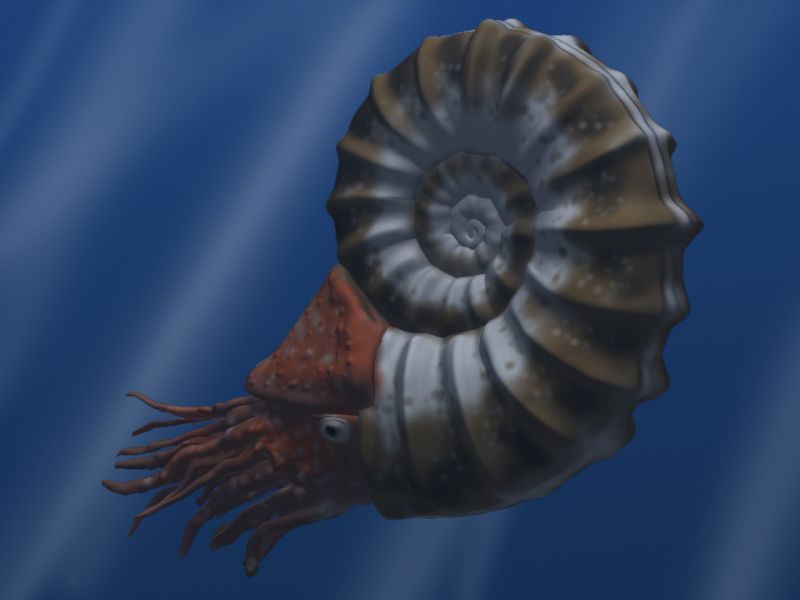
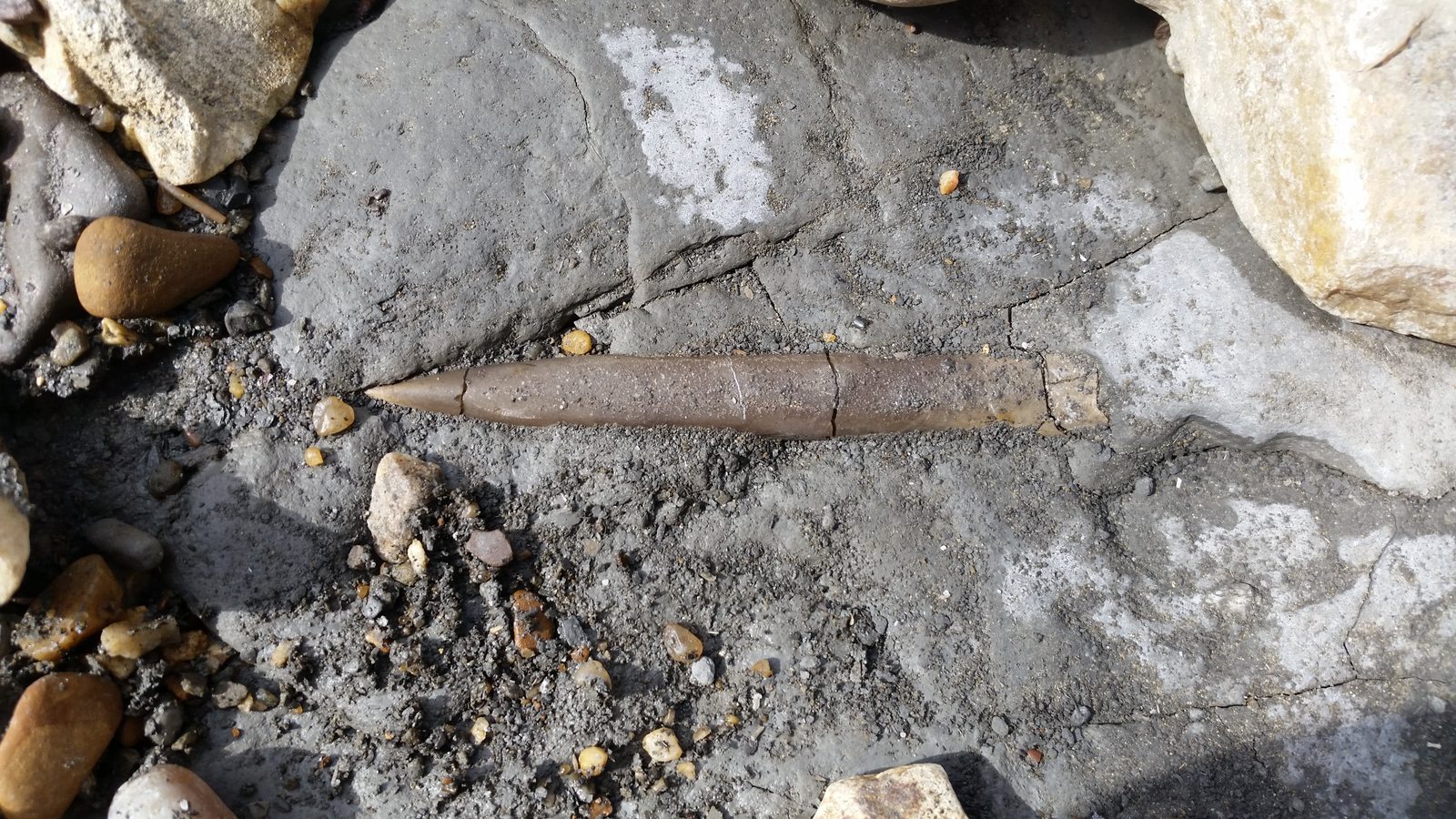
That counterweight mattered. With heavy stone at the back and light gas chambers in the middle, a belemnite could point its arms wherever it liked and shoot forward with jet propulsion, the same trick squid use today, squeezing water out of a muscular tube. Species that cruised open, deeper water grew the most massive rostra, while species of shallow shelves carried slimmer ones. The sharp tip even gave some genera their names: Belemnitella mucronata, a famous Late Cretaceous index fossil, carries a little spike, a mucro, at its end.
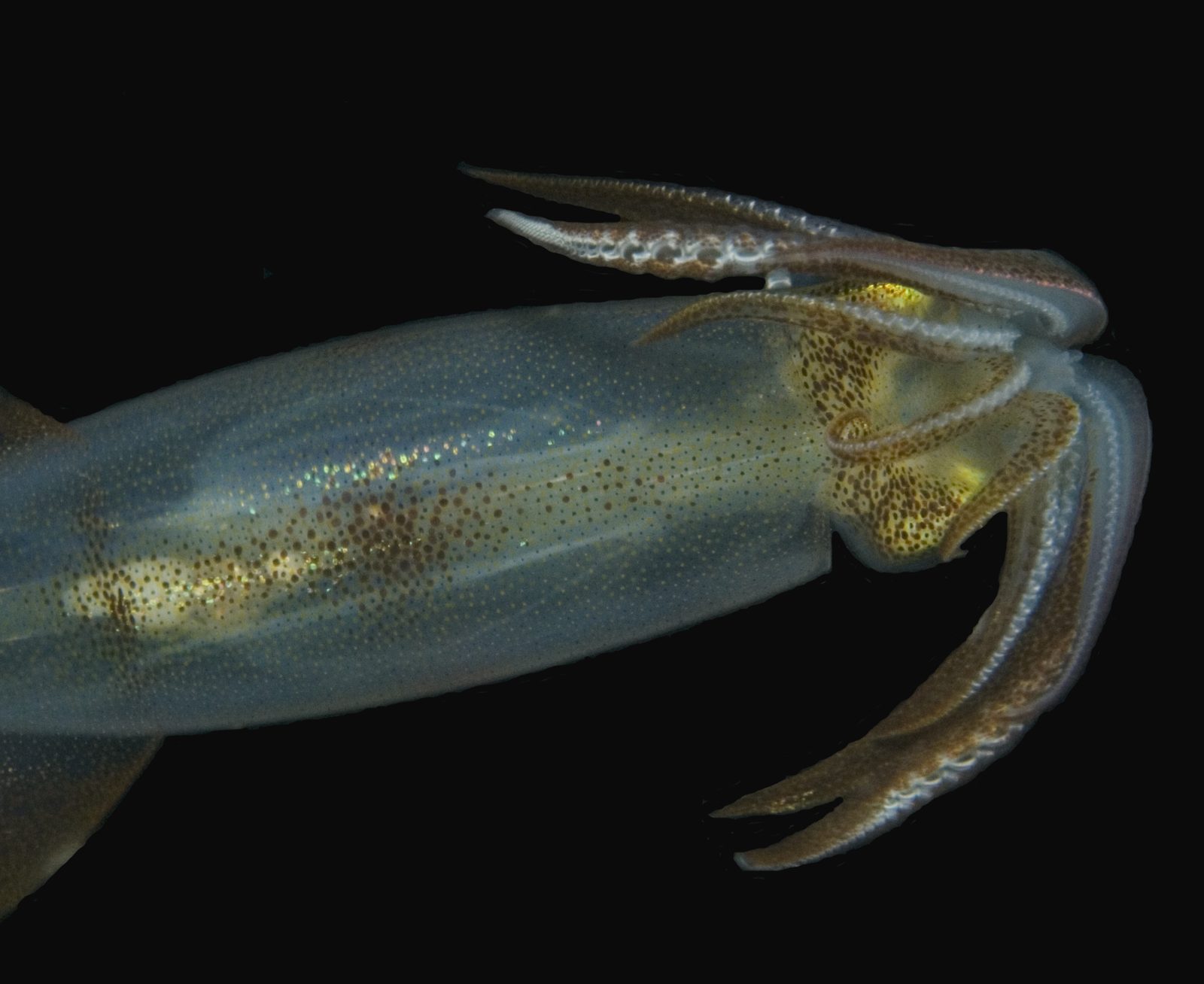
The animal wrapped around this shell was a classic coleoid: ten arms lined with hooks like those of living squid, large eyes, and a powerful mantle. Complete fossils are vanishingly rare because soft flesh decays in days, but a handful of exquisite specimens, some from the famous Solnhofen limestones, preserve the full outline, fins and all. Nearly everything a museum receives from a beach cliff is the stone spear alone.
The squid family tree
Belemnites belong to the coleoids, the cephalopods that carry their shell inside the body. That makes them less like ammonites and more like the squid and cuttlefish of today's oceans, and their living descendants are easy to point at. Cut a cuttlefish open and you find the cuttlebone, the white oval slab sold in pet shops for caged birds. It is a chambered, gas filled shell, a direct scaled down descendant of the belemnite phragmocone. Squid carry only a thin, feather shaped remnant called a gladius.
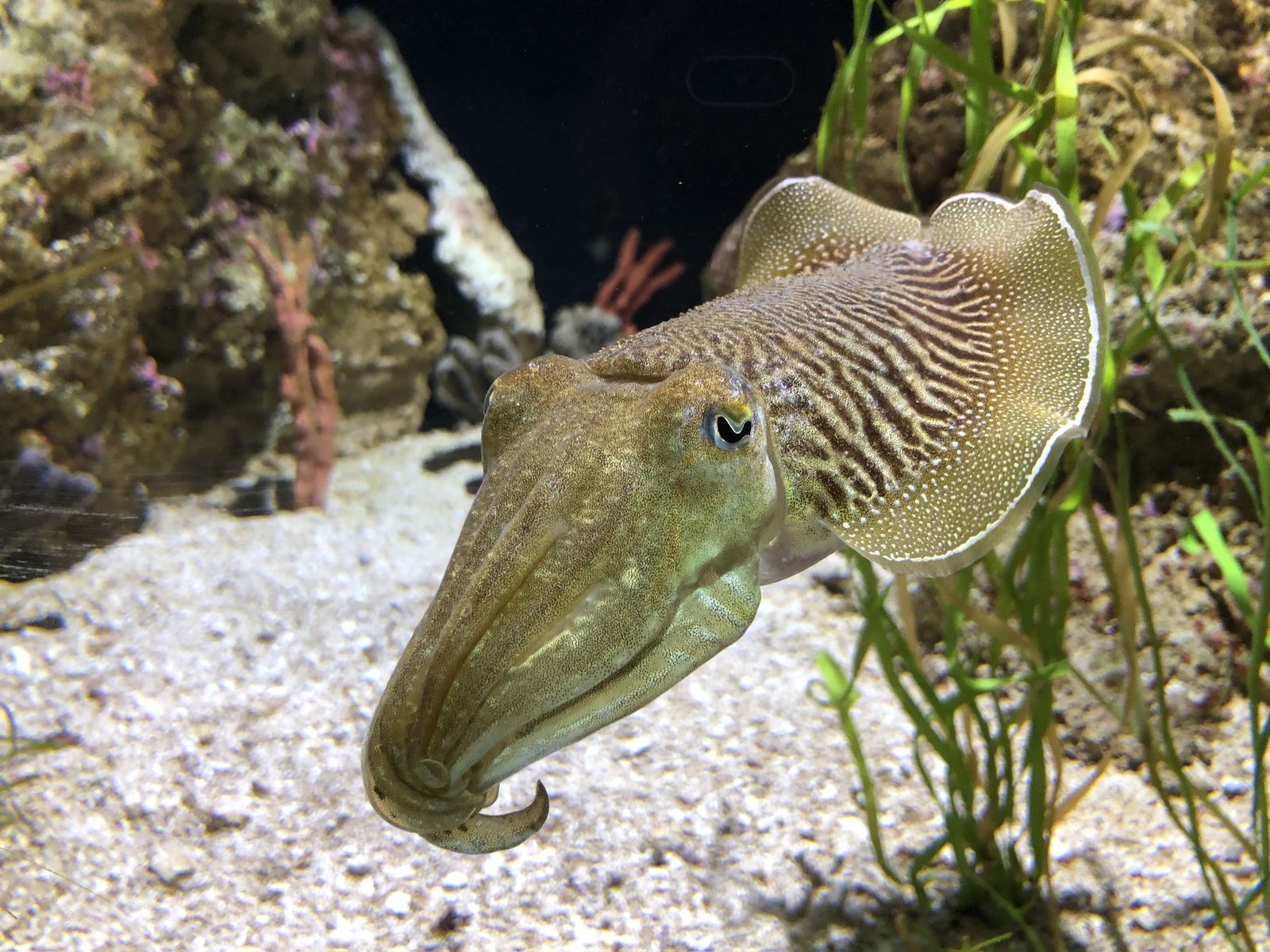
Belemnites first appear in the Early Triassic, roughly 245 million years ago, soon after the worst extinction in Earth's history had gutted the oceans. Through the Jurassic and Cretaceous they became so abundant that their rostra often carpet whole layers of rock. From the Jurassic coasts of Lyme Regis to the chalk of northern Europe, a single block of sediment can hold hundreds. They vanished, along with the ammonites, in the extinction that ended the Cretaceous 66 million years ago.
Reading the stone archive
Because the rostrum grew by adding layers, the way a tree adds rings, it records the animal's whole life. Cut one in half and you can count growth lines and measure each chamber. Better still, the oxygen isotopes locked into the calcite change with the temperature of the water the animal swam in. Paleontologists grind up rostra and read them like thermometers, reconstructing the seasons of Jurassic seas 180 million years back, and tracking how cold snaps and warm spells swept the oceans and pushed these animals around the globe.
The abundance that makes them useful to climatologists also makes them useful for dating rocks. Some species lasted only a few hundred thousand years yet are found across whole continents, so a single rostrum in a chalk bed can pin down its age. Generations of geologists mapped the Cretaceous chalk of Europe with belemnites long before radiometric dating existed.
Lunch, and someone else's lunch
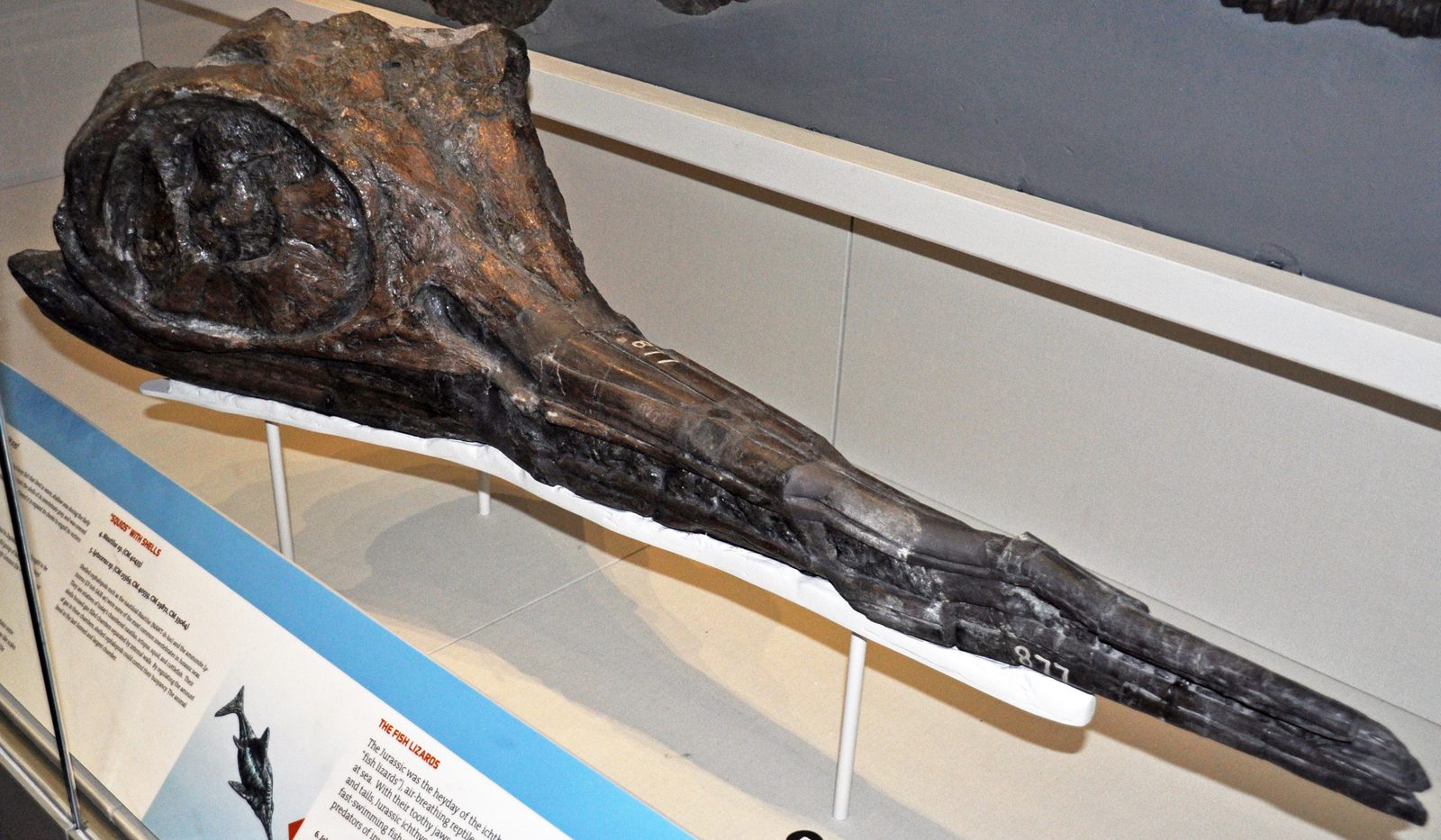
Belemnites grew fast and lived short, most surviving only a year or two, maturing quickly and dying after spawning like modern squid. Schools of them chased small fish and crustaceans, and they were hunted in turn by almost everything with teeth. The fossils tell on their predators: ichthyosaur coprolites, fossil droppings, are crammed with belemnite hooks and fragments of rostrum. Several ichthyosaur skeletons have been found with a heap of belemnite remains exactly where the stomach sat, so many that paleontologists think the reptiles bit off more than they could digest and vomited the indigestible stone spears back up, the way sperm whales today rid themselves of squid beaks.
The belemnites did not always lose, either. One celebrated Jurassic slab of Posidonia Shale holds a Hybodus shark whose stomach is packed with the rostra of some 250 belemnites, a final meal of hundreds of grams of shell that may itself have killed the shark. Heavy calcite is a dangerous thing to swallow in bulk.
The end of the thunderbolt
The catastrophe that ended the Cretaceous collapsed the marine food web, and the belemnites, specialized hunters of open water, went with it. Their cousins had already hedged their bets. Cuttlefish and squid, carrying lighter internal shells, slipped through the extinction and inherited the seas. Every cuttlebone washed up on a beach, every squid seen on a night dive, is the surviving branch of the same family.
Where Triops outlasts hard times by pausing life itself, sealing its eggs into a dry egg bank and waiting out the bad years, the belemnites had bet everything on staying fast and fertile in a rich, warm ocean. When that ocean broke, the bet failed. The thunderbolt never really left, though: it just traded its stone spear for a feather light shell and kept swimming. Next time a ploughed field throws up a polished bullet of calcite, pick it up. You are holding the counterweight of an animal that died 66 million years ago, one of the fastest and most successful hunters its ocean ever produced.