Published 2026-10-01 · by the Triops.me Editorial Team · Back to Articles
Borealopelta: The Dinosaur Mummy from the Oil Sands
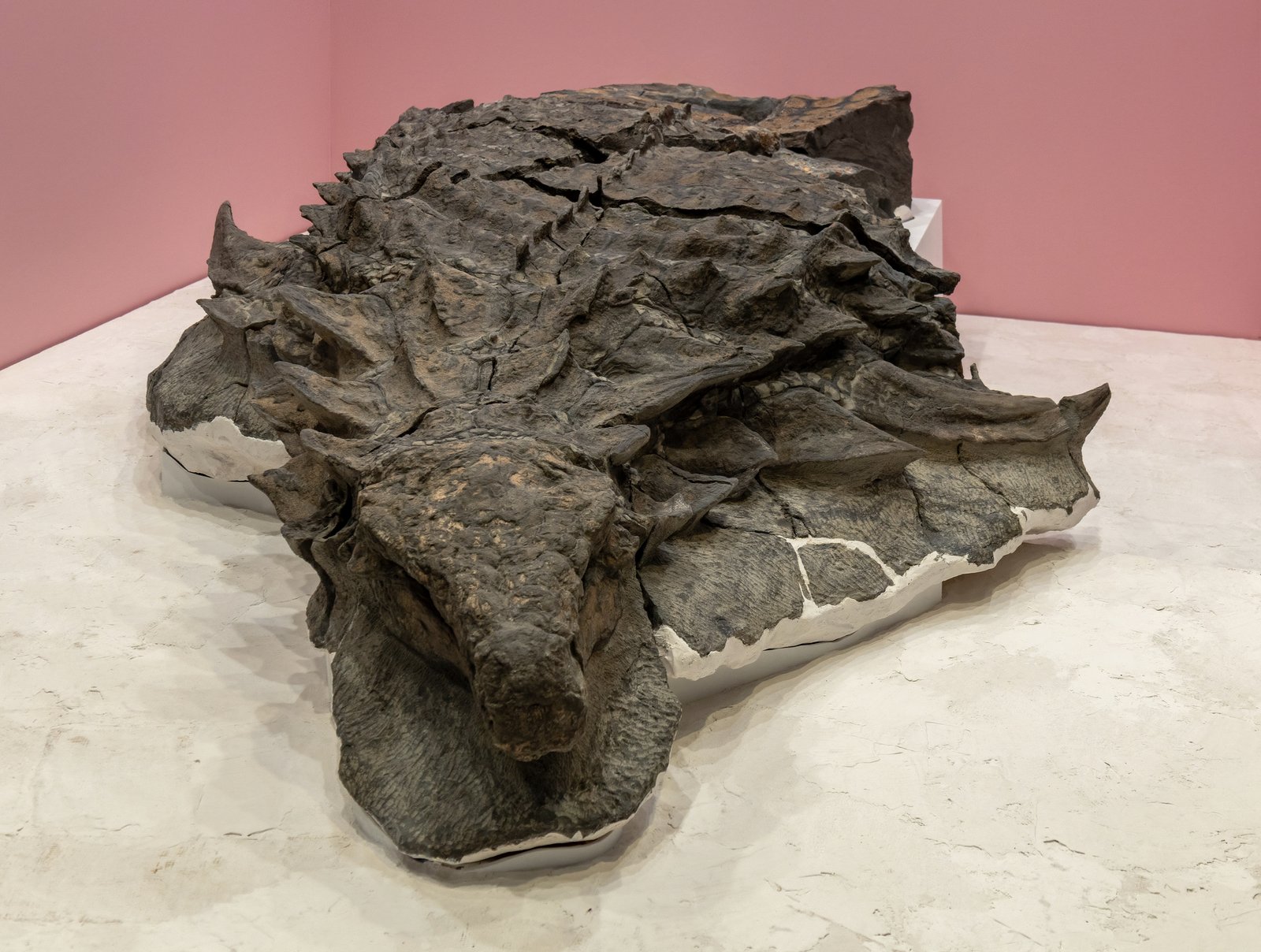
On 11 March 2011 a heavy equipment operator named Shaun Funk was driving a truck through Syncrude's oil sands mine north of Fort McMurray, Alberta, when a strange block of stone fell out of the mine wall. It was the size of a coffee table, reddish, and covered in repeating bumps that looked far too regular to be natural. Most people would have tipped it into a crusher. Funk did not. He loaded it into a truck and sent it to the Royal Tyrrell Museum.
It took five years and roughly 7,000 hours of preparation to reveal what was inside. The bumpy rock turned out to be the front half of an armored dinosaur, lying on its belly with the skin, the keratin sheaths over the spikes and the pigment in the skin still in place. In 2017 it was named Borealopelta markmitchelli, northern shield in honour of Mark Mitchell, the technician who spent those years freeing it from the stone. Paleontologists called it a dinosaur mummy, and it is still one of the most complete armored dinosaurs ever found.
A Slow Tank in a World of Teeth
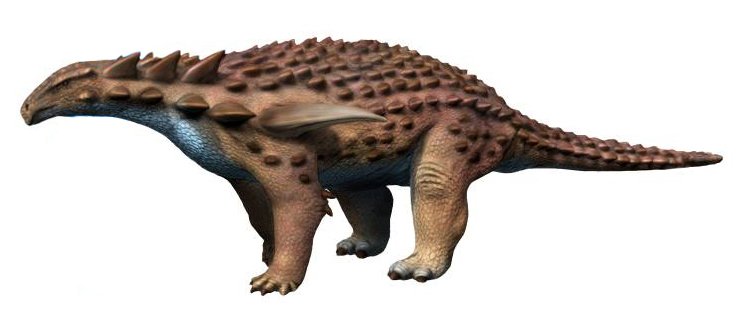
Borealopelta belonged to the Nodosauridae, the branch of armored dinosaurs that carried their defense on the shoulders and back instead of on the tail. It was about 5.5 metres long, roughly 1.5 metres across at the hips and has been estimated at around 1,300 kilograms, which is a small elephant's worth of animal that could not run, could not climb and could not fight back with a weapon it had to swing.
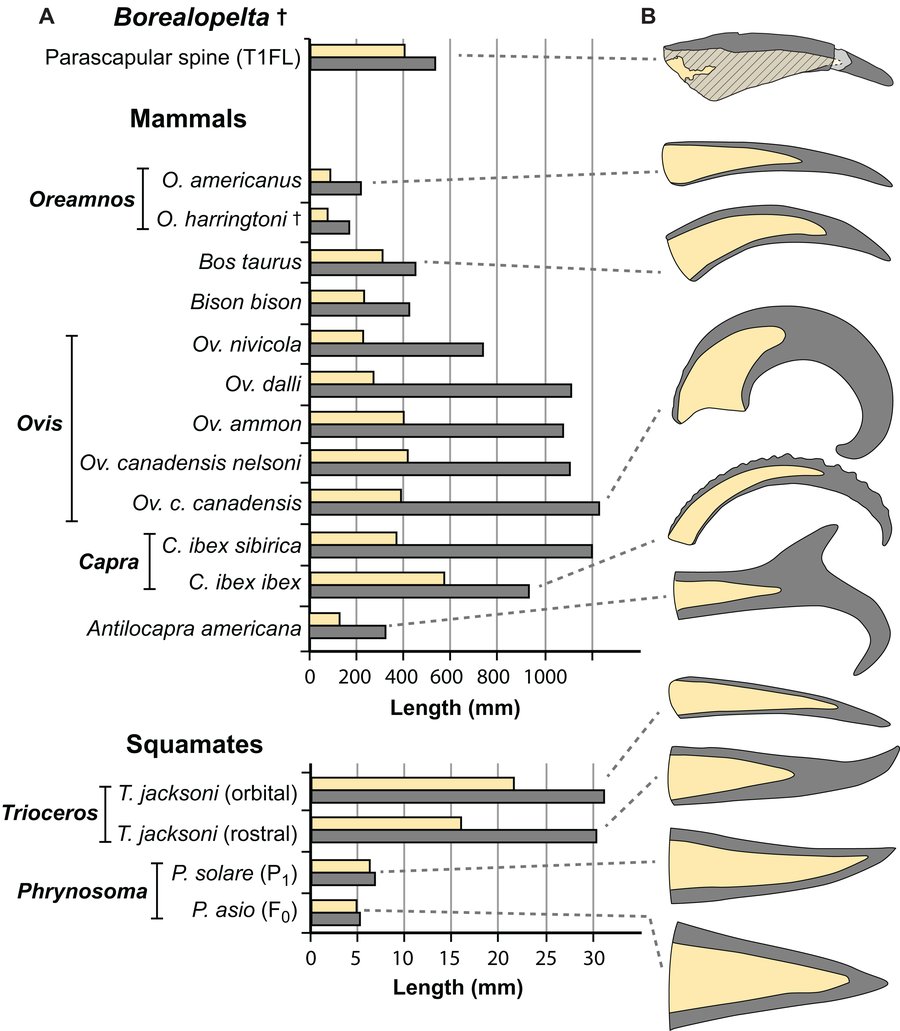
What it had instead was coverage. Nearly 90 percent of the armor plating survived in three dimensions, arranged as bands of bony studs called osteoderms set into the skin, with a heavy neck frill and a pair of enormous spines projecting from the shoulders. The skull was short and blunt, built for cropping low vegetation, and the mouth ended in a small beak. The tail carried no club. That is the dividing line between the two great armored families: nodosaurs like Borealopelta defended with spikes and a shield, while ankylosaurids such as Gastonia and Ankylosaurus weighted the end of the tail into a hammer.
Painted Like a Deer Fawn
Armor alone does not explain why this animal was worth preserving so completely. In 2019 researchers scraped tiny samples from the fossil and looked at the melanosomes, the microscopic grains that carry colour in skin and feathers. The dorsal side, the back and flanks, held dense dark pigment consistent with a deep reddish brown. The belly was pale, with a sharp boundary between the two.
That pattern is called countershading, and it is a camouflage trick. An animal lit from above looks flat and shadowless when its back is dark and its underside is light, so the body reads as a much smaller shape to a predator looking at it. Living examples include white tailed deer fawns and some sharks. The discovery mattered because Borealopelta was a tonne and a half of dinosaur. The conclusion was that even very large plant eaters lived under predators sharp enough that being seen was a genuine risk, and those predators were judging colour while doing it.
Last Meal: Ferns and Ash
The belly region gave up more than colour. When the slab was prepared, a dark mass inside the gut area turned out to be fossilised stomach contents, the first time a nodosaur has been found with its last meal in place. The mass was dominated by fragments of fern leaves, with a large amount of charcoal mixed through it and no sign of the tough, fibrous plants that armored dinosaurs are usually assumed to have eaten.
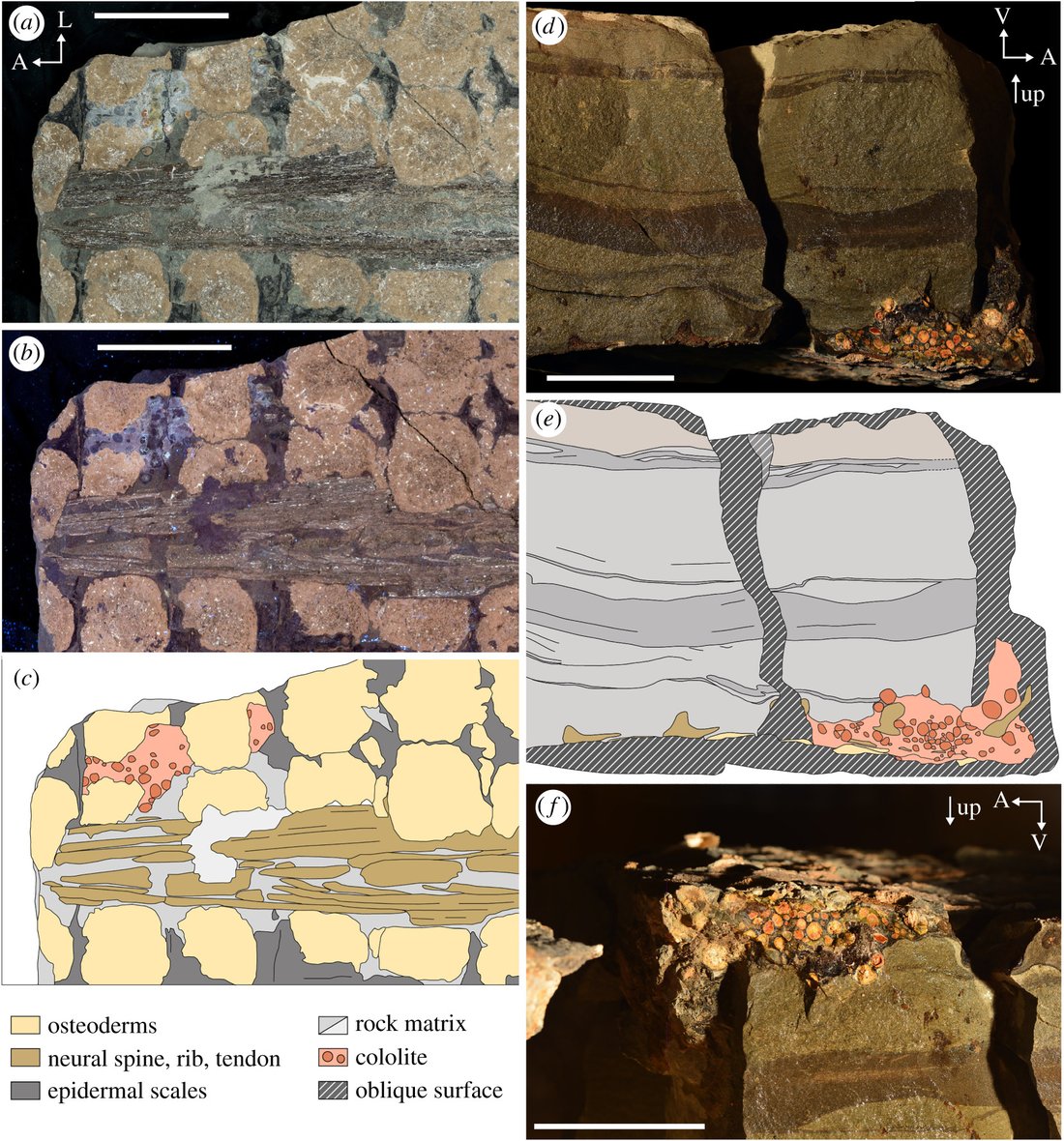
Charcoal in quantity points to a specific habit. Ferns are the first plants that grow back after a forest fire, pushing up fresh green shoots through the ash within weeks, and charcoal means the animal was eating that regrowth in a recently burned landscape. So the picture is a slow, heavily armored browser that wandered into burnt ground to graze on the one food source that was plentiful, in a habitat where the alternative was thicket and competition. Its teeth show heavy wear consistent with a lifetime of grinding.
How Half a Dinosaur Survives at All
Armour explains the shape of the fossil, not its existence. Borealopelta was found in rocks of the Clearwater Formation, laid down about 110 million years ago in the Western Interior Seaway, a shallow sea that split North America in two. Nothing about the surroundings is a river floodplain, so the working reconstruction is that the animal died near the coast, floated out to sea, sank and settled on the mud with its armored back facing upward, the natural position of a carcass that is heavier on top than on the bottom.
From there it was sealed fast. The shell of armor protected the soft tissue underneath from scavengers, sediment buried it before the ocean floor could be churned up, and chemists have argued that iron released from the animal's own blood helped cross link proteins early enough to slow decay. The result is not mummified flesh so much as a chemical cast of it, which is why the surface keeps the pebbled texture of the skin and the sharp outline of every scute after 110 million years.
What Was Chasing It
Countershading is only sensible if something was watching. The Clearwater Formation has produced Acrocanthosaurus, a theropod up to eleven metres long with tall spines running along its backbone and a skull built for biting through flesh. It was the largest predator of its time in North America, and it shared the floodplains with Borealopelta. No bite marks on the specimen prove an attack, and the armor would have made a direct charge expensive, but a predator of that size explains why a tonne and a half of herbivore still needed to disappear against the background.
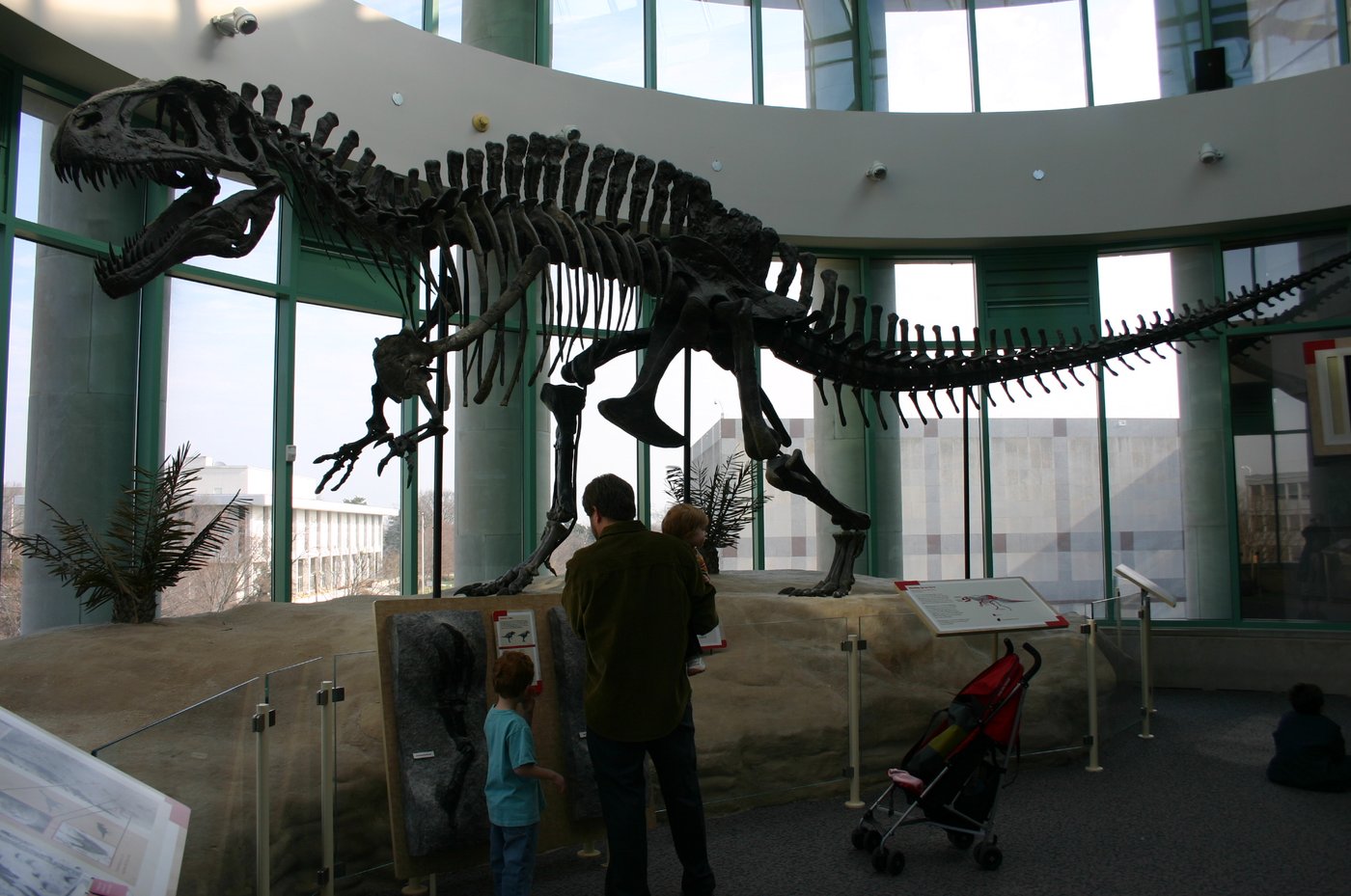
The nodosaurs lost the arms race in the end. The group disappears from the record before the end of the Cretaceous, while the club tailed ankylosaurids carried on until the asteroid. What Borealopelta leaves behind is unusually direct evidence of an arms race that normally has to be reconstructed from bone alone: color, meal, hide and all.
There is a quieter contrast elsewhere on this site. Triops rode out five mass extinctions with no armor at all, no claws and no speed, relying on eggs that sit in dry mud for decades and hatch when the rain returns. Borealopelta invested everything in one magnificent defense against the predators of its own moment in history, and it still ended up as a truckload of rock in a mine. The safest strategy is the one that does not depend on conditions staying the same.
Image credits: mounted specimen photograph by Chris Woodrich (CC BY-SA 4.0), life restoration by Nobu Tamura (CC BY-SA 4.0), and gut contents and keratin sheath plates from Brown et al. (CC BY 4.0), all via Wikimedia Commons; Acrocanthosaurus mount by Ryan Somma (CC BY-SA 2.0).