The Cambrian Explosion: 5 Weird Creatures That Ruled the Ancient World
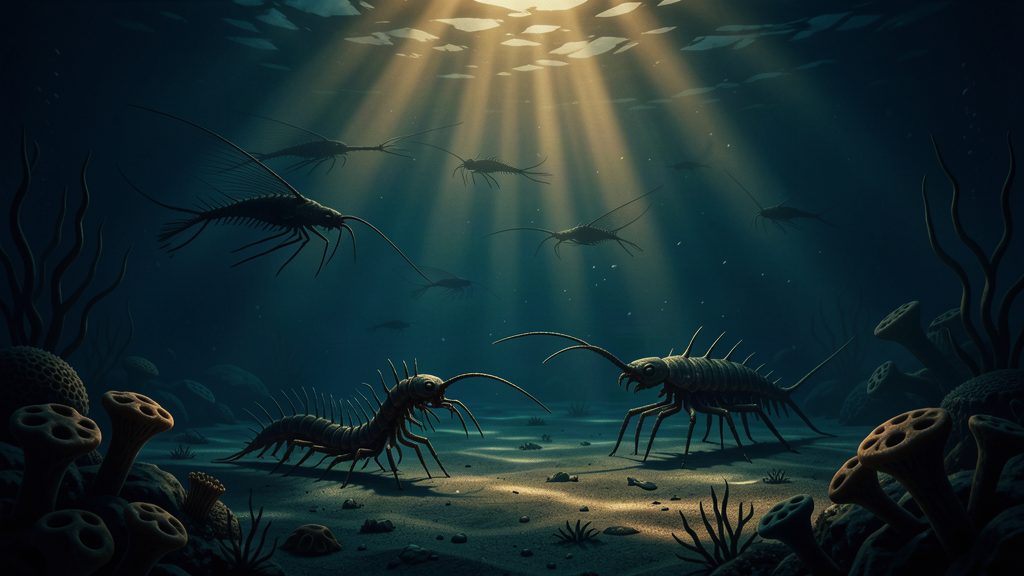
Meet the strangest animals ever to swim, crawl, and hunt in Earth's ancient seas.
Published August 07, 2026, 22:31 by the Triops.me Editorial Team
Roughly 540 million years ago, Earth's oceans experienced one of the most dramatic events in the history of life. In a geological blink, most of the major animal body plans that exist today appeared in the fossil record. Scientists call this rapid diversification the Cambrian explosion, and it remains one of the greatest mysteries in paleontology.
The fossil sites from this era, particularly the Burgess Shale in British Columbia and the Chengjiang biota in China, have given us a window into a world filled with creatures so strange that early paleontologists often struggled to classify them. These were not gentle grazers or simple worms. Many were armored, spiked, or equipped with predatory appendages that had no parallel in earlier life. The Cambrian explosion produced some of the most wonderfully bizarre prehistoric creatures imaginable.
1. Anomalocaris: The Terror of the Cambrian Seas
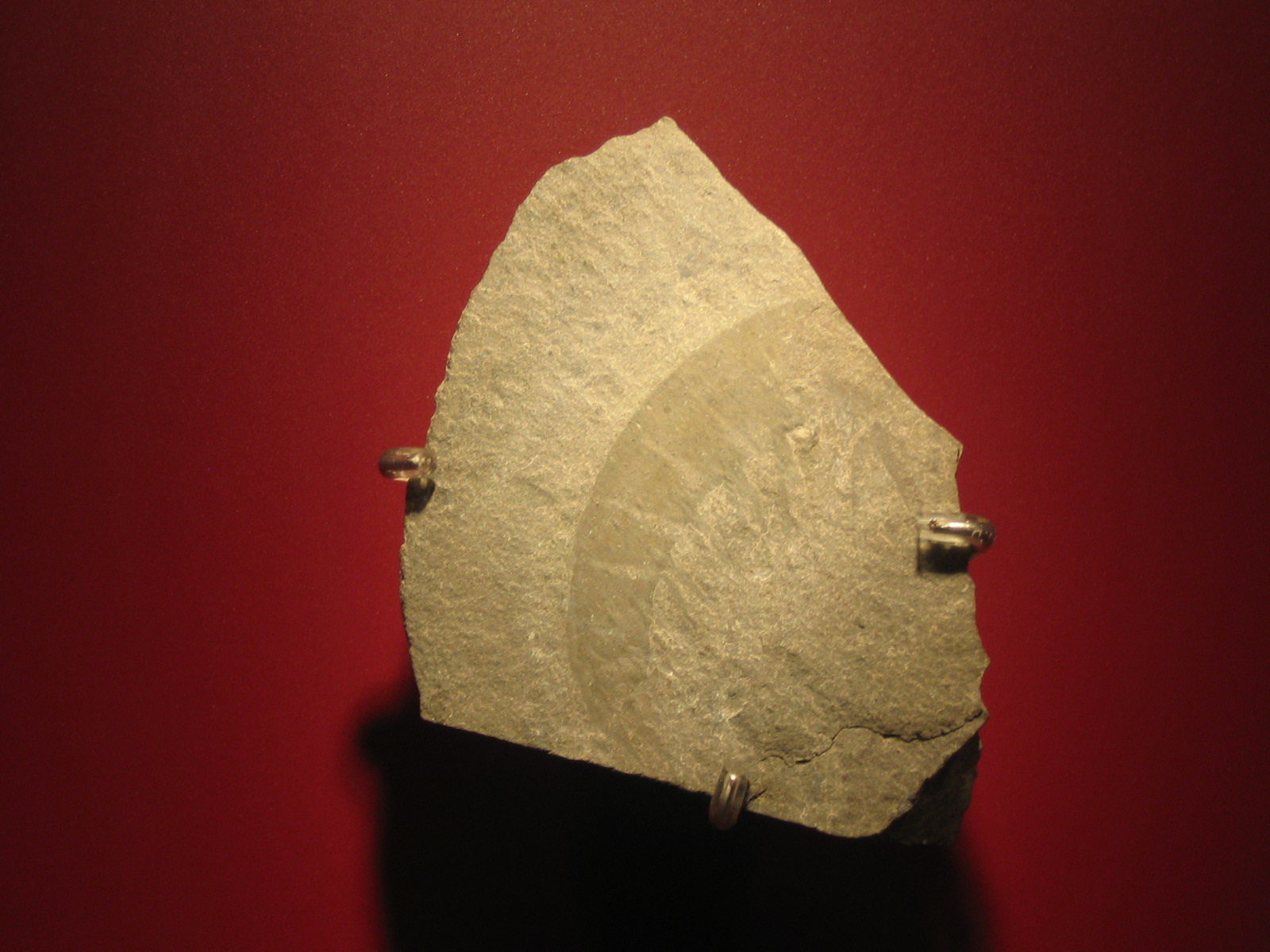
If there was an apex predator during the Cambrian explosion, it was Anomalocaris. Growing up to one meter in length, this creature was enormous by Cambrian standards, when most animals were just a few centimeters long. Its name means "abnormal shrimp," a nod to its bewildering anatomy that puzzled scientists for decades.
Anomalocaris had a flattened, oval-shaped body with lateral lobes that it likely used to swim with undulating movements. At the front of its head sat two large, segmented appendages lined with sharp spines, which it used to seize prey and bring it toward its circular, plate-lined mouth. The mouth resembled a pineapple ring made of hard, overlapping plates.
Its fossils, found in the Burgess Shale and Chengjiang deposits, show that Anomalocaris possessed large compound eyes with thousands of lenses, giving it exceptional vision. For decades, paleontologists had fragments of this creature: a single appendage was once mistaken for the body of a shrimp, and the mouth disk was classified as a jellyfish. It was not until the 1980s and 1990s that these scattered pieces were reassembled into one coherent animal, revealing the true scale of this prehistoric hunter.
2. Hallucigenia: The Upside-Down Worm
Few Cambrian creatures have caused as much confusion as Hallucigenia. When it was first described from the Burgess Shale in 1977, paleontologist Simon Conway Morris reconstructed it walking on pairs of stiff, antenna-like spines with soft, fleshy tentacles dangling from its back. The interpretation was so peculiar that the creature was named after hallucinations.
Later analysis showed that Conway Morris had the animal completely upside down. The stiff spines pointed upward as a defensive armor, and the soft tentacles beneath were actually stubby legs. Hallucigenia was only about one to five centimeters long, but its rows of sharp dorsal spines would have made it an unappetizing meal for any predator.
Modern research has linked Hallucigenia to modern velvet worms (Onychophora), a small group of terrestrial invertebrates found in tropical forests today. This connection is significant because it places Hallucigenia near the ancestry of the panarthropods, a vast group that includes insects, crustaceans, and arachnids. The tiny, spiny worm from the Cambrian explosion turns out to be a distant cousin of some of the most successful animals on Earth.
3. Opabinia: Five Eyes and a Proboscis
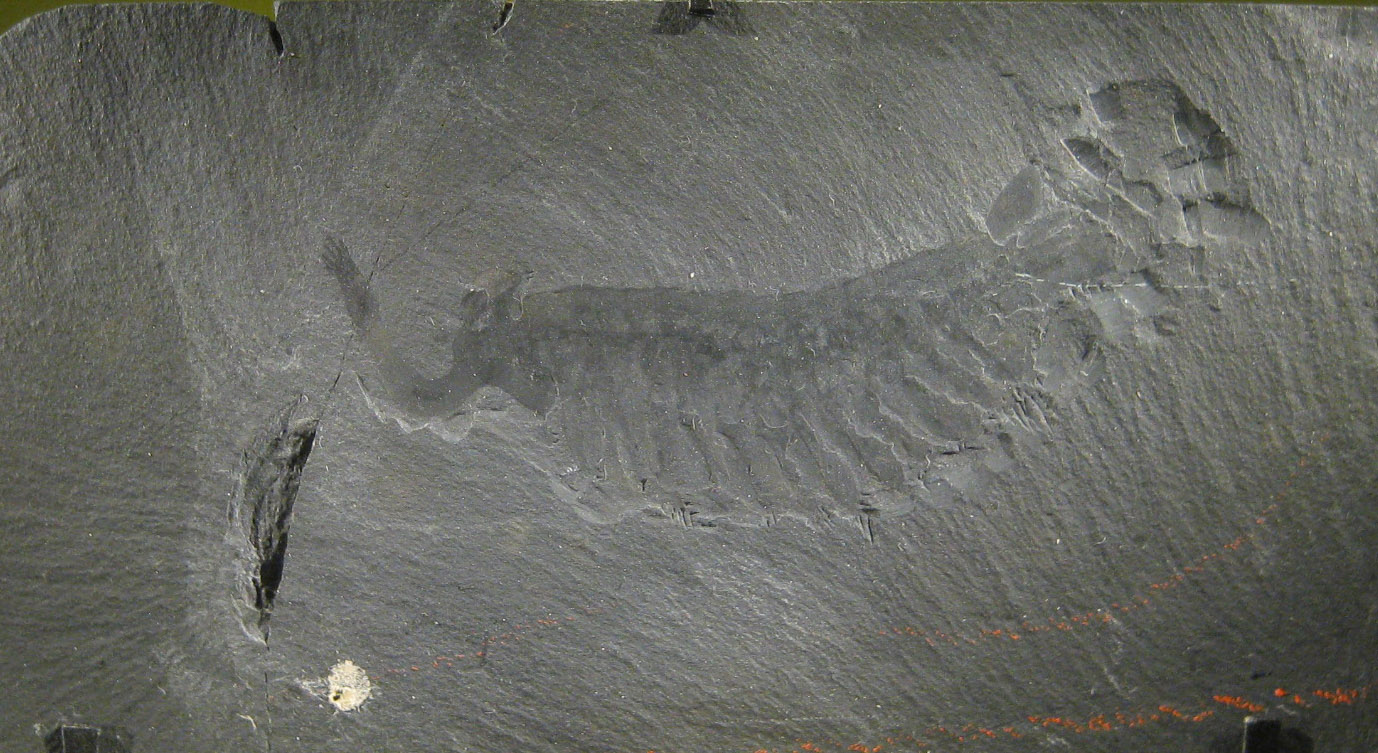
Opabinia regalis is arguably the strangest animal to emerge from the Cambrian explosion. This small, roughly five-centimeter creature had five eyes mounted on stalks atop its head, a forward-facing flexible proboscis (a trunk-like feeding organ), and a segmented body with lateral swimming lobes and a fan-shaped tail.
When Harry Whittington first presented Opabinia at a geological conference in 1975, the audience reportedly burst into laughter. No known animal combined five eyes with a proboscis and a lobed body. It defied easy comparison to any living or extinct organism.
The proboscis may have been used to root through sediment on the seafloor, probing for small prey or organic matter. Its five eyes would have given it an unusually wide field of vision, possibly useful for detecting predators in the open water. Opabinia is classified within its own order, Opabiniidae, and remains difficult to place within the broader tree of life. It is one of the Cambrian's most enigmatic organisms, a reminder that evolution once experimented with body plans that seem almost alien by modern standards.
4. Wiwaxia: The Armored Slug
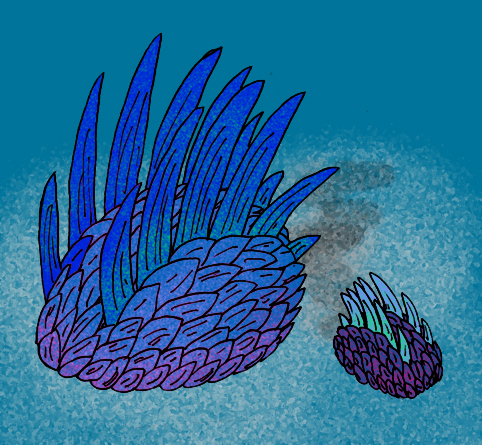
Wiwaxia corrugata was a low-slung, oval-shaped animal covered in overlapping scale-like plates called sclerites, with two rows of upward-curving spines along its back. It looked something like a prehistoric armadillo crossed with a porcupine, albeit much smaller, typically measuring about two to five centimeters in length.
First discovered in the Burgess Shale and later found in the Chengjiang deposits and Sirius Passet in Greenland, Wiwaxia is known from multiple sites around the world, suggesting it was a common inhabitant of Cambrian seafloors. Its mouthparts included a pair of hardened, plate-like structures that it may have used to scrape algae or detritus from the substrate, similar to the radula of modern mollusks.
The classification of Wiwaxia has been debated for decades. Some researchers have placed it near the annelid worms, while others argue it belongs closer to mollusks or even to the stem group of arthropods. Regardless of its exact phylogenetic position, Wiwaxia demonstrates an important principle of the Cambrian explosion: many organisms displayed mosaic traits, combining features that in later periods would become associated with entirely different animal groups.
5. Kimberella: A Mysterious Precursor
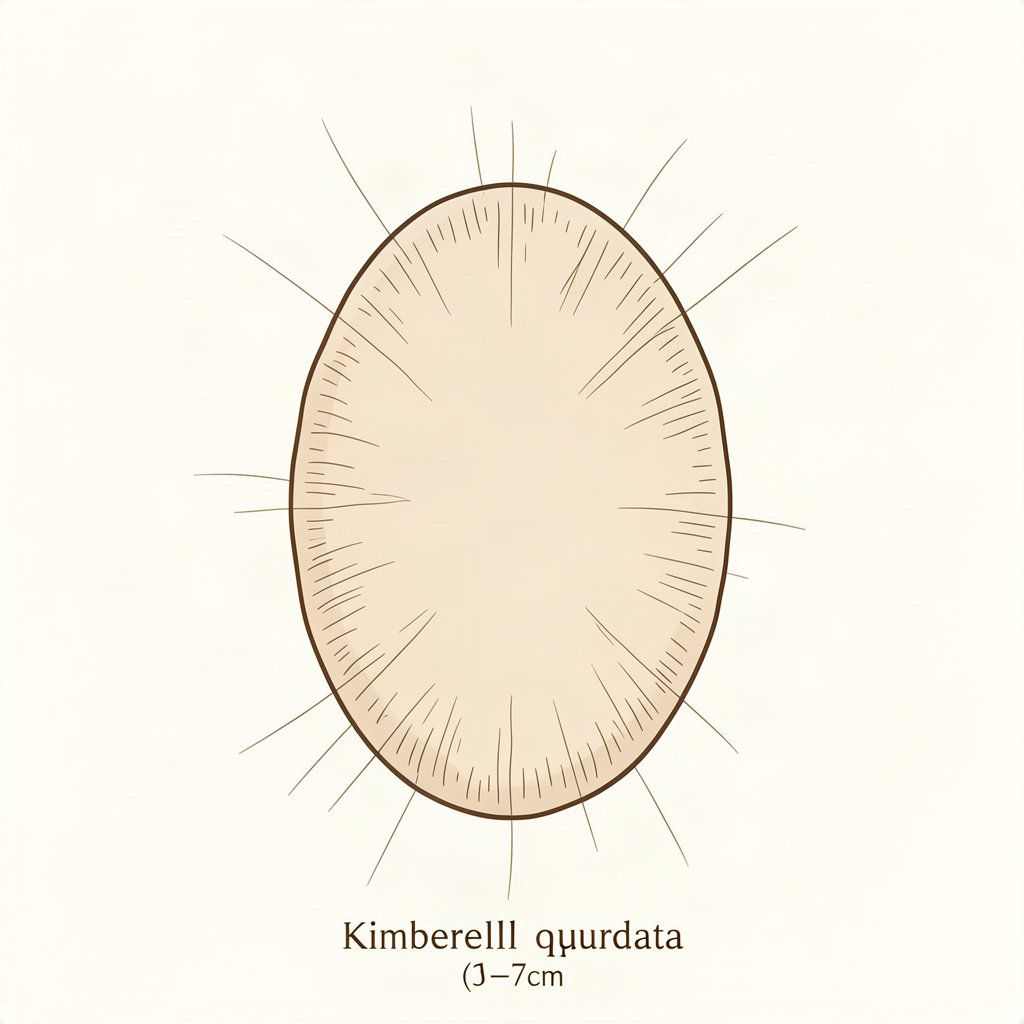
Kimberella predates the main phase of the Cambrian explosion, with fossils dating to approximately 555 million years ago in the Ediacaran period. Found in the White Sea region of Russia, Kimberella was an oval-shaped organism, roughly three to seven centimeters long, with a tough, flexible outer covering.
What makes Kimberella particularly intriguing is the series of scratch marks found near its fossils. These scratches radiate outward in arcs consistent with a radula-like feeding organ, the same tool modern mollusks use to rasp food from surfaces. If this interpretation is correct, Kimberella may be one of the earliest known bilaterian animals and a possible relative of modern mollusks.
Some paleontologists have argued that Kimberella represents evidence that complex animal life was already experimenting with bilaterally symmetric body plans before the Cambrian explosion began. Others remain cautious, noting that soft-bodied Ediacaran organisms are notoriously difficult to interpret. Either way, Kimberella sits at a critical juncture in the history of life, a bridge between the Ediacaran biota and the spectacular diversification that followed.
Why the Cambrian Explosion Still Matters
The Cambrian explosion produced the foundational body plans for nearly every animal lineage alive today. From the fearsome Anomalocaris to the tiny, spiny Hallucigenia, these creatures show that evolution is not a smooth, gradual process. At key moments, life diversifies rapidly, filling ecological niches with an astonishing array of forms.
Many Cambrian experiments did not survive. Opabinia left no direct descendants. Anomalocaris gave way to newer predators. But the legacy of the Cambrian explosion lives on in the body plans of arthropods, mollusks, chordates, and every other major animal phylum. Studying these prehistoric creatures helps us understand not just where life has been, but how the biodiversity of the modern world came to exist.
For more on prehistoric creatures, visit the Creature Gallery, or head back to the Articles for more articles about Earth's deep past.