Published September 30, 2026, 01:46 · by the Triops.me Editorial Team · Back to Articles
Cameroceras: The Straight-Shelled Giant of the Ordovician Seas
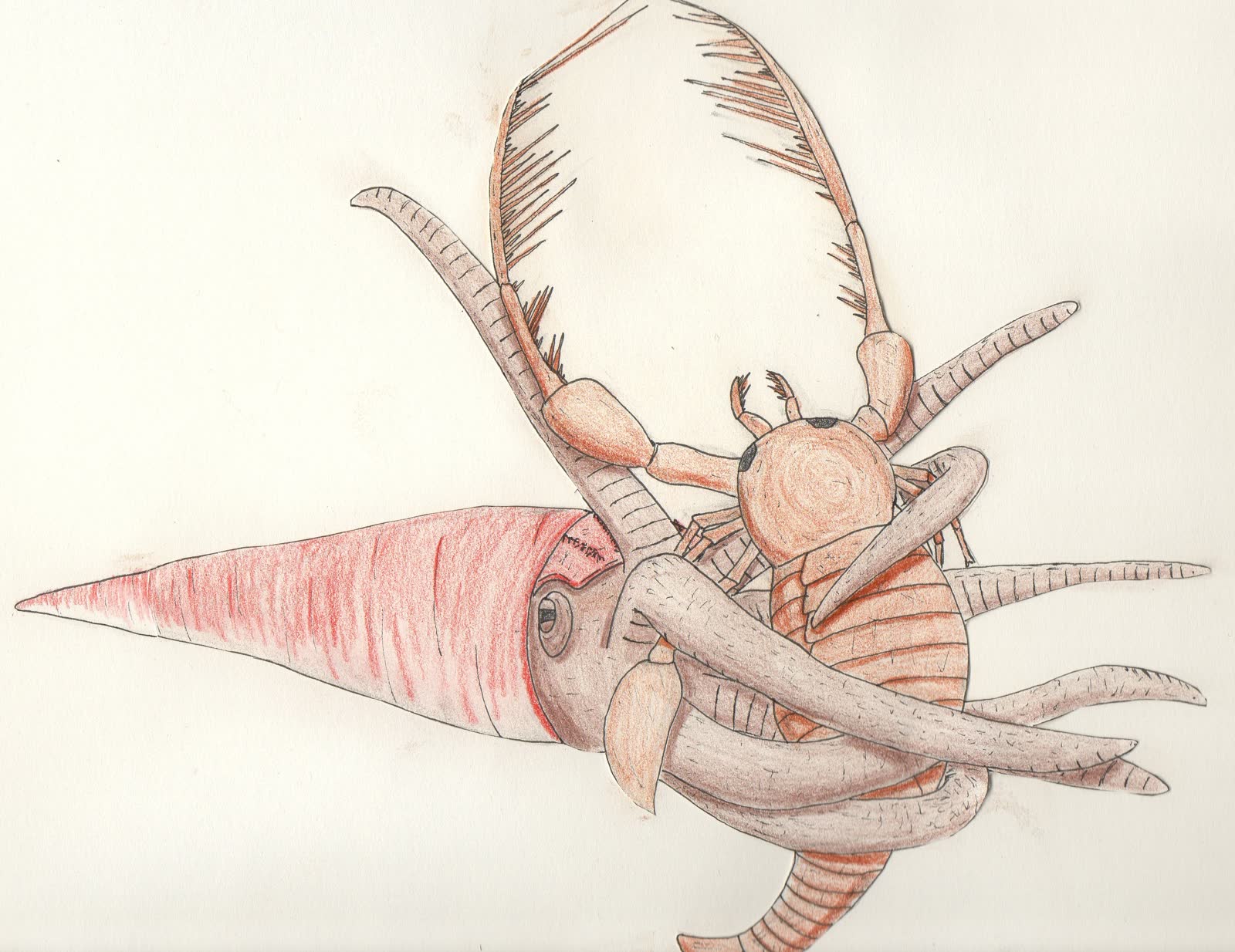
Picture a shallow, warm sea cutting across what is now New York, Sweden and Estonia, about 460 million years ago. The water is clear, the seafloor is crowded with brachiopods, crinoids and crawling trilobites, and something long and pale is hanging in the water above it all: a cone of shell, several metres from tip to aperture, with a ring of tentacles and a parrot-like beak at the open end. This is Cameroceras, one of the first animals to make a serious living as a large open-water predator.
It was a cephalopod, a relative of squids, octopuses and the chambered nautilus, but it belonged to an order called the Endocerida that has no living representative at all. Every endocerid is extinct, every one of their straight shells is empty, and their story is one of the earliest rises and falls of an apex predator in the fossil record.
A horn-shaped chamber, and a name for it
The name gives the game away: Cameroceras comes from the Greek for "chamber" and "horn". The animal lived inside a long, straight, pointed shell called an orthocone, and only the front part of the soft body stuck out of the opening. The mantle, gills and organs sat protected inside the shell, while the head, eyes and tentacles probed the water outside.
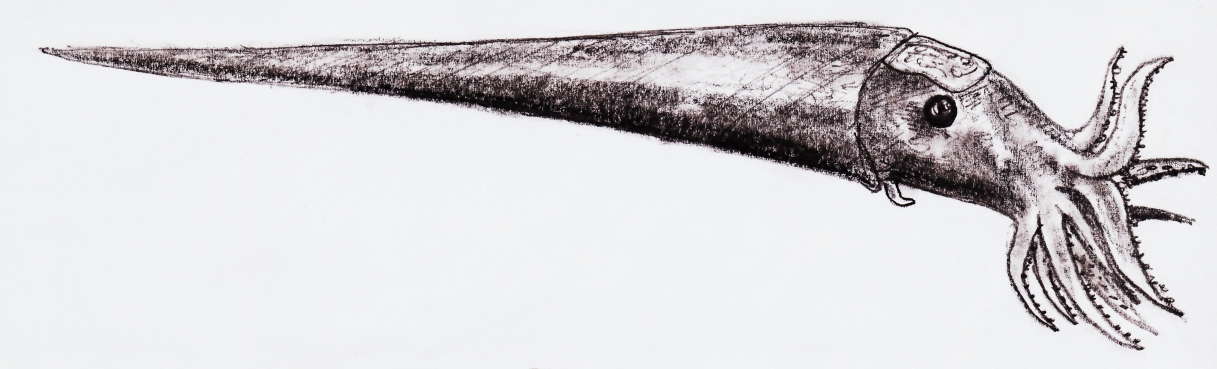
Fossils turn up in the Trenton Limestone of western New York, the rock that gave the type species its name in 1842, and across the Ordovician rocks of North America, Europe and Asia. Back then those regions sat in tropical latitudes as the continents Laurentia, Baltica and Siberia, and Cameroceras was abundant in the shallow seas around them, most commonly in the Katian stage of the Late Ordovician.
Only the shell fossilises, which is why paleontologists argue so much about the animal behind it. In cross-section the shell is round or slightly wider than tall, the internal chambers (camerae) are divided by simple walls called septa, and the outer surface is smooth. That last detail matters: it is how you tell Cameroceras apart from its close relative Endoceras, which carries thin rings around the shell. The two genera are so alike in everything else that for over a century almost every big straight-shelled fossil was dumped into one name or the other.
How the shell worked
Like the modern nautilus, Cameroceras breathed water that it drew into the mantle cavity and jetted out through a funnel, so it could swim, steer and hang almost motionless in the water column. The shell itself was a buoyancy device: most of it was a chain of gas-filled chambers, keeping the animal from sinking while the tentacles and eyes stayed pointed forward.
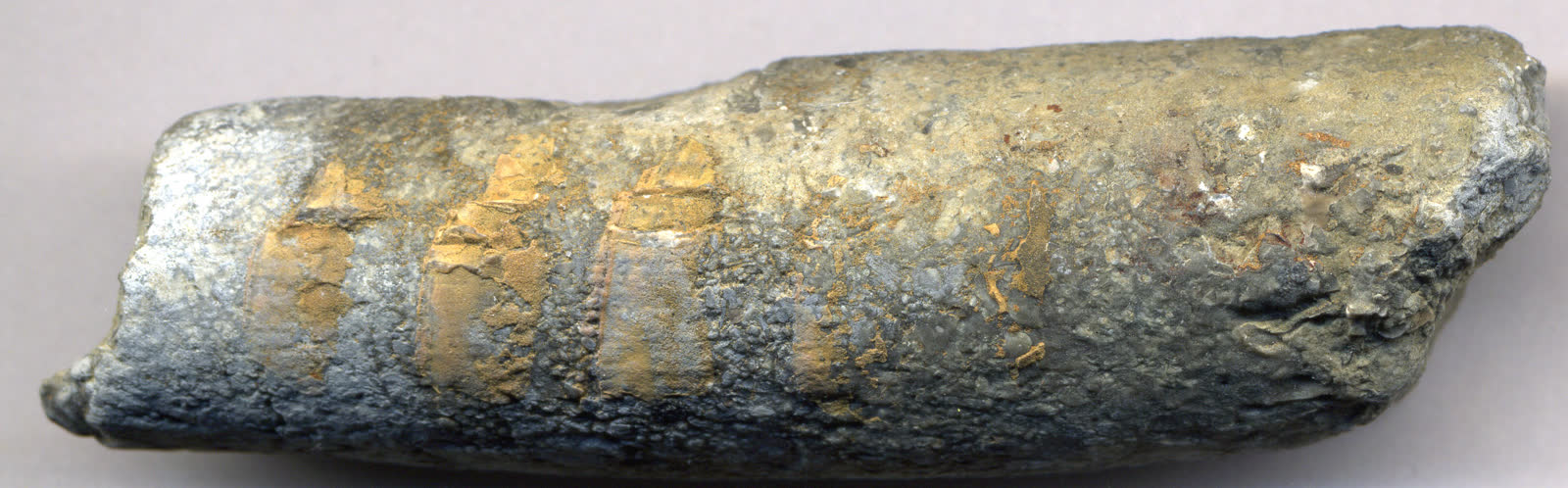
What made the endocerids special was their siphuncle, the tube that runs back through every chamber and controls the gas and fluid balance inside it. In Cameroceras the siphuncle was enormous, in places reaching half the diameter of the shell, and it was packed with stacked, funnel-shaped blocks of calcite known as endocones. Those cones sat at the tail end of the shell and worked as ballast, holding the heavy front of the animal level. It is an elegant solution: a rigid aeroplane-like body, trimmed by stone weights hidden deep inside the tube.
Because the body chamber is surprisingly small compared with the whole shell, some researchers think a good part of the visceral mass was housed back inside that wide siphuncle rather than in the front chamber alone. The animal was, in effect, built around its plumbing.
How big was it, really?
This is where the popular image and the science part company. Old textbooks routinely listed Cameroceras at 5.7 metres, and some at a dramatic 9.1 metres, making it the largest nautiloid that ever lived. Those figures are now treated with caution: the biggest estimates lean on doubtful field observations of incomplete shells, and the largest orthocone fossils are often assigned to Endoceras, which does approach six metres.
The species actually named as Cameroceras are more modest. One Swedish species is estimated at around two metres of shell, a Minnesota species at roughly 1.2 metres, and others at 70 centimetres or less. Even so, two metres of solid shell with a beak at the end is a substantial predator, and the great majority of endocerids and nautiloids in general stayed under a metre for their whole lives. A two-metre Cameroceras was the exception, not the rule, and it was big enough to be the largest hunter in its neighbourhood.
Hunting gear and prey
Reconstructions lean on the chambered nautilus, the closest living shelled relative. The head would have been muscular and soft, armed with a ring of tentacles for seizing and holding, and at the base of them a hard keratinous beak strong enough to crack armour. Inside the mouth sat a radula, the rasping tongue of toothed chitin that modern cephalopods use to rip flesh out of shells.
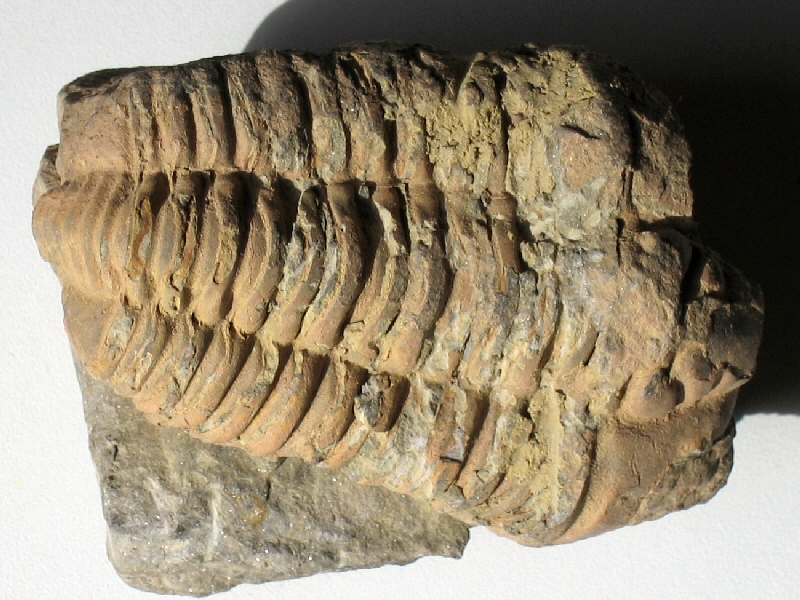
That toolkit points straight at the Ordovician menu: trilobites, brachiopods, small armoured crustaceans and other cephalopods. Artwork even shows Cameroceras feeding on a fellow nautiloid while others swim past, a reminder that in a sea of shelled animals, a predator that could crush shells had a wide buffet. Slow, steady cruising and short lunges from ambush is the likeliest hunting style, since dragging a long straight shell through the water is not built for sustained chases.
Rivals in a crowded sea
The Ordovician was no quiet ocean. The Great Ordovician Biodiversification Event had filled the seas with new body plans and new arms races, and Cameroceras shared the water with eurypterid sea scorpions, some of which grew to a metre or more and carried grasping claws. One famous restoration imagines a standoff between Cameroceras and Megalograptus, an unusually aggressive eurypterid from the same Ordovician seas, and it captures the tone of the period well: heavily armed animals meeting in water that had never seen predators of this size before.
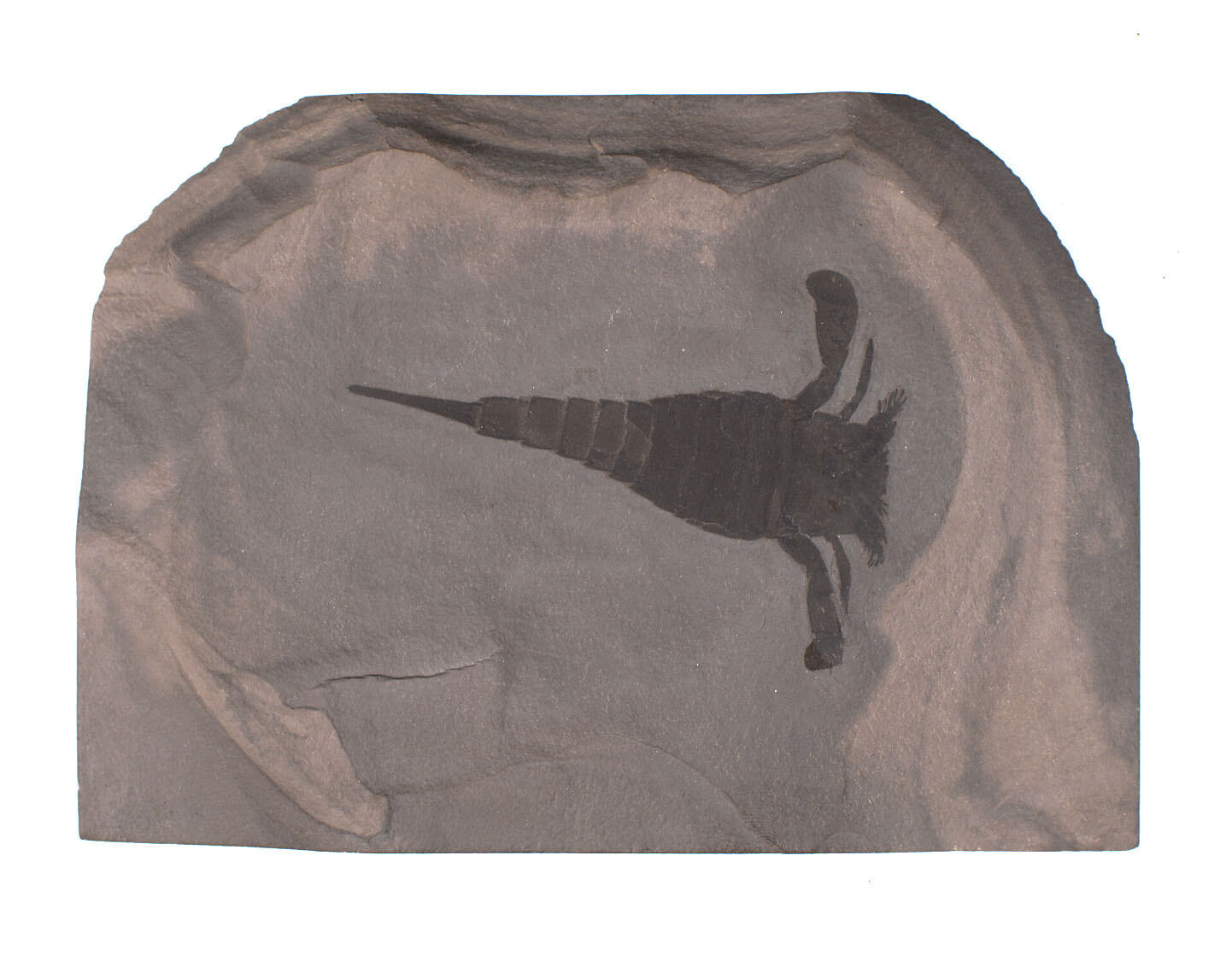
Below them, the trilobites and brachiopods ploughed the sediment, and behind the whole scene was a food web that looked, for the first time, like the ones we know: producers, grazers, scavengers, and hunters at the top. The sea scorpions and the straight-shelled nautiloids were both betting on armour and weapons, and for tens of millions of years neither side won outright.
The end of the straight shells
The endocerids did not survive the end of the Paleozoic's first act. Their range runs from the Early Ordovician to the Hirnantian at the very end of the period, with the odd report from the Silurian, and then they are gone. The Late Ordovician mass extinction, driven by rapid glaciation, falling sea levels and the collapse of the shallow shelf seas they depended on, hit exactly the habitats Cameroceras knew best. The lineage never recovered. Later cephalopods went in other directions: the coiled ammonites, the bullet-shaped belemnites, and a shrinking band of nautiloids that today leaves just one genus, Nautilus, circling coral reefs in the Indo-Pacific.
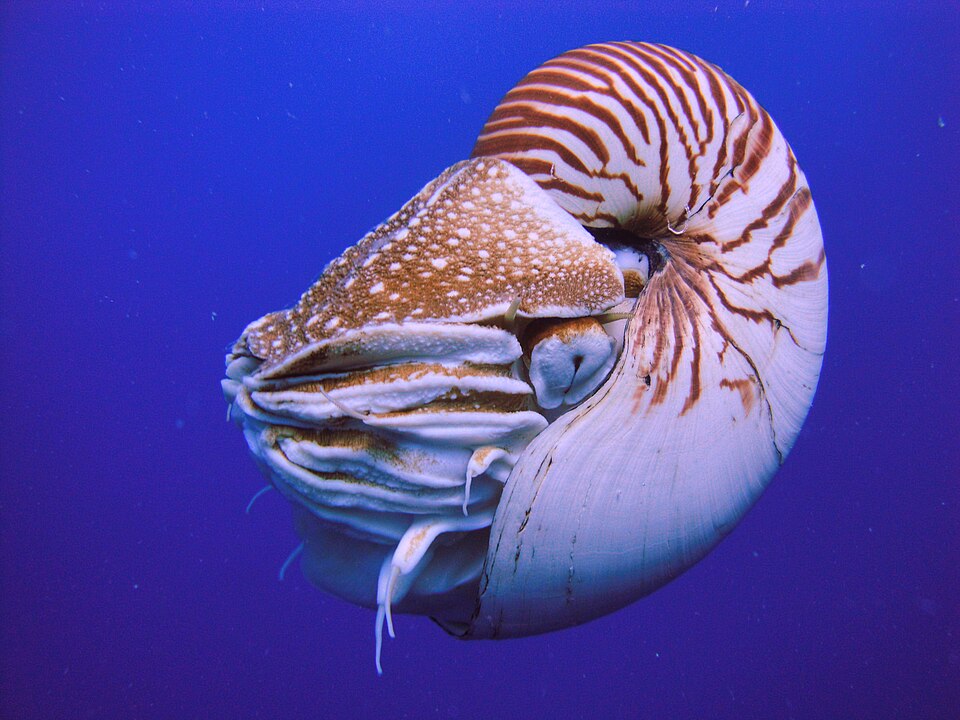
There is a useful contrast with the animal this site is named after. Triops survived five mass extinctions by living in mud puddles that dry out, banking eggs that wait years for rain. Cameroceras did the opposite: it specialised in warm, stable, shallow seas, grew large, and disappeared when those seas changed faster than it could follow. Big and specialised is a great strategy until the world moves.
What remains is the shell. Straight nautiloid fossils are common enough that collectors find them in Ordovician limestone world-wide, often as pale internal molds like the Kentucky specimen above. Each one is a piece of plumbing from the first chapter of predatory life in the ocean, written in stone, and it cost nothing but a walk through the right outcrop to pick one up.