Published August 13, 2026, 18:45 by the Triops.me Editorial Team · Back to Articles
When Insects Ruled the Earth: Giants of the Carboniferous
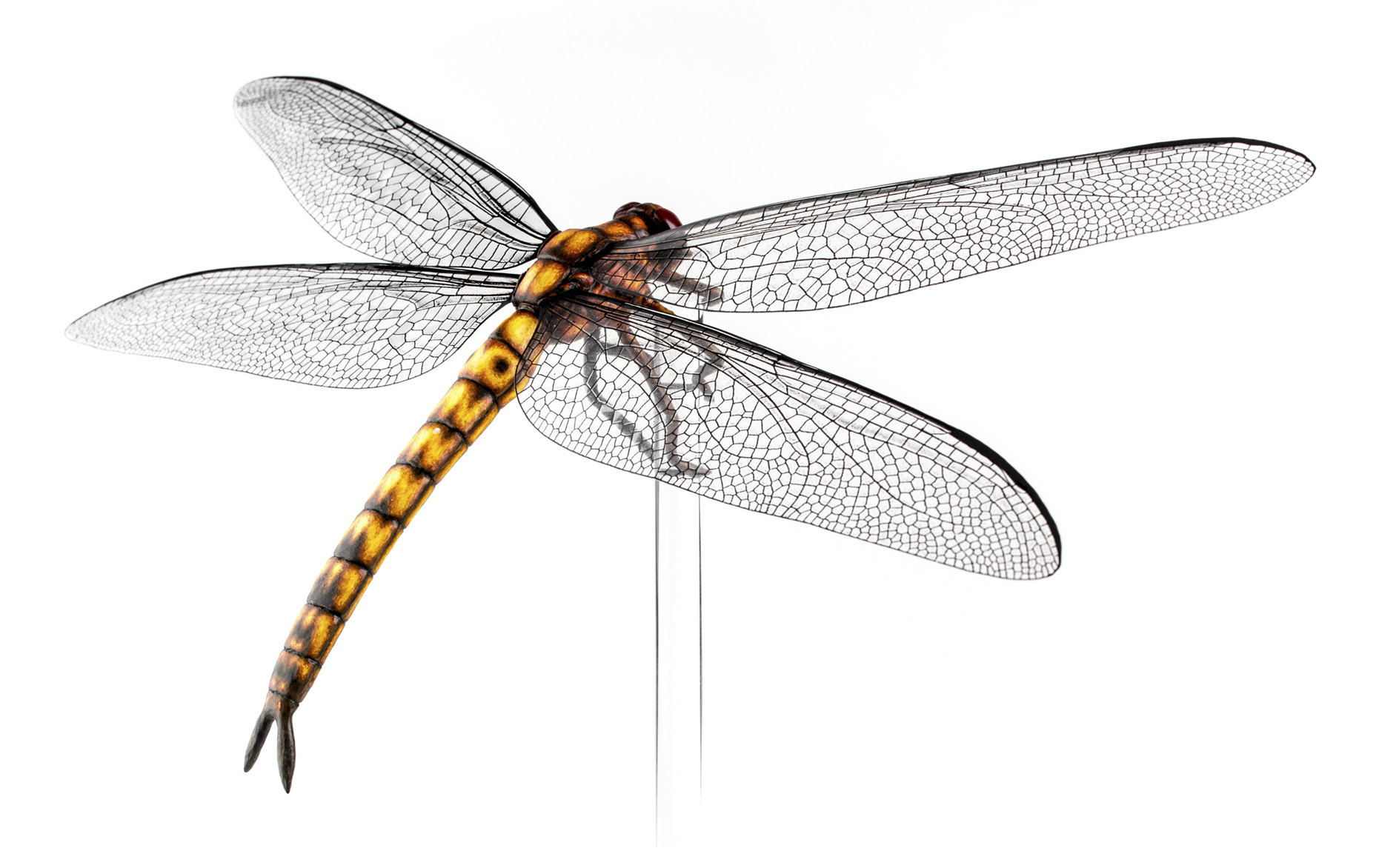
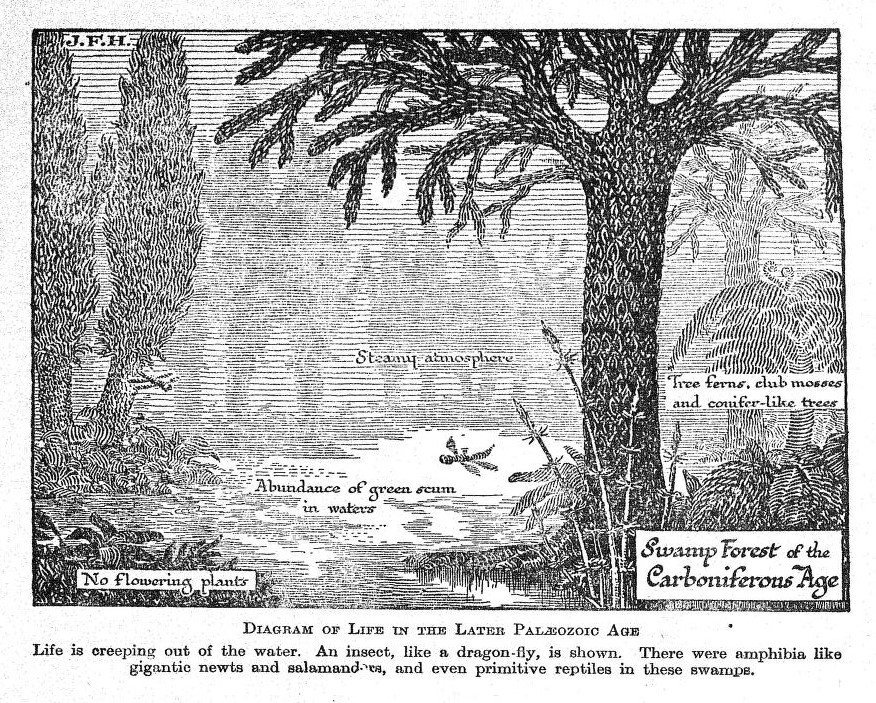
Imagine stepping into a forest 300 million years ago. The air is thick and warm, and towering ferns and club mosses rise fifty meters overhead, forming a dense canopy that blocks out the sky. You hear a sound like a helicopter overhead. You look up and see a dragonfly the size of a hawk, its wingspan wider than your outstretched arms, slicing through the humid air after prey. This was the Carboniferous period, and it was the age when insects became truly enormous.
The Carboniferous period, spanning from roughly 359 to 299 million years ago, is one of the most extraordinary chapters in the history of life on Earth. Named for the vast coal deposits that formed from its rotting forests, this era produced some of the most astonishing arthropods to ever exist. These were not the small bugs we swat at today. They were giants, and understanding how and why they grew so large tells us something fundamental about the relationship between life and the atmosphere it inhabits.
The Oxygen Engine
The key to Carboniferous gigantism lies in the air itself. During this period, atmospheric oxygen levels climbed to roughly 35%, compared to about 21% today. This dramatic increase was driven by the explosion of terrestrial plant life. Vast forests of giant ferns, horsetails, and early conifers pumped out oxygen through photosynthesis on an unprecedented scale. Crucially, the microbes and organisms capable of breaking down lignin, the tough structural compound in wood, had not yet evolved. Dead trees piled up without decomposing, locking away carbon and allowing oxygen to accumulate in the atmosphere.
For insects, this oxygen bonanza was transformative. Insects breathe through a network of tiny tubes called tracheae, which deliver oxygen directly to their tissues. The efficiency of this system depends on the concentration of oxygen in the surrounding air. Higher oxygen levels mean oxygen diffuses deeper into the tracheal network, supporting larger body sizes. The mathematics of diffusion set a hard ceiling on insect size at today's oxygen levels, but the Carboniferous atmosphere pushed that ceiling far higher than it had ever been before or would ever be again.
Meganeura: The Giant Dragonfly
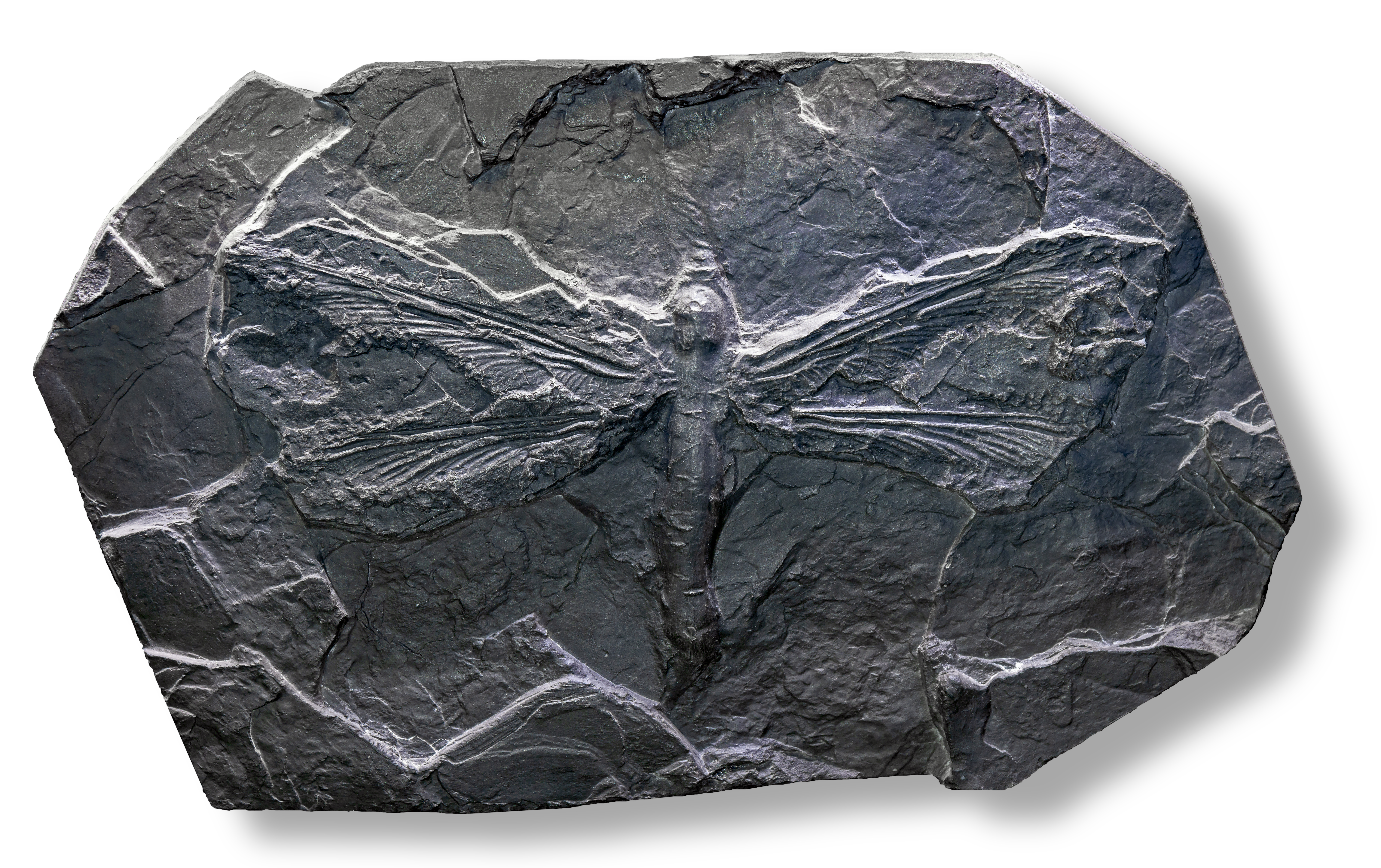
No creature better embodies Carboniferous gigantism than Meganeura monyi, a giant griffinfly related to modern dragonflies. With a wingspan reaching up to 75 centimeters, Meganeura was roughly the size of a large raptor. Fossils discovered in the coal mines of Commentry, France in the 1880s stunned paleontologists. The first specimens were initially mistaken for pterosaur wing fragments. It was only when the delicate wing venation became clear that scientists realized they were looking at the largest flying insect ever discovered.
Meganeura was an apex predator of the Carboniferous skies. Its enormous eyes, inherited from its smaller ancestors, gave it superb vision for tracking prey in flight. It likely fed on other large insects and small amphibians that ventured too close to the water's edge. Its larvae, known as griffinflies, were aquatic and grew to impressive sizes themselves, hunting in the warm, oxygen-rich swamps that dominated the landscape. Modern dragonflies are already among the most efficient aerial predators in the insect world. Meganeura was the same design, scaled up to terrifying proportions.
Arthropleura: The Land Leviathan
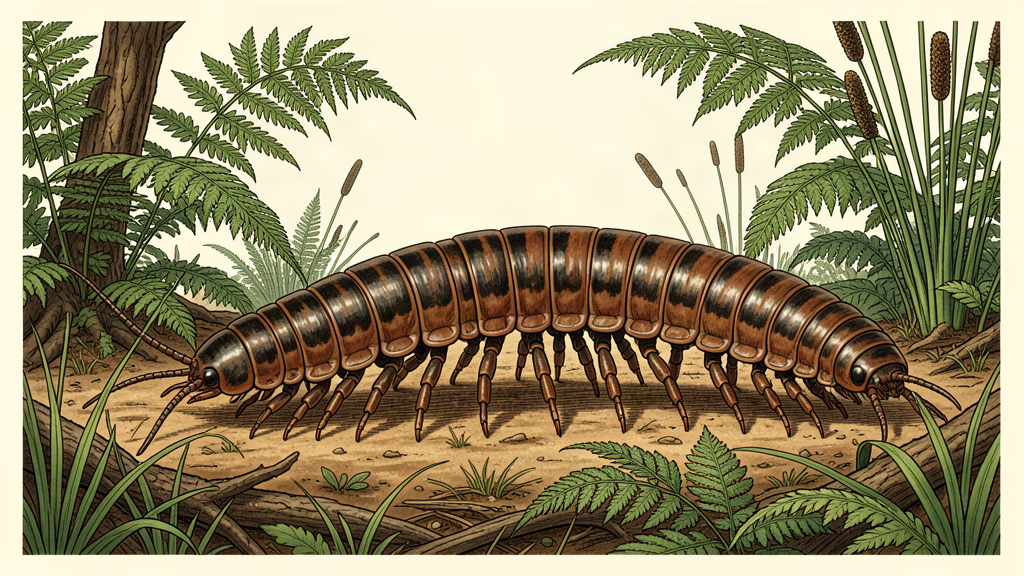
If Meganeura ruled the air, Arthropleura armata dominated the forest floor. This colossal millipede relative stretched over 2.5 meters long, making it the largest known land-dwelling invertebrate in Earth's history. Its body was broad and flat, armored with overlapping plates, and supported by hundreds of paired legs rippling in coordinated waves beneath it as it plowed through the leaf litter.
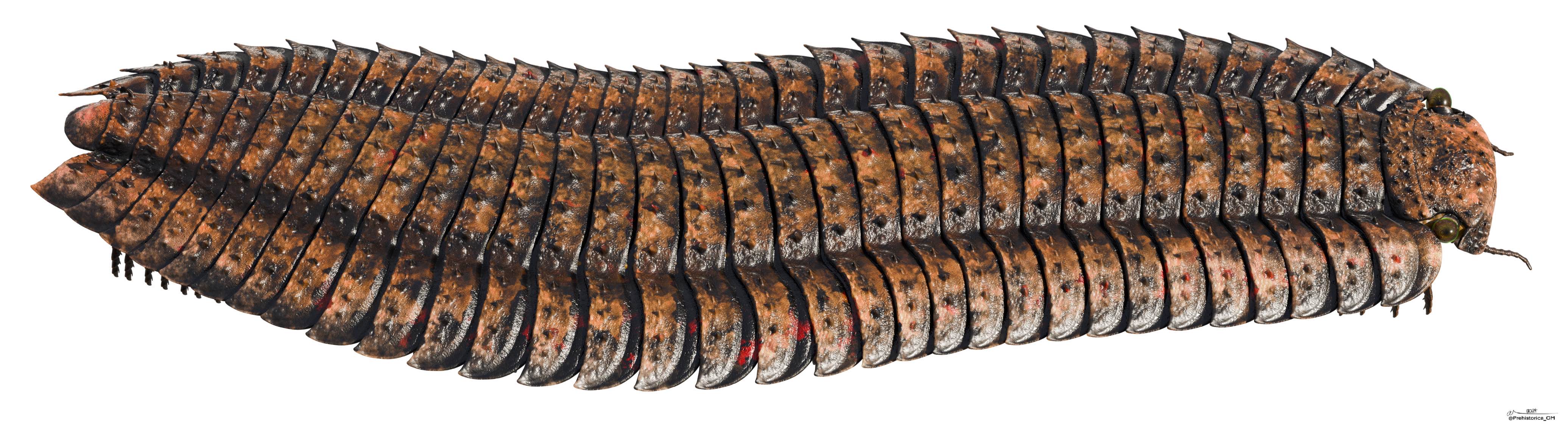
Arthropleura fossils are rare but dramatic. In 2021, researchers in northern England discovered the first complete trackway, showing the creature's path preserved in stone for over 300 million years. The tracks revealed that Arthropleura moved with a gentle, sinusoidal gait, its many legs working in fluid metachronal waves, much like a modern millipede but on a scale that defies imagination. Some researchers have questioned whether its enormous size was enabled purely by high oxygen levels, or whether factors like low predator pressure on land also played a role. Either way, Arthropleura stands as proof that the arthropod body plan can scale to sizes we rarely associate with invertebrates.
A World of Giants
Meganeura and Arthropleura were the most famous Carboniferous giants, but they were far from alone. Giant scorpions like Pulmonoscorpius kirktonensis grew up to 70 centimeters long, patrolling the forest floor for prey. Massive cockroach-like insects, some with wingspans exceeding 30 centimeters, thrived in the decaying vegetation. Even the amphibians grew enormous, with Mastodonsaurus reaching three meters in length, lurking in the swampy waters where insect larvae grew fat and abundant.
The entire ecosystem was built on scale. Insects were not minor players in the food web. They were the dominant land animals of the Carboniferous, filling ecological niches that vertebrates would later claim. Their abundance and size shaped predator-prey dynamics, nutrient cycling, and even the physical landscape. The vast coal deposits that power modern civilization are, in a very real sense, the compressed remains of this insect-dominated world.
The End of an Era
What goes up must come down. By the early Permian period, around 299 million years ago, oxygen levels began a long decline. The coal-forming forests shrank as climates grew drier, and the decomposition catch-up finally arrived: fungi and bacteria evolved the enzymes needed to break down lignin efficiently. With dead wood now decaying and releasing its carbon back into the atmosphere, oxygen levels dropped steadily toward the 15% range. The giant insects could no longer sustain their enormous bodies. Meganeura's descendants shrank. Arthropleura disappeared entirely. The age of insect gigantism was over.
The Permian-Triassic mass extinction, 252 million years ago, finished what the oxygen decline had started. By the time dinosaurs rose to dominance, the largest insects were a fraction of their Carboniferous ancestors. Some researchers have suggested that the decline of giant insects actually helped open ecological space for small vertebrates to diversify and eventually dominate land. In this view, the fall of the insect giants was not just an ending, but a necessary precondition for the world we know today.
Lessons for Today
The Carboniferous giant insects offer a vivid demonstration of how profoundly the atmosphere shapes life on Earth. Today, atmospheric oxygen is declining slowly, and carbon dioxide levels are rising. While no modern scientist expects insects to grow to Carboniferous sizes, the principle remains: the composition of the air we breathe is not a backdrop to evolution, but an active driver of it.
For Triops enthusiasts, there is an additional connection. Triops themselves are ancient crustaceans, relatives of the same arthropod lineage that produced the Carboniferous giants. While Triops never grew to the sizes of Meganeura or Arthropleura, they share the same fundamental body plan: exoskeleton, jointed legs, compound eyes. The triops that hatch in a backyard pool today carry within their DNA a legacy stretching back to the Carboniferous and beyond, to the Cambrian explosion where arthropods first appeared. When you watch a Triops scurry through the water, you are watching a living echo of the same evolutionary experiment that, under the right atmospheric conditions, produced the largest insects the world has ever seen.
The Carboniferous reminds us that Earth's history is full of surprises. Life does not follow a simple, linear path. Under the right conditions, creatures we consider minor can become magnificent. And when those conditions change, the world reshapes itself in ways no one could have predicted.