Published 2026-10-26 · by the Triops.me Editorial Team · Back to Articles
Cave Lions: Ice Age Big Cats
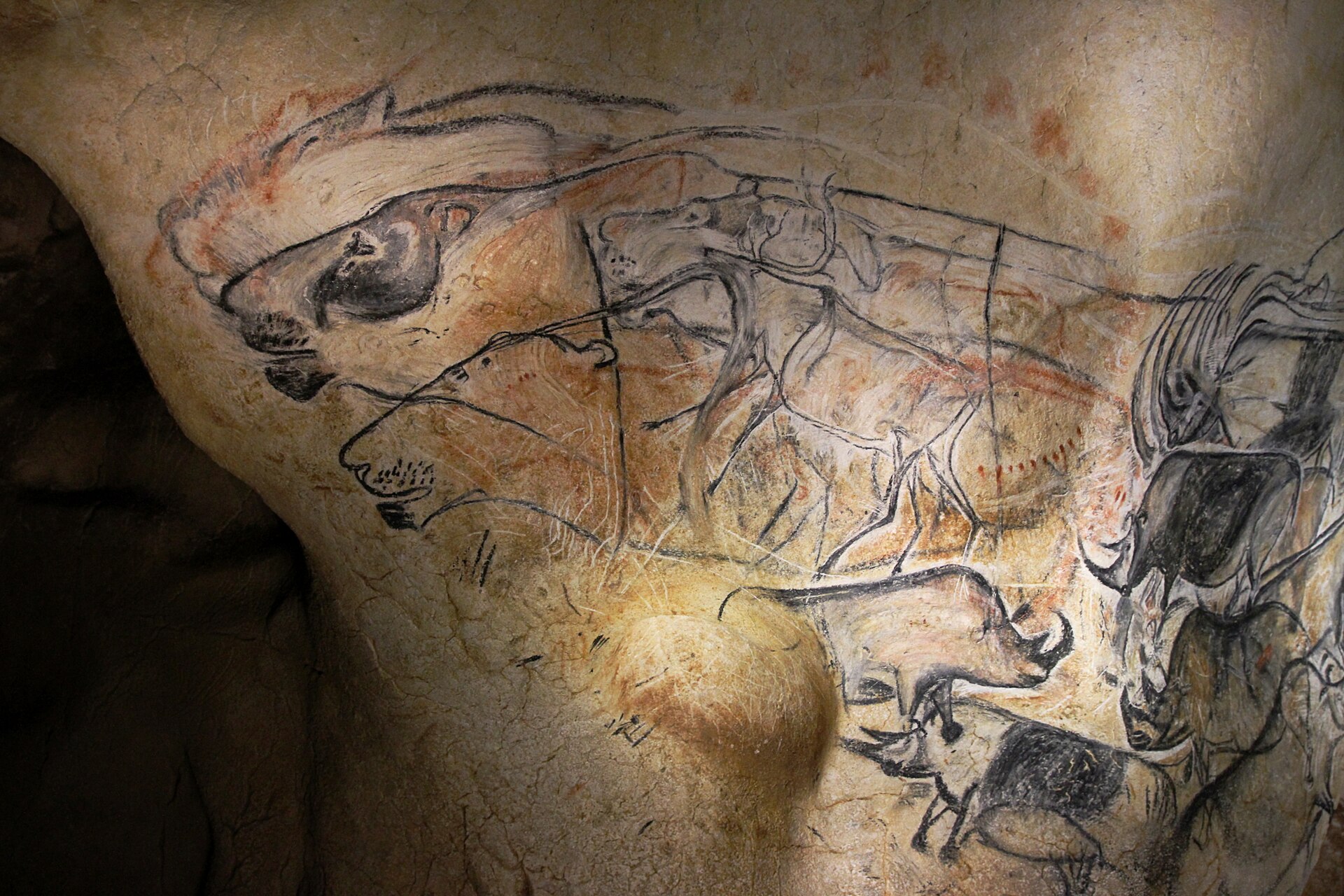
Thirty-six thousand years ago, someone crouched by firelight in a deep cave in what is now southern France and painted lions. The artists of Chauvet Cave captured more than a dozen of them, lean and maneless, sweeping across the rock after a herd of bison. These were not imagined beasts. The cave lion, Panthera spelaea, then roamed from Spain to Siberia, and for hundreds of thousands of years it was the dominant big cat of the Ice Age world.
A Lion of a Different Line
The first cave lion skull to be formally described came from a Bavarian cave in 1810, when the paleontologist Georg August Goldfuß named it Felis spelaea, the lion of the caves. Early researchers treated it as a subspecies of the modern lion, but genetics has since pulled it apart. Cave lions split from the ancestors of today's African and Asian lions several hundred thousand years ago, and many researchers now rank them as a separate species. When you picture one, the differences show.
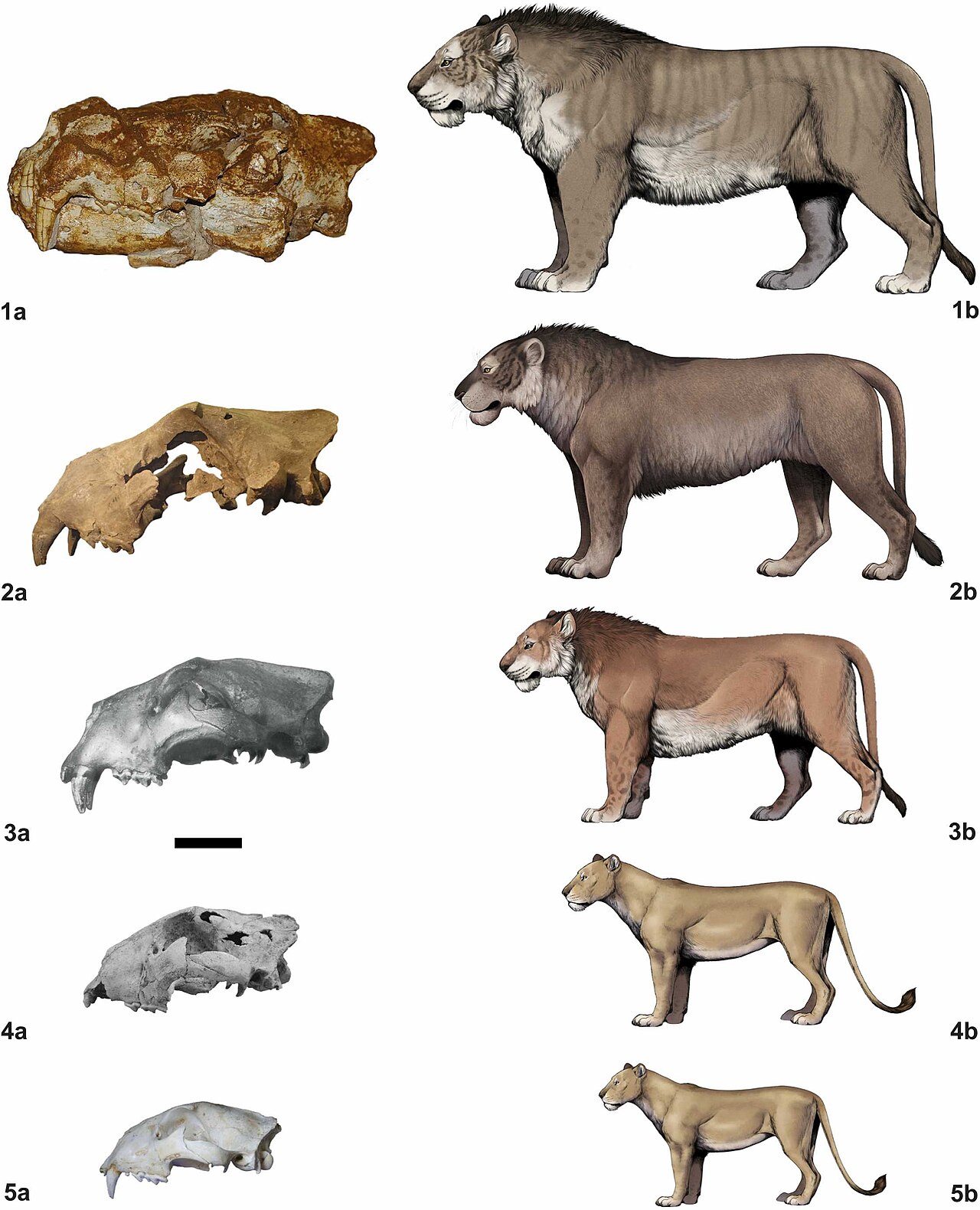
This was a bigger cat than any lion alive today. Complete skeletons suggest a body about ten percent longer and taller than an African lion, with large males possibly pushing 300 kilograms. And it dressed differently. Cave paintings and a fur-covered frozen cub show a thick seasonal coat, but none of the long dark mane that hangs from a male African lion's neck.
Cave lion bones turn up from Britain and Spain across Europe, north through Russia, and far into Siberia. At the height of the Ice Age, when sea levels dropped and the Bering land bridge surfaced, lions crossed into Alaska and the Yukon. Their descendants south of the ice sheets, often called American lions, grew even larger and have a fair claim to being the biggest cats that ever lived.
Painted by Firelight
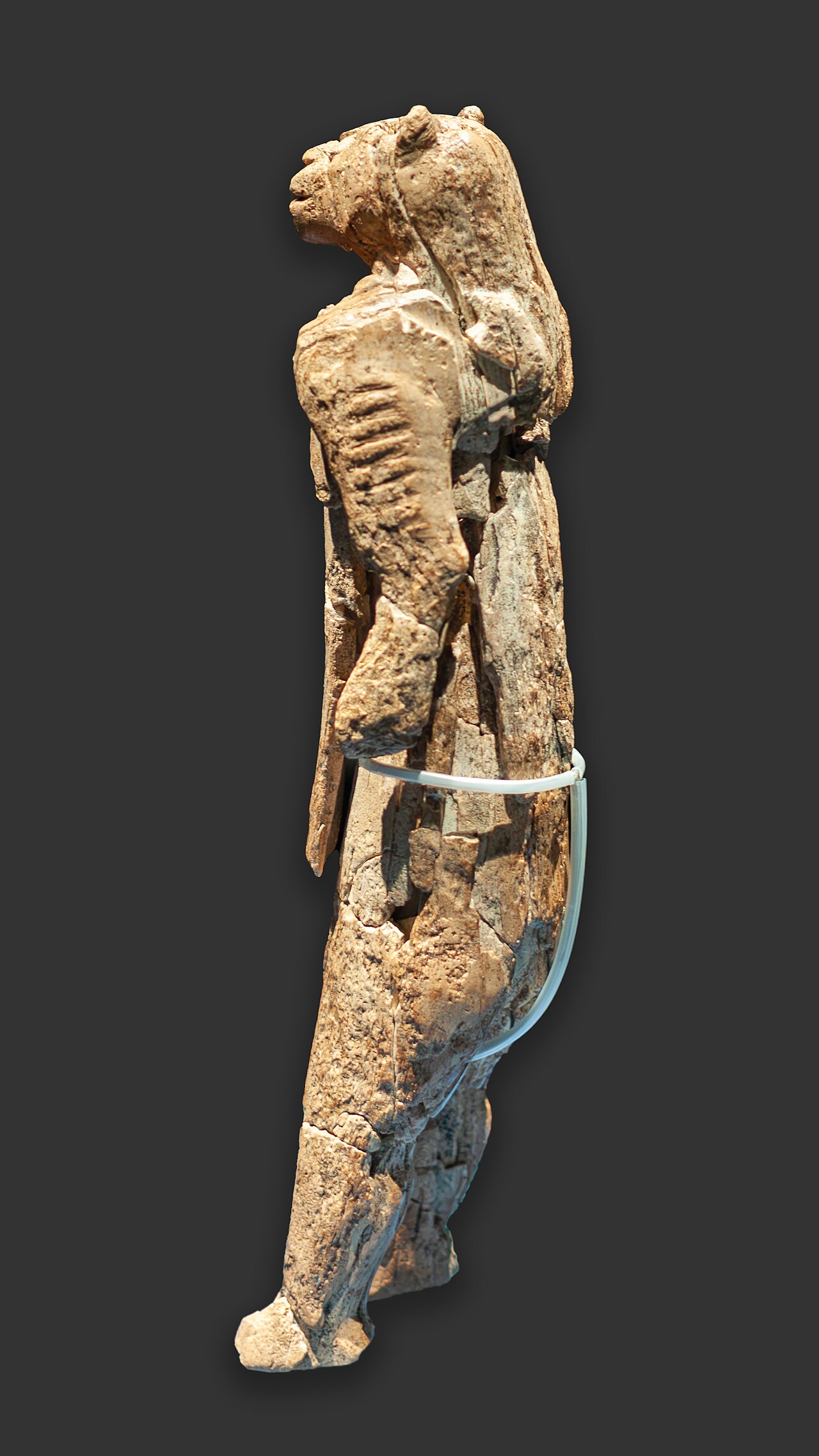
Humans met cave lions in the flesh for tens of thousands of years, and the encounters left marks. Perhaps the oldest is the Lion Man of Hohlenstein-Stadel in Germany, a figurine carved from mammoth ivory roughly 40,000 years ago with a human body and a lion's head. It stands about 31 centimeters tall and ranks among the oldest works of figurative art ever found.
Neanderthals knew cave lions too. Evidence from Scladina Cave in Belgium shows Neanderthals skinned and butchered cave lions, apparently for their pelts, long before modern humans arrived in Europe.
But the masterpiece is at Chauvet. The Lion Panel there shows a pride of lions, maneless and muscular, stalking a column of bison. The anatomy is so exact that researchers believe the artist watched real hunts: one lion's rear foot is drawn at a strange angle, a detail of how lions pivot mid-pursuit that only close observation would teach.
What Was on the Menu
Bone chemistry answers the diet question directly. Isotopes preserved in cave lion collagen point to reindeer, horses, and bison as staple prey, which is roughly what lions eat today: whatever big herd animals the landscape offers.
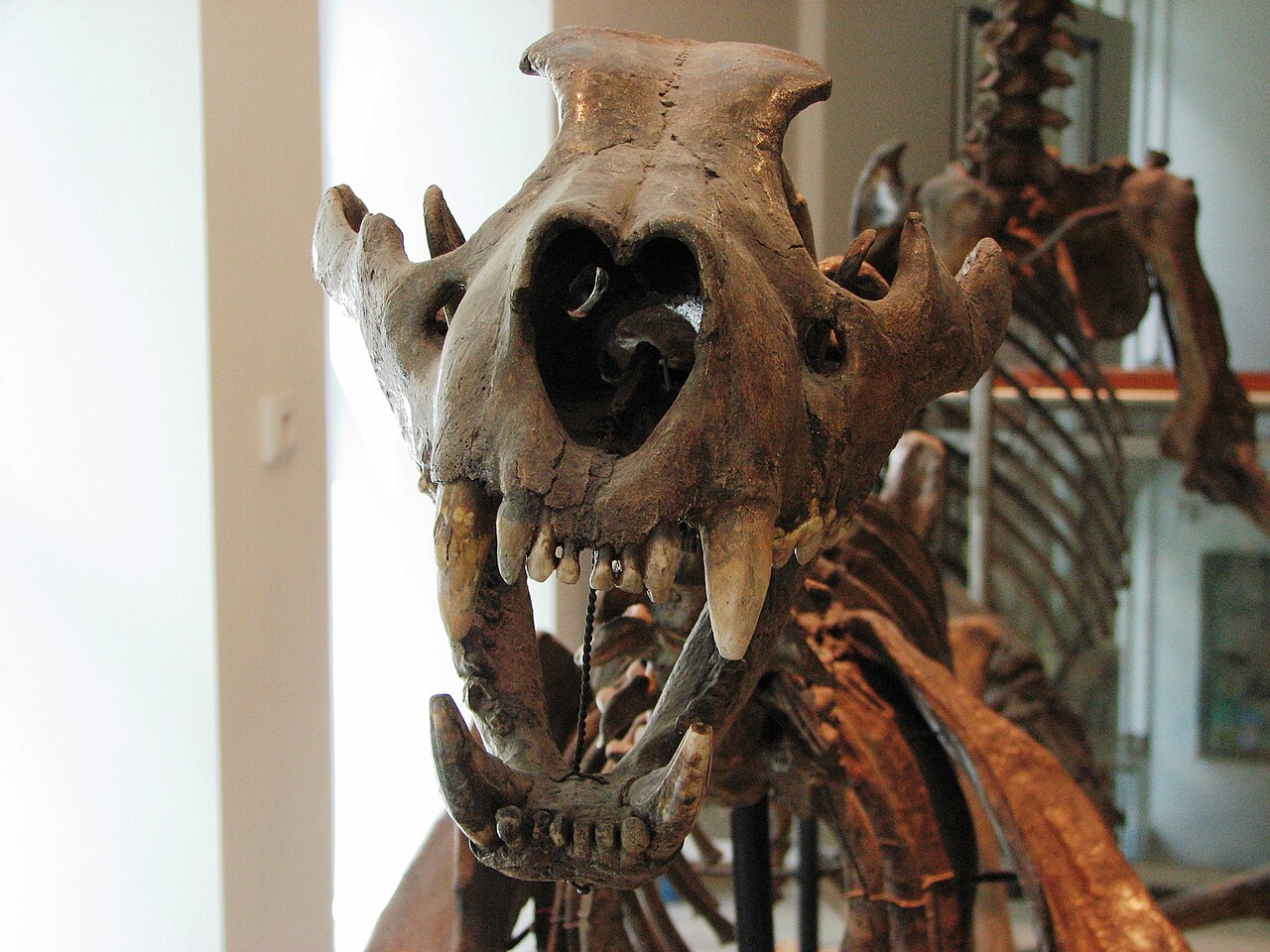
They also went after something riskier. Cave lion remains repeatedly turn up deep inside the hibernation dens of cave bears, including a famous skull from Conturines Cave in the Italian Alps, and isotope studies suggest the cats sometimes ate young cave bears, snatching cubs from their winter dens.
Despite the name, the cave lion was no cave dweller. It took its name from where its bones happened to survive: caves were where cave bears denned, where lions ambushed them, and where remains escaped the weather. On open ground this cat belonged to the windswept mammoth steppe, which is why many researchers prefer its other name, the steppe lion.
The Cubs That Time Froze
In 2015, mammoth tusk hunters in Yakutia, Siberia, stumbled on something no one had ever seen: cave lion cubs, complete with fur. Two more followed, Boris in 2017 and Sparta in 2018, and a study published in 2021 confirmed the details. Boris lived about 43,000 years ago, Sparta about 28,000, and both were only a few weeks old when they died.
Their preservation borders on the unbelievable. Fur, whiskers, skin, and even soft tissue survived in the frozen ground, and researchers described Sparta as possibly the best-preserved Ice Age animal ever found. For the first time, scientists could see exactly what the cat painted at Chauvet looked like in the flesh: a yellowish gray-brown coat, no mane, and a build made for cold.
Pride or Loner?
Modern lions are the only truly social cats, living in prides. Were cave lions the same? The Chauvet panel shows a group moving together, which some researchers read as a pride in action, but paintings prove little about behavior. Boris and Sparta were found in the same corner of Siberia and died around similar ages, hinting that mothers denned near one another, or simply that the permafrost preserved two animals by luck. The honest answer is that no one knows yet. The question matters, because cooperative hunting would have let cave lions tackle far bigger prey than any lone cat could manage.
The End of the Ice Age
For hundreds of thousands of years, cave lions shrugged off ice ages as they came and went. The end came fast. By about 14,000 years ago they were gone, one of the last Ice Age predators to disappear. The warming that followed the last glacial maximum, a spell called the Bølling-Allerød about 14,700 years ago, transformed their world. Open steppe gave way to scrub and forest, the great herds of bison, horse, and reindeer thinned and shifted, and the lions' range collapsed with their prey. Human hunting groups were spreading across the same landscape at the same time. No single cause is proven, but the pattern fits what happens to a big predator when its food base shrinks and well-armed competitors multiply.
Modern lions, now confined to Africa and one small population in India, are the last branch of a line that once included the cave lion. Stand in front of a lion today and you are looking at the nearest living relative of the cats on the Chauvet wall. They ruled the Ice Age world for far longer than modern humans have existed, and they still could not hold on when their world changed faster than they could adapt. For a site devoted to Earth's great survivors, the cave lion is a sobering reminder: resilience has limits, even for the king.