Published 2026-09-25 · by the Triops.me Editorial Team · Back to Articles
Ceratopsians: The Horned Dinosaurs
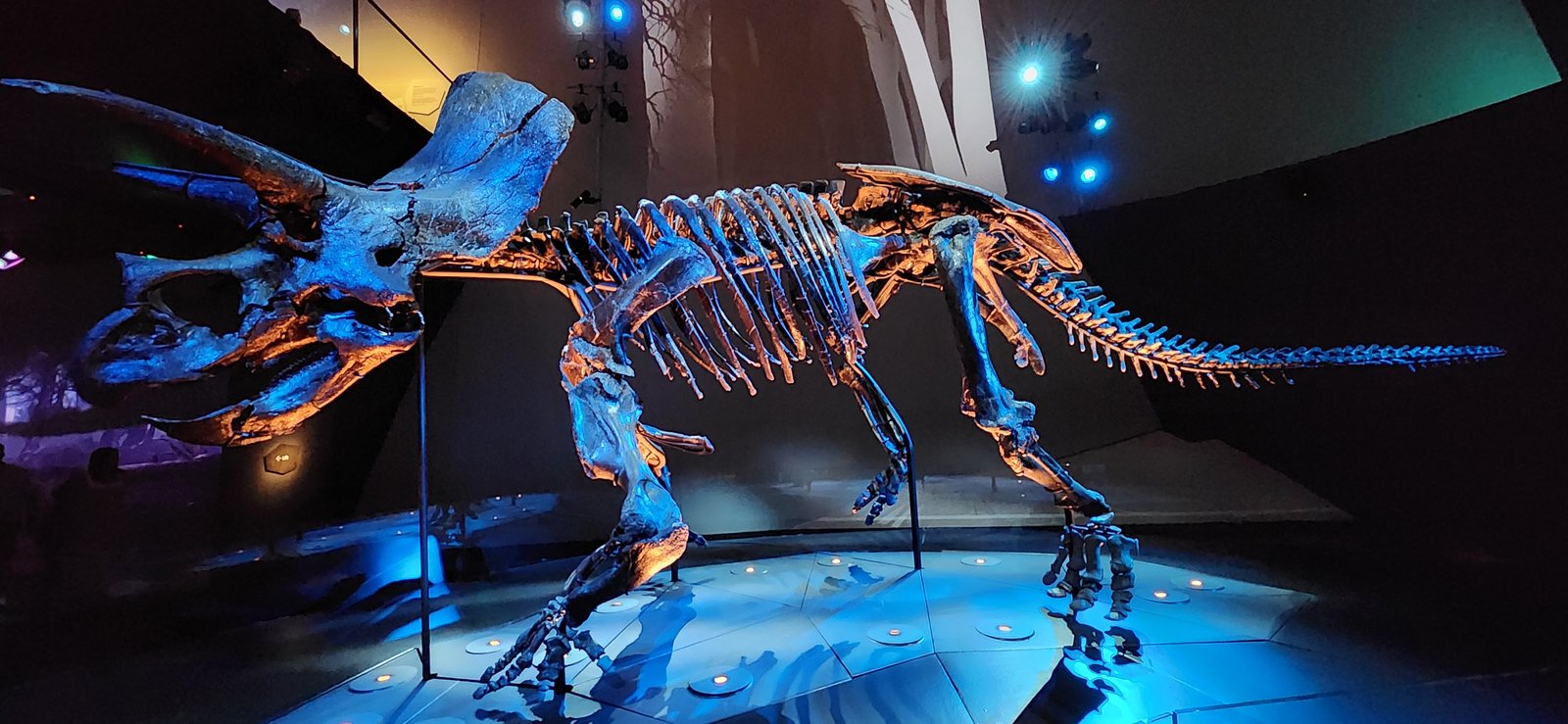
Triceratops is one of the most recognizable animals that ever lived: three horns, a bony frill, and a skull the size of a small car. It is also only the last and most famous chapter of a much longer story. Palaeontologists call the group Ceratopsia, Greek for horned face, and it stretches from dog-sized two-legged plant eaters of the Late Jurassic to multi-tonne giants that grazed the floodplains of North America in the final million years of the age of dinosaurs. Along the way the group produced dozens of species and some of the most spectacular skulls in the history of life.
The name game with our own mascot is a happy accident. Triops, the living fossil this site is named after, means three eyes, for the light sensing organs on top of its head. Triceratops means three horned face. Both names are Greek, both describe a face, and for tens of millions of Cretaceous years the two animals shared the planet, Triops in the shallows, ceratopsians on land.
Small Beginnings, Parrot Beaks
Ceratopsians did not start out as tanks. The earliest member yet found is Yinlong, a small bipedal plant eater from the Late Jurassic of China, roughly 160 million years ago and about the size of a large dog. For most of the Cretaceous the group was an Asian affair, quietly experimenting with the features that would later make it famous. The first to perfect the formula was Psittacosaurus, the parrot lizard, which radiated into around thirty named species across Asia and became one of the most successful dinosaurs of its time. Its hooked, parrot-like beak was built for cropping tough plants, and some specimens preserve bristles along the tail, a hint of the filamentous covering many early dinosaurs carried.
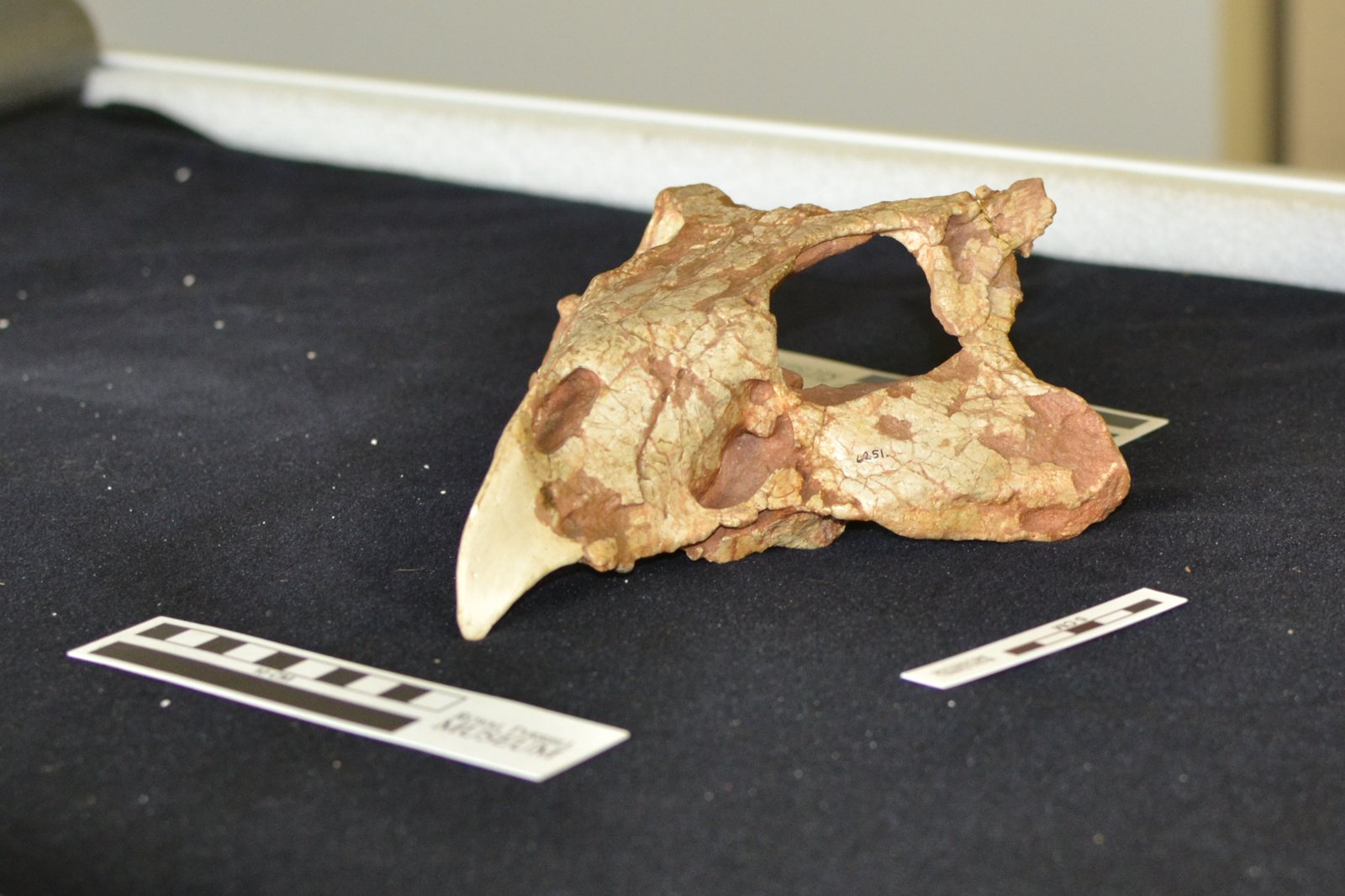
Its best known relative is Protoceratops, a sheep-sized animal from the Gobi Desert of Mongolia. Protoceratops had no horns yet, only a large neck frill, and it died in the sandstorms that formed the Djadokhta Formation, a fossil bed that preserves some of the most dramatic scenes in palaeontology. One of them, found in 1971, captures a Protoceratops and a Velociraptor locked together in a final struggle, predator and prey killed and buried mid fight. In North America, tiny early forms such as Aquilops show that the group reached the western continent more than a hundred million years ago, long before the giants arrived.
The Big League of Laramidia
During the Late Cretaceous, high sea levels split North America into a western island continent, Laramidia, and a low eastern shelf. Ceratopsians crossed from Asia over the Bering land bridge and, in Laramidia, suddenly diversified into the family Ceratopsidae, the horned dinosaurs in the strict sense. For several million years before the asteroid, as many as ten species may have roamed Laramidia at once, partitioned by geography and by how they fed.
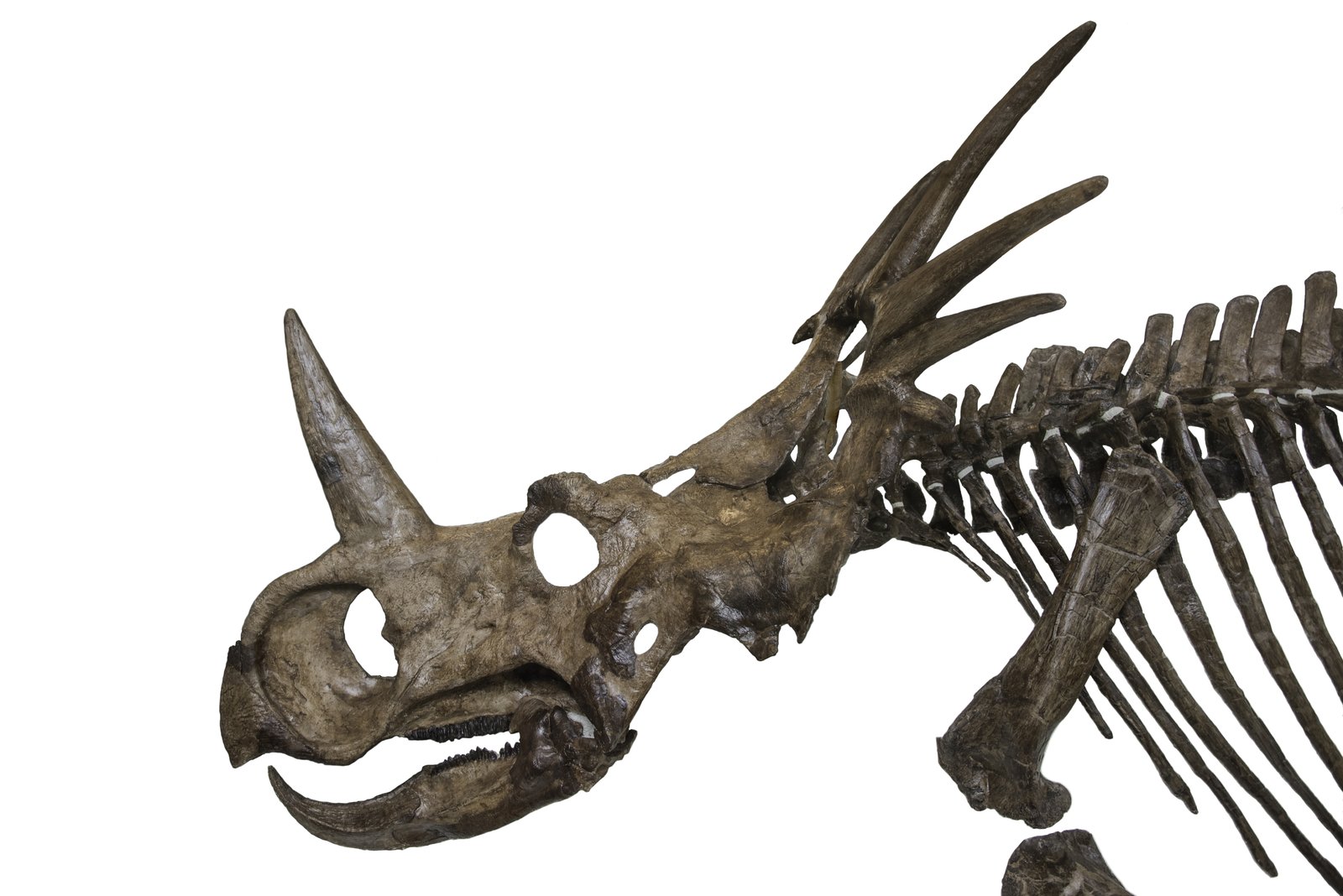
The family divides into two branches. The centrosaurines sported short frills and dramatic nasal hardware: Centrosaurus with its single long nose horn, Styracosaurus with a crown of six long spikes radiating from the frill, Pachyrhinosaurus with a massive bony boss instead of a horn, and Nasutoceratops with an outsized nose. The chasmosaurines went the other way, growing long frills and heavy brow horns: Chasmosaurus, Pentaceratops, Torosaurus, and finally Triceratops itself. Together they turned the Cretaceous prairies of Montana, Alberta, Utah, and Texas into a grazing landscape dominated by horned faces.
Built Like a Living Bulldozer
Every ceratopsian shared the same basic toolkit, scaled from half a metre to nine. At the front sat a deep, parrot-like beak, formed by a unique extra bone called the rostral, made for shearing through palm fronds, cycads, horsetails, and ferns. Behind it, jaws packed with dental batteries, hundreds of teeth arranged in grinding columns and replaced continuously as they wore down. Large animals such as Styracosaurus reached six metres in length; Triceratops reached eight to nine and perhaps six tonnes or more.
The skull was the showpiece. In a large Triceratops it could exceed two metres from beak to frill edge, one of the largest heads of any land animal that ever lived, carried on a short, immensely muscular neck. The limbs were columnar and the hips were built for bearing weight, not for speed, though a charging ceratopsian was fast enough to be dangerous. Skin impressions from Triceratops show a mosaic of non-overlapping hexagonal scales, more like a lizard than the bird like feathers of its theropod cousins.
What Was the Frill For?
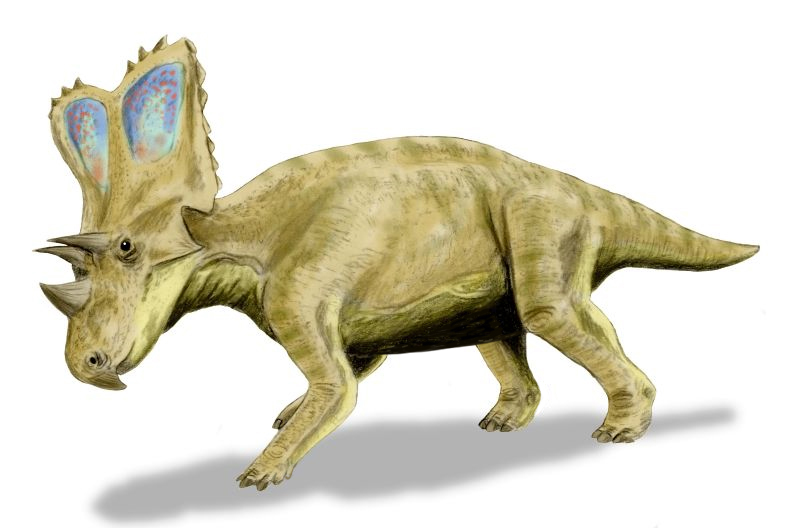
The frill has puzzled palaeontologists since the first fragments were dug out of the American West in the 1870s. It is not solid armour, for one thing. CT scans show the bone is surprisingly thin, shot through with blood vessel channels, and far too fragile to turn aside a tyrannosaur jaw. The current best guesses are display and recognition: a billboard of healthy bone that advertised species, sex, and condition to rivals and mates, while the channels may have helped dump heat in a large, active body.
The horns look more practical. Healed fractures, gouges, and punctures on horn cores and frill edges are common, and the injuries match each other closely enough to suggest horn to horn shoving matches between rivals, something like the shoving contests of modern bison. The weapon was not only for show: a Triceratops frill from Montana carries tooth punctures that align with the bite of a Tyrannosaurus, evidence that at least some of those injuries came from predators, and that the animals survived them. Even the taxonomy hides drama, as some researchers have argued that Torosaurus, with its thinner frill and extra openings, may simply be the fully grown form of Triceratops, a claim still argued over at every dinosaur conference.
Herd Animals of the Polar Winter
Ceratopsians were not loners. Bonebeds in Alberta and Montana preserve hundreds, occasionally thousands, of Centrosaurus individuals crowded together, the remains of vast herds overwhelmed by floodwaters as they tried to cross rivers. Their eggs and embryos are known too: clutches of Psittacosaurus with unhatched young inside give rare insight into how these animals began life, small, beaked, and already looking like miniature versions of the adults.
Some herds even lived at extreme latitudes. Pachyrhinosaurus fossils from the North Slope of Alaska place horned dinosaurs inside the Arctic Circle, grazing through months of winter darkness in a Cretaceous climate far milder than today's but still seasonal. When the asteroid struck 66 million years ago, everything ceratopsian went with it, from the last Triceratops of the Hell Creek Formation to the polar herds in the far north. Their closest living relatives, the dome headed pachycephalosaurs, disappeared in the same event, and nothing like a ceratopsian has walked the Earth since.
What remains is one of the richest fossil records of any dinosaur group: thousands of skulls, growth series from hatchling to elder, herds, injuries, and bite marks that let us reconstruct behaviour rather than just anatomy. To see how another survivor of deep time copes with an ever changing world, revisit the three eyes of Triops, or browse the full creature gallery for more armored giants like Stegosaurus and the reptiles that shared the age of dinosaurs.