Published August 15, 2026, 17:10 by the Triops.me Editorial Team · Back to Articles
The Coelacanth: A Fish That Outlived the Dinosaurs
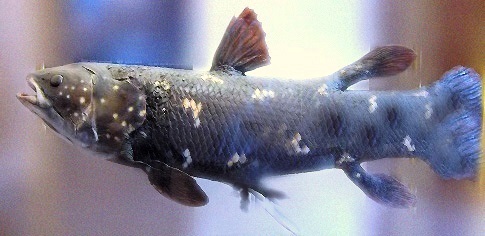
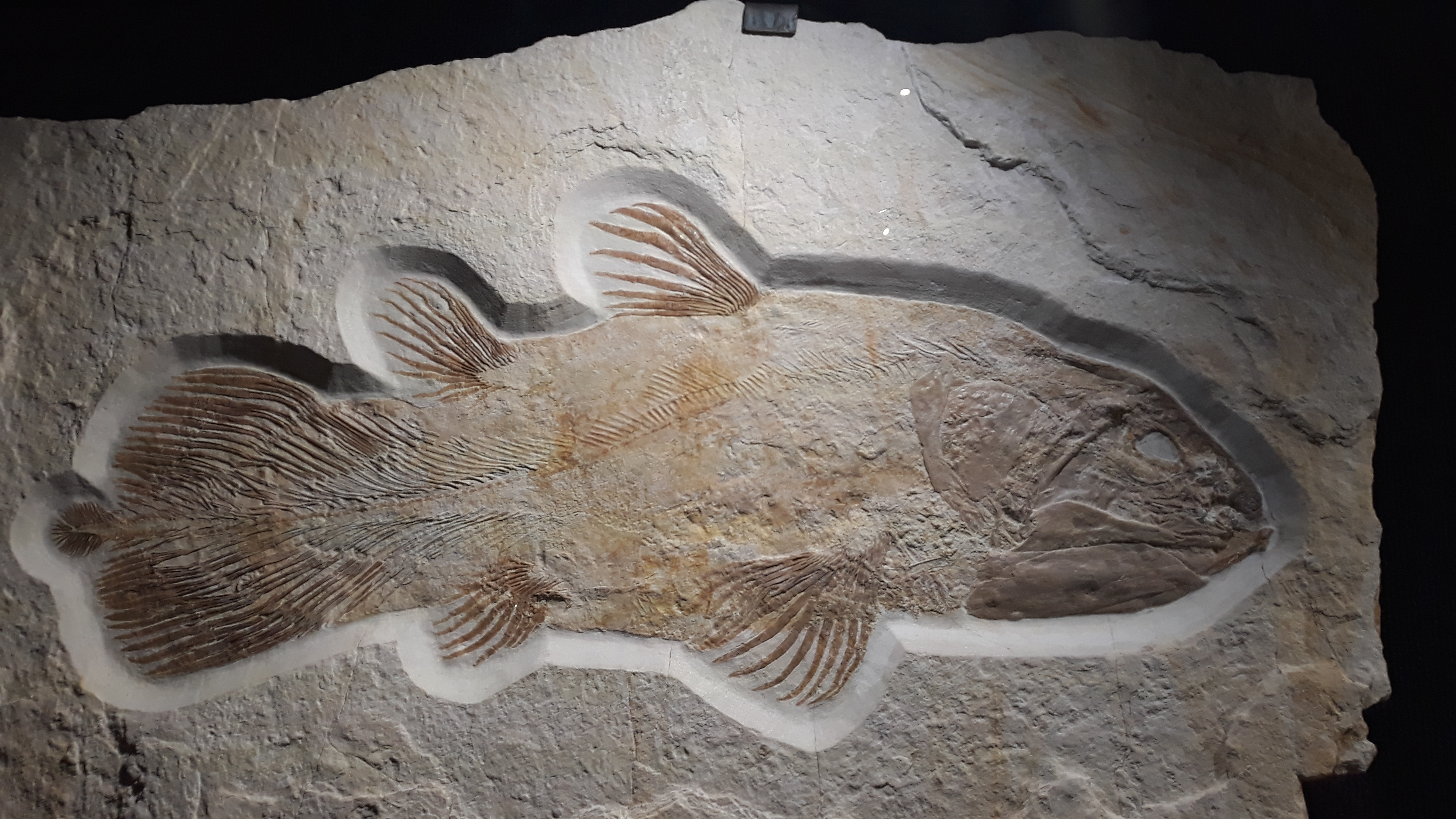
For nearly a century, paleontologists were certain the coelacanth was gone. Fossil records showed this strange, lobed-finned fish appearing in the late Devonian period, roughly 360 million years ago, and then vanishing abruptly at the end of the Cretaceous, 65 million years ago. It had disappeared alongside the dinosaurs, the pterosaurs, and the great marine reptiles. Case closed.
Then, on December 22, 1938, a trawler named the Nerine hauled in an unusual catch off the coast of South Africa. The fish was nearly two meters long, weighed around 80 kilograms, and had peculiar limb-like fins that looked more like stubby arms than anything found on a modern fish. Marjorie Courtenay-Latimer, the young museum curator who examined the specimen, knew immediately she was looking at something extraordinary. She contacted Professor J.L.B. Smith, a South African ichthyologist, who confirmed her suspicion: this was a coelacanth, a fish the scientific world had written off as extinct for 65 million years.
The discovery was dubbed "the most sensational zoological find of the century." Smith named the species Latimeria chalumnae, honoring Courtenay-Latimer and the Chalumna River near where it was found. The world was electrified. If a coelacanth could survive unseen for tens of millions of years, what else might still be out there?
A Body Designed for Deep Water
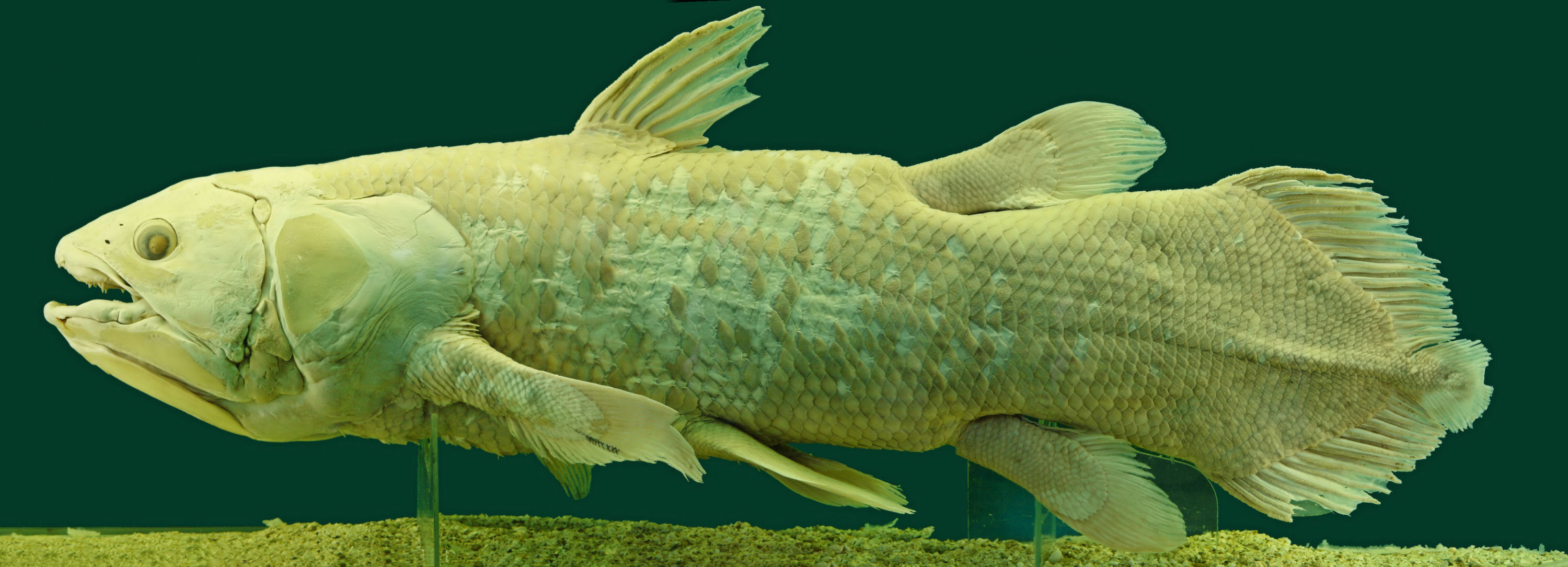
Coelacanths are not what most people picture when they think of ancient fish. They can grow to over two meters in length and weigh up to 90 kilograms. Their bodies are covered in thick, armor-like scales that give them a rugged, prehistoric appearance. But it is their fins that truly set them apart.
Unlike the ray-finned fish that dominate today's oceans, coelacanths belong to a group called sarcopterygians, or lobe-finned fish. Their fins are supported by fleshy, bone-structured stalks rather than thin rays of bone. When a coelacanth moves through the water, its fins rotate in a pattern that closely resembles the limb movements of a tetrapod walking on land. This is not a coincidence. Lobe-finned fish are the closest living relatives of all terrestrial vertebrates, including reptiles, birds, and mammals. Coelacanths and lungfish are the only surviving members of this ancient lineage.
Their anatomy holds other surprises. Coelacanths possess an intracranial joint, a unique hinge in the skull that allows the front portion of the head to pivot upward. This adaptation lets them open their mouths unusually wide to engulf prey. No other living vertebrate has this feature. Beneath their spinal cord, they retain a notochord, a hollow, fluid-filled rod that was the precursor to the vertebral column in early vertebrates. Their braincase is filled mostly with fat, and they have a rostral organ in the snout that detects electrical impulses from nearby prey, much like sharks and rays.
Living in the Twilight Zone
Coelacanths inhabit the deep waters of the western Indian Ocean, primarily at depths between 150 and 500 meters. They prefer caves and rocky overhangs carved into ancient volcanic limestone. During the day, they rest inside these shelters, drifting almost motionless in the current. At night, they venture out to hunt small fish, cephalopods, and crustaceans. Their metabolism is remarkably slow, and they seem to glide through the water with minimal effort, using their lobed fins in a gentle, paddling motion.
This deep-water lifestyle is precisely why coelacanths went "missing" for so long. The fossil record preserves species that lived in shallow, sediment-rich environments where bones fossilize readily. Modern coelacanths inhabit steep volcanic reefs in deep water, an environment that rarely produces fossils. They did not vanish from the planet, only from the fossil record. This gap in the geological evidence created a Lazarus taxon, a species that appears to disappear and then reappear without explanation.
Slow Life, Long Generations
Coelacanths reproduce in a way that makes their survival all the more remarkable. They are ovoviviparous, meaning the female fertilizes her eggs internally and carries them until they hatch. A single captured female was found to contain 26 fully developed embryos, each over 30 centimeters long. Estimates based on growth ring analysis suggest a gestation period of roughly three to five years, one of the longest of any vertebrate species. Coelacanths may also live for over 100 years, making them among the longest-lived fish known to science.
This slow reproductive strategy, combined with their low population numbers, makes them extremely vulnerable. The total population of the West Indian Ocean coelacanth (Latimeria chalumnae) is estimated at fewer than 500 individuals. A second species, the Indonesian coelacanth (Latimeria menadoensis), was discovered in 1997 near Sulawesi, and its population is similarly small. Both species are listed as critically endangered by the IUCN.
Lessons from the Deep
The coelacanth story resonates with anyone fascinated by prehistoric survival. Like triops, which have persisted with minimal morphological change for over 200 million years, coelacanths demonstrate that evolutionary success does not always mean dramatic transformation. Sometimes it means finding a stable niche and holding on. Coelacanths occupied deep-water reef caves, avoided the catastrophic changes that wiped out surface-dwelling species, and simply endured.
Threats today are real. Deep-sea fishing nets occasionally snare coelacanths as bycatch. Oil and gas exploration in the western Indian Ocean risks disturbing their fragile habitat. Because they reproduce so slowly and carry so few young, even small increases in mortality can push a population toward collapse.
The coelacanth reminds us that the natural world still holds surprises. A creature that swam alongside the dinosaurs is alive today, drifting through underwater caves off the coast of Africa, watching the modern world evolve around it while it remains, stubbornly and beautifully, unchanged.
Quick Facts
- Species: Latimeria chalumnae (West Indian Ocean) and L. menadoensis (Indonesian)
- First described: Fossils in 1836; living specimen in 1938
- Fossil record: Late Devonian (~360 million years ago) to present
- Length: Up to 2 meters (6.5 feet)
- Depth: 150 to 500 meters
- Gestation: 3 to 5 years
- Conservation status: Critically Endangered (IUCN)
- Closest relatives: Lungfish and, distantly, all land vertebrates