Published October 19, 2026, 12:34 · by the Triops.me Editorial Team · Back to Articles
Concavenator: The Dinosaur With the Mystery Hump
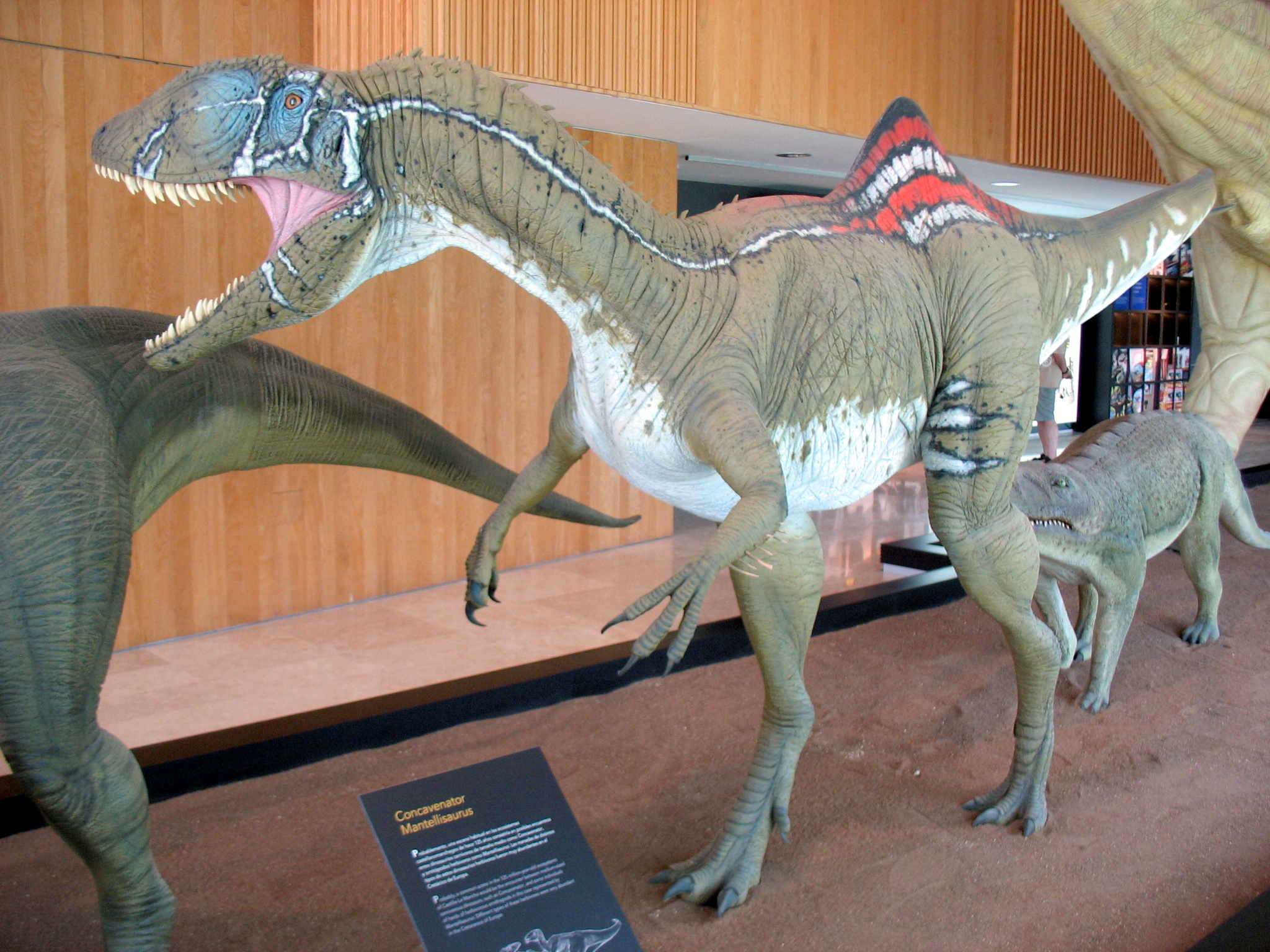
Accounts of meat-eating dinosaurs tend to reach for the same short list, and the animals with the most alarming teeth always win it. Concavenator corcovatus earned its reputation a different way. Described in 2010 from a nearly complete skeleton found in northern Spain, it was a predator of about 5 to 6 metres and 320 to 400 kilograms, with a conventional allosauroid skull and one extraordinary feature: two vertebrae just in front of its hips that shoot upward into a narrow, pointed hump that no close relative possesses.
The name gives the game away. Concavenator means hunter of Cuenca, the province where the fossil was collected, and the species name corcovatus is Latin for hunchbacked. Francisco Ortega, Fernando Escaso and José Luis Sanz published the description, and the specimen, catalogued as MCCM-LH 6666, is held by the Science Museum of Castilla-La Mancha. It is still the only known member of its genus, and fifteen years of follow-up study have not explained the hump.
A predator from a tropical lake bed
The fossil came out of Las Hoyas, a site in the hills west of Cuenca that is classed as a Konservat-Lagerstätte, meaning a deposit where preservation is unusually complete. The rocks there are fine laminated limestones laid down in an Early Cretaceous wetland, roughly 125 million years ago, in a climate that was hot and humid. Mud that settles in still water in thin seasonal layers can archive a whole ecosystem, and Las Hoyas does exactly that.
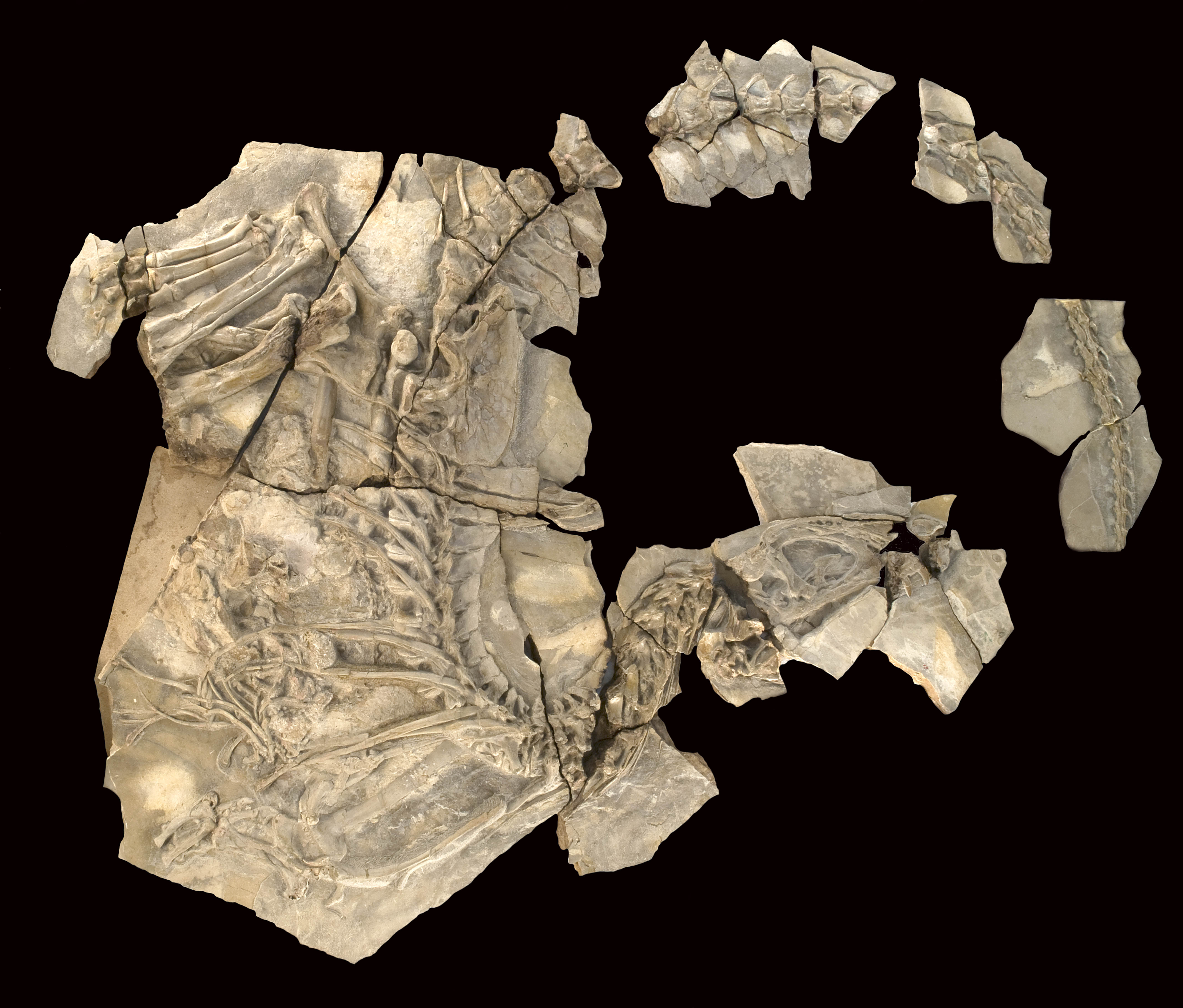
The Concavenator individual is articulated and almost complete: the skull, ten neck vertebrae, thirteen back vertebrae (the last two elongated), five vertebrae of the hip region, thirty tail vertebrae, ribs, and parts of the arms and legs. Some blocks were deliberately left in the rock rather than prepared out, because delicate traces of skin were sitting on the surface. Those traces are the ordinary kind: rectangular scales on the underside of the tail, bird-like scutes on the feet, and pads on the soles. No feathers were found anywhere on the animal.
The same lake also gave up its neighbours, including the toothed bird-mimic Pelecanimimus and some of the earliest known birds. In life this was a crowded, humid floodplain rather than the open desert the bonebed might suggest, and the predator at the top of it was built like a lean hunter: a skull 63 centimetres long carrying blade-shaped serrated teeth, and a body modest by the standards of its family.
Two bones that should not be there
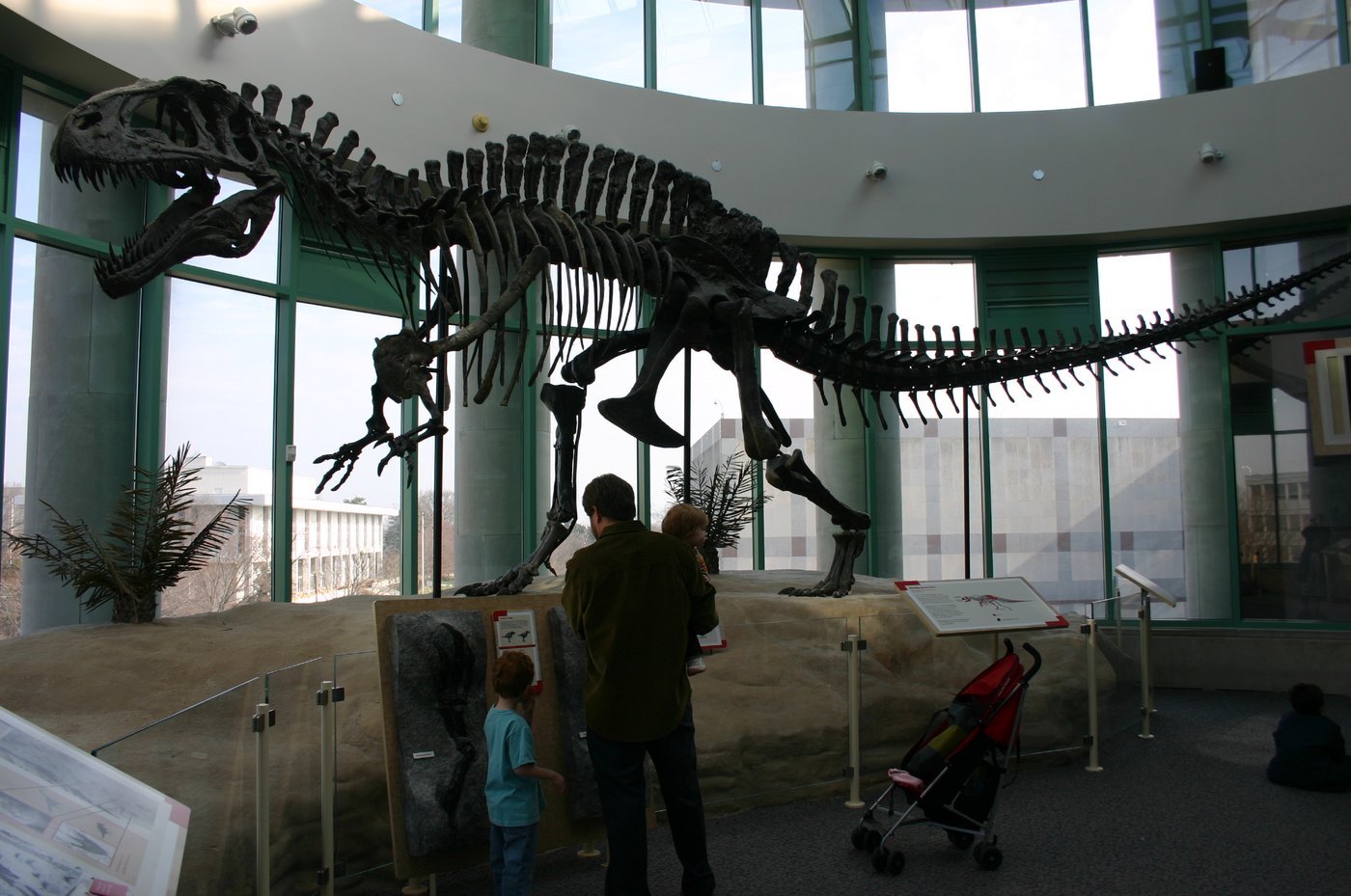
Across most theropods the back vertebrae carry neural spines of fairly even height, so the back reads as a low continuous ridge. In Concavenator the final two are dramatically taller than the rest, raising a single narrow peak directly over the hips. The rest of the column is normal. It is not a sail running the length of the body, and it is not a thick dome like the muscle hump of a bison. It is a thin, pointed structure in one small part of the spine, and that shape is what makes it hard to interpret.
Hump, sail or fat store
Three explanations have been offered, and none can be tested against the fossil, because whatever covered those spines did not survive. Roger Benson of the University of Cambridge suggested the structure may be analogous to crests used for visual display, a signal aimed at rivals and mates rather than at the environment. The team that named the animal proposed it could have been a thermal regulator. A third suggestion is that it held a deposit of fat, a reserve of the kind a camel carries, useful in a habitat that may have dried out seasonally.
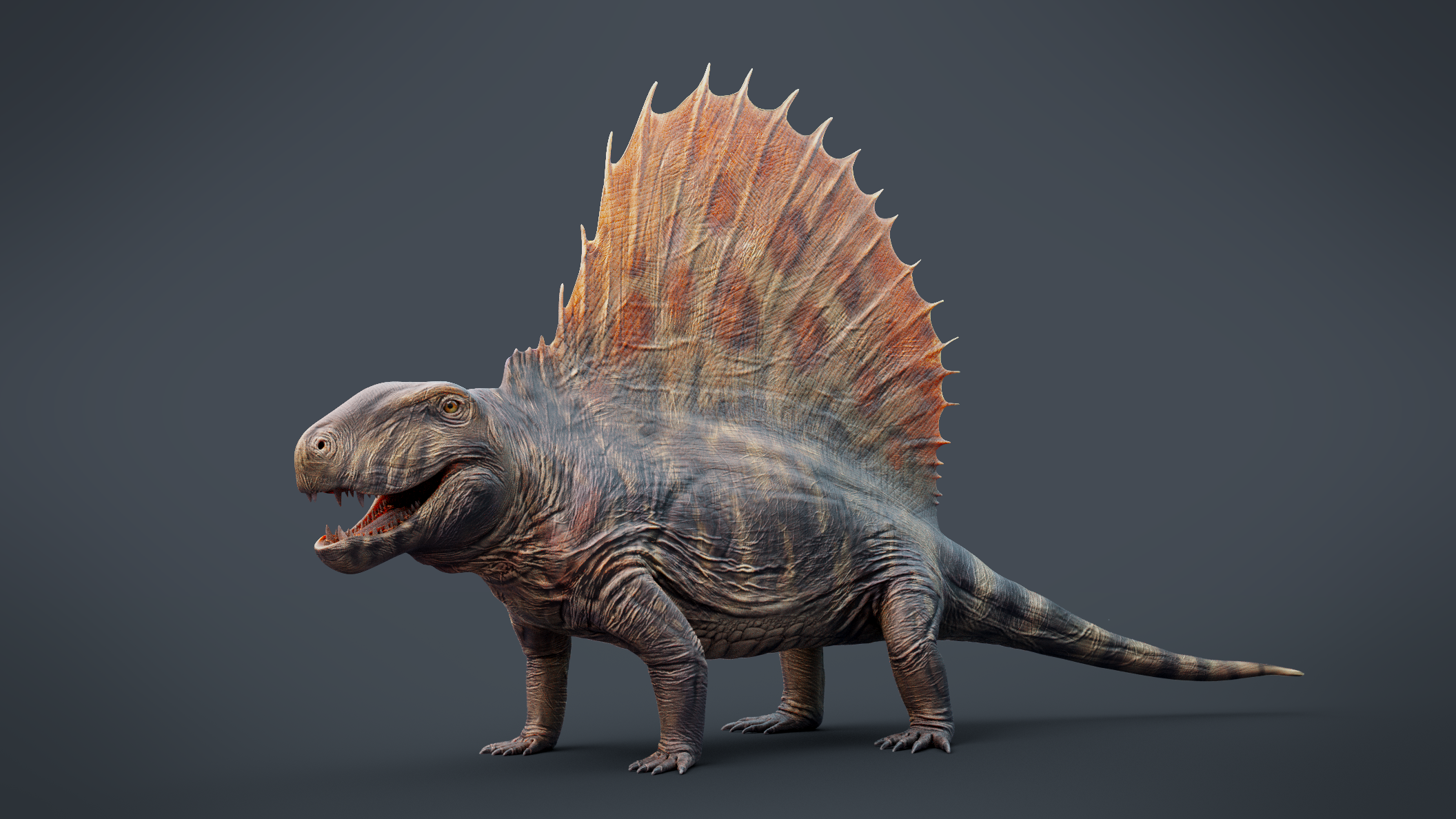
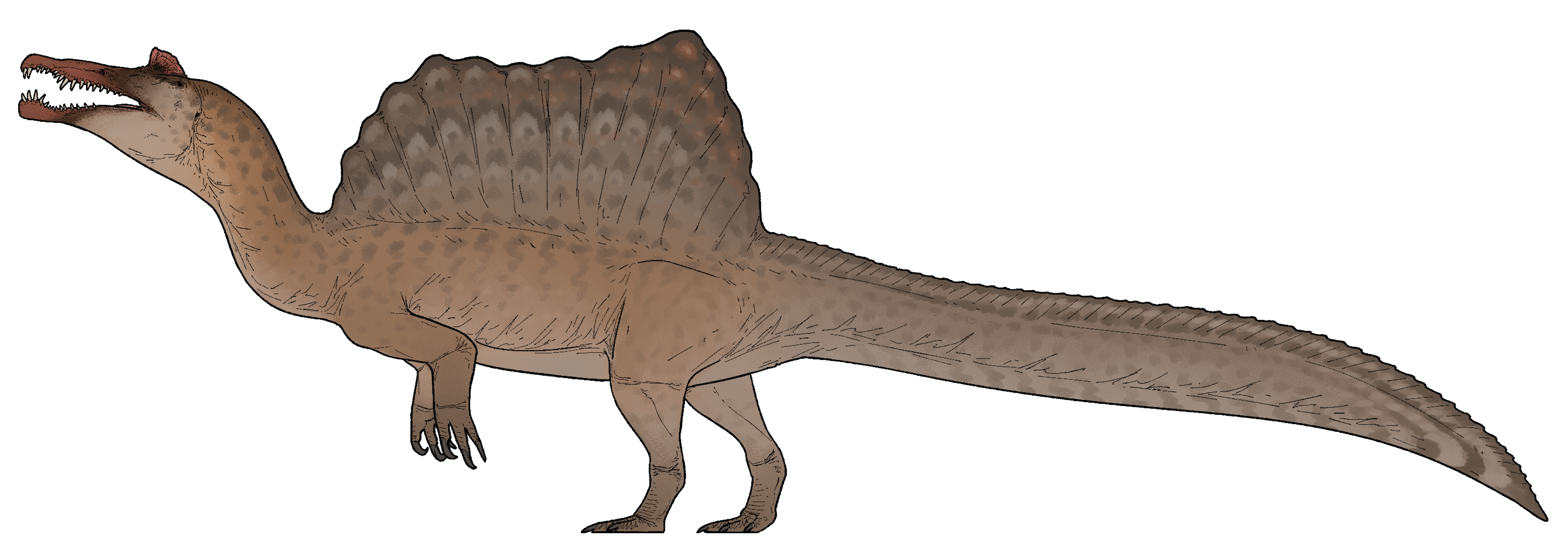
The thermal idea has a famous comparison in Dimetrodon, the sail-backed synapsid of the Permian, which lived some 200 million years before Concavenator and was in no way related to it. A broad sheet of skin stretched over long spines is a radiator: it can catch the morning sun to warm up and dump heat when the day gets hot. Spinosaurus and other spinosaurids ran the same experiment again in the Cretaceous. The problem in this case is proportion. A tall narrow hump has little surface area, so it would make a poor radiator compared with a real sail, which is one reason display is the more popular guess.
Quill knobs on the forearm
The second controversy sits on the arm. On the ulna, the forearm bone, Concavenator preserves a row of bumps. In birds and in feathered theropods such as dromaeosaurids, bumps in that position are quill knobs, the places where ligaments anchored feather follicles to the bone. Ortega and colleagues argued the knobs probably anchored simple hollow quills, which would push the origin of feathers deeper into the theropod family tree than the small feathered predators usually quoted. Quill-like structures also turn up in ornithischians such as Tianyulong and Psittacosaurus, so if all of them are true feathers, the feature is far older than any one lineage.
Not everyone accepts that reading. Christian Foth and colleagues noted that the bumps sit on the anterolateral side of the ulna and proposed they are intermuscular lines that served as tendon attachments instead. Elena Cuesta Fidalgo, working with Ortega and Sanz, rebuilt the forearm musculature and answered back: the row does not fall between any of the major muscles, the only muscle that could reach it normally attaches to smooth bone, and the same offset arrangement of knobs is found in living birds such as the moorhen. Her 2018 thesis further argued that the bone is preserved on its side, which changes the position the critics were working from. The bumps are real. Their meaning is still disputed.
A giant's family with a European address
Concavenator is a carcharodontosaurid, a member of the group that produced the biggest land predators of the southern continents: Carcharodontosaurus in Africa, Giganotosaurus, Tyrannotitan and Mapusaurus in South America, and the more recently described Meraxes from Argentina. The North American Acrocanthosaurus is close to them and shares the tall spines, though in that animal the spines run in a ridge along the whole back instead of a single peak, and it lived several million years later.
What makes the Spanish fossil interesting to specialists is where it sits. The phylogenetic analysis published with Meraxes in 2022 recovered Concavenator as an early-diverging member of the family, grouped near Eocarcharia from Africa and Lajasvenator and Lusovenator from South America. The family therefore was not a single burst of giants in one corner of Gondwana. It had a broader and earlier spread than the giant skulls imply, and its oldest representatives turn up in Europe. That matters here too, because Early Cretaceous Europe was a scatter of islands where large dinosaurs were the exception rather than the rule, and a 6 metre predator was a serious animal on any of them.
What survives of Concavenator is a snapshot rather than a story: one skeleton, one lake, one strange spine, and a set of marks on an arm bone that two groups of researchers read in opposite directions. Blocks of the specimen were left unprepared on purpose, which means the animal still has material it has not shown anyone yet, and it is a fair bet that some future preparation or scan will either settle the quill question or start a new argument about it.
It also illustrates a contrast with the animal this site is built around. Triops survived five mass extinctions by staying small, staying dormant and asking nothing of any particular environment. Concavenator did the opposite: a specialised predator in a narrow slice of time and place, famous now for two bones that may have been advertisement, radiator or fat. Branchiopods are still here. The humpbacked hunter is a slab of limestone in Cuenca.
Further reading on this site: the sail-backed Dimetrodon, the semi-aquatic Spinosaurus, Allosaurus as the great Jurassic cousin, and why prehistoric animals grew so big.