Published September 02, 2026 · by the Triops.me Editorial Team · Back to Articles
The Cretaceous-Paleogene Extinction: The Day the Dinosaurs Died
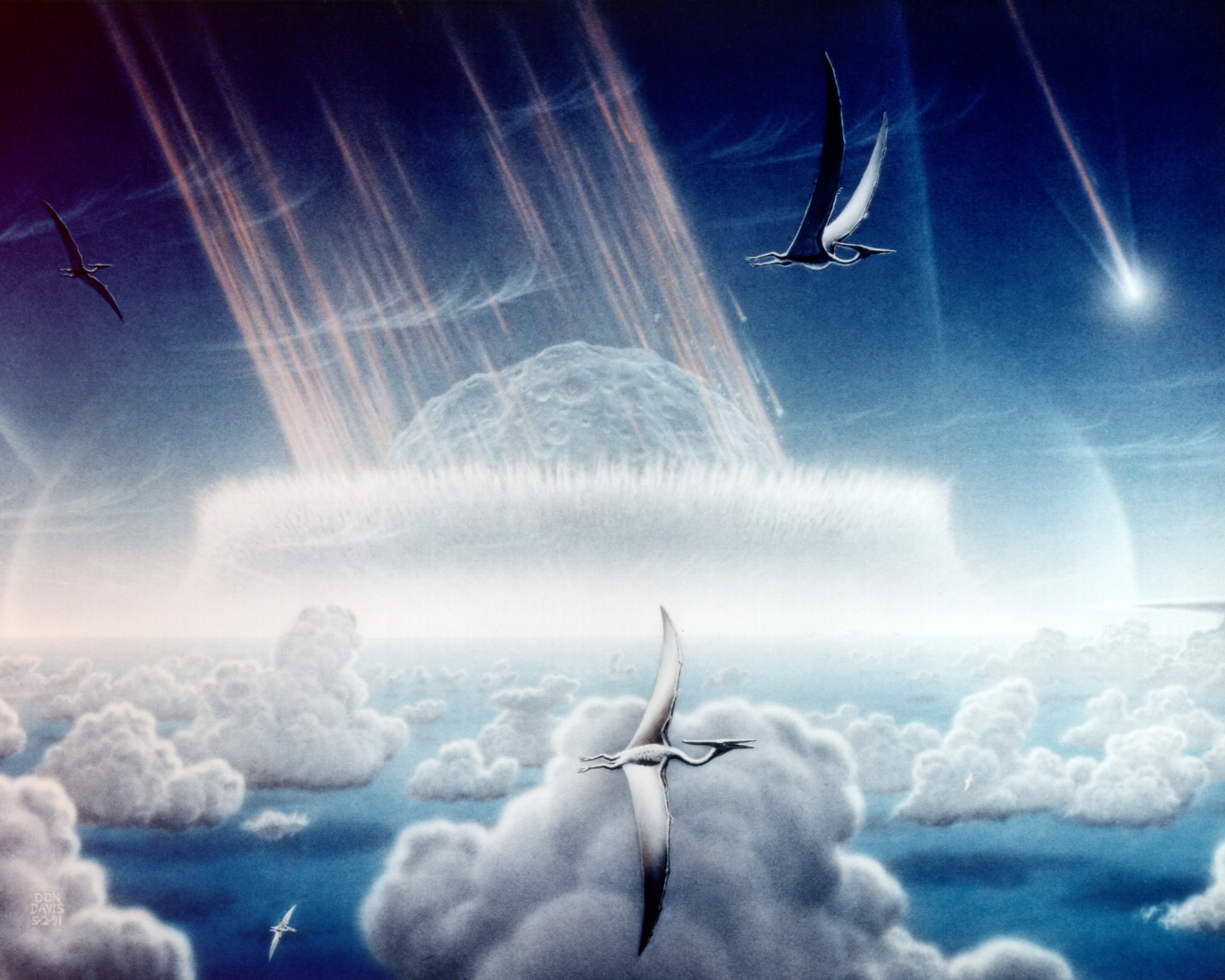
On a spring day 66 million years ago, a rock the size of a small city slammed into what is now the Yucatan Peninsula of Mexico. The impact created the Chicxulub crater, a basin nearly 200 kilometers wide and buried beneath modern-day sediment. In a single afternoon, the event triggered a cascade of environmental catastrophe that ended the reign of the dinosaurs and wiped out roughly 75% of all species on Earth. This is the Cretaceous-Paleogene extinction, the most famous of all mass extinction events, and the one that reshaped life on our planet forever.
But while the dinosaurs perished, other creatures endured. Among them was one of the most ancient lineages on Earth: Triops, the tadpole shrimp. These small crustaceans had already survived two earlier mass extinctions, and the asteroid that ended the Age of Dinosaurs could not touch them. Understanding how and why Triops survived gives us a window into what it takes to endure the unthinkable.
The Chicxulub Impact
The asteroid that struck Earth at the end of the Cretaceous period was approximately 10 to 15 kilometers in diameter. It traveled at roughly 20 kilometers per second, and upon impact it released energy equivalent to billions of nuclear bombs. The immediate effects were devastating. A fireball engulfed everything within hundreds of kilometers. Tsunamis hundreds of meters high raced across the ocean. Earthquakes shook the planet with a force that dwarfed any modern disaster.
The impact site itself, near what is now the town of Chicxulub on the northern coast of the Yucatan Peninsula, was buried under layers of limestone and laterite. The crater was not discovered until 1978 by geophysicist Glen Penfield, who noticed a magnetic anomaly in satellite data. It took decades for the scientific community to fully accept that this buried structure was the smoking gun for the extinction of the dinosaurs.
The Aftermath: Nuclear Winter and the Collapse of Food Webs
The immediate destruction was only the beginning. The impact vaporized massive amounts of rock, sending dust and soot into the upper atmosphere. Sulfur released from the target rock combined with water vapor to form sulfuric acid aerosols, which blocked sunlight for months or even years. This created what scientists call an "impact winter," a period of cold, dark conditions that halted photosynthesis across the planet.
Without photosynthesis, plant life died. Without plants, the herbivorous dinosaurs starved. Without herbivores, the carnivores followed. The food chain, which had taken hundreds of millions of years to develop, collapsed in a matter of months. Ocean ecosystems suffered too, as the cooling and acidification of seawater disrupted the plankton and other organisms at the base of the marine food web.
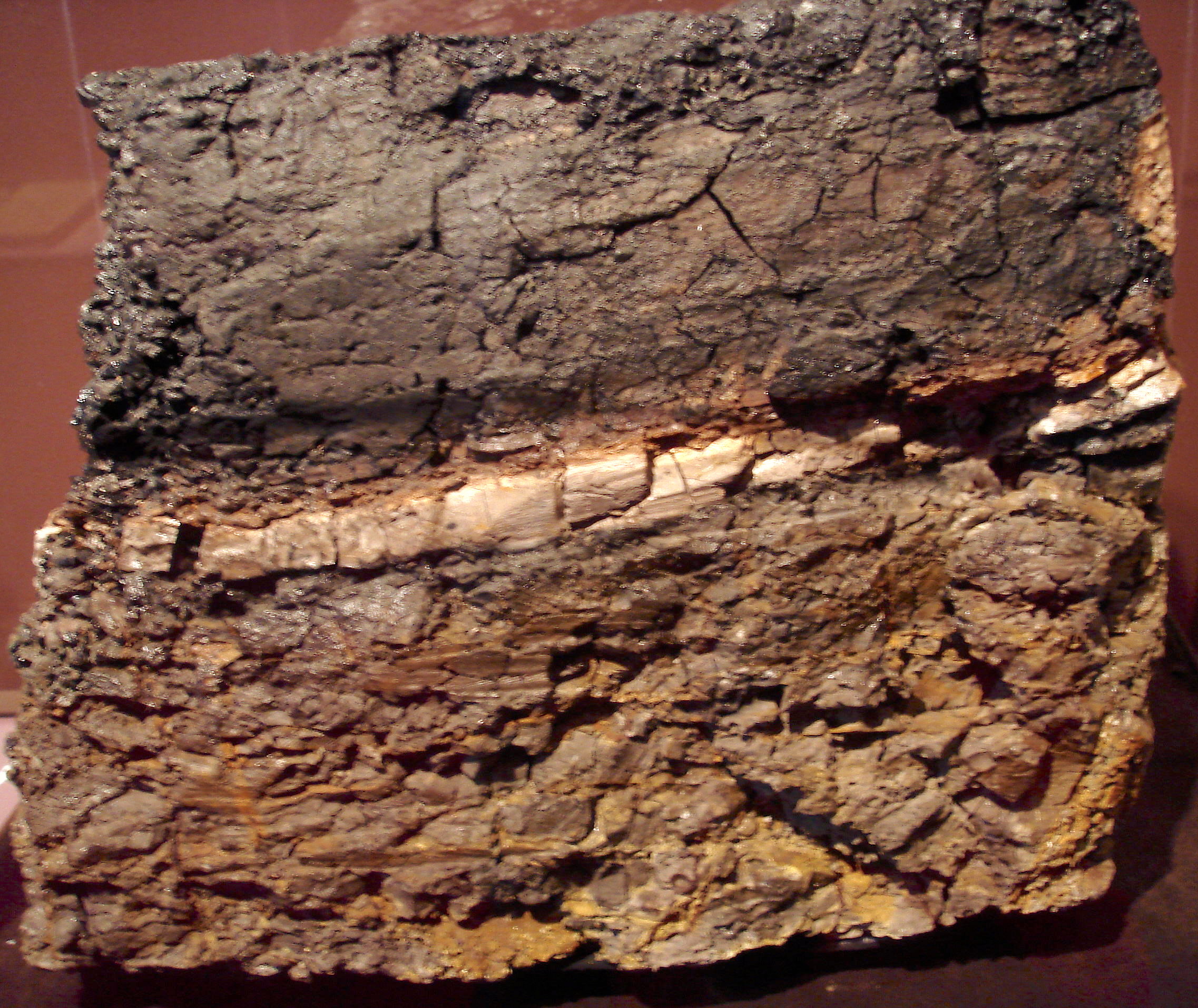
The iridium layer, a thin clay layer rich in the element iridium, was discovered by Walter Alvarez and his team in 1980 in Italy. Iridium is rare on Earth's surface but abundant in asteroids, providing compelling evidence that the extinction was caused by an extraterrestrial impact. This layer, known as the K-Pg boundary, is found in rock formations all around the world, a silent testament to the scale of the catastrophe.
Who Died, Who Survived
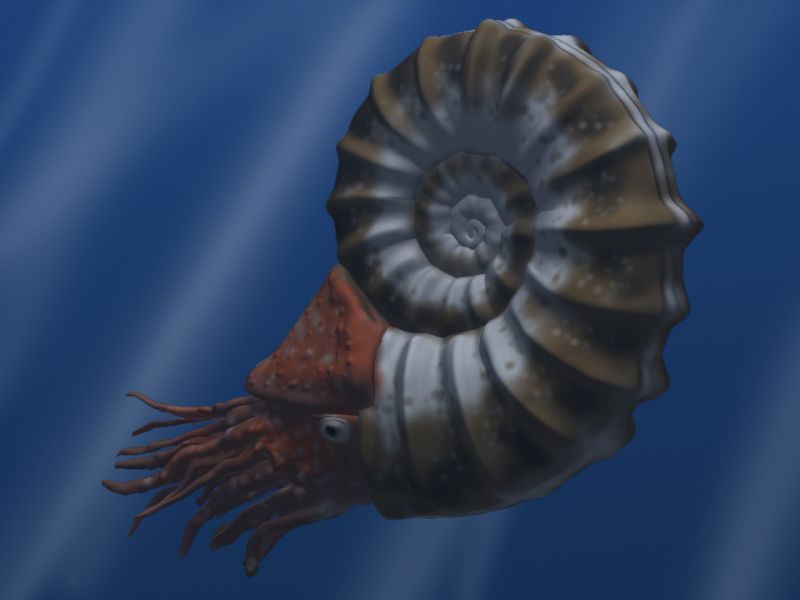
The Cretaceous-Paleogene extinction was not selective in its destruction. It eliminated all non-avian dinosaurs, from the massive Tyrannosaurus rex to the smallest theropods. Pterosaurs, the flying reptiles, vanished entirely. Marine reptiles like mosasaurs and plesiosaurs disappeared from the oceans. Ammonites, the spiral-shelled cephalopods that had been abundant for hundreds of millions of years, went extinct. Seventy-five percent of all species on Earth were gone.
Yet some lineages survived. Small mammals, many of which lived underground or in burrows, endured the initial devastation and the long aftermath. Birds, the direct descendants of dinosaurs, survived and diversified rapidly in the aftermath. Crocodilians, turtles, and many fish species also made it through. Insects, too, proved remarkably resilient, with many species surviving the post-impact conditions.
How Triops Survived the Extinction
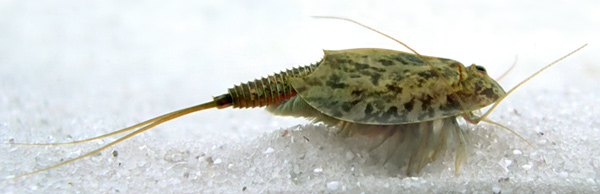
Among the survivors were the branchiopods, and specifically Triops, a group of crustaceans whose lineage dates back over 300 million years. Triops had already survived the Permian-Triassic extinction, the Great Dying that killed 90% of all species. The K-Pg extinction was devastating, but Triops had a set of adaptations that made it almost impossible to wipe out.
The key to Triops' survival lies in its eggs. Triops produce eggs that are resistant to extreme conditions, a trait known as cryptobiosis. These eggs can survive desiccation, freezing, and even exposure to radiation. When conditions are favorable, the eggs hatch, and the Triops begin their rapid life cycle, which can be completed in just a few weeks. This ability to "pause" life and wait for favorable conditions is one of the most remarkable adaptations in the animal kingdom.
Triops also live in temporary pools and ephemeral water bodies. These habitats are inherently unstable, with water appearing and disappearing unpredictably. Triops have evolved to thrive in these conditions, and their eggs can remain dormant in the soil for decades, waiting for the next rainfall. When the K-Pg impact devastated the Earth's surface, the Triops eggs in the soil were insulated from the worst effects, and when rain finally returned, the Triops hatched and began their life cycles anew.
The impact of the Chicxulub asteroid on the world's oceans would have caused massive disruption to marine ecosystems, but Triops, as freshwater creatures, were largely shielded from the worst of the oceanic effects. Their ability to tolerate a wide range of environmental conditions, from near-freezing to very warm temperatures, also helped them survive the post-impact climate chaos.
The Broader Picture: What the Cretaceous-Paleogene Extinction Teaches Us
The K-Pg extinction is a reminder of the fragility of life on Earth. A single event, a rock from space, could reshape the entire planet and eliminate the dominant species of the era. But it also shows the resilience of life. Creatures like Triops, which had evolved over hundreds of millions of years and developed extraordinary survival strategies, were able to endure and persist.
The extinction opened up new ecological niches, allowing mammals to diversify and eventually evolve into the wide range of species we see today, including humans. Without the asteroid, the world would be a very different place. The dinosaurs might still rule, and the small mammals that survived would never have had the chance to become the dominant group on Earth.
Triops, meanwhile, continued their ancient existence, unchanged by the extinction event. They are a living link to a world before the dinosaurs, before the mammals, before the reptiles. They are a testament to the power of adaptation, the importance of resilience, and the enduring nature of life itself.
Conclusion
The Cretaceous-Paleogene extinction was a catastrophic event that reshaped life on Earth. It eliminated 75% of all species, including the dinosaurs, and opened the way for the rise of mammals. But it also showed the incredible resilience of life, with creatures like Triops surviving the event through their remarkable adaptations. Triops, the tadpole shrimp, are not just survivors, they are living fossils, a window into the ancient past, and a reminder that life can endure even the most devastating of catastrophes.