Published 2026-08-30 by the Triops.me Editorial Team · Back to Articles
Cynodonts: The Prehistoric Ancestors of Mammals
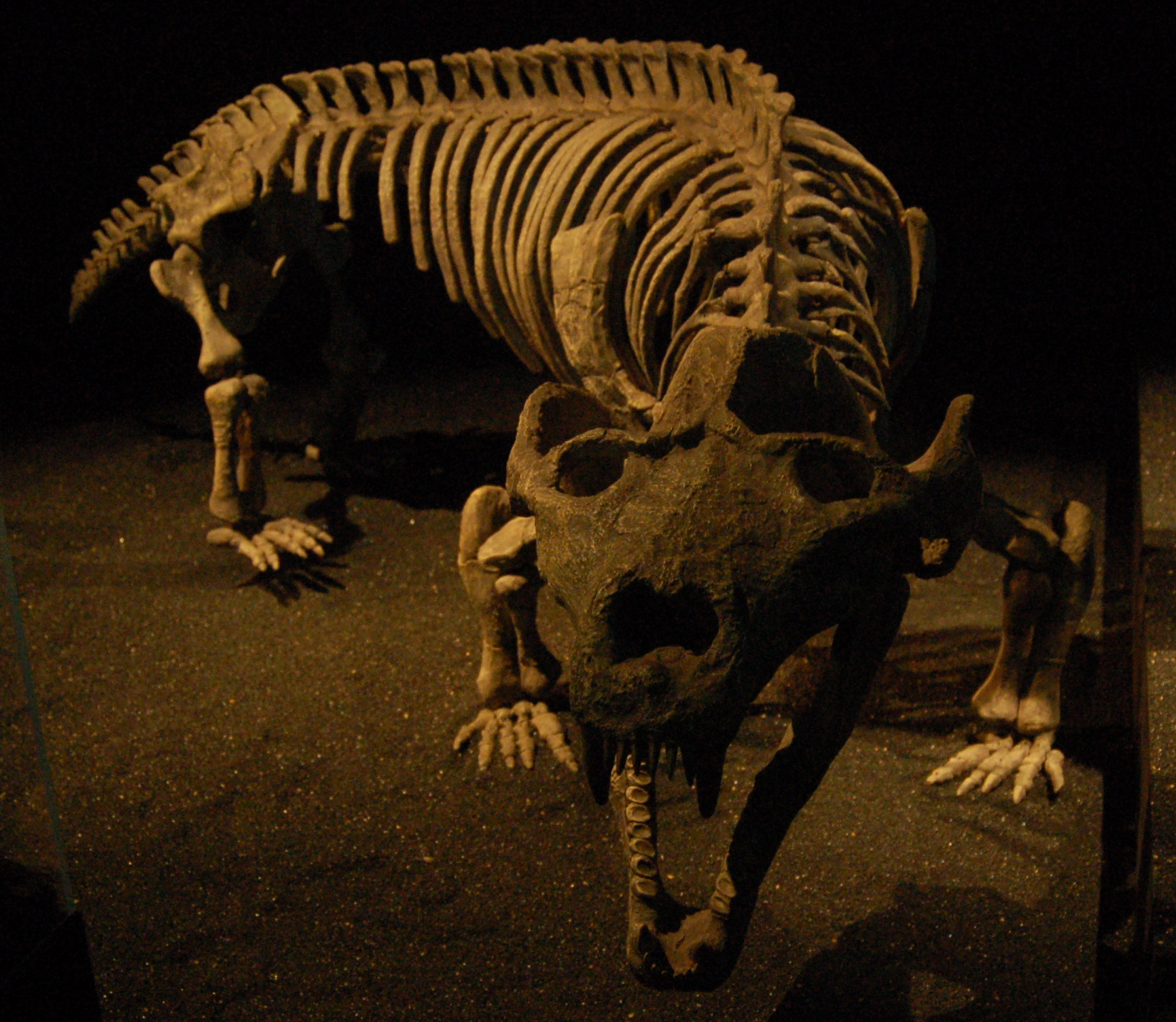
Every mammal alive today, from the smallest shrew to the largest blue whale, owes its existence to a group of prehistoric creatures called cynodonts. These "dog-toothed" reptiles, first appearing roughly 260 million years ago during the Permian period, were not dinosaurs, not lizards, and not quite mammals. They occupied a crucial middle ground in vertebrate evolution, bridging the gap between ancient reptile-like ancestors and the warm-blooded, fur-covered mammals that would eventually dominate the planet.
Cynodonts belonged to a broader group called therapsids, which were the dominant land animals of the late Permian. While many of their relatives were large, lumbering herbivores, cynodonts were relatively small, agile creatures that developed a suite of features remarkably similar to those of modern mammals. They had differentiated teeth, including prominent canines and precise chewing molars. They likely had a higher metabolism than their cold-blooded neighbors. Some evidence suggests they had whiskers and possibly even rudimentary fur, though the fossil record for soft tissues is always limited.
The Permian-Triassic Extinction and Survival
Their greatest test came about 252 million years ago with the Permian-Triassic extinction event, often called "The Great Dying." Roughly 90% of all marine species and 70% of terrestrial vertebrate species were wiped out in a catastrophe likely triggered by massive volcanic eruptions in what is now Siberia. The world's ecosystems collapsed, oceans acidified, and global temperatures swung wildly.
Yet cynodonts survived. They were among the few therapsid lineages to make it through, likely because their smaller body size and potentially endothermic metabolism gave them an edge in a destabilized world. In the aftermath, as ecosystems slowly rebuilt, cynodonts diversified and radiated across the supercontinent Pangea, filling ecological niches left vacant by the devastation.
A Global Radiation
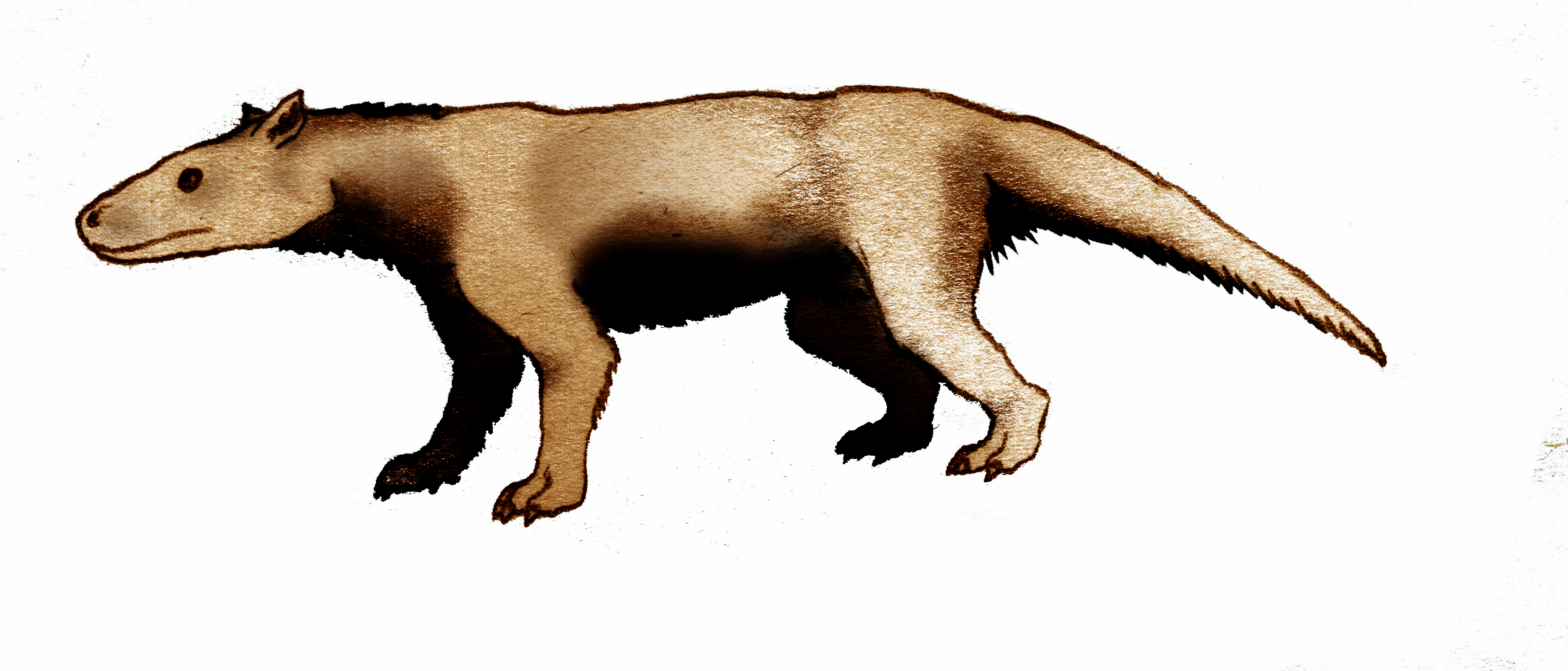
In the Triassic period, cynodonts were found on every continent. Some of the best-known species include Cynognathus, a robust predator roughly the size of a modern wolf that could weigh over 30 kilograms. Its massive jaws, lined with sharp canines and shearing postcanine teeth, made it one of the apex predators of the early Triassic. Fossils of Cynognathus have been found in both South America and Africa, which makes sense given that these continents were still joined together as part of Gondwana.
On the herbivorous side, Massetognathus was a common small cynodont found in the fossil beds of southern Brazil and Argentina. Measuring about 30 centimeters long, it grazed on vegetation with specialized teeth designed for grinding plant material. Diictodon, another herbivorous cynodont from South Africa, was even more widespread and is one of the most commonly found therapsid fossils in the Karoo Basin.
Some cynodonts took unusual paths. Thrinaxodon, a small burrowing cynodont from the early Triassic, is known from both South America and Antarctica, providing key evidence that these continents were once connected. Its fossils have been found curled up in burrow casts, suggesting a lifestyle not unlike that of modern badgers or ground squirrels.
The Road to Mammals
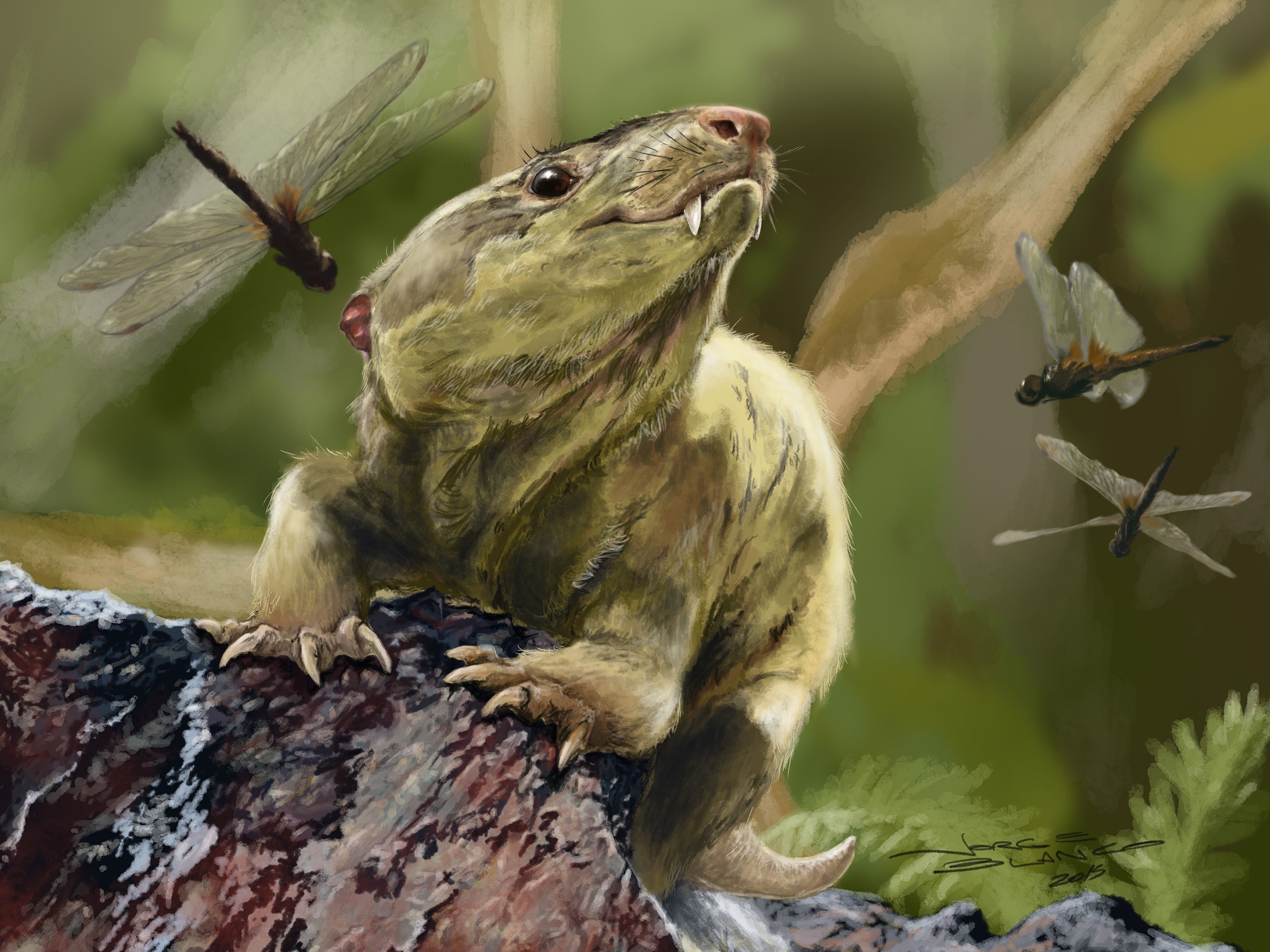
The evolutionary journey from cynodonts to mammals was not a single leap but a gradual accumulation of mammalian features over tens of millions of years. Early cynodonts still laid eggs, but some later lineages are thought to have given birth to live young, much like modern mammals. The jaw joint shifted from the reptilian articular-quadrate system to the mammalian dentary-squamosal configuration, a change that also repurposed the old jaw bones as the tiny middle ear bones unique to mammals.
True mammals first appear in the fossil record during the late Triassic, roughly 225 million years ago, overlapping in time with the earliest dinosaurs. For much of the Mesozoic era, mammals remained small, nocturnal creatures overshadowed by dinosaurs. But the cynodont blueprint, refined over millions of years of evolution, had equipped them with the metabolic efficiency, reproductive flexibility, and sensory acuity they would need to thrive once the dinosaurs were gone.
Legacy in Every Living Mammal
Today, we are all cynodonts in the deepest sense. Every feature that makes mammals distinct, from warm blood and milk production to whiskers and differentiated teeth, traces its origins back to those Permian and Triassic survivors. When you chew your food, you are using teeth that follow a design first perfected by Cynognathus over 240 million years ago. When you feel the texture of something with your fingers, you are using the same sensory system that first evolved in a small, burrowing therapsid huddled against the Permian cold.
The story of cynodonts also resonates with the broader theme we explore on this site. Like Triops, which has survived five mass extinctions with a body plan that barely changed in 200 million years, cynodonts endured one of the worst catastrophes in Earth's history and came out the other side. But while Triops perfected the art of staying the same, cynodonts perfected the art of slow, relentless transformation. Both strategies have proven spectacularly successful. One gave us a creature that looks identical to its Triassic ancestors. The other gave us everything else.