Published August 21, 2026, 03:28 by the Triops.me Editorial Team · Back to Articles
Deinosuchus: The Terror Croc That Hunted Dinosaurs
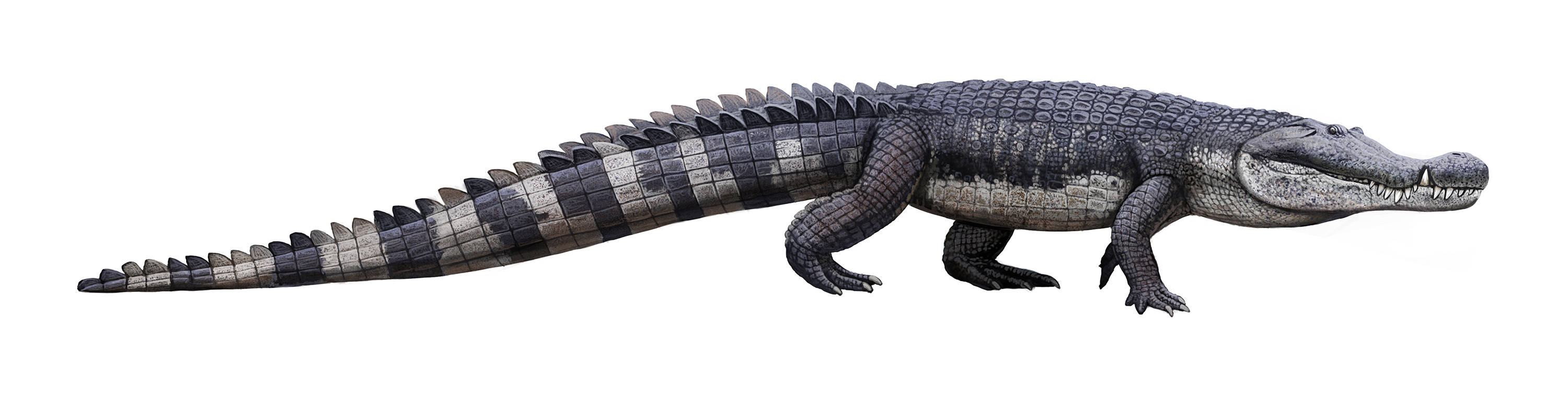
Imagine a crocodile the length of a school bus, patrolling the rivers and swamps of ancient North America while dinosaurs roamed the banks. This was Deinosuchus, whose name literally translates to "terrible crocodile" from the Greek deinos (terrible) and suchos (crocodile). Far from being a prehistoric curiosity, Deinosuchus was arguably the most dangerous predator in its freshwater ecosystem, and it may have been the largest crocodilian to ever live.
Discovery and Naming
The story of Deinosuchus begins in 1858, when geologist Ebenezer Emmons described two enormous fossil teeth found in the Tar Heel Formation of Bladen County, North Carolina. At the time, Emmons mistakenly assigned them to Polyptychodon, a marine reptile. It would take another half-century before the true identity of these teeth came to light.
In 1903, fossil hunter John Bell Hatcher discovered several massive osteoderms, or bony scutes, lying on the surface at Willow Creek, Montana. He initially thought they belonged to the armored dinosaur Euoplocephalus. When examination revealed they were crocodilian, Hatcher reportedly "immediately lost interest." After his death in 1904, his colleague W.J. Holland studied the material and formally described the genus Deinosuchus hatcheri in 1909.
For decades, knowledge of Deinosuchus remained frustratingly limited. In 1954, paleontologists Edwin Colbert and Roland Bird assembled a dramatic skull reconstruction at the American Museum of Natural History, using fragments from Big Bend National Park in Texas. The result, modeled after a Cuban crocodile, was impressive but wildly inaccurate. It would not be until the work of David R. Schwimmer beginning in the 1990s that a clearer picture of the animal began to emerge.
A Giant Among Crocodilians
Deinosuchus was enormous by any measure. Estimates based on more complete fossil material place its total body length between 8 and 10 meters (26 to 33 feet), with the largest specimens possibly reaching 12 meters (39 feet). That is roughly the length of a large saltwater crocodile multiplied by nearly two. Weights are estimated at 2.5 to 5 metric tons, with the biggest individuals potentially exceeding 8.5 tons.

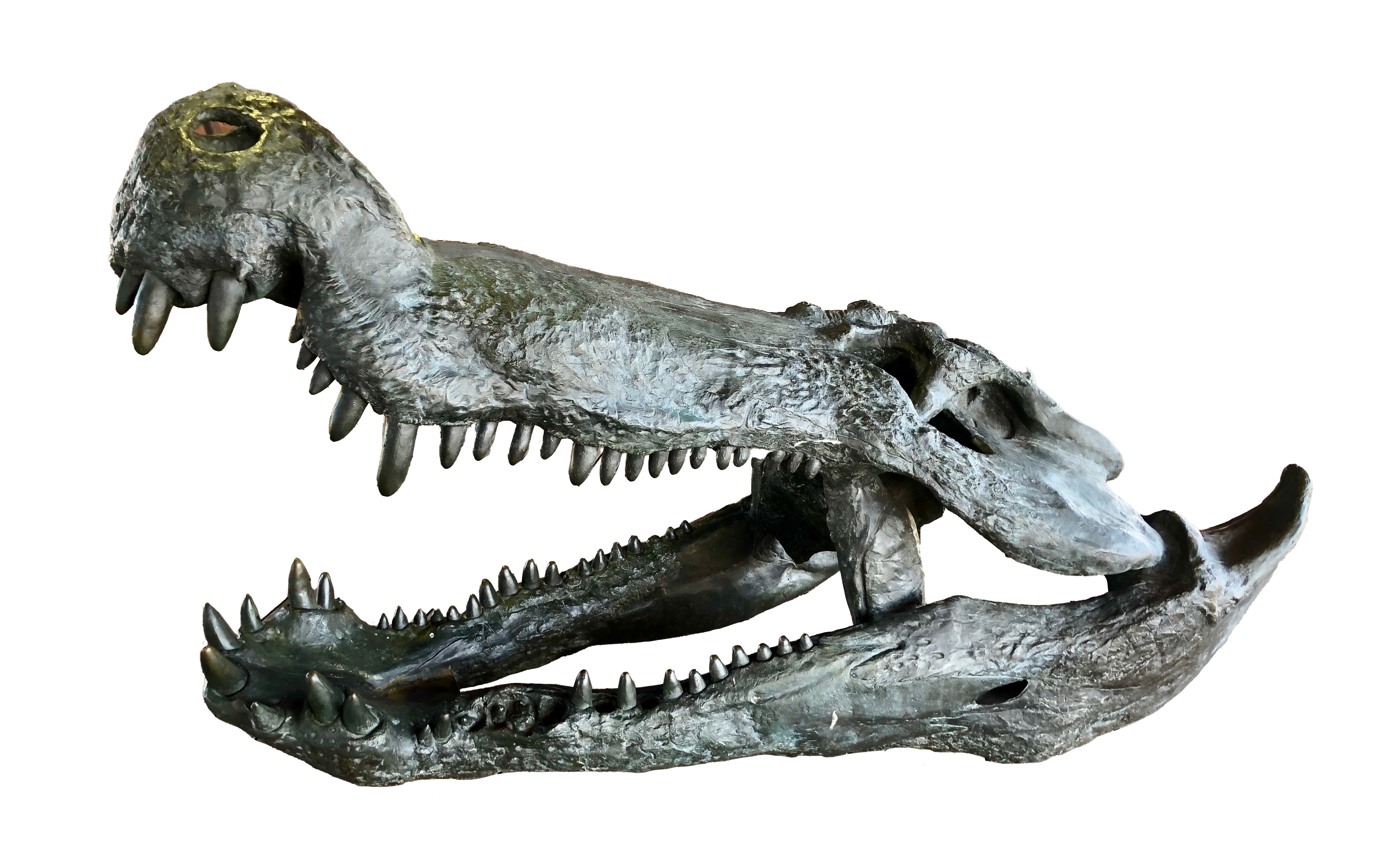
Despite its massive proportions, Deinosuchus did not look dramatically different from modern crocodilians. It had a broad, alligator-like snout with a slightly bulbous tip. Its teeth were thick, robust, and built for crushing rather than piercing. Each maxilla contained 23 teeth, and the rear teeth were short, rounded, and blunt. This was a jaw designed for shattering bone and cracking shells.
Modern saltwater crocodiles hold the record for the strongest bite of any living animal, measuring around 16,414 Newtons. Deinosuchus may have dwarfed that figure. Estimates range from 18,000 Newtons on the conservative end to a staggering 102,803 Newtons, which would be roughly seven times the bite force of Tyrannosaurus rex.
An Armored Beast
One of the most distinctive features of Deinosuchus was its osteoderms, the bony plates embedded in its skin. These were unusually large, heavy, and deeply pitted, with some taking on a roughly hemispherical shape. The deep pits and grooves served as attachment points for connective tissue. Together, the osteoderms and connective tissue formed a load-bearing reinforcement that supported the massive body when the animal moved on land.
Interestingly, more recent biomechanical analyses suggest that despite this armature, Deinosuchus would have struggled with the "high walk" gait seen in some modern crocodilians. Its hindlimbs could not generate enough muscular force to lift the enormous body into an erect posture. This means Deinosuchus probably spent the vast majority of its life in the water, dragging its belly across the land when it had to move.
The Dinosaur Killer Hypothesis
Was Deinosuchus really capable of hunting dinosaurs? The evidence strongly suggests yes. In 2002, Schwimmer identified hadrosaurid tail vertebrae near Big Bend National Park that bore tooth marks consistent with Deinosuchus. These bite marks showed the telltale patterns of a crushing, not piercing, attack.
In 2003, paleontologist Christopher Brochu supported this hypothesis, noting that Deinosuchus likely dined on ornithopod dinosaurs that ventured too close to the water's edge. The animal's habitat, the coastal swamps and river systems of Late Cretaceous North America, would have put it in direct contact with large herbivorous dinosaurs. A 10-meter crocodilian lurking beneath the surface would have been a lethal ambush predator for any dinosaur that lowered its head to drink.
But dinosaurs were not its only prey. Fossil evidence also points to giant sea turtles, large fish, and other aquatic vertebrates as regular parts of its diet. Deinosuchus was an opportunistic apex predator, not a dinosaur specialist.
Species and Distribution
Fossils of Deinosuchus have been found in 12 U.S. states, from Montana to North Carolina, as well as in northern Mexico. It lived on both sides of the Western Interior Seaway, the vast inland sea that divided North America during the Late Cretaceous. Three species are currently recognized: D. hatcheri from the western interior, D. schwimmeri from the eastern coastal regions, and the larger D. riograndensis from Big Bend, Texas.
Western populations tended to reach larger sizes but were less common, while eastern populations were far more abundant but generally smaller. A 2025 phylogenetic study by Walter and colleagues added a surprising twist: Deinosuchus may not even be a true crocodilian. Their analysis placed it outside Crocodilia entirely, as a derived non-crocodilian eusuchian. If confirmed, this would make Deinosuchus something even more remarkable, an evolutionary dead end of extraordinary proportions.
A Living Legacy
In August 2026, the Tellus Science Museum in Cartersville, Georgia, unveiled the first scientifically accurate mounted skeleton of Deinosuchus schwimmeri. The 31-foot replica was built from detailed fossil scans and more than 40 years of research by Dr. David Schwimmer, for whom the species was named. It took two years of collaboration between Schwimmer and Triebold Paleontology Inc. to complete the project.
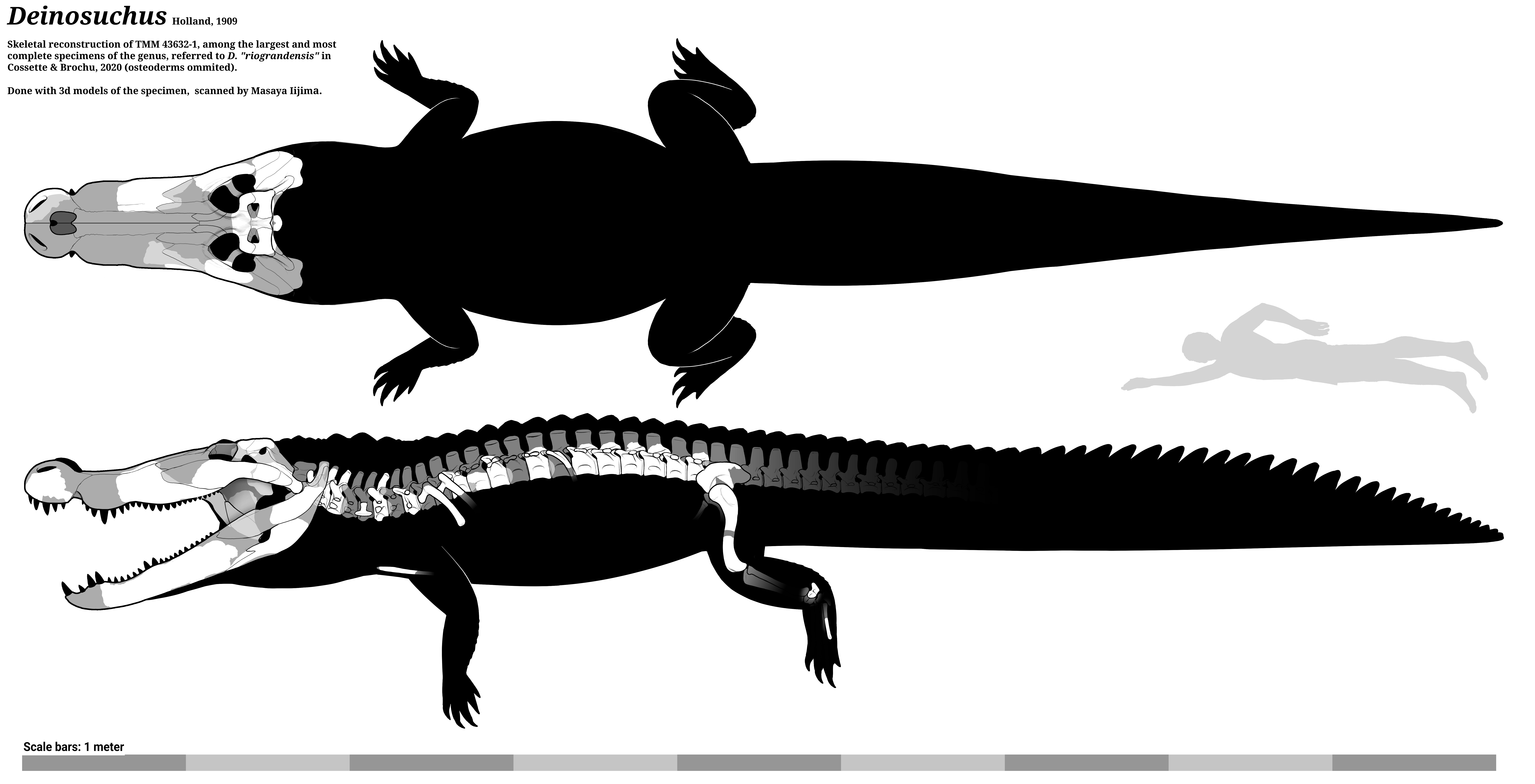
The mount represents a milestone in paleontology. For over a century, Deinosuchus existed only as fragmentary teeth and scattered bone. Now, visitors can stand face to face with a life-sized replica of the predator that terrorized the rivers of Cretaceous North America.
What Can Triops Teach Us?
Deinosuchus and Triops share something important: they are both reminders that the creatures we see today are survivors of deep time. Triops have persisted for over 200 million years, largely unchanged. Deinosuchus ruled for roughly 10 million years before vanishing around 73 million years ago, long before the final extinction event that ended the age of dinosaurs. One lineage endured; the other did not. Understanding why some ancient creatures persisted while others vanished is one of the great questions in paleontology, and it is a question that both the humble tadpole shrimp and the terrible crocodile help us ask.
References and Further Reading
- Schwimmer, D.R. (2002). King of the Crocodylians: The Paleobiology of Deinosuchus. Indiana University Press.
- Cossette, A.P. and Brochu, C.A. (2020). "A systematic review of the crocodyliform Deinosuchus." Journal of Vertebrate Paleontology, 40(2).
- Walter, J.D. et al. (2025). "Reassessment of the phylogenetic position of Deinosuchus." Systematic Palaeontology.
- Columbus State University (2026). "First scientifically accurate Deinosuchus skeleton mounted at Tellus Science Museum." ScienceDaily, August 5, 2026.