Published September 02, 2026, 12:17 · by the Triops.me Editorial Team · Back to Articles
Dilophosaurus: The Double-Crested Predator
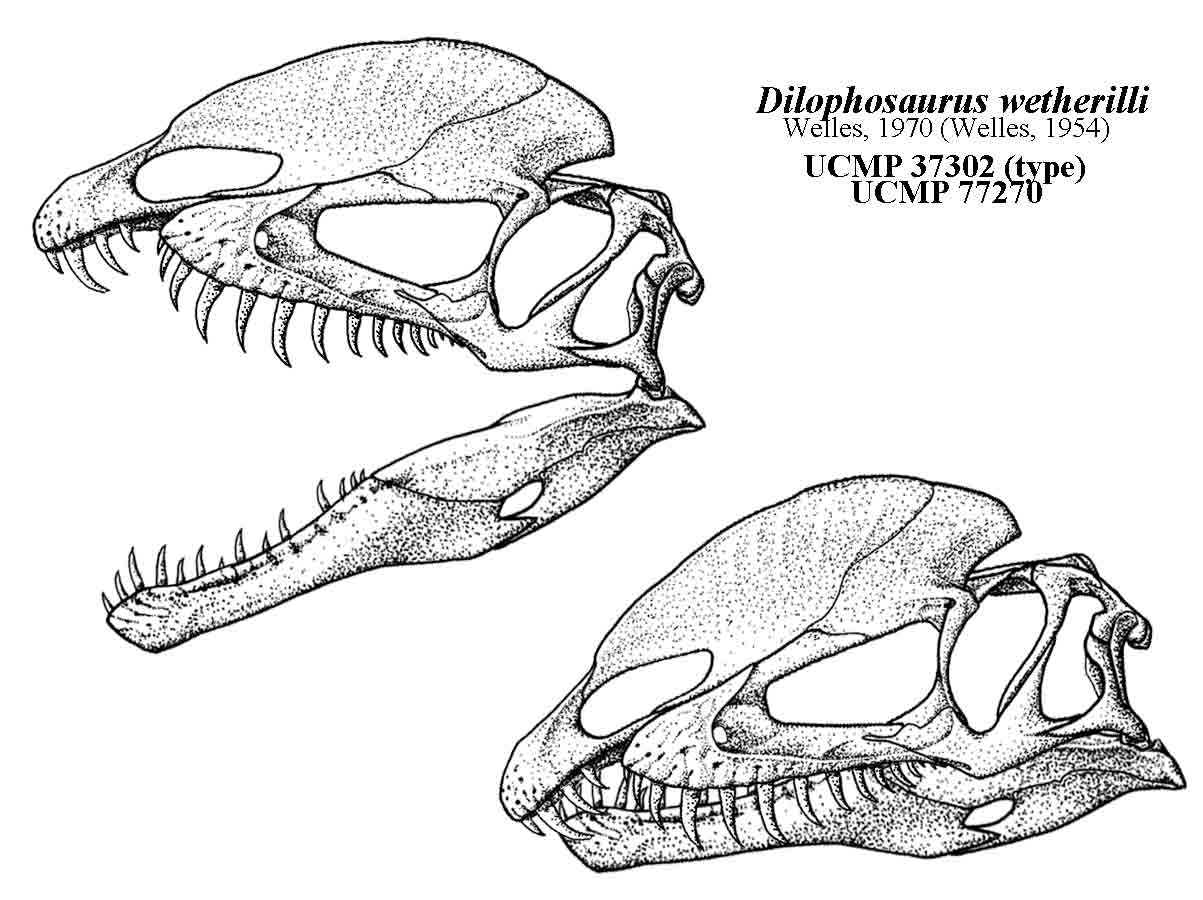
When most people picture Dilophosaurus, they imagine a small, frilled dinosaur spitting venom at its prey. That image comes from the 1993 film Jurassic Park, and it has almost nothing to do with the real animal. The actual Dilophosaurus was one of the largest land predators of the early Jurassic period, reaching lengths of six to seven meters and weighing around 400 kilograms. It had no neck frill, no venom, and no interest in shrinking itself to fit a movie script.
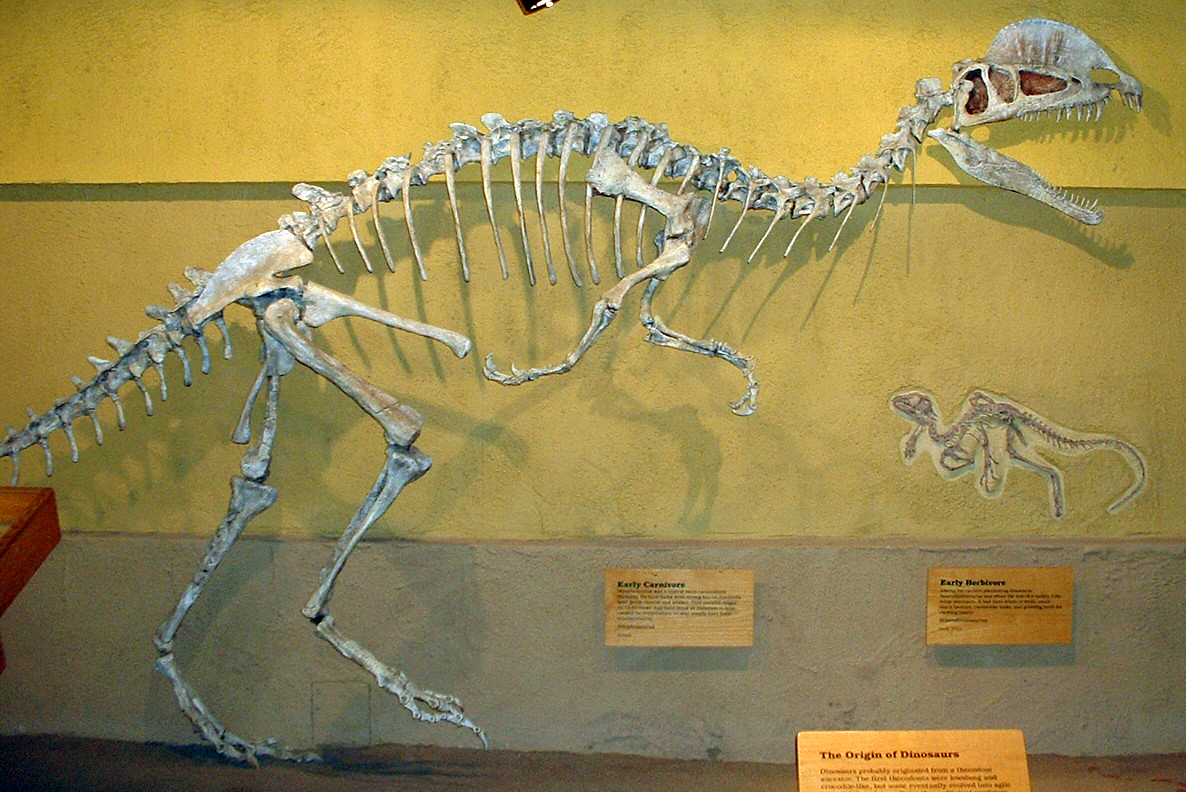
Discovered in 1940 in the Kayenta Formation of Arizona, Dilophosaurus wetherilli was first misidentified as a larger species of Megalosaurus. It was not until paleontologist Samuel Welles revisited the fossils in the 1960s that the animal received its own genus name. The name means "two-ridged lizard," referring to the pair of thin bony crests running along the top of its skull. These crests were fragile, likely covered in keratin, and were almost certainly used for display rather than combat.
A Predator in a Recovering World
Dilophosaurus lived approximately 193 million years ago, during the early Jurassic. The world it inhabited was still recovering from the Permian-Triassic extinction, the worst mass extinction event in Earth's history, which had wiped out roughly 90% of all species roughly 30 million years earlier. Ecosystems were rebuilding, and new groups of animals were filling niches left empty by the catastrophe.
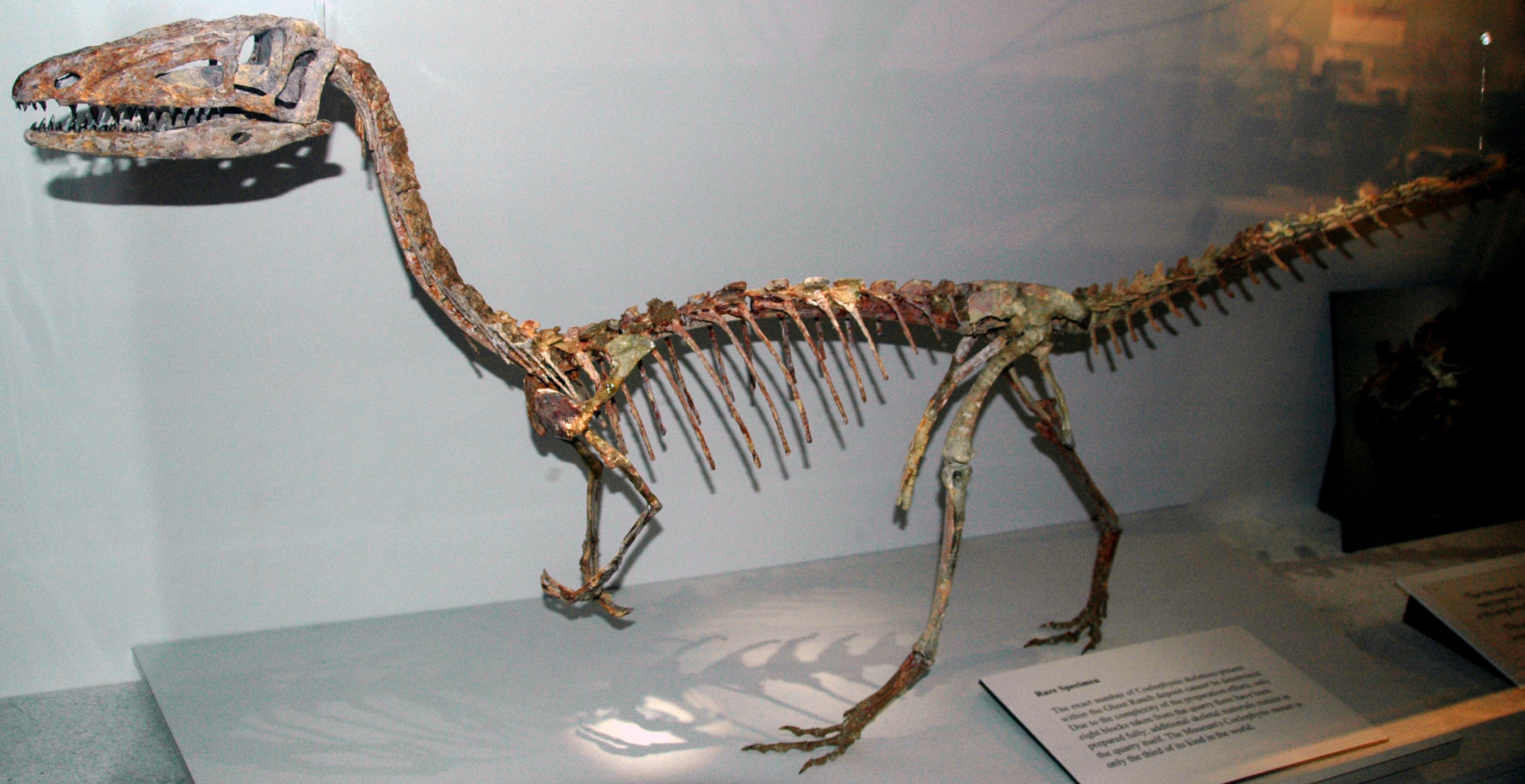
In the Kayenta Formation, Dilophosaurus shared its environment with a diverse community of early dinosaurs and other reptiles. Small theropods like Coelophysis hunted insects and tiny vertebrates nearby. Early sauropodomorphs, the ancestors of later giants like Brachiosaurus, browsed on low vegetation. Massive amphibians like Metoposaurs lurked in rivers and floodplains. Dilophosaurus sat near the top of this food web, likely preying on medium-sized herbivores and smaller carnivores alike.
Anatomy of an Apex Predator
The skull was long, narrow, and lightly built, with a distinctive notch between the premaxilla and maxilla bones that gave the upper jaw a bent appearance. Early researchers interpreted this notch as evidence of a weak bite, but more recent biomechanical studies have challenged that view. The skull was well reinforced at key stress points, suggesting Dilophosaurus could deliver a meaningful bite to prey of moderate size.
Its neck was long and flexible, the body compact and agile. Dilophosaurus was a fast runner, with long hind limbs built for pursuit. Unlike the heavy theropods of later eras like Allosaurus or Tyrannosaurus, Dilophosaurus relied on speed rather than brute force.
The Crest Mystery
The twin crests are the most visually striking feature of Dilophosaurus, and the most debated. They were thin, delicate structures that would have shattered in a fight. This strongly suggests a display function, similar to the elaborate plumage of modern birds of paradise or the horn structures of ceratopsian dinosaurs. The crests may have been brightly colored in life, used to attract mates or signal dominance to rivals.
Some researchers have proposed that the crests helped Dilophosaurus distinguish members of its own species from other early theropods in shared habitats. In a world where several carnivorous dinosaurs competed for the same prey, visual signals that prevented costly intraspecific conflict would have been a significant survival advantage.
A Cinematic Mismatch
The Jurassic Park portrayal created one of the most persistent misconceptions in paleontology. The film depicted Dilophosaurus as a small, dog-sized animal with a venom-spitting neck frill. In reality, it was among the largest predators of its time, about the size of a modern grizzly bear. No fossil evidence supports a neck frill, and there is zero evidence that any dinosaur evolved venom delivery through projectile spitting.
The cinematic version was inspired by a combination of the real crests, the threat displays of modern frilled lizards, and the venom of spitting cobras. It makes for dramatic cinema, but it obscures the genuinely fascinating biology of an animal pioneering large-bodied predation after Earth's greatest extinction.
Dilophosaurus represents an important moment in dinosaur evolution. It was one of the first theropods to achieve large body size, demonstrating that bipedal predatory dinosaurs could dominate ecosystems long before the famous creatures of the late Jurassic and Cretaceous. Without animals like Dilophosaurus paving the way, the later giants might never have existed.