Published August 19, 2026, 14:28 by the Triops.me Editorial Team · Back to Articles
Dimetrodon: The Sail-Backed Predator That Predates Dinosaurs
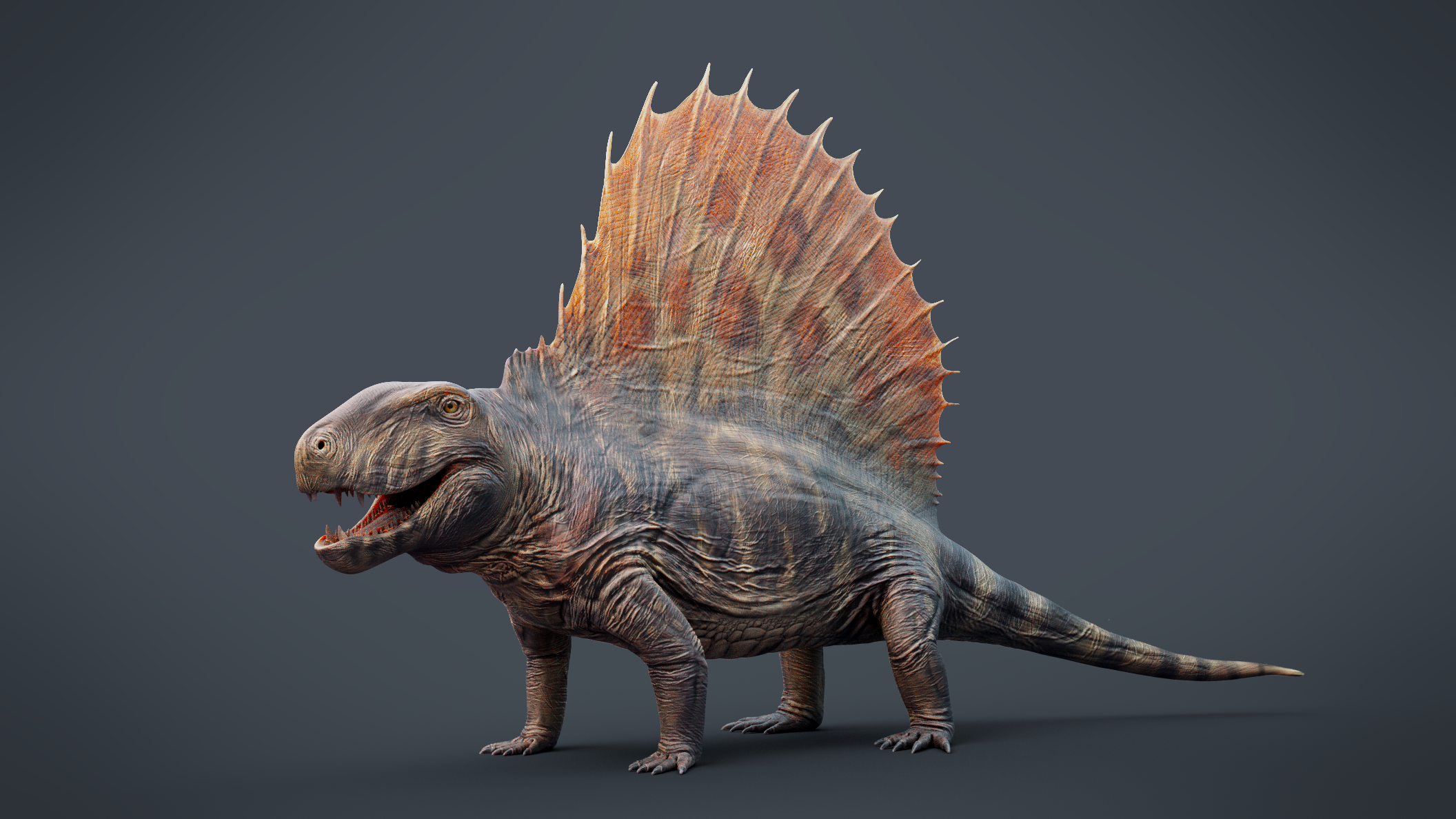
Every toy store, every children's dinosaur book, every cartoon featuring prehistoric life makes the same mistake. There, among the Tyrannosaurus and Triceratops, stands a low-slung creature with a towering sail on its back, labeled as if it were just another dinosaur. But Dimetrodon was not a dinosaur. It was something far more interesting, and far more relevant to anyone reading this article, because Dimetrodon is more closely related to you than it ever was to any dinosaur.
Dimetrodon lived during the Permian period, roughly 295 to 271 million years ago. That makes it about 40 million years older than the first dinosaurs. While dinosaurs would not appear until the Triassic period, Dimetrodon had already dominated the floodplains of what is now Texas and Oklahoma for millions of years, and then vanished completely long before a single dinosaur egg was ever laid.
A Reptile in Name Only
Dimetrodon belongs to a group called synapsids, which includes all mammals and their extinct relatives. The name "synapsid" refers to a single opening behind the eye socket, a feature that separates them from reptiles, which have two openings. When you look at a Dimetrodon skull, you are looking at the same basic skull architecture that every mammal, from mice to elephants to humans, still carries today.
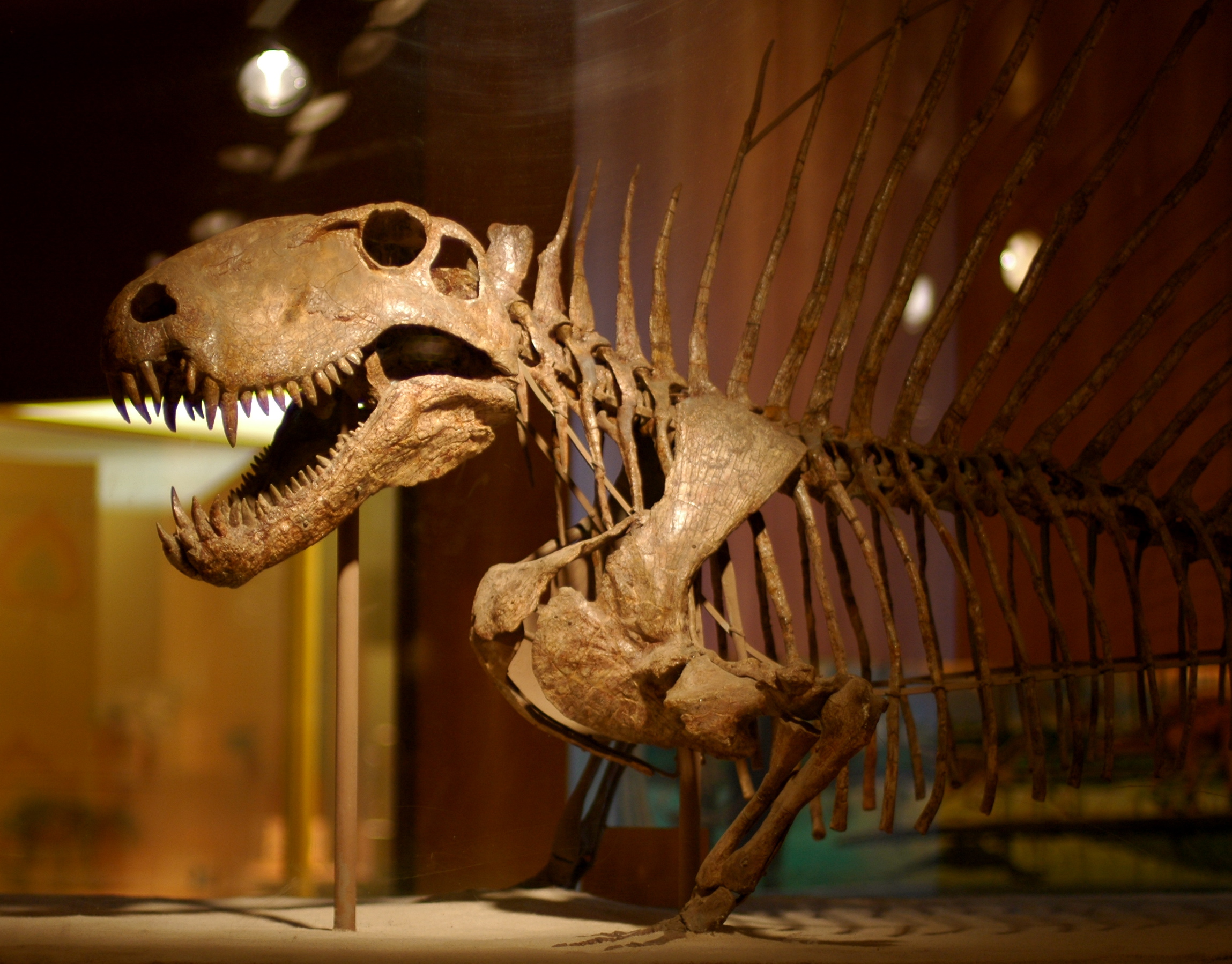
The split between the synapsid line and the reptile line happened long before Dimetrodon appeared. Dimetrodon sits on a branch very close to the base of therapsids, the group that eventually gave rise to true mammals. In evolutionary terms, it is more like a great-uncle of mammals than a cousin of lizards. Paleontologists sometimes call early synapsids "pelycosaurs," a term that groups Dimetrodon with its closest relatives in the family Sphenacodontidae.
This is not just a taxonomic technicality. Understanding Dimetrodon's position in the family tree changes how we think about the origins of mammalian traits like warm blood, hair, and complex teeth. Dimetrodon shows us what our ancestors looked like before those features fully developed.
The Sail: Nature's Solar Panel
The feature that makes Dimetrodon instantly recognizable is the enormous sail rising from its back. This structure was formed by elongated neural spines, extensions of the vertebrae that could reach up to a meter in length in the largest species. A thin membrane of skin likely stretched between these spines, creating a broad, flat surface visible from a distance.
What was the sail for? The leading theory is thermoregulation. The Permian climate was hot and seasonally arid. Dimetrodon may have used its sail as a biological solar panel, angling it toward the morning sun to warm up quickly after a cool night. Blood vessels running through the sail membrane would absorb heat efficiently, allowing the animal to reach hunting temperature faster than a sleek, sail-less competitor could.
Some researchers also propose a display function. A large, brightly colored sail would have been an effective signal during mating season, advertising health and genetic fitness. Bone microstructure studies suggest the sail may have also served a species-recognition role, with different Dimetrodon species sporting distinctly shaped sails.
Apex Predator of the Permian
Dimetrodon was the largest land predator of its time. Depending on the species, it measured between 1.7 and 4.6 meters long and weighed up to 250 kilograms. Its skull was tall and deep, equipped with differentiated teeth, large canines at the front for gripping prey and smaller teeth further back for slicing flesh. This heterodont dentition, teeth of different shapes and sizes, is another distinctly mammalian trait. Dimetrodon was already moving toward the specialized dental toolkit that mammals would later perfect.
Fossil evidence from the Red Beds of Texas shows Dimetrodon preyed on large amphibians like Eryops and smaller synapsids. Its powerful jaws and robust limbs suggest an ambush predator that could overpower prey through sheer force rather than sustained pursuit. With no competition from dinosaurs or mammals, Dimetrodon sat at the top of the food chain for over 20 million years, an extraordinary run of dominance by any measure.
The Sail's Other Sail: Edaphosaurus
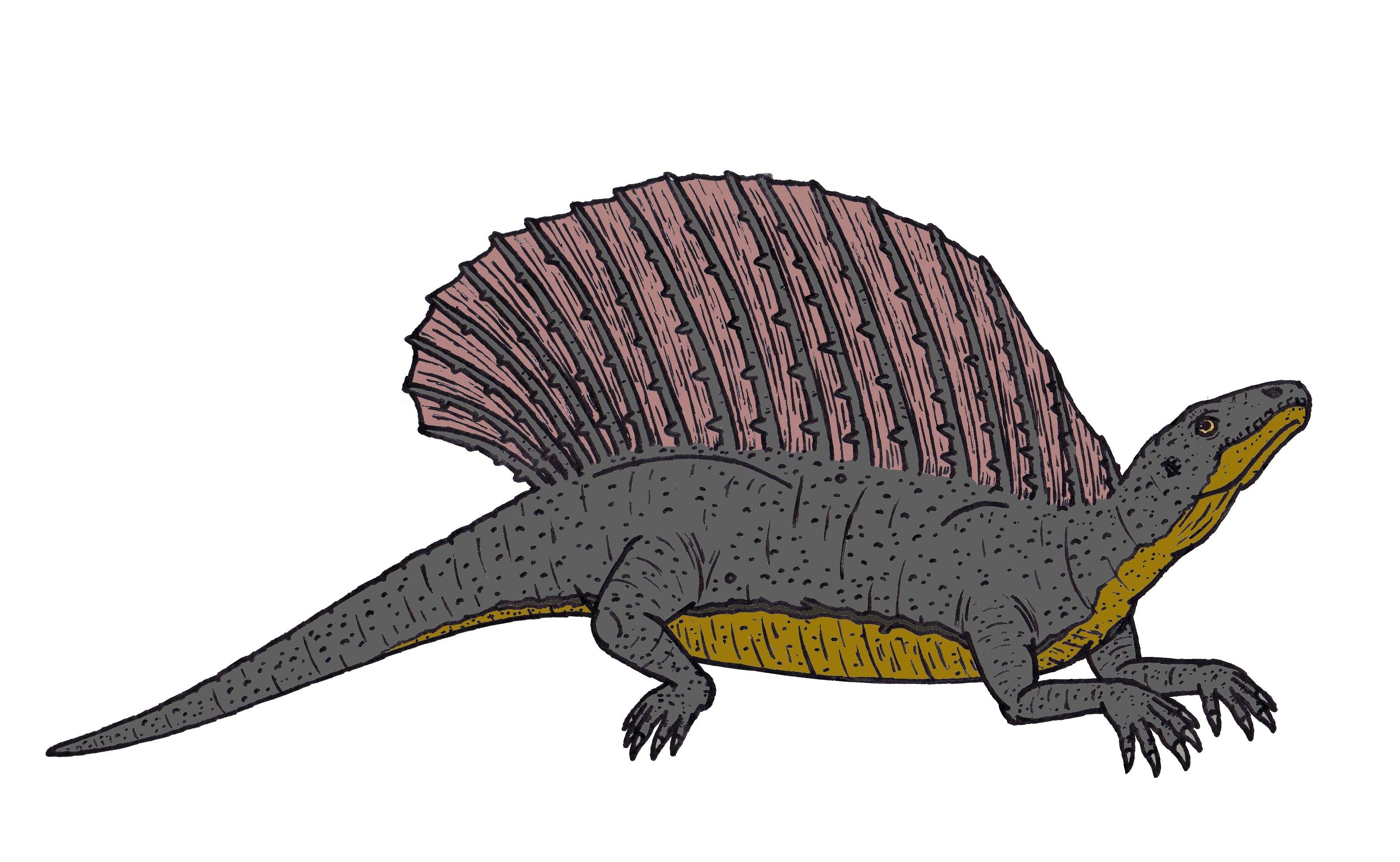
Dimetrodon was not the only sail-backed animal of the Permian. Edaphosaurus also carried a prominent sail, and the two are often confused. But while Dimetrodon was a carnivore, Edaphosaurus was a herbivore that fed on ferns and seed ferns. Its teeth were broad and flat, designed for grinding plant material, a sharp contrast to the slicing dentition of its sail-backed contemporary.
Edaphosaurus belongs to a different family within the synapsids, the Edaphosauridae, and the two lineages are not closely related. The sail evolved independently in both groups, an example of convergent evolution driven by similar environmental pressures.
Extinction and Legacy
Dimetrodon did not survive the Permian period. By the middle Permian, roughly 271 million years ago, the genus had disappeared from the fossil record. The great synapsid decline was already underway, as archosaurs, the group that would give rise to dinosaurs and crocodilians, began to radiate and fill the ecological roles that synapsids had dominated.
But the synapsid story was far from over. Dimetrodon's more derived relatives, the therapsids, continued to evolve and diversify, eventually producing the first true mammals in the late Triassic. Every mammal alive today, including every human being, carries a lineage that passed through the same evolutionary neighborhood that Dimetrodon once called home.
Dimetrodon matters because it reminds us that the story of life on Earth is far more complex than dinosaurs ruling the planet. Before dinosaurs, before mammals, creatures like Dimetrodon and early Triops shared a Permian landscape that would be almost unrecognizable today. The sail-backed predator that toy stores mislabel as a dinosaur was actually a milestone in the long, winding path that led to us.
Next time you see a Dimetrodon figurine in a dinosaur toy set, remember: it does not belong there. It belongs in a story about our own origins, a story that is far more personal than any tale of Tyrannosaurus rex.