Published August 23, 2026, 01:57 by the Triops.me Editorial Team · Back to Articles
Diplodocus: The Longest Dinosaur That Ever Lived
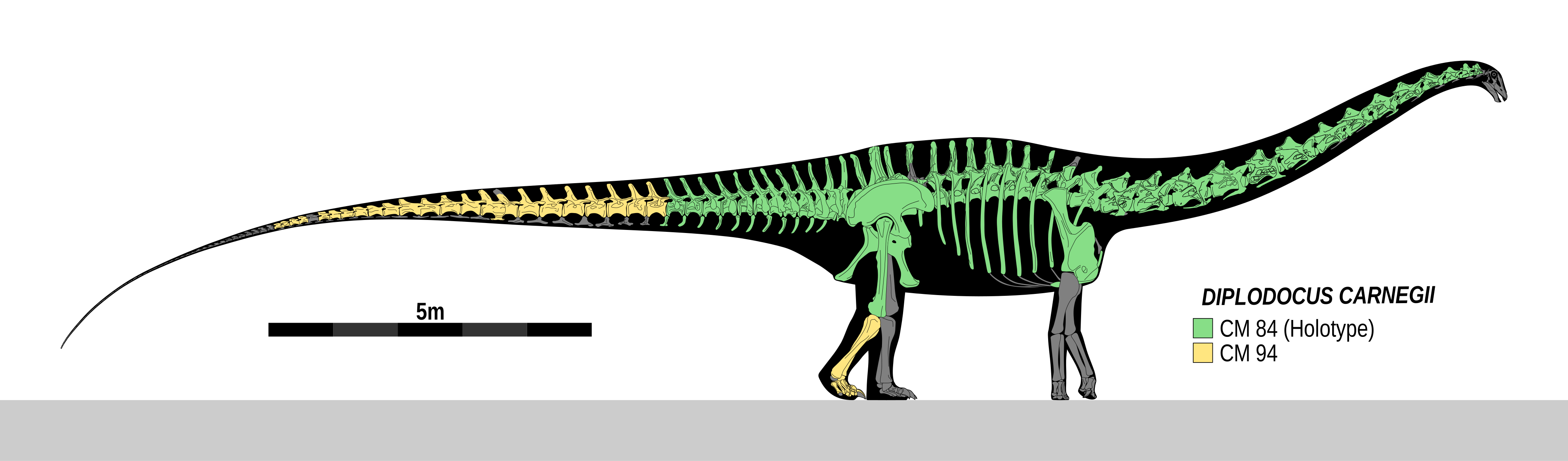
When most people picture a dinosaur, they imagine a towering T. rex or a thundering Triceratops. But for millions of years, the landscape of Late Jurassic North America was dominated by something far longer and, in many ways, more extraordinary: Diplodocus, the double-beamed lizard. Stretching up to 27 meters (89 feet) from snout to tail, it was one of the longest animals to ever walk the Earth, and its elegant, elongated silhouette has become one of the most recognizable silhouettes in all of paleontology.
Discovery and Naming
The first Diplodocus fossils were discovered in 1877 in Morrison, Colorado, by legendary fossil hunters Othniel Charles Marsh and his team. Marsh formally described the genus in 1878, naming it Diplodocus after the Greek words "diplos" (double) and "dokos" (beam), referring to the unusual chevron-shaped bones found underneath the tail vertebrae. These paired bony projections, unique among sauropods, likely anchored powerful muscles that helped the animal balance and move its whip-like tail.
Since that initial find, dozens of Diplodocus specimens have been recovered from the Morrison Formation, a vast sedimentary deposit that stretches across western North America. The Morrison Formation preserves an entire ecosystem from roughly 154 to 150 million years ago, a world of river floodplains, seasonal droughts, and lush conifer forests where Diplodocus shared its habitat with giants like Apatosaurus, Brachiosaurus, Allosaurus, and Stegosaurus.
Anatomy: Built for Length
Diplodocus was a sauropod, the group of long-necked, four-legged herbivores that includes the largest land animals ever. But even among sauropods, Diplodocus stood out for its extreme proportions. Its neck could reach 6 to 7 meters (20 to 23 feet) long, and its whip-like tail may have added another 14 meters (46 feet). The total body length rivaled that of a blue whale.
Despite this enormous size, Diplodocus was surprisingly lightweight for a dinosaur. Its skeleton was honeycombed with air sacs, a feature shared with modern birds, which reduced its mass significantly. Estimates put adult Diplodocus at around 12 to 16 metric tons, far lighter than the bulkier Apatosaurus or the massively thick Brachiosaurus. This lightweight design allowed Diplodocus to grow to extraordinary lengths without collapsing under its own weight.
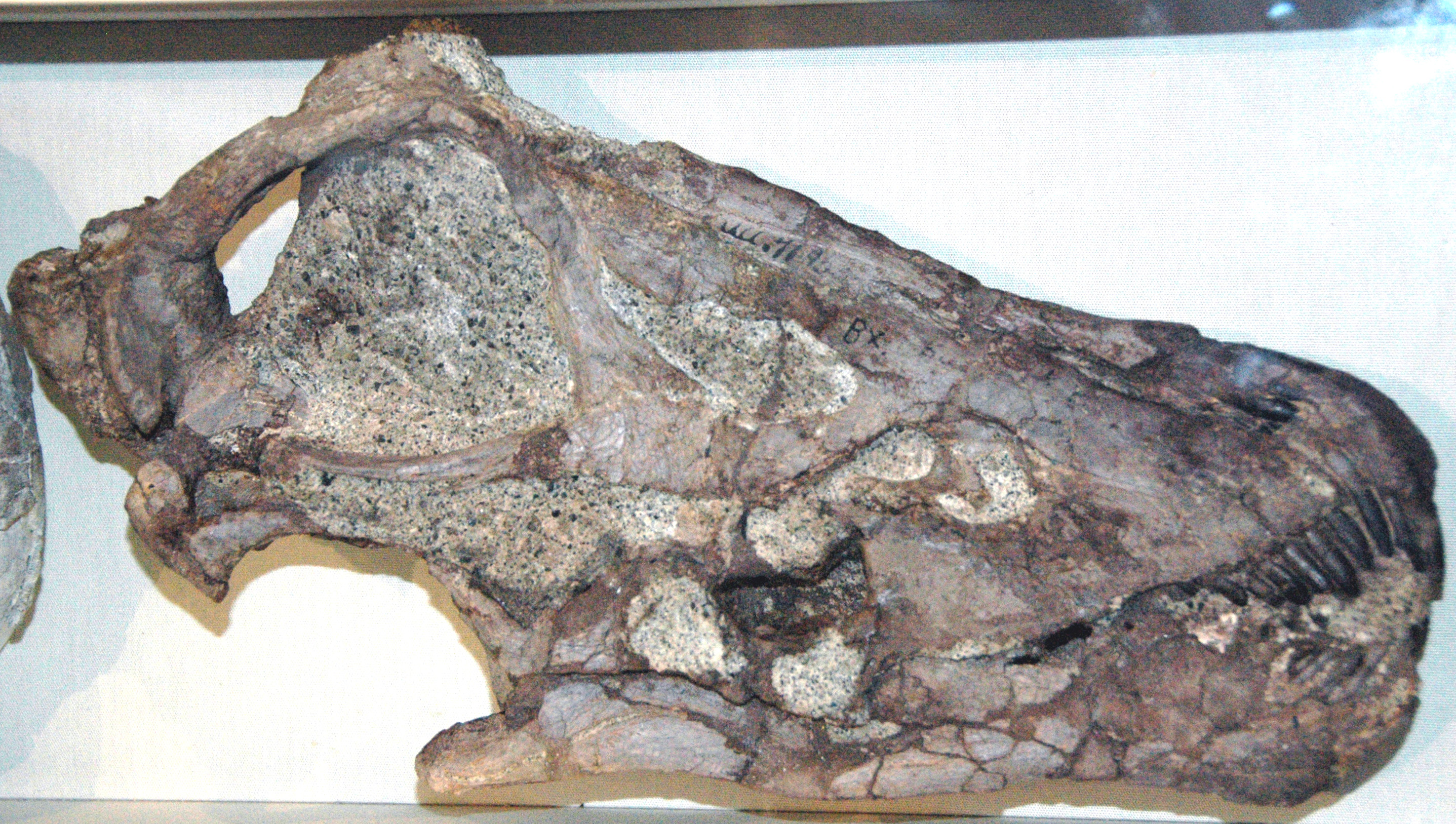
Its head was small relative to its body, with a narrow snout and peg-like teeth concentrated at the front of the jaw. Unlike the grinding teeth of later hadrosaurs or ceratopsians, Diplodocus's teeth were built for stripping and raking vegetation, not chewing it. The animal likely swallowed plant matter whole or in rough strips, relying on gastroliths (stomach stones) to help break down tough fibrous material in its enormous gut.
The Tail Whip Hypothesis
One of the most debated features of Diplodocus is its extraordinarily long, thin tail. Some paleontologists have proposed that the tail could have been cracked like a bullwhip, producing a sonic boom loud enough to startle predators or communicate with other sauropods. The tip of the tail was composed of thin, rod-like bones called bony tendons, which would have made the final section extremely flexible and fast-moving.
If this hypothesis is correct, the tail crack may have reached supersonic speeds, generating a shockwave with a volume rivaling a small cannon blast. While the idea remains controversial, it offers a fascinating glimpse into how these enormous animals might have defended themselves despite lacking the claws, teeth, or armor of their predatory contemporaries.
Feeding Strategy: The Living Crane
Diplodocus's feeding strategy was likely quite different from other sauropods. Its relatively short forelimbs and low-slung posture meant its head rarely rose more than 4 to 5 meters (13 to 16 feet) off the ground. This made it a ground-level to mid-level browser, sweeping its long neck side to side like a giant garden rake, stripping ferns, horsetails, cycads, and conifer needles from vast stretches of vegetation.
Unlike Brachiosaurus, which reached high into the canopy, Diplodocus exploited a different ecological niche. Some researchers have suggested that this partitioning of feeding heights allowed multiple sauropod species to coexist in the same environment without directly competing for food. It is a strategy we still see in modern ecosystems, where giraffes browse the treetops while zebras graze below.
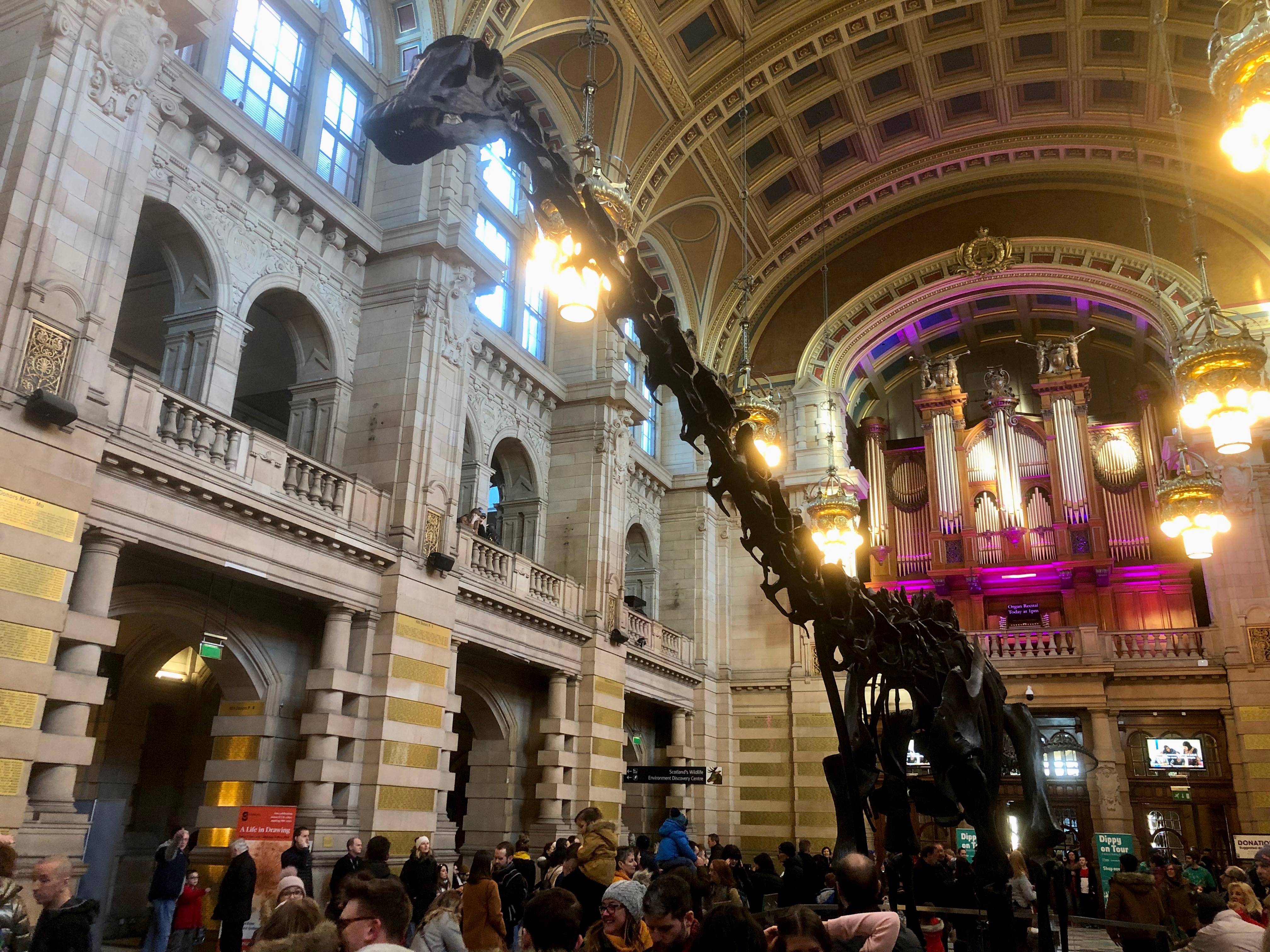
Dippy the Diplodocus: A Museum Icon
No article about Diplodocus would be complete without mentioning Dippy, perhaps the most famous single dinosaur specimen in the world. Cast from a partial skeleton discovered in 1899 near Medicine Bow, Wyoming, Dippy was acquired by Andrew Carnegie and installed in the Carnegie Museum in Pittsburgh. Carnegie was so proud of his dinosaur that he gifted plaster casts to museums across the globe, including the Natural History Museum in London, where Dippy the Diplodocus became the face of the museum for over a century.
Dippy's influence extends beyond museums. The Diplodocus silhouette has appeared in countless films, documentaries, video games, and children's books. It is one of the "default" dinosaurs, the animal people think of when they hear the word sauropod. The species most commonly represented is Diplodocus carnegii, named in honor of Carnegie himself.
Why Diplodocus Still Matters
Diplodocus is more than just a big dinosaur. It represents an evolutionary experiment in body size, skeletal engineering, and ecological specialization that played out over millions of years. Its air-filled bones prefigure the respiratory system of birds. Its feeding strategy shows how niche partitioning works in practice. And its tail, whether it cracked like a whip or not, demonstrates that even the largest animals can evolve unexpected and specialized structures.
At Triops & Prehistoric Creatures, we are fascinated by the full spectrum of life's resilience and ingenuity. From the tiny Triops, which has survived virtually unchanged for over 200 million years, to the towering Diplodocus, which dominated its ecosystem for millions of years before vanishing, these creatures remind us that nature has always found remarkable ways to thrive. Every fossil tells a story, and the story of Diplodocus is one of elegance, scale, and enduring wonder.
Want to learn more about prehistoric life? Explore our creature gallery or read about other remarkable prehistoric creatures.