Published September 28, 2026, 07:40 · by the Triops.me Editorial Team · Back to Articles
The Dire Wolf Was Not a Wolf
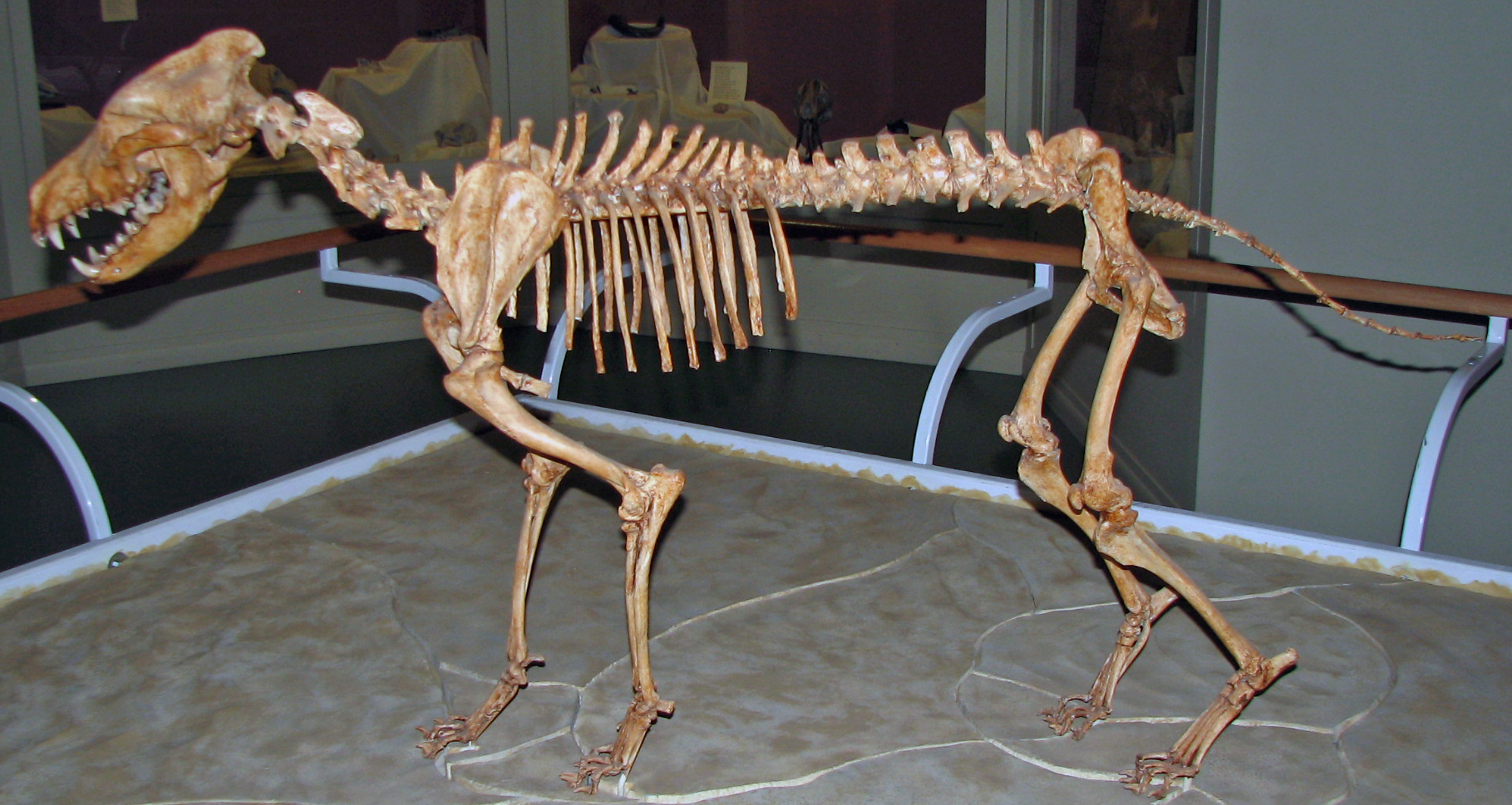
For more than a century the animal was filed under the name Canis dirus, "fearsome wolf", and nobody questioned it. It looked the part: a heavy-bodied canid with a broad skull, long fangs and a bite that could crack bone, prowling the plains and savannas of the Americas while mammoths, horses and camels still walked them. Then, in 2021, a study of ancient DNA pulled it out of the wolf family tree entirely. The dire wolf was not a wolf. It was the last member of a lineage that split off long before wolves, coyotes and jackals ever existed, and it left no living relatives at all.
That single reclassification changes how we read the whole story. This was not a bigger, meaner version of today's wolf that simply lost the competition. It was an independent experiment in being a pack-hunting apex predator of the Ice Age, an experiment that ran for well over 100,000 years and ended abruptly at the end of the Pleistocene.
A name that refused to die
The first dire wolf jaw turned up in 1854 in the bed of the Ohio River near Evansville, Indiana, and Joseph Leidy described it in 1858 as a new species of Canis. Bones kept pouring out of the western United States, and by 1912 John Campbell Merriam had enough material from the La Brea tar pits to sort the mess of duplicate names into one species. Merriam also proposed a separate genus, Aenocyon, from the Ancient Greek for "terrible wolf", but the wolf name was stickier. Museum labels, textbooks and every dinosaur museum gift shop kept saying Canis dirus.
The argument was settled with DNA. In 2021 a team led by Angela Perri sequenced material from four dire wolves and compared it with every living canid. The dire wolf lineage had branched off roughly 5.7 million years ago, far too deep to sit inside Canis, and it was not closely related to gray wolves, coyotes or jackals at all. Back on went Merriam's genus: Aenocyon dirus. A 2026 analysis of paleogenomes from two more specimens pushed the split even earlier, to around 4.5 million years ago, before the black-backed jackal separated from the rest of its branch, and hinted at ancient mixing with the ancestors of South American canids like the maned wolf.
Built to take down big prey
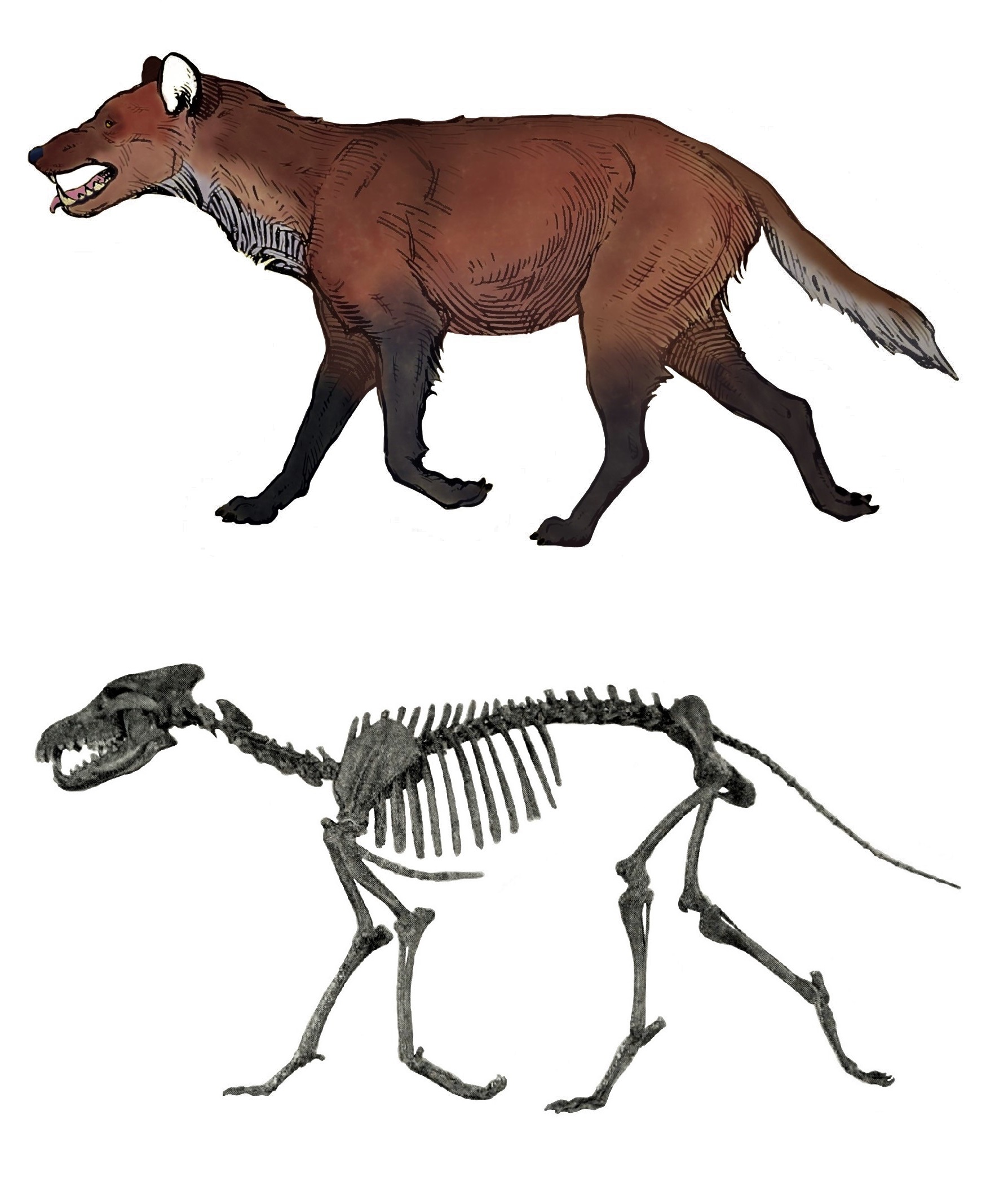
Physically, the dire wolf was roughly the size of the largest modern gray wolves. The subspecies A. d. guildayi averaged around 60 kilograms and the larger A. d. dirus about 68 kilograms, with a deeper chest, proportionally shorter legs, a wider skull and larger, more blade-like teeth than a gray wolf. Its bite force at the canine tooth was stronger than that of any known Canis species.
Those are the tools of a hunter that went after animals much bigger than itself. Isotopic and anatomical work points to a menu of western horses, camels, ancient bison, flat-headed peccaries, pronghorn and ground sloths: the megaherbivores of late Pleistocene North America. In South America the same animal turned up in arid savanna country, ranging from the northern United States down through Brazil, but almost never above 42 degrees north, where the ice sheets made life impossible.
The trap that froze a population in time
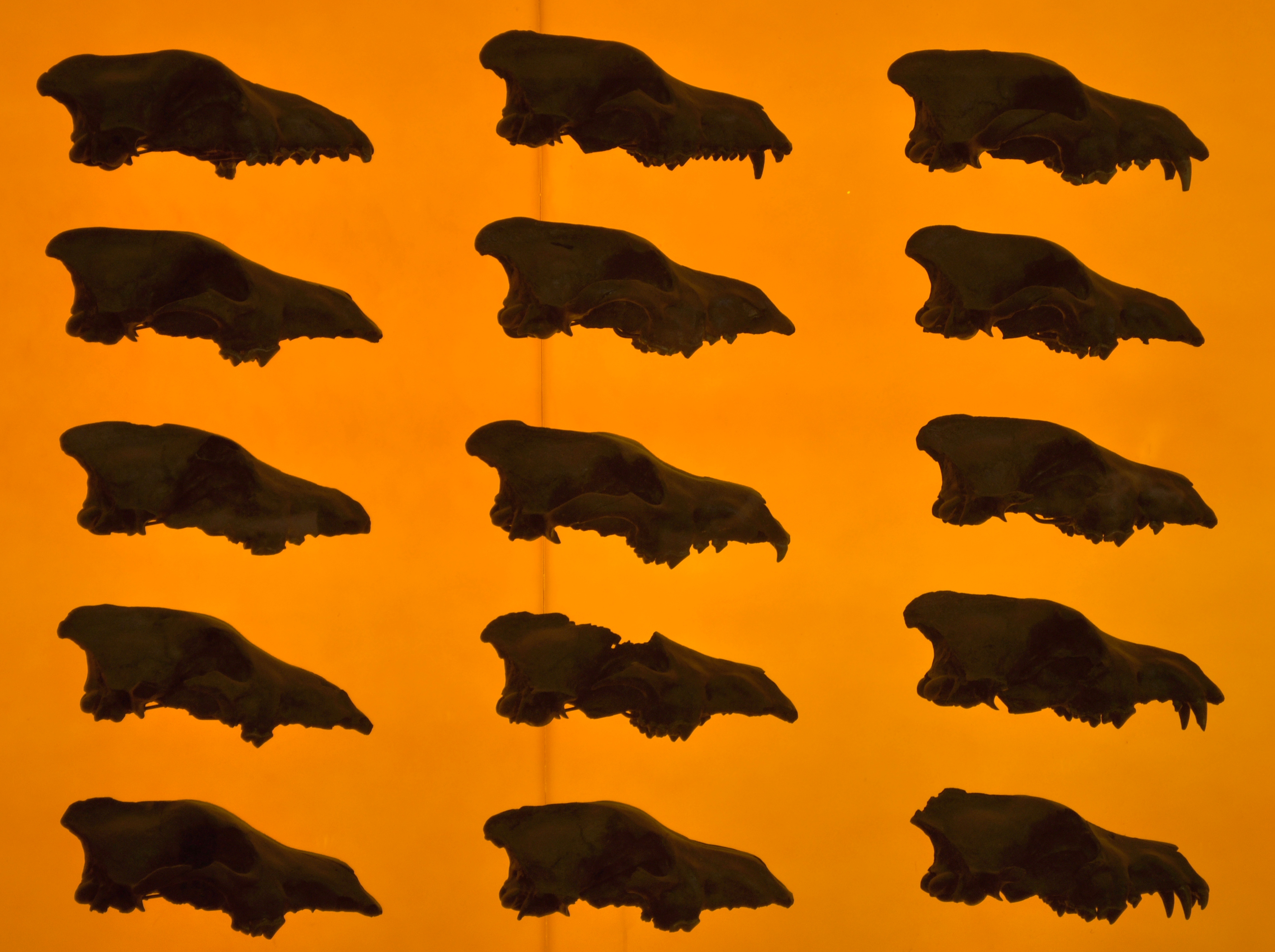
The richest dire wolf cemetery on Earth is the Rancho La Brea Tar Pits in downtown Los Angeles. There, natural asphalt seeps pooled under a film of leaves and dust, and animals that stepped in sank fast. Merriam's crews began pulling wolf bones out in 1908, and the site remains the largest collection of dire wolf fossils anywhere.
The accumulation looks very much like a social animal being punished for it. Many sites show adults falling in together, and the classic interpretation is that pack members rushed in to help a trapped companion and got stuck themselves. Alongside them in the asphalt sit saber-toothed cats, short-faced bears and horses, the whole predator and prey community of Ice Age California. The tar also ruined the science: asphalt soaks into the bone, which is why every attempt to pull DNA out of La Brea dire wolves has failed, and why the 2021 breakthrough had to come from specimens found elsewhere.
Living in the shadow of the real wolf
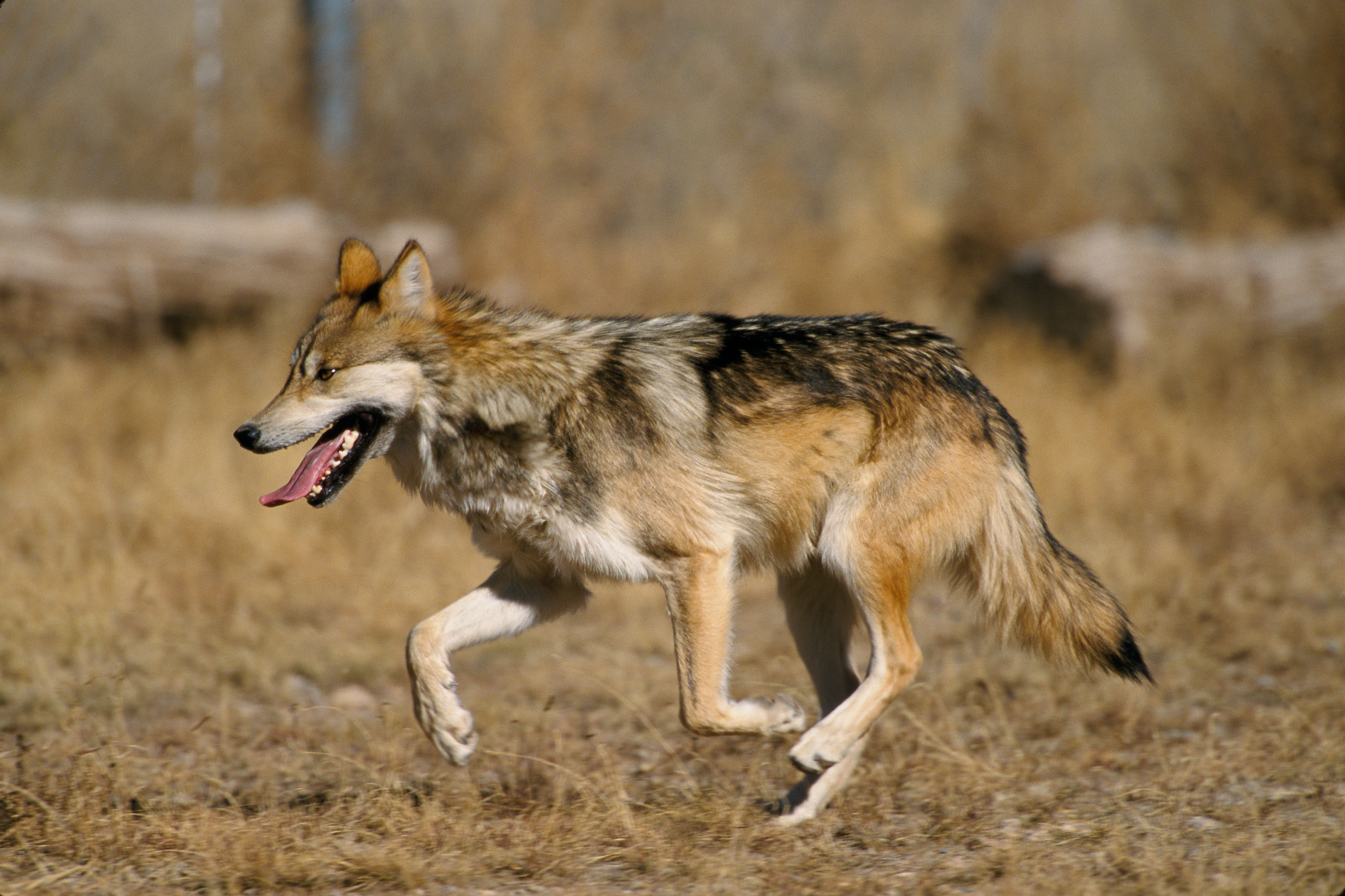
Gray wolves reached the Americas from Eurasia and overlapped with dire wolves for a long stretch of the late Pleistocene. The two were built differently. The gray wolf is the endurance hunter, long-legged and cursorial, chasing prey over distance and thriving on deer and smaller targets. The dire wolf was the bruiser, built for close-range attacks on heavy animals that needed to be wrestled down and dismembered with crushing jaws.
They did not obviously outcompete each other for tens of thousands of years. What undid the arrangement was the menu. At the end of the Pleistocene, North America lost horses, camels, mammoths and ground sloths in the Quaternary extinction event, and dated remains show dire wolves surviving to roughly 10,000 years ago. A predator whose whole body was optimized for megaherbivores had nothing left to point those jaws at. The gray wolf, a generalist that could live on deer, survived. So did the coyote.
Back from the dead, in theory
The dire wolf has become a cause for de-extinction programs. The Dire Wolf Project, started in 1988, selectively breeds large, wolfy-looking pet dogs such as the American Alsatian for the phenotype alone. More ambitiously, Colossal Biosciences announced in 2025 that it had used cloning and gene editing to create three pups it presented as dire wolves, Romulus, Remus and Khaleesi. The team made 20 edits across 14 genes in gray wolf cells to reproduce a few distinctive traits, then implanted the embryos in domestic dog surrogates.
Critics point out the obvious gap: no ancient dire wolf DNA was spliced in. These are gene-edited gray wolves carrying a handful of dire wolf variants, raised without dire wolf behavior, microbiome or ecology, and Colossal itself called the changes "minor genetic modifications". That makes resurrection a generous word for what happened. And it highlights the real problem, the same one that sits behind every de-extinction pitch: bringing back the body is the easy part, restoring the lost world it belonged to is not.
The lesson Triops got right
There is a useful contrast with the animal this site is named after. Triops is a generalist of temporary pools, a scavenger that eats whatever the rain brings, carries eggs that sit dry for decades, and has done so through five mass extinctions. The dire wolf was the opposite bet: a finely tuned specialist of large-bodied prey, magnificent as long as that prey existed and worthless the moment it did not. Specialization wins in stable times and loses in sudden ones. The record of the last Ice Age is written by the species that were willing to eat anything.
Fossil parks and museum halls still label the skeleton Canis dirus because the old name has a century of inertia behind it. The bones have not changed, only our reading of them, and that is a good reminder that prehistory is a moving target. One day a jawbone in Ohio, and the next a genome, and the fearsome wolf turns out to be a cousin twice removed that nobody had a name for yet.