Published August 14, 2026, 20:54 by the Triops.me Editorial Team · Back to Articles
Dunkleosteus: Earth's Most Terrifying Armored Fish
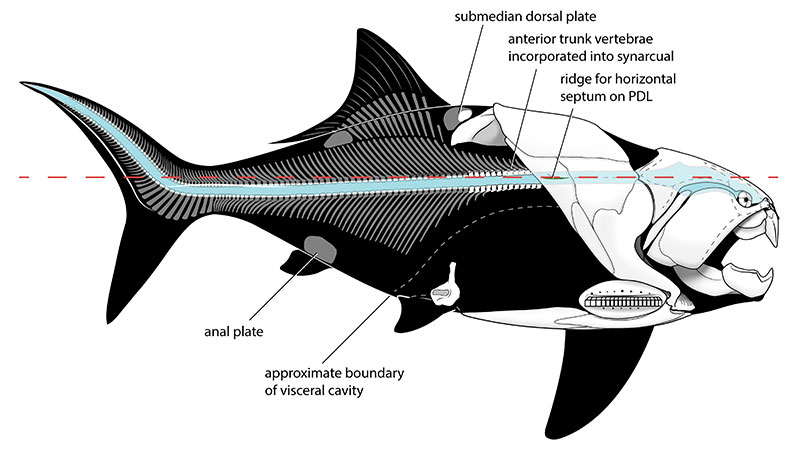
Three hundred and sixty million years ago, long before dinosaurs walked the Earth, the seas belonged to something far stranger and arguably more frightening. Dunkleosteus was an apex predator of the Late Devonian period, a fish armored head to tail in thick bone plates, armed with self-sharpening jaw blades, and large enough to swallow a modern human whole. It was, by any measure, one of the most formidable hunters the oceans have ever produced.
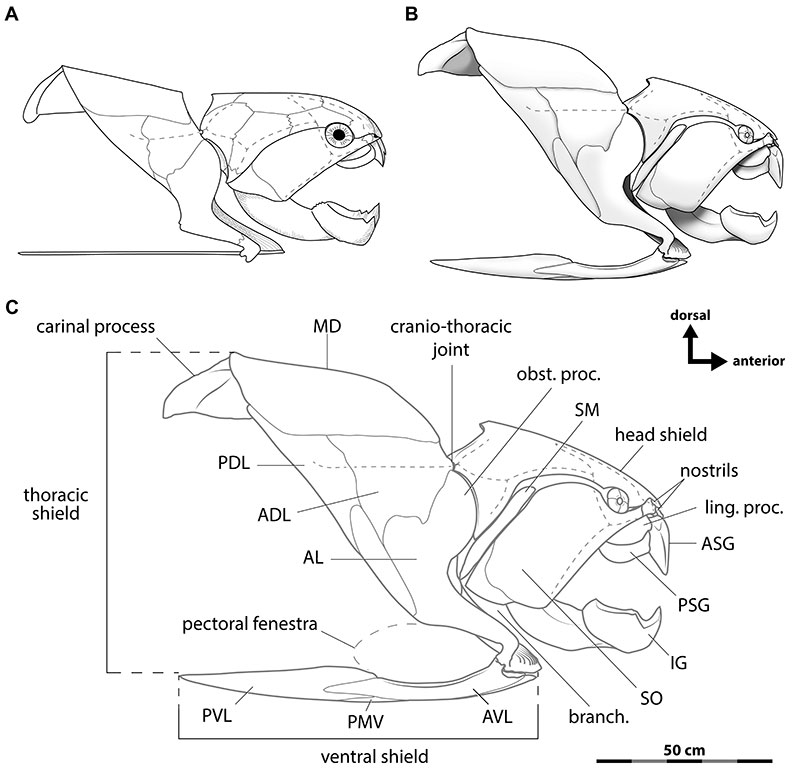
Unlike the bony fish we know today, Dunkleosteus did not have teeth. Instead, its jaws featured two pairs of long, razor-sharp bony plates that functioned like enormous shearing blades. The upper and lower plates met at a point, creating a bite that could slice through the tough hides of other armored fish with terrifying efficiency. Paleontologists estimate the bite force at roughly 6,000 newtons, strong enough to crush bone and dent steel. This made Dunkleosteus one of the most powerful biters in all of vertebrate history, a record that still stands among fish.
The creature belonged to a group called placoderms, meaning "plate skin." Placoderms were the dominant vertebrates of the Devonian, often called the Age of Fishes. While many placoderms were small bottom-dwellers, Dunkleosteus took a different path. Fossil evidence suggests it reached lengths of six to ten meters, though the largest complete skulls measure about 70 centimeters. The full body length is debated because the posterior half of Dunkleosteus was not armored and therefore rarely fossilized, leaving scientists to estimate its total size from the proportions of its head and thoracic shield.
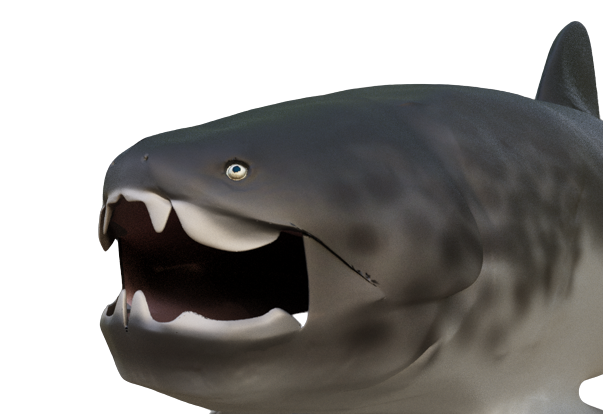
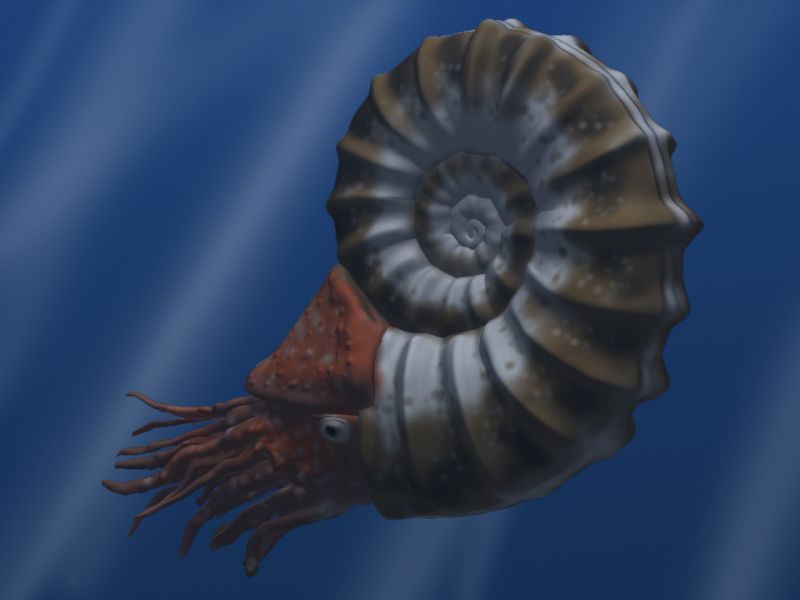
Its hunting strategy was as remarkable as its anatomy. Dunkleosteus used a unique jaw mechanism that allowed it to open its mouth in an estimated 0.02 seconds, creating a powerful suction that drew prey directly into its path. The entire feeding motion, from suction to bone-crushing bite, took less than a fiftieth of a second. This combination of speed and power made escape nearly impossible for any creature caught in its range. Ammonites, smaller placoderms, and early sharks all likely ended up on the Dunkleosteus menu.
The world Dunkleosteus inhabited was vastly different from our own. The Devonian seas were warm, shallow, and teeming with life, but they were also dangerous. The reef ecosystems of the period were built by massive stromatoporoid sponges and early corals, creating labyrinthine habitats where predators lurked around every corner. Dunkleosteus was the largest of these predators, sitting at the absolute top of the food chain. Nothing in the Devonian ocean hunted it. It was, quite literally, the most dangerous animal alive.
Fossil discoveries of Dunkleosteus have been found across multiple continents, from the famous Cleveland Shale in Ohio to sites in Morocco, Belgium, and Poland. The Cleveland Shale deposits have yielded the most complete specimens, preserving the massive head shields in remarkable detail. These fossils reveal thick, layered bone with a texture not unlike modern antler, designed to absorb impact and resist damage. Some specimens show healed fractures, evidence of violent confrontations, possibly with other Dunkleosteus individuals during territorial disputes or mating competition.
Despite its fearsome reputation, Dunkleosteus was not built to last. The Late Devonian extinction events, a series of catastrophic ocean anoxia episodes, wiped out roughly 75% of all species on Earth, including all placoderms. By 359 million years ago, Dunkleosteus was gone. The oceans recovered, eventually giving rise to the ancestors of modern fish and, much later, the first land vertebrates. But nothing in the subsequent 360 million years of evolution has produced a predator quite like Dunkleosteus.
There is something humbling about studying creatures like Dunkleosteus. Modern humans have existed for roughly 300,000 years. Triops, our namesake, have been around for about 220 million years. Dunkleosteus dominated its world for nearly 15 million years before the extinction events erased it. These time scales remind us that Earth's history is not a story leading up to us. We are a brief chapter in a much longer, stranger, and more violent narrative. The Devonian seas remind us that life has always found ways to produce monsters, and that no monster, no matter how powerful, is permanent.