Published August 18, 2026, 20:57 by the Triops.me Editorial Team · Back to Articles
Ediacaran Biota: Earth's First Complex Animals
Before trilobites scuttled across the Cambrian seafloor, Earth was home to organisms so strange that scientists still argue about what they actually were. The Ediacaran biota, flourishing roughly 575 to 538 million years ago, represent the earliest known complex multicellular life. They lived in a world utterly alien to us: no predators, no burrowing animals, no plants on land. Just soft, quilted organisms draped across microbial mats in shallow seas.
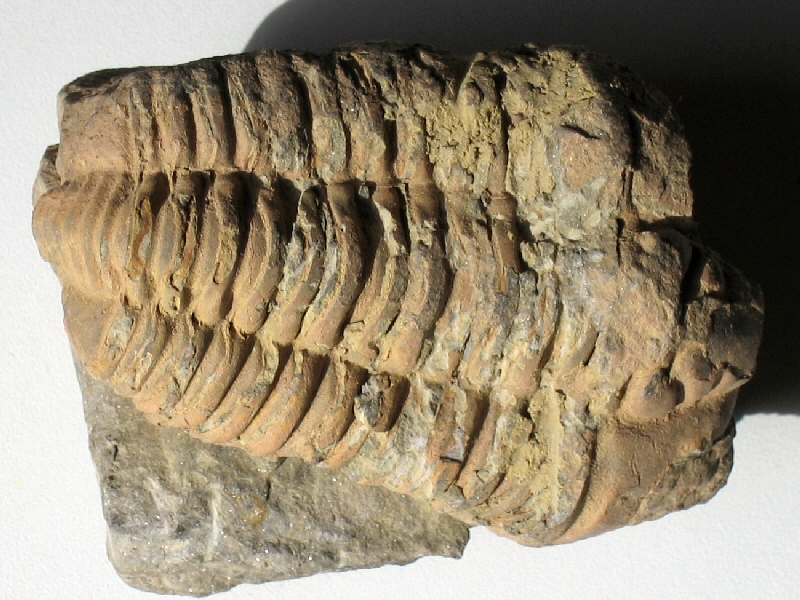
These creatures vanished just as the Cambrian explosion began, leaving behind only ambiguous fossils and more questions than answers. What were they, and why did they disappear so completely? To understand where complex life came from, we need to look at these enigmatic first experiments in multicellular design.
A World Without Predators
The Ediacaran period followed the Cryogenian, a time when Earth was locked in severe glaciation often called "Snowball Earth." As the ice retreated, oceans warmed and flooded vast continental shelves. Microbial mats, thin layers of bacteria and algae, carpeted the seafloor. In this quiet, oxygen-poor world, the first large organisms emerged.
Ediacaran organisms had no hard shells, no eyes, no limbs. Most were sessile, fixed in place like plants, though some may have slowly crept across microbial mats. Without predators, there was no evolutionary pressure to develop armor or speed. Life was soft, flat, and fractal. These organisms absorbed nutrients through their body surfaces, filter-fed from the water, or grazed on microbial films.
The Fossils That Defy Classification
Ediacaran fossils first gained attention in the 1940s when geologist Reg Sprigg discovered strange impressions in the Ediacara Hills of South Australia. Sites worldwide have since yielded similar fossils, from the White Sea coast of Russia to Mistaken Point in Newfoundland. The organisms are preserved as thin impressions in sandstone, often little more than ghosts of their former selves.
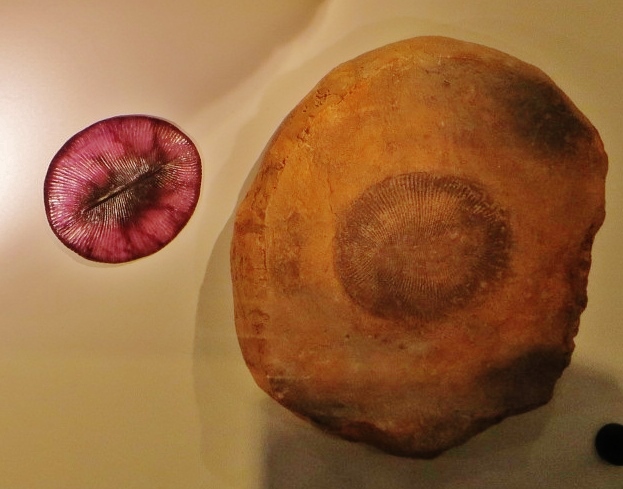
Dickinsonia is the most iconic Ediacaran organism. These flat, oval creatures ranged from a few millimeters to over a meter in length, with a quilted, segmented body plan unlike anything alive today. For decades, scientists debated whether it was a lichen, a fungus, or a giant protist. In 2018, molecular analysis of preserved cholesterol molecules confirmed it was an animal, one of the very first.
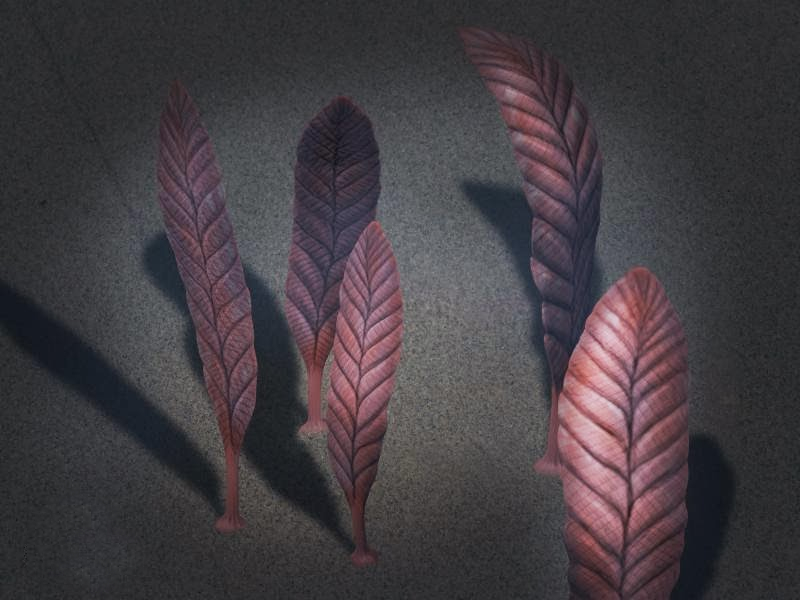
Charnia, named after the Charnwood Forest in England, was a frond-shaped organism anchored to the seafloor. It resembles a sea pen, but phylogenetic analysis has failed to place it in any living animal group. Charnia may represent an entirely extinct lineage.
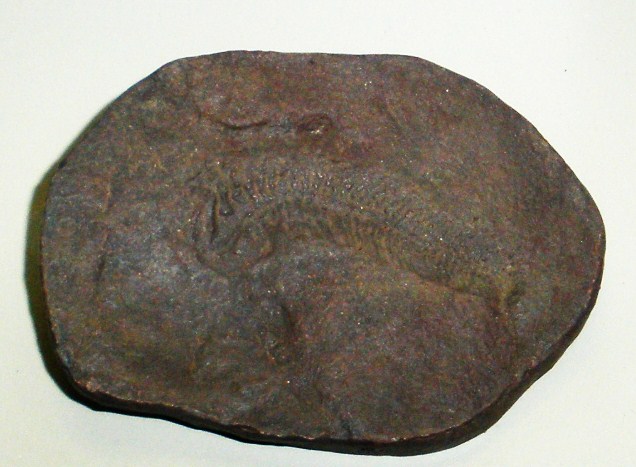
Spriggina is another puzzling form. With a crescent-shaped head and long, segmented body, it has been compared to trilobites and annelid worms. Some researchers see bilateral symmetry, a hallmark of most modern animals, while others argue the impressions are misleading.
Kimberella, found in Russia and Australia, is perhaps the most animal-like Ediacaran organism. It appears to have had a tough outer shell and may have grazed on microbial mats, leaving scratch marks on the seafloor. Some paleontologists consider it a primitive mollusc, a potential ancestor of snails and clams. If correct, Kimberella pushes the origin of molluscs back into deep time.
Why Did They Disappear?
The end-Ediacaran extinction, around 538 million years ago, wiped out most Ediacaran body plans. The timing coincides with the start of the Cambrian explosion, when animals with hard shells, active predation, and complex ecosystems rapidly diversified. Several factors likely contributed.
First, burrowing animals disrupted the microbial mats that Ediacaran organisms depended on. Second, predation created an arms race that favored hard shells, speed, and defensive strategies, none of which Ediacaran organisms possessed. Third, changes in ocean chemistry and oxygen levels may have altered the conditions that supported them.
A small number of Ediacaran-type fossils appear in early Cambrian deposits, suggesting a brief overlap. But by about 520 million years ago, the Ediacaran world was gone, replaced by the animal-dominated ecosystems we recognize today.
What the Ediacaran Teaches Us
The Ediacaran biota remind us that evolution is not a straight line toward complexity. Life experimented with body plans that have no parallel in the modern world, organisms successful for millions of years before being swept aside by new innovation. The ancestors of modern branchiopods, like Triops, did not appear until the Devonian, hundreds of millions of years later. But the principle is the same: simple, resilient organisms persist across vast stretches of time while ecosystems rise and fall around them.
The Ediacaran biota may be the strangest chapter in the history of life on Earth, proof that nature does not follow a script.