Published August 22, 2026, 17:23 by the Triops.me Editorial Team · Back to Articles
Elasmosaurus: The Long-Necked Marine Reptile That Confused Scientists
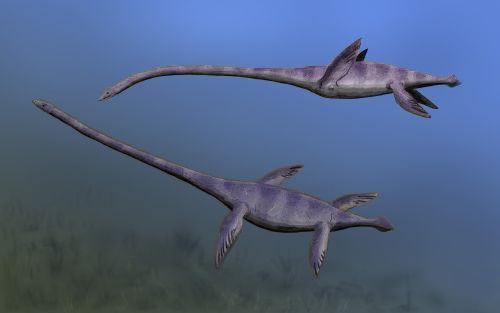
Imagine a creature with a neck so long it had 72 vertebrae, more than any other known vertebrate. Elasmosaurus, whose name means "thin-plate lizard," was one of the most remarkable marine reptiles of the Late Cretaceous, roughly 80 million years ago. It patrolled the Western Interior Seaway, a vast inland ocean that split North America in two.
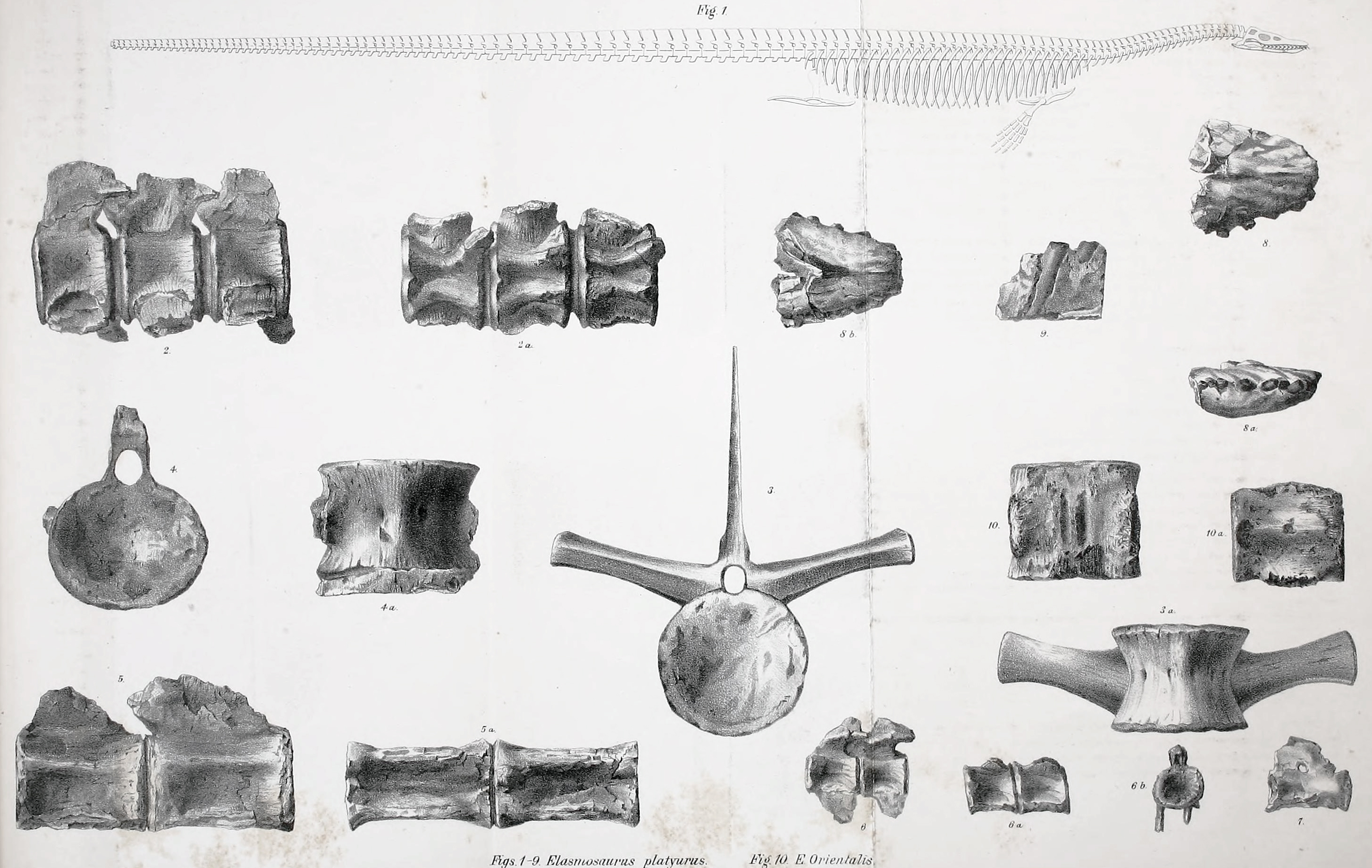
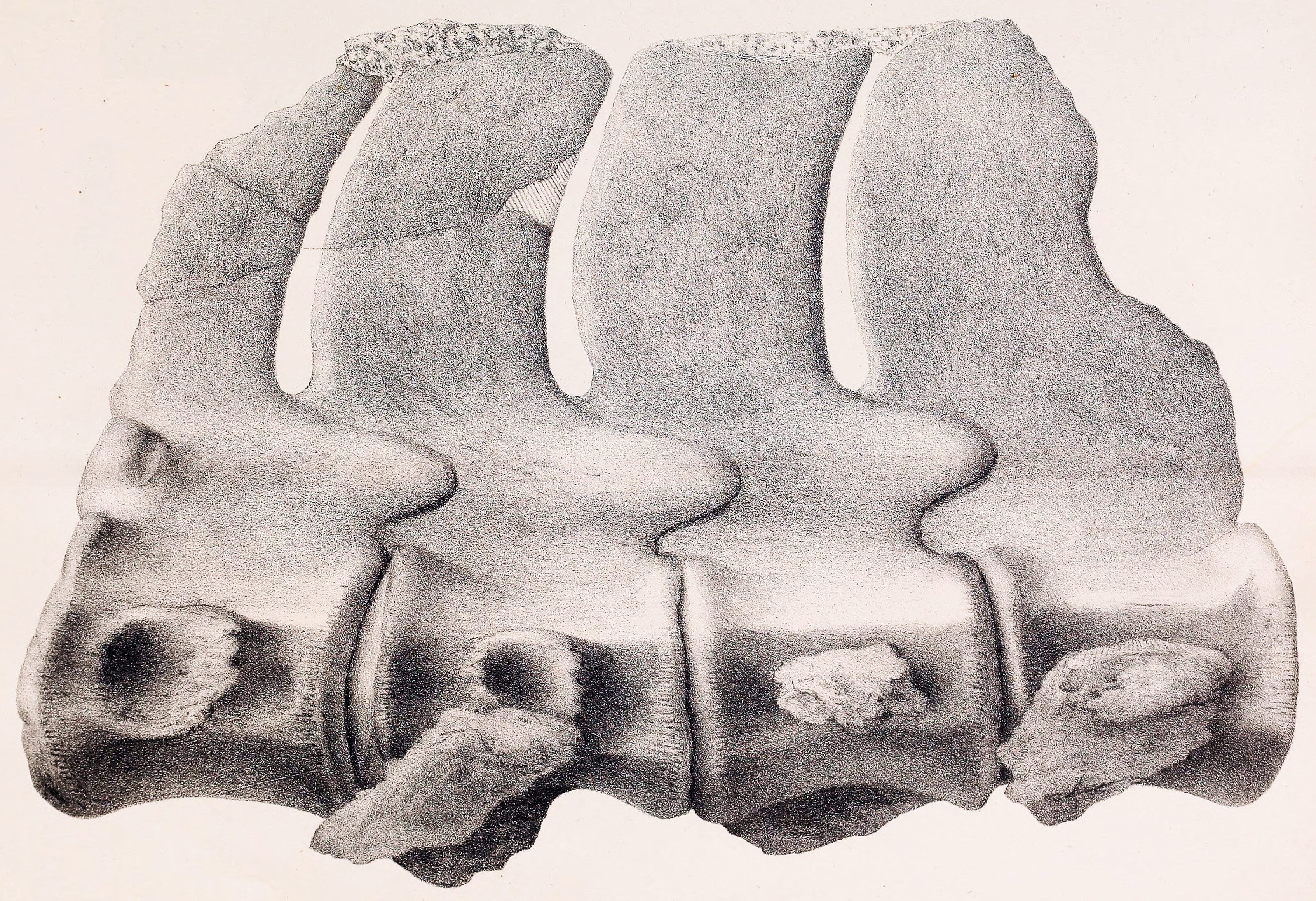
What makes Elasmosaurus especially fascinating is not just its neck, but the story of how that neck fooled some of the brightest minds in 19th-century paleontology. When Edward Drinker Cope first described the animal in 1868, he made a mistake that would echo through scientific literature for over a century: he placed the skull on the wrong end of the vertebral column. Cope counted 72 vertebrae and assumed the shorter series belonged to the tail. In reality, the neck held 72 vertebrae and the tail contained far fewer. The great paleontologist O.C. Marsh pointed out the error in 1870, and the resulting rivalry between Cope and Marsh became one of the most famous feuds in the history of science, known as the Bone Wars.
Anatomy Built for Ambush
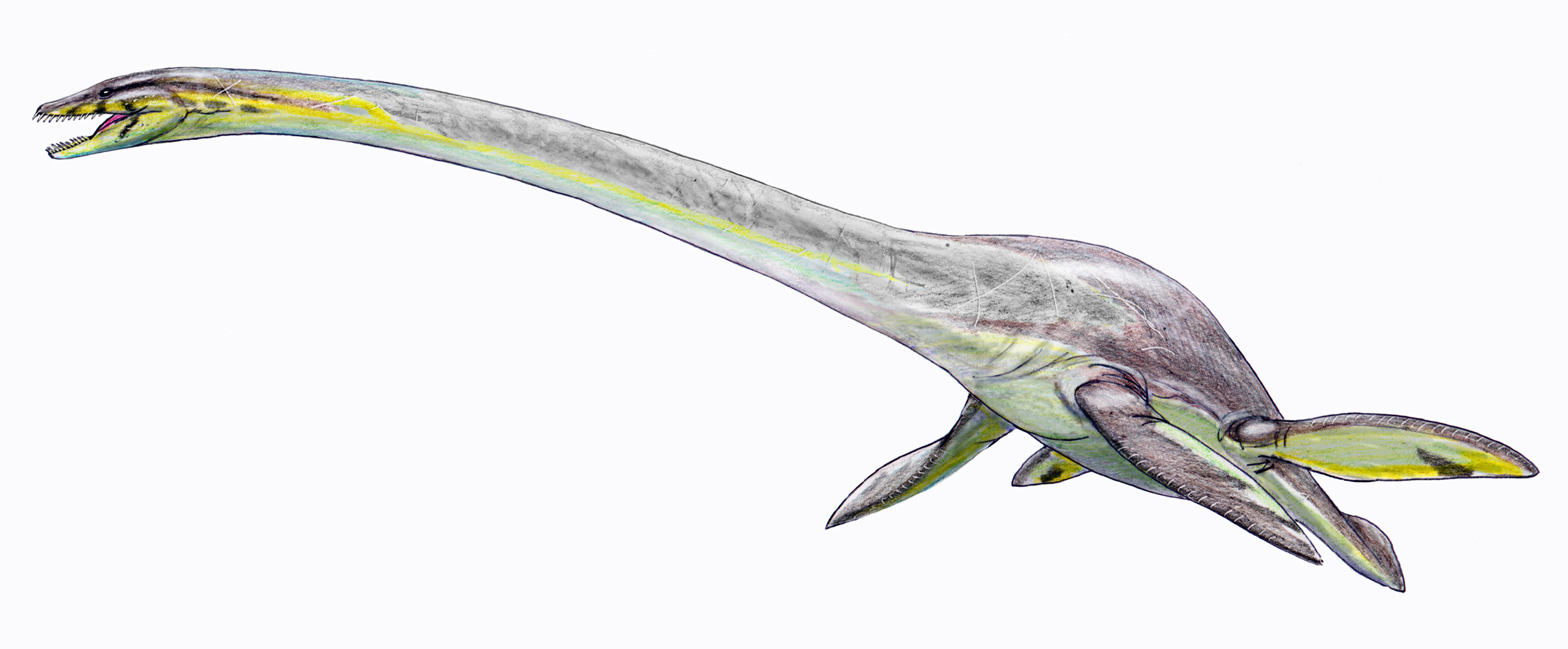
Elasmosaurus measured roughly 10 meters (34 feet) from snout to tail tip, with the neck alone accounting for about 6 meters (20 feet). The head was surprisingly small, roughly the size of a cat's skull. The jaws contained interlocking needle-shaped teeth ideal for snatching slippery fish and cephalopods, not for crushing hard-shelled prey.
The body was compact and barrel-shaped, propelled by four large paddle-like limbs. Unlike fish, Elasmosaurus did not undulate its body side to side. Instead, it used its flippers in a flying motion, essentially underwater flight. This made it maneuverable but not particularly fast, suggesting a hunting strategy based on stealth and surprise rather than pursuit.
The neck was once thought to be rigid, held stiffly above the water like a periscope. Modern biomechanical studies have shown this was wrong. The vertebrae had ball-and-socket joints allowing considerable flexibility, including lateral sweeps and S-curves. However, it could not raise its neck vertically out of water, the classic "swan-like" pose seen in old illustrations is anatomically impossible.
Hunting in the Inland Sea
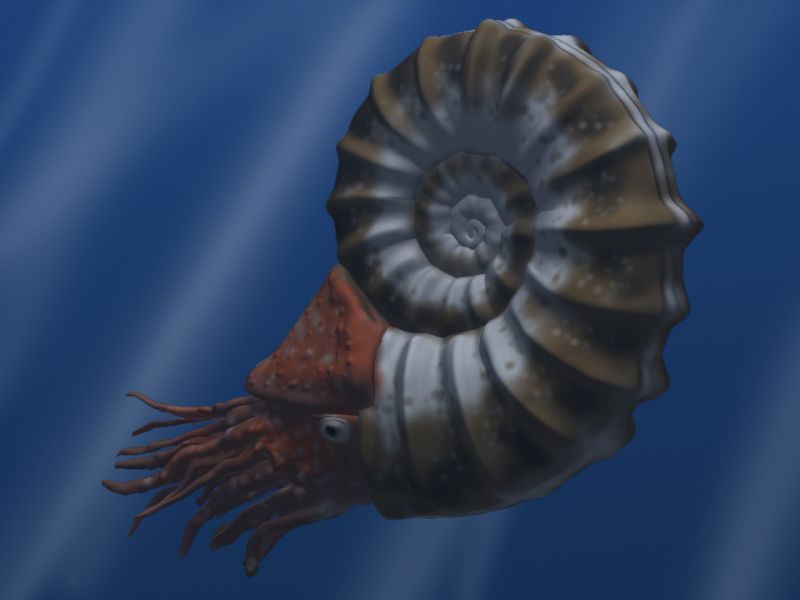
The Western Interior Seaway was a warm, shallow tropical sea teeming with life. Elasmosaurus shared these waters with the massive mosasaur Tylosaurus and the shark Cretoxyrhina. Fish were abundant, and cephalopods like belemnites and ammonites provided a steady food source.
The long neck likely served as a stealth advantage. Because the body stayed at a distance from the head, Elasmosaurus could approach prey without the larger, more visible body triggering a flight response. Small fish and squid would not detect the danger until the tiny head was already within striking range, a biological fishing line with the head as the lure.
A Ruling Reptile, Not a Dinosaur
Despite popular culture lumping all prehistoric reptiles together, Elasmosaurus was not a dinosaur. It belonged to the order Plesiosauria, a group of marine reptiles that evolved entirely in the ocean. While dinosaurs dominated the land, plesiosaurs ruled the seas.
The group Plesiosauria eventually vanished at the end-Cretaceous extinction event, 66 million years ago, along with the non-avian dinosaurs, mosasaurs, and ammonites. No plesiosaurs survived into the Cenozoic era. Their ecological niche, large-bodied marine predators with specialized feeding strategies, was eventually filled by marine mammals like whales and porpoises, though these are not direct descendants.
Legacy and Cultural Impact
Elasmosaurus has become one of the most recognizable prehistoric creatures, featured in films, novels, and museum displays worldwide. The Loch Ness Monster is frequently compared to Elasmosaurus, with some cryptozoologists suggesting that plesiosaurs survived into modern times in deep lakes. While there is no scientific evidence for this, the comparison speaks to the enduring hold Elasmosaurus has on the public imagination.
What we can learn from Elasmosaurus extends beyond the creature itself. Cope's skull mistake was not a failure but a stepping stone, a moment where error led to deeper understanding. The Bone Wars, for all their personal bitterness, drove both Cope and Marsh to discover and describe hundreds of new species, shaping American paleontology for generations.
From the vertebrae of a Cretaceous sea monster to the rivalry that defined a discipline, Elasmosaurus continues to teach us about the ancient oceans and the humans who seek to understand them.