Published September 17, 2026, 12:38 · by the Triops.me Editorial Team · Back to Articles
Elasmotherium: The Real Siberian Unicorn
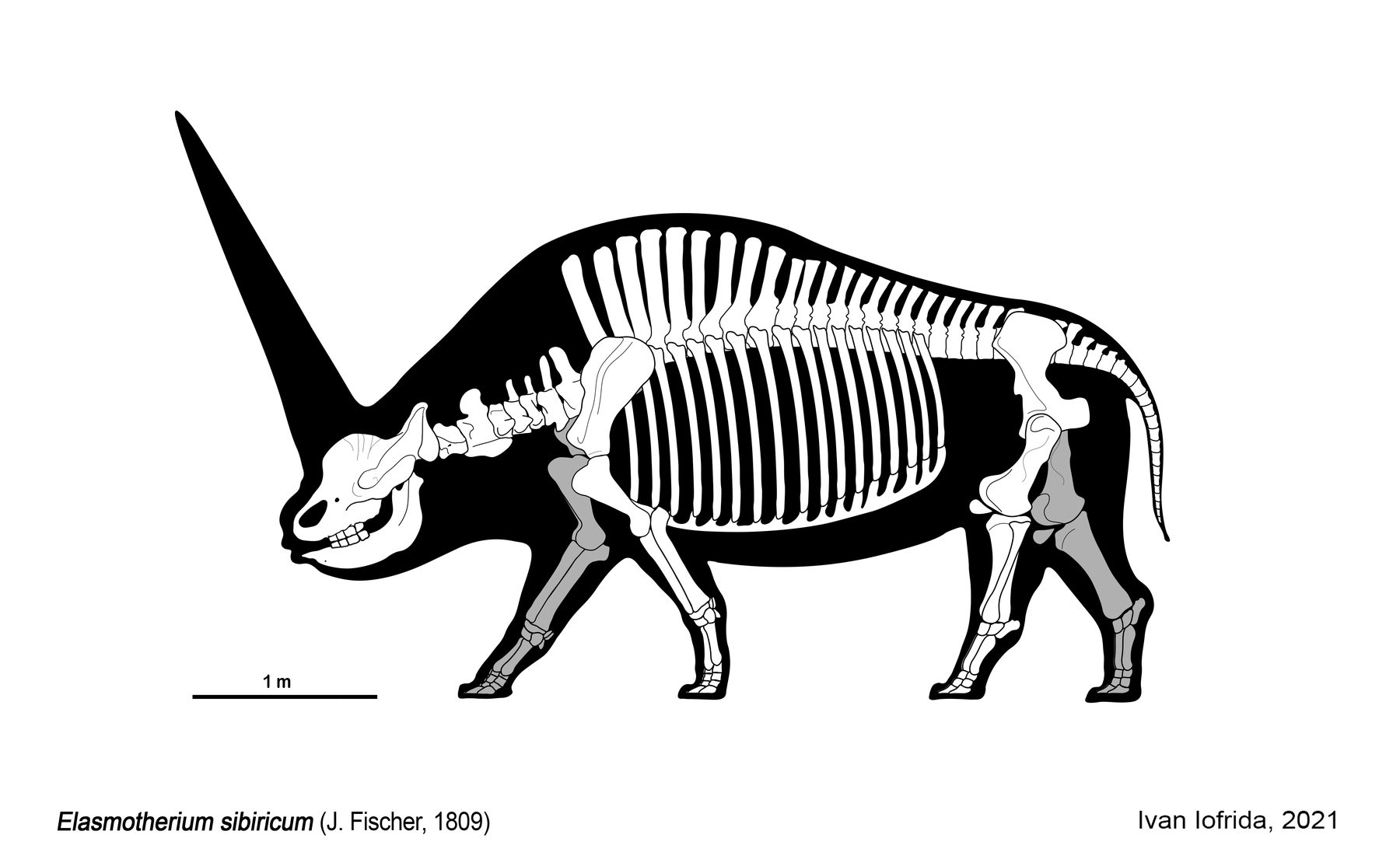
Long before anyone painted a unicorn on a tapestry, something very much like one was real. It was not a slender white horse with a spiral horn. It was a rhinoceros the size of a small elephant, built like a tank on long, springy legs, with a single enormous cone of keratin rising from its forehead. Scientists call it Elasmotherium, and everyone else calls it the Siberian unicorn.
For most of its history on the record, this animal was a curiosity for specialists. In the last decade it has become one of the most talked-about Ice Age mammals ever discovered, mostly because we finally figured out when it died, and the answer surprised nearly everyone.
A Rhinoceros Built Like No Other
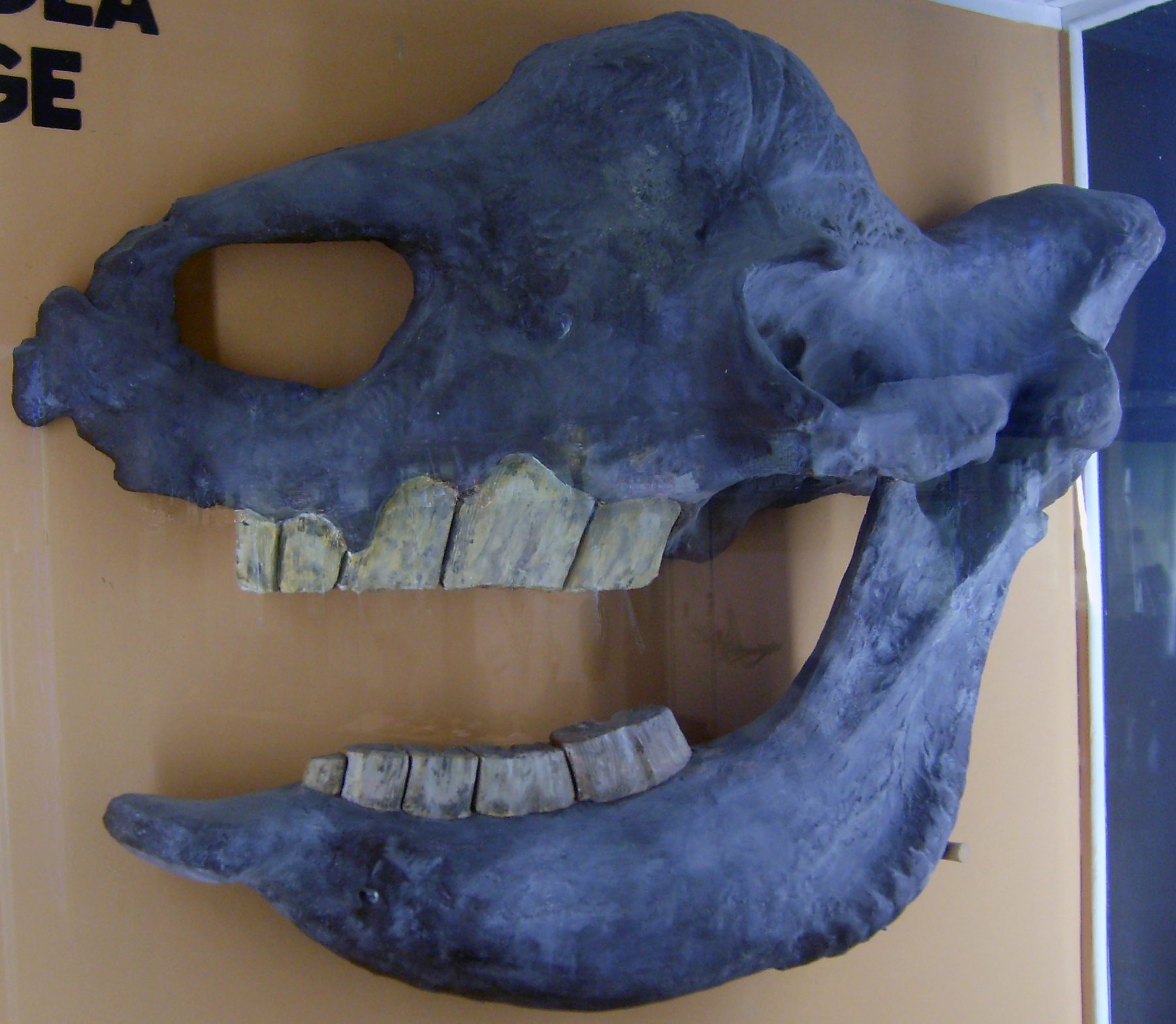
Elasmotherium was named in 1808 by the German-born paleontologist Gotthelf Fischer von Waldheim, working from fossil jaw fragments found in Russia. The name means "thin plate beast", a reference to the deeply folded enamel plates of its molars, which looked to him like layered sheets. Several species have since been recognized, including the older and even larger Elasmotherium caucasicum and the classic Pleistocene Elasmotherium sibiricum.
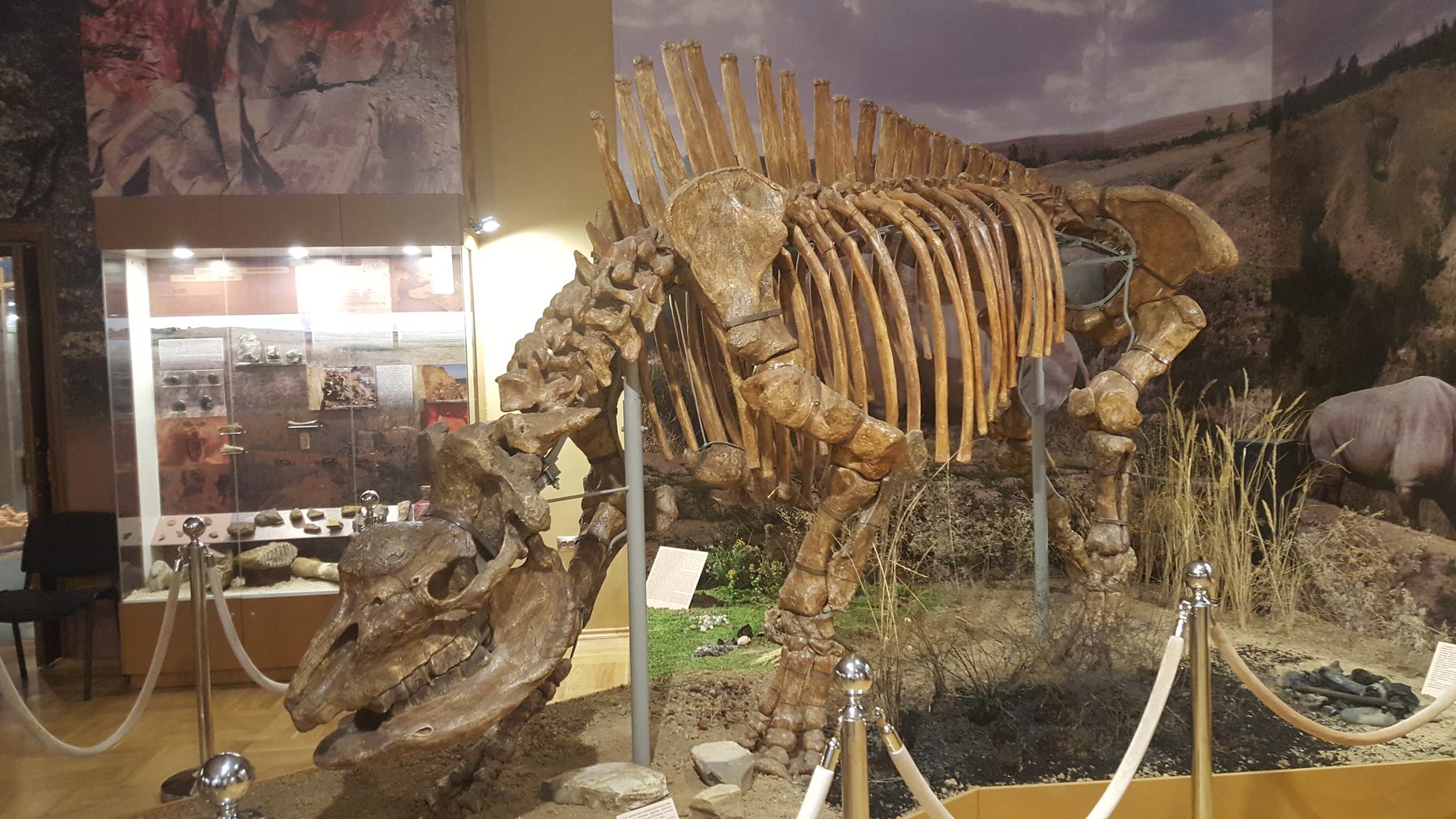
Whatever the species, the proportions were striking. An adult E. sibiricum stood roughly two meters tall at the shoulder, stretched about 4.5 meters long from nose to tail, and probably weighed around 3.5 to 4 tonnes, putting it in the same weight class as a white rhinoceros on stilts and then some. Fossils have turned up across a huge band of Eurasia, from Russia and Ukraine through Kazakhstan, Mongolia and northern China, making it one of the most widespread large mammals of the Pleistocene steppe.
The Horn That Never Fossilized
Here is the frustrating part: we have never found the famous horn, and we never will. Rhinoceros horns are made of keratin, the same protein as hair and fingernails, with no bone core to survive in sediment. The horn decayed along with the rest of the soft tissue, leaving only its footprint behind.
That footprint is a large, roughened dome on the animal's forehead, a bony base that anchored the horn the way a bolt anchor holds a flagpole. Early reconstructions, extrapolating from that dome, gave it a horn up to two meters long. That figure is still the one you see most often, and it made Elasmotherium an internet favorite: a unicorn with a horn the height of a person. More recent studies suggest the dome may have supported a more modest structure, perhaps closer to half a meter, and honest researchers will tell you the true size is simply unknown. What is not in doubt is that it carried a single, dominant, horn, unlike any living rhino, which have two or none.
Life on the Mammoth Steppe
Elasmotherium shared its world with woolly mammoths, woolly rhinos, bison and cave lions, but it did not live like them. Two features set it apart. First were its teeth: extraordinarily high-crowned molars that grew continuously, an adaptation for grinding abrasive grasses loaded with dust and grit. It was a dedicated grazer of the open steppe, less a browser of shrubs than a living lawnmower built for tough plains grass.
Second were its legs. Compared with the stocky, short-legged modern rhino, Elasmotherium had surprisingly long, slender limbs. Several researchers have argued it was a capable runner, maybe even with a gait closer to a horse than to a modern rhinoceros. A four-tonne animal that could move fast across open country is an odd combination, but the open steppe rewards both speed and bulk, and it seems to have invested in both.
A Slow Death We Misdated for Decades
For years, textbooks said Elasmotherium vanished around 29,000 years ago, well before most other Ice Age giants. Then, in 2018, a team re-examined every reliably dated specimen and applied radiocarbon dating to new samples. The revised picture moved the extinction back to roughly 39,000 years ago, ten thousand years earlier than believed, and showed the species had been in decline for a long stretch before that.
The study also recovered DNA evidence pointing to low genetic diversity and slow reproduction, the signature of a population that was thinning out. Climate shifts were remodeling the steppe it depended on at exactly the wrong time, and anatomically modern humans were spreading through its range. The combination, habitat change plus a slow-breeding species already on the ropes, fits the pattern we see in many late Ice Age extinctions. Elasmotherium never met the dramatic end of legend. It just quietly ran out of time.
Did It Inspire the Unicorn Legend?
Because the animal survived well into the age of humans, some writers have suggested that memories of Elasmotherium, whether from real encounters or from finds of its fossils, fed into the unicorn myths of Siberia and beyond. Indigenous legends of the region do describe a giant one-horned beast, and a medieval carving in Rouen Cathedral was once claimed to depict it, though that identification does not hold up. The truth is that nobody can prove a connection. What we can say is this: there really was a giant one-horned mammal walking the same landscapes where those stories grew, and it disappeared at almost exactly the moment human memory of it would begin to blur into myth.
Why It Still Matters
Elasmotherium is a reminder that the unicorn story has a real home in the fossil record, just not the one you expect. It is also a lesson in how paleontology actually moves forward. One careful redating project in 2018 changed the timeline, the extinction story and the human connection all at once, a decade after the animal had been considered settled science. The mounted skeleton in the Azov Museum in southern Russia remains one of the best places to stand in front of a real unicorn and appreciate the size of it.
The next time someone tells you unicorns are pure fantasy, you can tell them about a four-tonne grazer with a horn the size of a fence post, long legs and a myth, that walked the steppes of Asia while humans were painting caves a few thousand kilometers to the west. Reality did not have a horn quite as elegant as legend's. It had one much heavier.
Further reading: woolly mammoths, the icons of the Ice Age, Glyptodon, the armored armadillo of the Ice Age, and living fossils that time forgot.