Published 2026-10-28 · by the Triops.me Editorial Team · Back to Articles
The Fighting Dinosaurs: A Battle Frozen in Stone
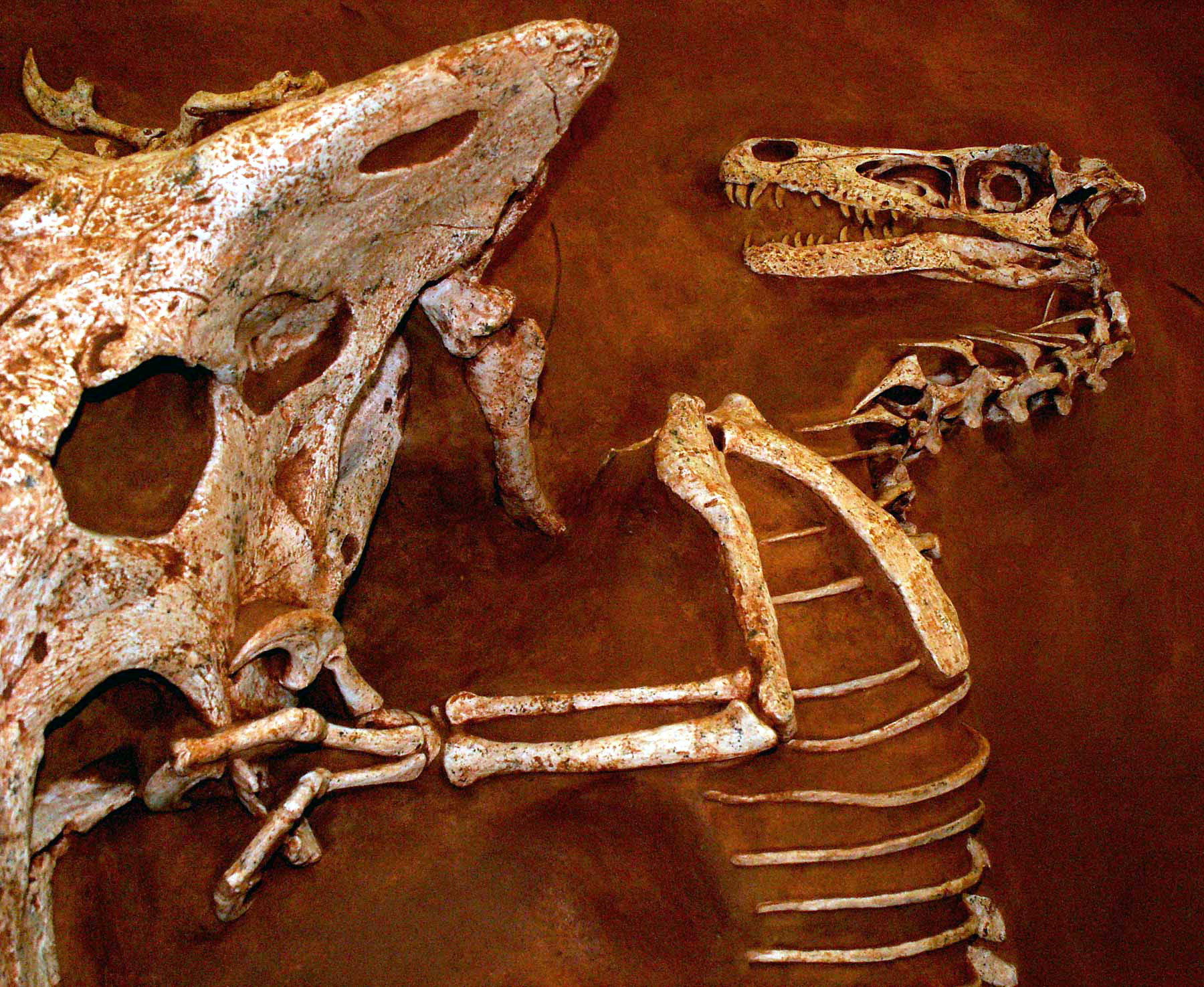
Most fossils are quiet. A shell, a bone, a footprint: traces of things that happened long before anyone could watch. Then there is the specimen that Mongolian sand locked away about 75 million years ago, a block of rock holding two dinosaurs caught in the act of killing each other. A Velociraptor and a Protoceratops, pressed together mid-battle, claws and jaws still engaged. Palaeontologists call it the Fighting Dinosaurs, and it is the closest thing the fossil record has to a photograph of a predator attack.
The story begins in 1971, during the final field season of the Polish-Mongolian Palaeontological Expeditions, the series of Gobi surveys led by Zofia Kielan-Jaworowska. At a locality called Tugriken Shireh in the southern Gobi Desert, the team working the wind-carved sandstones of the Djadochta Formation uncovered something no one had ever seen: two complete skeletons, different species, tangled together. The specimen, catalogued today as MPC-D 100/25, never left Mongolia. It is kept in Ulaanbaatar at the institute of the Mongolian Academy of Sciences, and a cast displayed in Warsaw introduced generations of European visitors to the scene.
The attacker: small, feathered, and dangerous
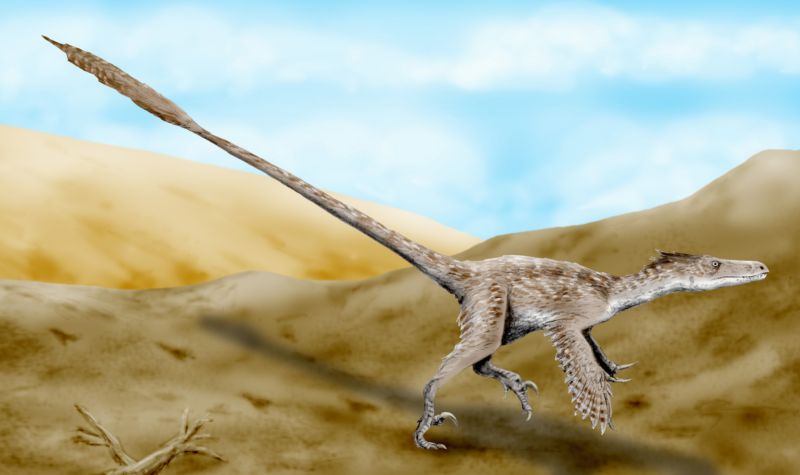
The predator in the rock is Velociraptor mongoliensis, and it looks almost nothing like its movie namesake. The real animal stood about half a metre at the hip, stretched roughly two metres from snout to tail tip, and probably weighed less than 20 kilograms. It carried a long, low skull full of curved teeth, a stiff tail that worked like a balancing rod, and the signature dromaeosaur weapon: an enlarged sickle claw on the second toe of each foot, held raised off the ground and snapped forward when needed. Far from the giant screen monster, Velociraptor was a lean, agile hunter of small and medium game, and the Gobi was its hunting ground. You can read more about the species in our Velociraptor deep dive.
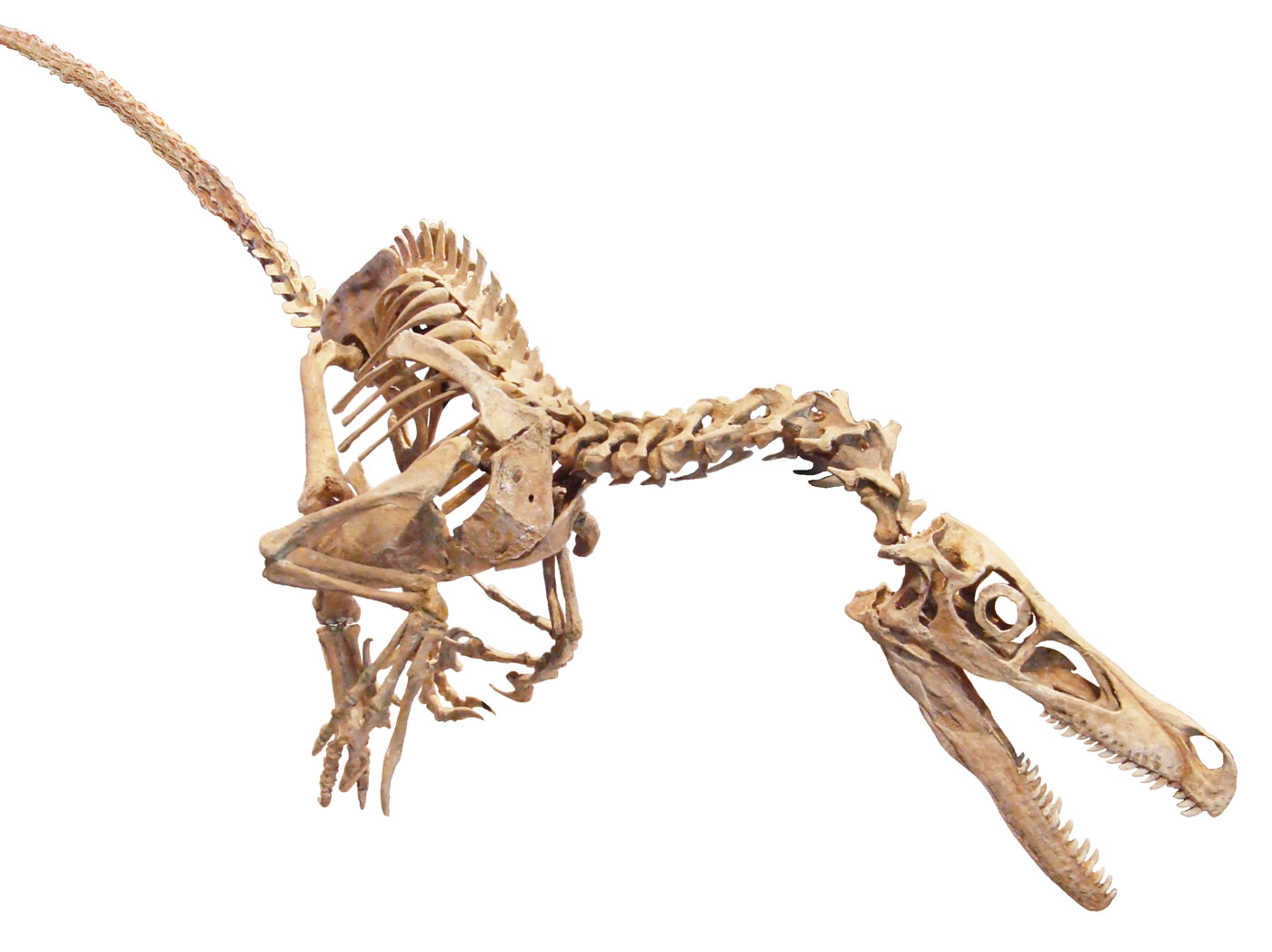
One detail makes the fossil scene even stranger to picture. In 2007 researchers found quill knobs, tiny bumps where feathers anchor, on a Velociraptor forearm bone, which means the species carried true feathered wings on its arms. The forelimb that ends up clamped in the Protoceratops beak was, in life, feathered. The famous fossil shows a bird-like animal in a fight to the death, not a scaly lizard.
The defender: a frilled plant eater with a serious bite
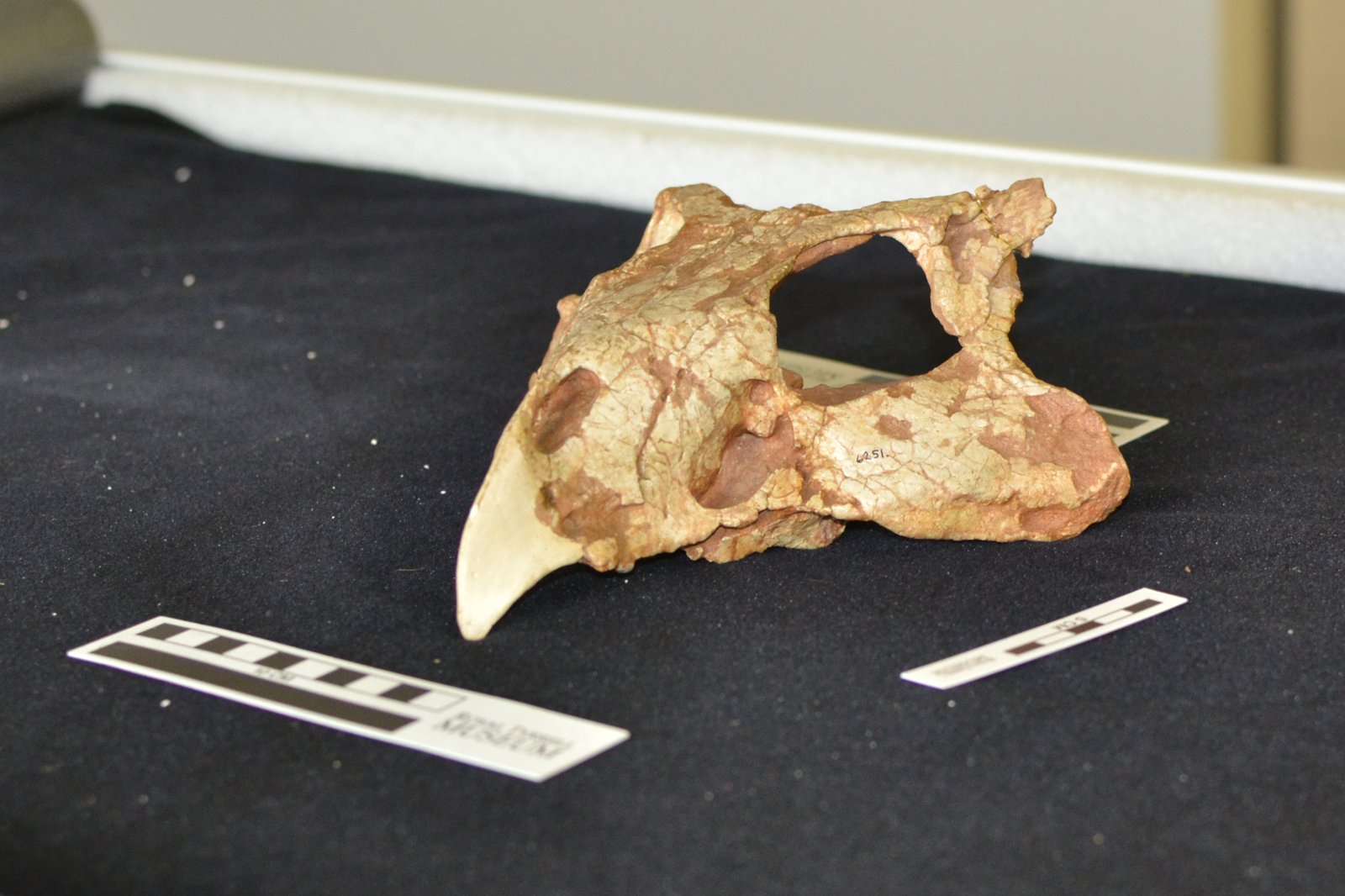
The other combatant, Protoceratops andrewsi, was described back in 1923 from the same desert. It was a sheep-to-pony-sized plant eater: bulky, four-legged, with a big head, a bony frill, and a sharp parrot-like beak backed by strong jaw muscles. No horns yet, those came later in the ceratopsian family tree, but the beak alone could crack through tough desert plants, and it made a formidable weapon when the animal turned on an attacker. Our ceratopsian overview follows where that lineage led. Protoceratops remains are everywhere in the Djadochta sands, from hatchlings to adults, and the species nested in colonies, a story that once got another Gobi dinosaur badly slandered.
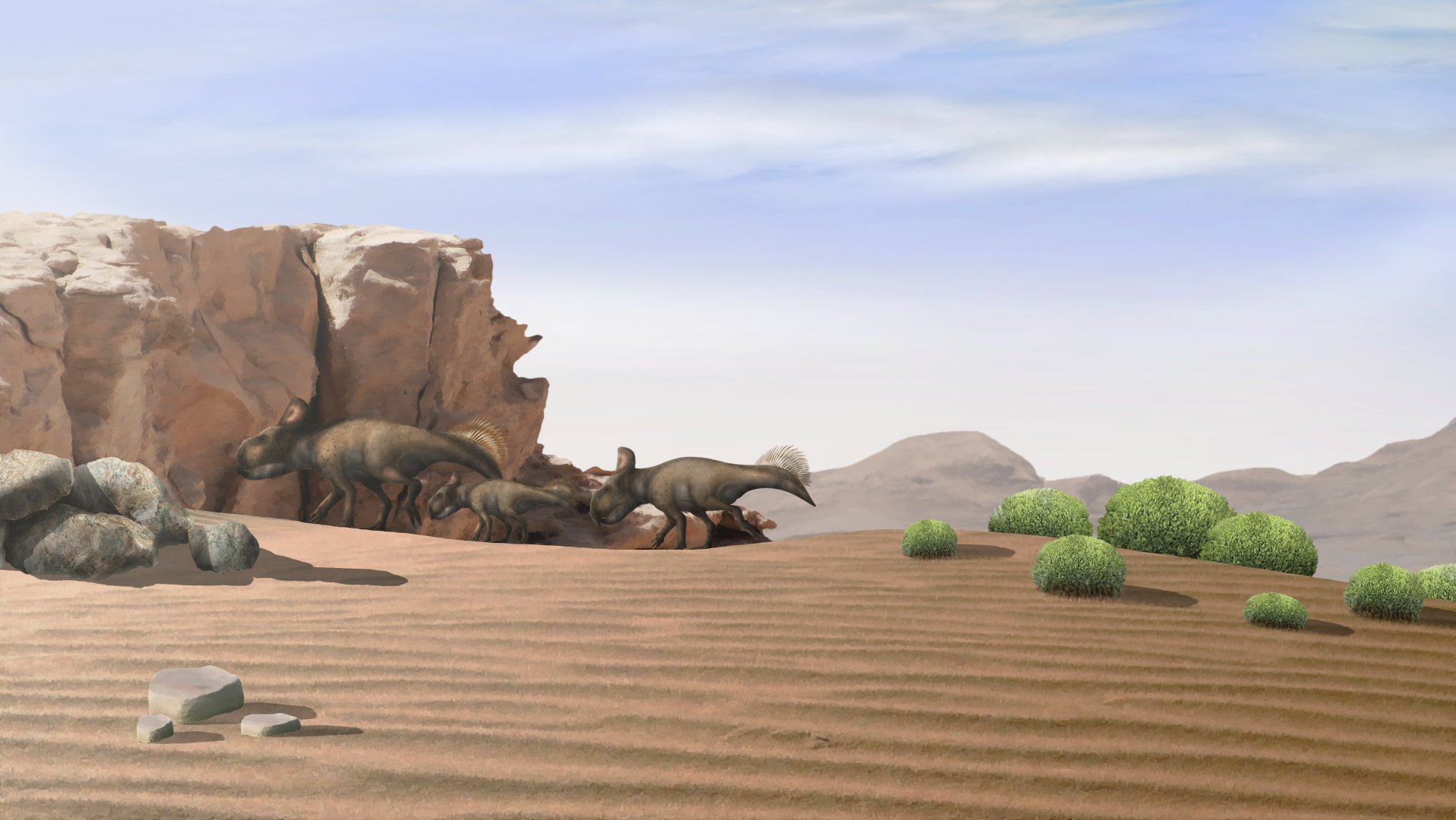
When early expeditions found Protoceratops skeletons piled near clusters of eggs, scientists assumed the animals were stealing them and named the supposed egg thief Oviraptor. Decades later, a parent found fossilized brooding on its own nest proved the eggs belonged to the oviraptorids themselves. The full rehabilitation is told in our Oviraptor article.
Reading a fight scene
The fossil itself is almost cinematic. The Velociraptor lies on its side beneath the Protoceratops, and one sickle-clawed foot is driven into the plant eater's throat region, right where the windpipe and major blood vessels run. At the same time, the Protoceratops beak is clamped around the raptor's right forelimb, an unambiguous counterattack. The palaeontologist Kenneth Carpenter, who analysed the specimen in detail in 1998, read it as a hunting attempt: the Velociraptor going for the neck while the Protoceratops fought back and got a grip on the very limb that carried the killer claws. Then the sand came down.
Not everyone agrees on every point. A minority has suggested the raptor might have been scavenging, or that decay and burial shifted some parts before the scene hardened. But most researchers treat the arrangement as a genuine life-or-death interaction, because the poses make sense together: an attack line on the throat and a defensive bite on the arm are exactly what you would expect from two animals that hurt each other at the same moment. The fossil is also a key exhibit in the long debate about what dromaeosaur sickle claws actually did. Whatever the fine points, this claw ended up buried inside prey, which is hard evidence that it was driven into living targets.
The sand that caught them
Preserving behaviour needs luck of a very specific kind: burial so fast that nothing scavenges or scatters the scene. Early researchers pictured a sudden sandstorm. Later work on the Djadochta sediments points to something more sudden still, the collapse of a dune face, possibly rain-weakened, avalanching over whatever stood beneath it. A dune that slumps dumps metres of sand in seconds. That would explain why two animals mid-fight were sealed together with no time to separate, and why the same formation preserves so many exquisite Gobi fossils, from whole egg clutches to shaded time capsule finds elsewhere in the world.
Moments like this are vanishingly rare. A Xiphactinus that died with a whole fish in its stomach, a Repenomamus caught with a baby dinosaur as its last meal, and the famous Dueling Dinosaurs block of a tyrannosaur locked against a Triceratops all offer snapshots of ancient behaviour. We have covered the fish in Xiphactinus: fish within a fish and the mammal in Repenomamus: the mammal that ate dinosaurs. The Fighting Dinosaurs remains the most celebrated of them all, because it captures not just an animal, but an interaction: two species, one attack, one defence.
That is what makes this block special. Every fossil is a pause button pressed by geology, but nearly all of them freeze something inert, a bone here, a shell there. This one froze a second of panic, 75 million years before humans existed. A hunter made its move, the defender bit down, and the desert dropped the curtain on both. The Gobi is still giving up its treasures, and Mongolia now guards them as national heritage, but the scene in the sand has already told us its secret: dinosaurs fought, exactly as we imagined, and the rock kept the receipt.