Published 2026-09-02 · by the Triops.me Editorial Team · Back to Articles
Gastonia, the Walking Fortress of the Early Cretaceous
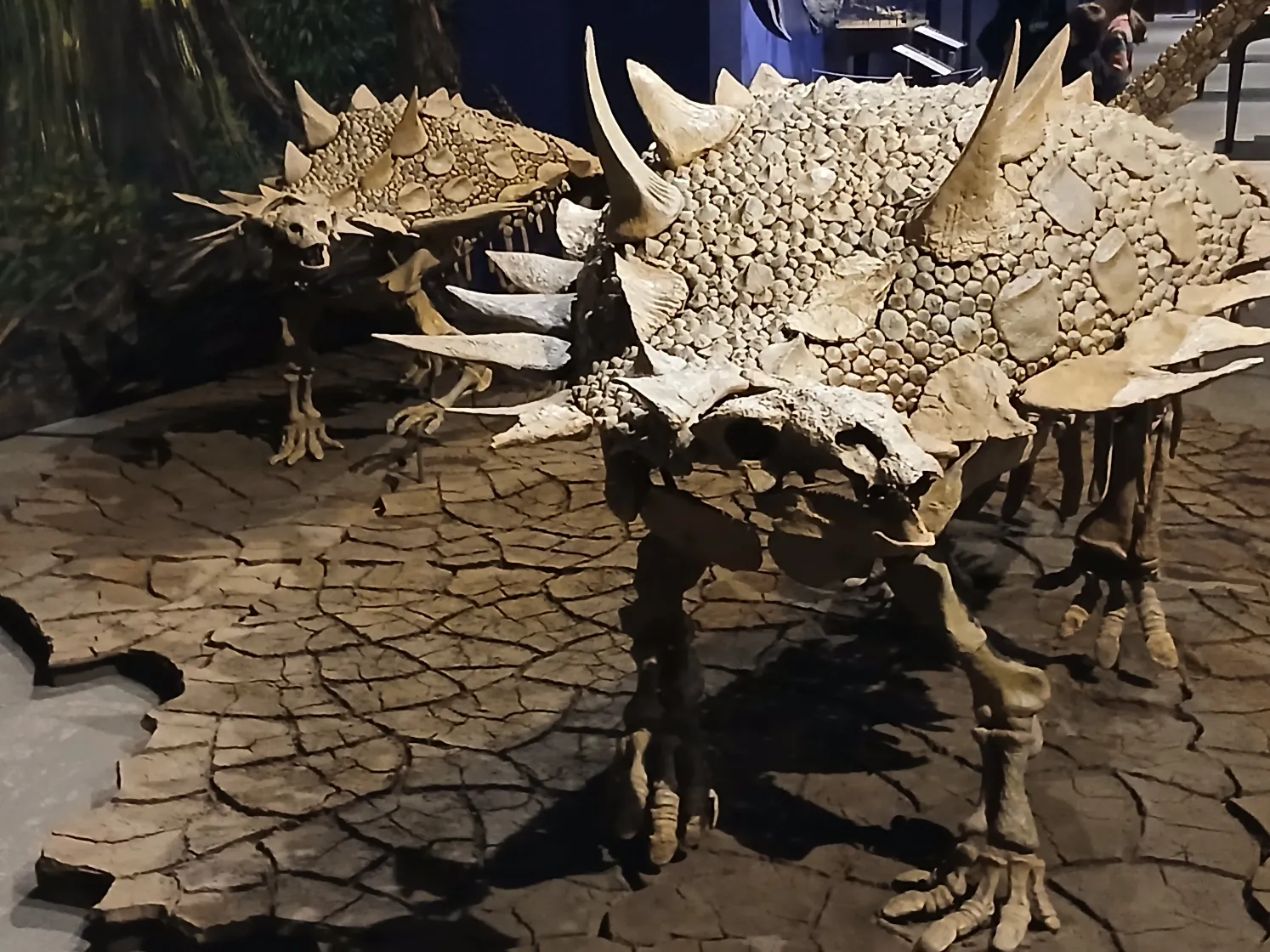
More than 130 million years ago, in a landscape of riverine forests and dry lake margins across what is now eastern Utah, a low-slung armored dinosaur packed more defensive hardware than almost any other creature of its time. This was Gastonia burgei, a polacanthine ankylosaur whose body was studded with rows of overlapping spikes, fused pelvic shields, and hundreds of small bony scutes. It was a dinosaur built like a medieval war horse in full plate armor, except it never needed a blacksmith. Its armor grew with it, embedded in its skin.
Gastonia was named in 1998 by paleontologist James Kirkland, honoring Robert Gaston, the discoverer of the quarry where the first major collection of specimens was found. The species name burgei pays tribute to Donald L. Burge, then director of the College of Eastern Utah Prehistoric Museum. The fossils come from the Yellow Cat Member of the Cedar Mountain Formation in Grand County, Utah, a rock unit dated to approximately 135 to 132 million years ago during the early Cretaceous Period.
A Mass Grave Tells the Story
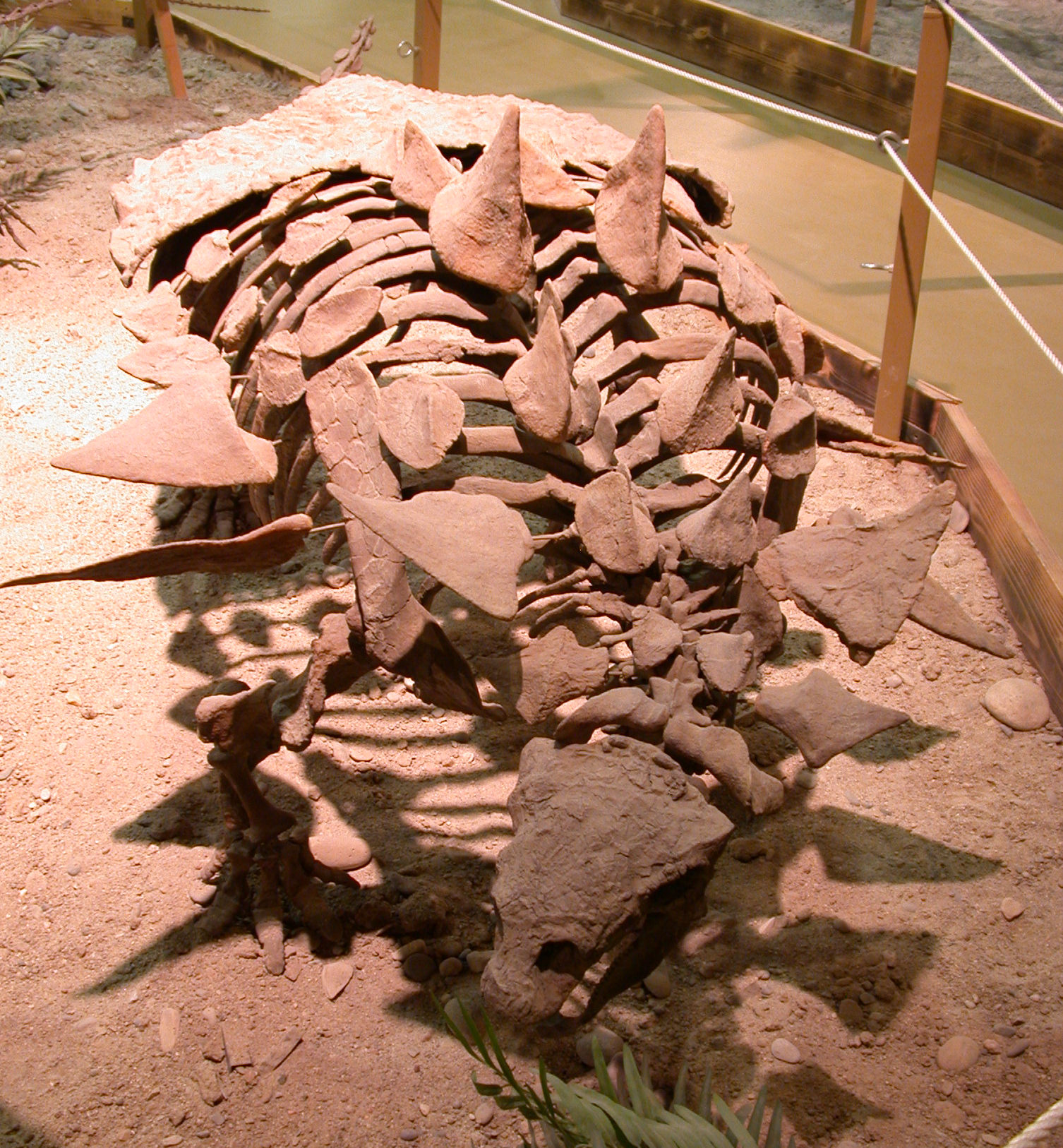
The first Gastonia specimen, found in 1989, was a 250-pound block of stone containing armored back plates that caught Kirkland's eye during a visit to the Moab Rock Shop. A full-scale excavation at what became known as Gaston Quarry followed in 1990, 1991, and 1992, yielding remains from at least six individuals. The concentration of so many animals in one spot has led researchers to suggest that Gastonia may have lived in herds, an unusual trait for ankylosaurs, which are typically thought of as solitary creatures. Some paleontologists propose the group died together during a drought or flash flood event that trapped them at a shrinking waterhole.
What makes the Gaston Quarry particularly remarkable is that it also produced the holotype specimen of Utahraptor, the giant dromaeosaurid raptor that measured up to 7 meters long. The two species lived side by side in the same ecosystem, and their co-occurrence in the bone bed has fueled speculation that the raptor may have attempted to prey on Gastonia. For a 1.9-tonne armored herbivore with rows of bony spikes protruding from every angle, a raptor attack would have been a perilous gamble.
Armor Unlike Any Other
Gastonia measured roughly 5 to 6 meters in length, making it a medium-sized ankylosaur, but its defensive architecture was anything but modest. Unlike the more famous Ankylosaurus of the late Cretaceous, Gastonia lacked a tail club. Instead, it relied on a completely different strategy: a dense covering of spikes arranged in overlapping rows along its flanks, tail, and shoulders.
The neck was encircled by bony rings, while the sides of the body bore at least five pairs of large, recurved triangular spikes that gradually decreased in size toward the tail. Each spike had a deep groove on its rear surface, designed to overlap the front edge of the spike behind it, creating a continuous shield. Between these larger elements, hundreds of small round ossicles, some no larger than a marble, filled the gaps in the armor like chain mail links. The pelvis was covered by a massive fused shield of interlocking osteoderms arranged in rosette patterns.
Kirkland proposed that this armor served a dual purpose. The vertical spikes provided passive defense, making the animal difficult to bite or claw. The flexible tail, tipped with horizontal spikes, could deliver active counterstrikes against attackers. This two-pronged approach, passive armor plus active retaliation, was likely effective enough to keep Gastonia one of the most common herbivores in its ecosystem.
Life in the Yellow Cat Fauna
The Cedar Mountain Formation's Yellow Cat Member preserves a rich snapshot of early Cretaceous life in western North America. Alongside Gastonia, the fauna included the long-necked sauropods Cedarosaurus and Moabosaurus, the ornithopods Hippodraco and Cedrorestes, and the theropods Nedcolbertia and Martharaptor. The landscape was partly wooded, with riverine forests separated by open, semi-arid areas. Gastonia was the only ankylosaur known from these rocks, and its abundance suggests it was well-adapted to this environment.
The beak-like jaws and small, leaf-shaped teeth of Gastonia indicate a herbivorous diet of low-growing vegetation. Its short, powerful limbs and broad, flattened body suggest a slow-moving lifestyle, grazing close to the ground much like a modern tortoise. The downturned head, enabled by a downward-pointing occipital condyle where the skull meets the neck, may also have facilitated head-butting contests between males, a behavior supported by the presence of shock-absorbing structures in the rear skull bones.
Why Gastonia Matters
More complete fossil material exists for Gastonia than for any other basal ankylosaur, giving paleontologists an unusually detailed picture of early armored dinosaur anatomy. Its discovery in 1998, alongside Utahraptor in the same quarry, changed how scientists understood the predator-prey dynamics of the early Cretaceous. The sheer number of osteoderms, spikes, and scutes found across multiple individuals has also shed light on how armored dinosaurs evolved their defenses over millions of years, from the simpler plates of early forms to the elaborate weapon systems of later giants.
In a world where most attention goes to the towering sauropods and fearsome theropods, Gastonia reminds us that evolution also produces quietly brilliant solutions. It did not need speed, venom, or enormous size to survive. It simply wore its fortress everywhere it went, and for 135 million years, that was enough.