Published August 18, 2026, 12:43 by the Triops.me Editorial Team · Back to Articles
Gorgonopsids: Saber-Toothed Rulers of the Permian
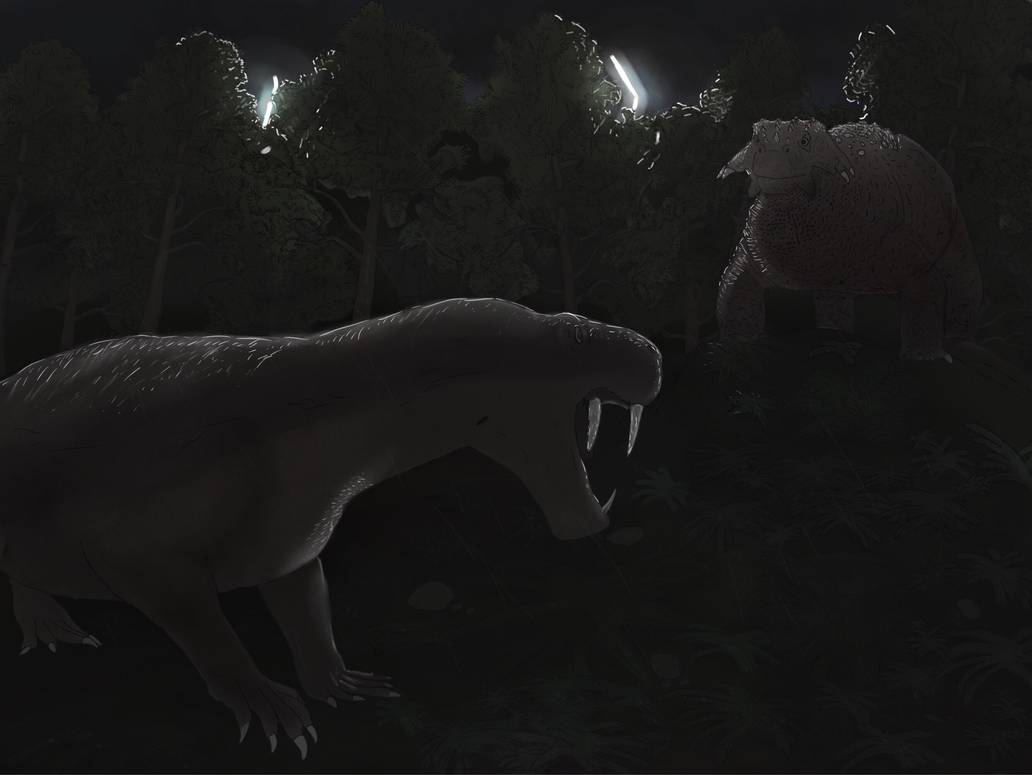
Long before T. rex thundered across Cretaceous plains, before even the first dinosaurs appeared, a different kind of apex predator stalked the Earth. These were the gorgonopsids, a group of large, saber-toothed therapsids that dominated the late Permian landscape approximately 260 to 252 million years ago. They were among the most fearsome carnivores of their time, and their story ends abruptly with the greatest mass extinction event in Earth's history.
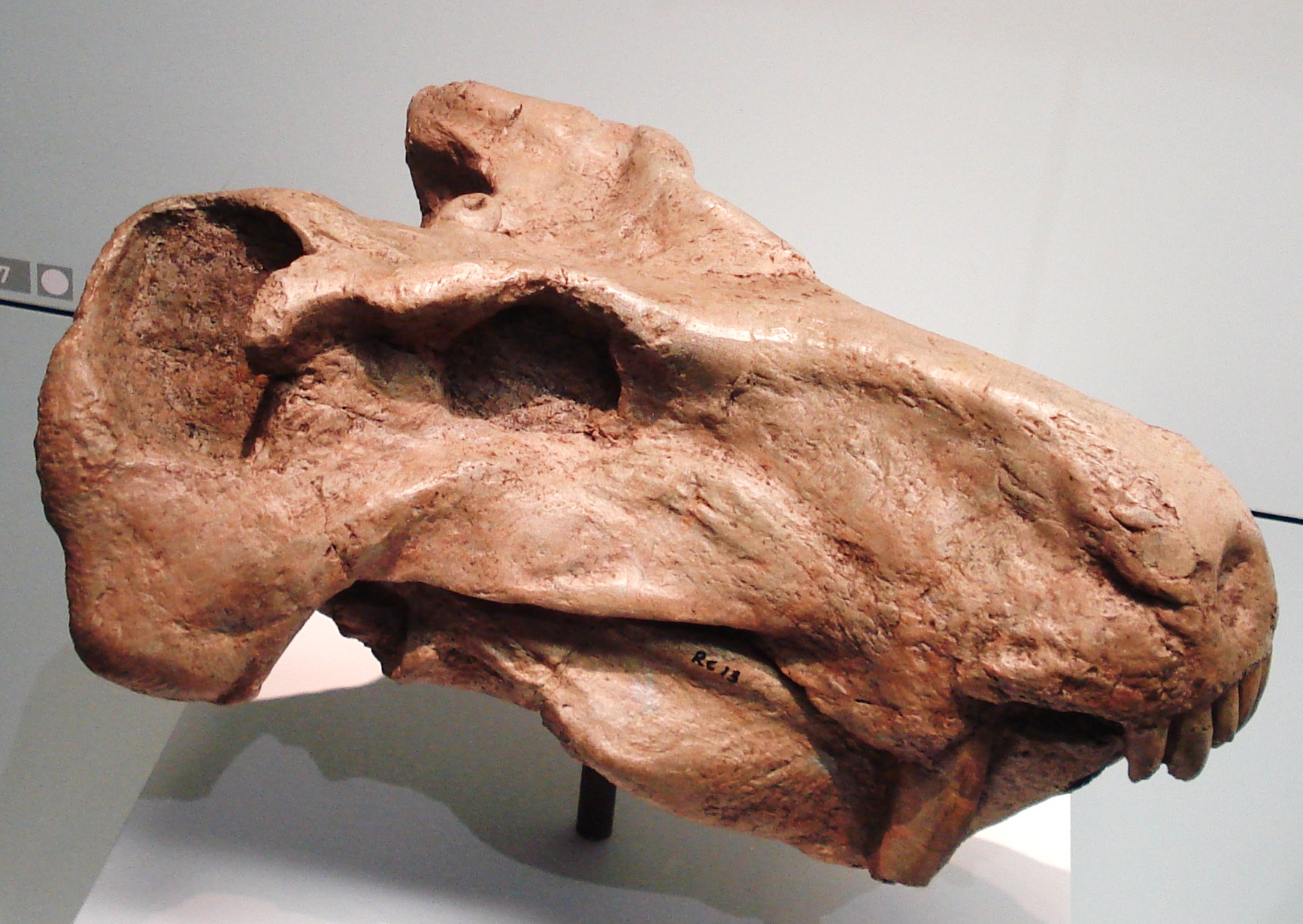
The name "gorgonopsid" means "Gorgon face," a reference to the monstrous, snake-haired creatures of Greek mythology. It is a fitting name. These animals had skulls adorned with bony ridges and textures that gave them a genuinely intimidating appearance, even by prehistoric standards. But their most striking feature was not their face. It was their teeth.
The Saber Teeth
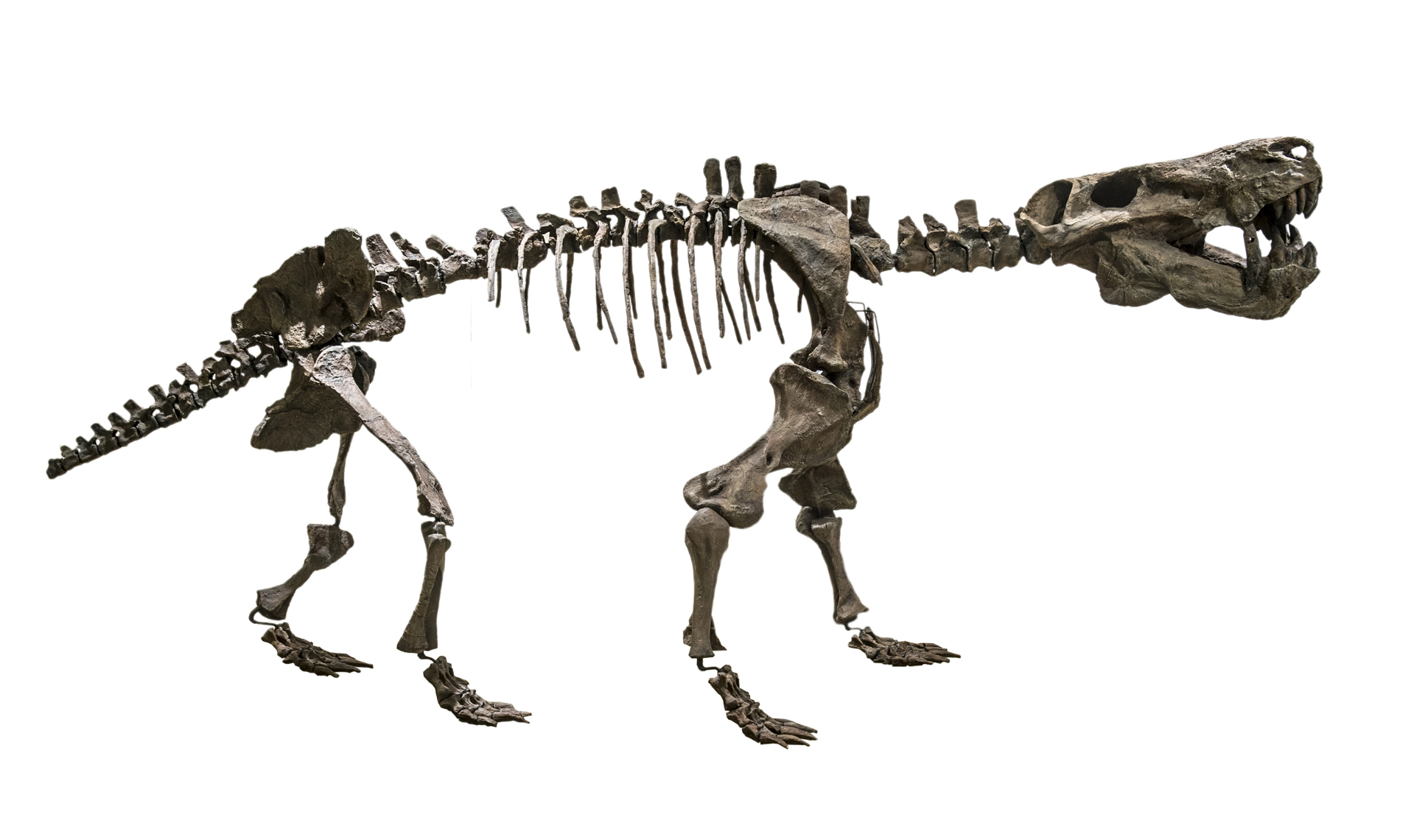
Gorgonopsids possessed elongated canine teeth that extended well below their lower jawline, much like the later saber-toothed cats such as Smilodon. These were not decorative. Fossil evidence shows that the teeth were serrated on the trailing edge, optimized for slashing through the thick hides of large Permian herbivores. The jaw could open wide enough to clear those enormous canines, and powerful jaw muscles delivered a bite force that made these animals the undisputed rulers of their ecosystems.
Unlike true mammals, gorgonopsids had a sprawling gait, with their limbs positioned to the sides rather than directly beneath the body. They were likely ambush predators, lying in wait before lunging forward with devastating force. Their build suggests they were powerful but not built for sustained chasing, more reminiscent of a Komodo dragon's hunting style than a greyhound's.
Inostrancevia: The Most Famous Gorgonopsid
Among the dozens of known gorgonopsid species, one stands out: Inostrancevia. Found in the Permian rocks of Russia's Orenburg region, Inostrancevia alexandri is the largest known gorgonopsid, with skull lengths exceeding 30 centimetres and an estimated body length of around 3.5 metres. It was a top predator that likely fed on the heavy armoured herbivore Scutosaurus, a pareiasaur with bony knobs covering its skull and body.
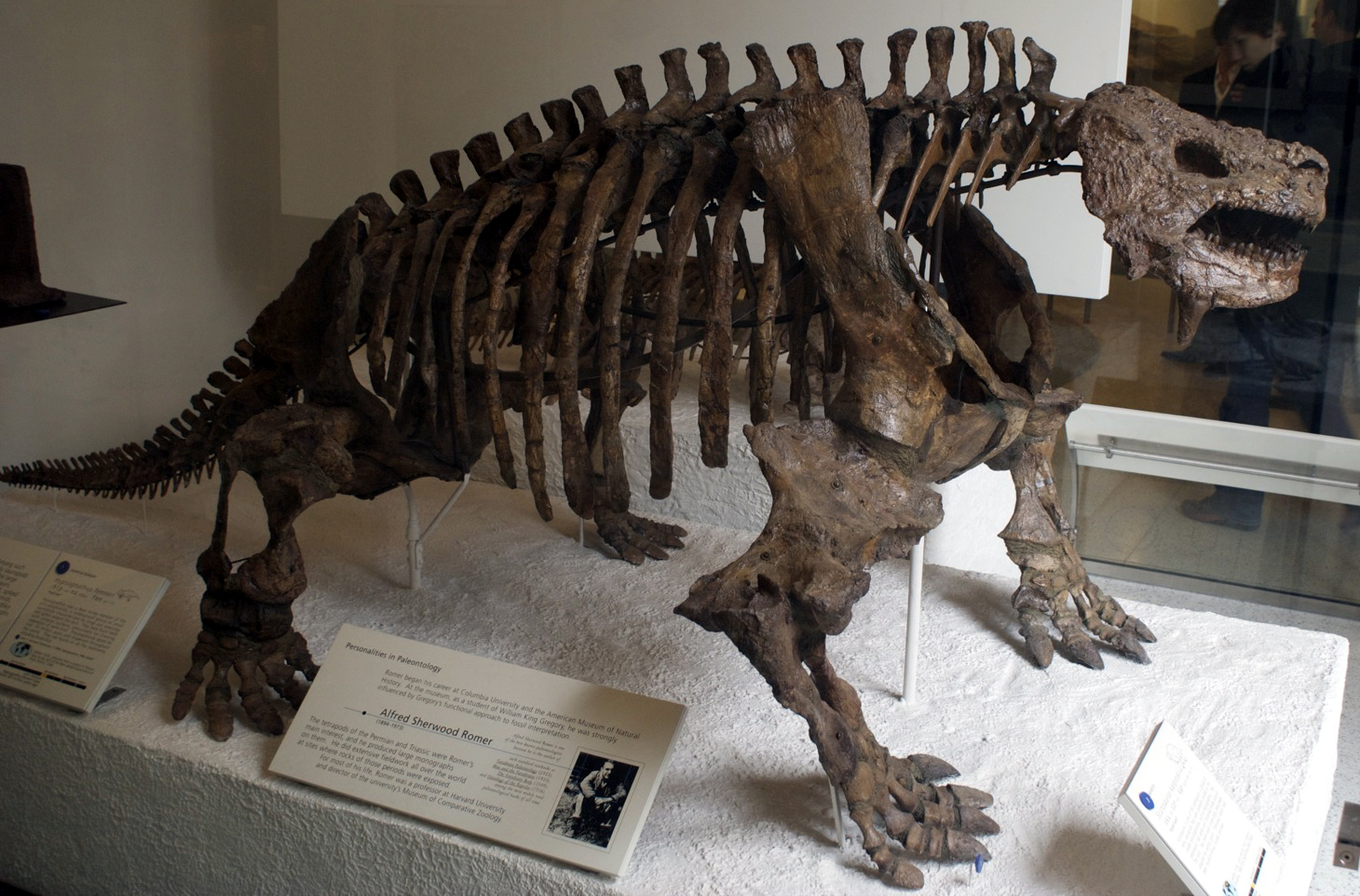
Fossil sites in the Kotelnich region of Russia have produced remarkable assemblages where Inostrancevia remains are found alongside Scutosaurus, suggesting these predators and their prey lived in close proximity. Some palaeontologists have interpreted certain bone orientations as evidence that Inostrancevia actively hunted Scutosaurus, using its saber teeth to bypass the herbivore's armour by targeting softer tissue at the neck or underbelly.
A World of Giants and Armoured Beasts
The Permian world that gorgonopsids inhabited bore little resemblance to our modern planet. There was a single supercontinent, Pangaea, surrounded by a vast global ocean. The climate ranged from arid interior deserts to humid coastal lowlands. In the river systems and floodplains of what is now Russia, South Africa, and Tanzania, gorgonopsids shared their world with an extraordinary cast of characters.
Herbivores like Scutosaurus, Estemmenosuchus, and the sail-backed Dimetrodon (which was not a dinosaur, and not a gorgonopsid, but a pelycosaur) filled the ecological niches that would later be occupied by hadrosaurs and ceratopsians. Other predators, including the smaller gorgonopsid Lycaenops and the massive Rubidgea, competed for prey. The fossil record from the Karoo Basin of South Africa has been particularly rich, yielding nearly complete gorgonopsid skeletons that have allowed researchers to reconstruct these animals in remarkable detail.
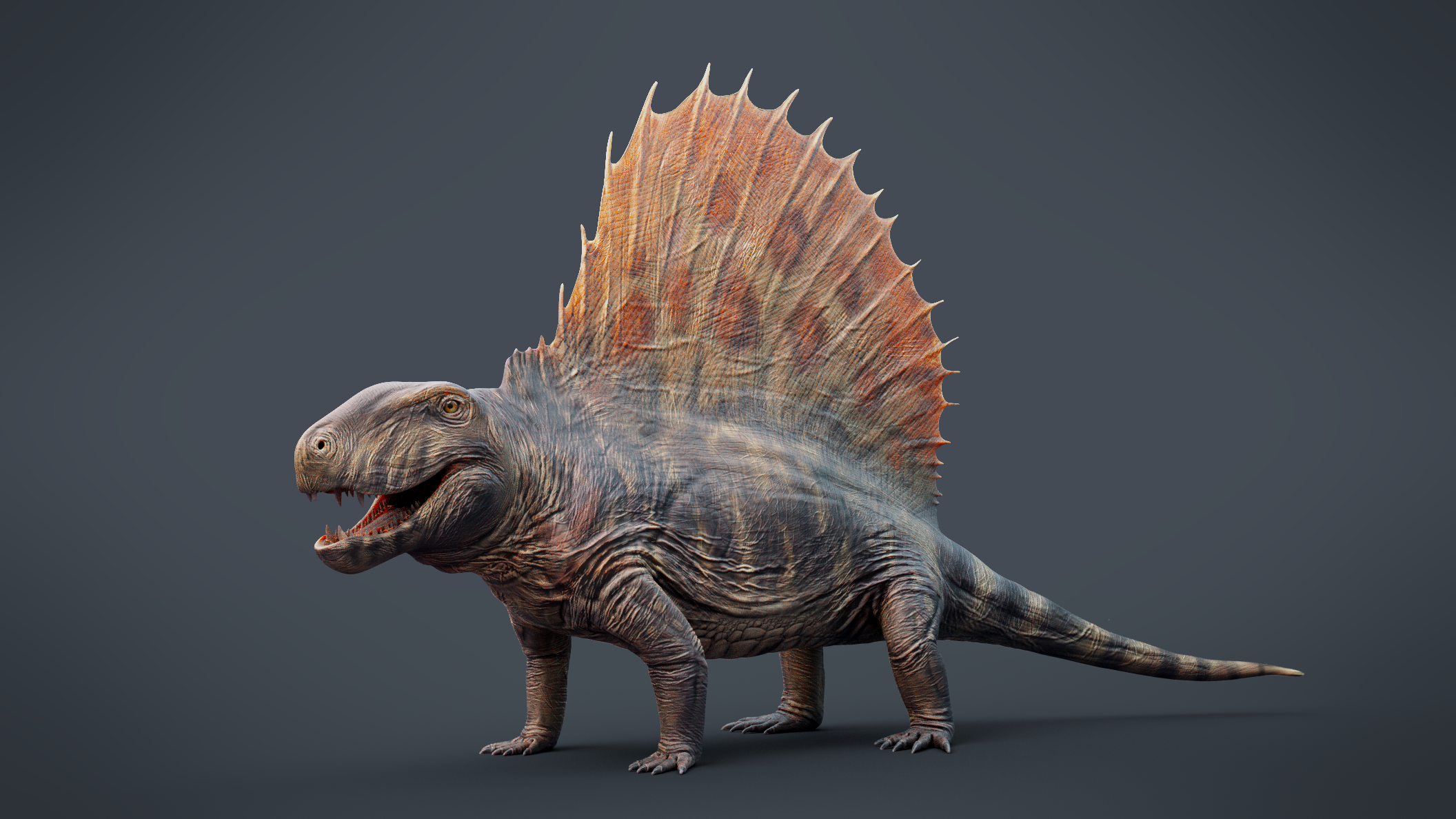
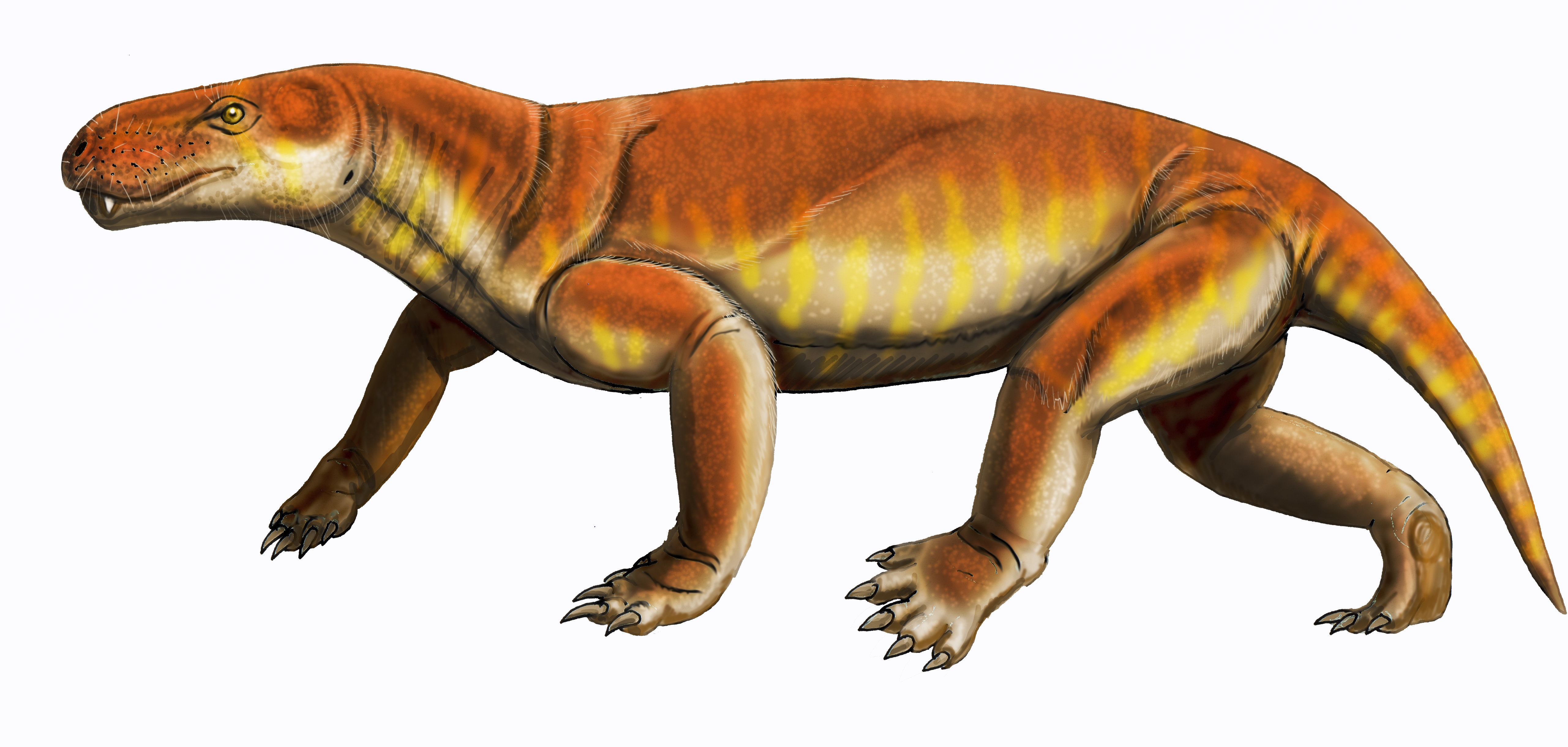
Gorgonopsids ranged in size from the fox-sized Lycaenops to the bear-sized Inostrancevia. Some species had elaborate bony crests and ridges on their skulls, possibly used for species recognition or sexual display. Others were more streamlined, built for speed rather than brute force. This diversity suggests that gorgonopsids occupied multiple ecological roles, from mid-level predators to apex hunters.
The Great Dying
The gorgonopsids' reign ended approximately 252 million years ago with the Permian-Triassic extinction event, often called the Great Dying. This catastrophe wiped out roughly 90 percent of all marine species and 70 percent of terrestrial vertebrate species. The causes are still debated, but the leading candidates include massive volcanic eruptions in what is now Siberia, which released enormous quantities of greenhouse gases and caused rapid climate change, ocean acidification, and widespread habitat destruction.
Not a single gorgonopsid survived. The group vanished entirely, along with most other large therapsids. What emerged in the Triassic were smaller, less specialised descendants of the therapsid lineage, the cynodonts, which eventually gave rise to mammals. The gorgonopsids' ecological niche as large terrestrial predators was left vacant, a gap that would eventually be filled by dinosaurs.
Ancient Predators, Ancient Survivors
It is worth pausing to appreciate the contrast between gorgonopsids and the creatures this site celebrates. Triops, those small freshwater crustaceans often called tadpole shrimp, first appeared in the fossil record around 250 million years ago, roughly the same time gorgonopsids went extinct. While the mighty saber-toothed predators vanished without a trace, the humble triops endured. Through five mass extinctions, climate upheavals, and the rise and fall of dinosaurs, triops persisted. Their secret was simplicity: small bodies, flexible reproductive strategies, and eggs that could survive years of drought in suspended animation.
Gorgonopsids, by contrast, were specialists. Large bodies require large amounts of food. Complex ecosystems support large predators, and when those ecosystems collapse, the biggest animals are often the first to disappear. The Permian-Triassic extinction reminds us that size and strength, no matter how impressive, are no guarantee of survival. Sometimes, the creatures best equipped to endure are the ones small enough, flexible enough, and patient enough to wait out catastrophe.
The next time you see a triops emerge from dried mud after a rain, remember: these tiny survivors outlasted the saber-toothed giants. That is the ultimate measure of evolutionary success.