Published August 17, 2026, 12:20 by the Triops.me Editorial Team · Back to Articles
Hallucigenia: The Cambrian Creature That Was Drawn Backwards
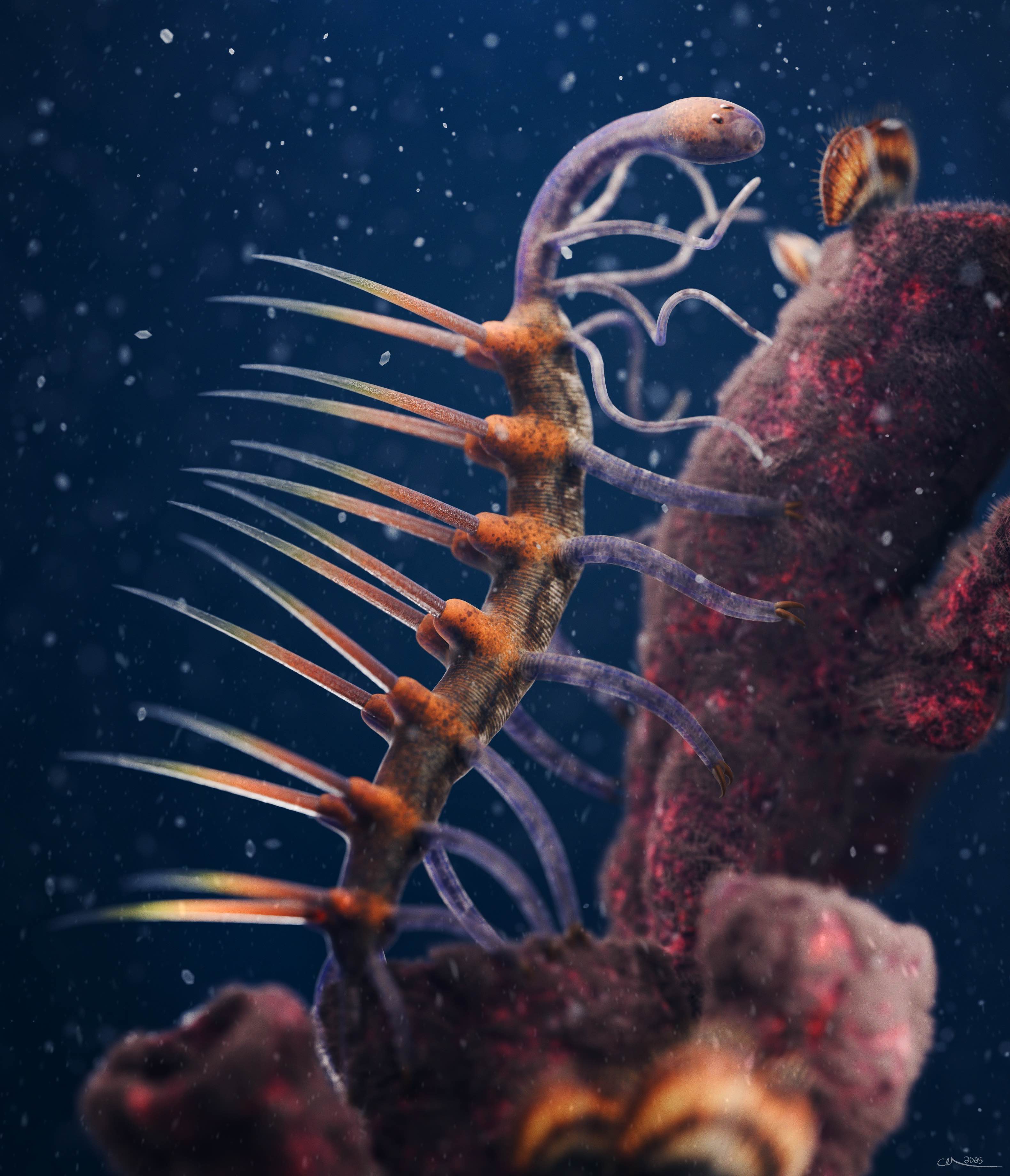
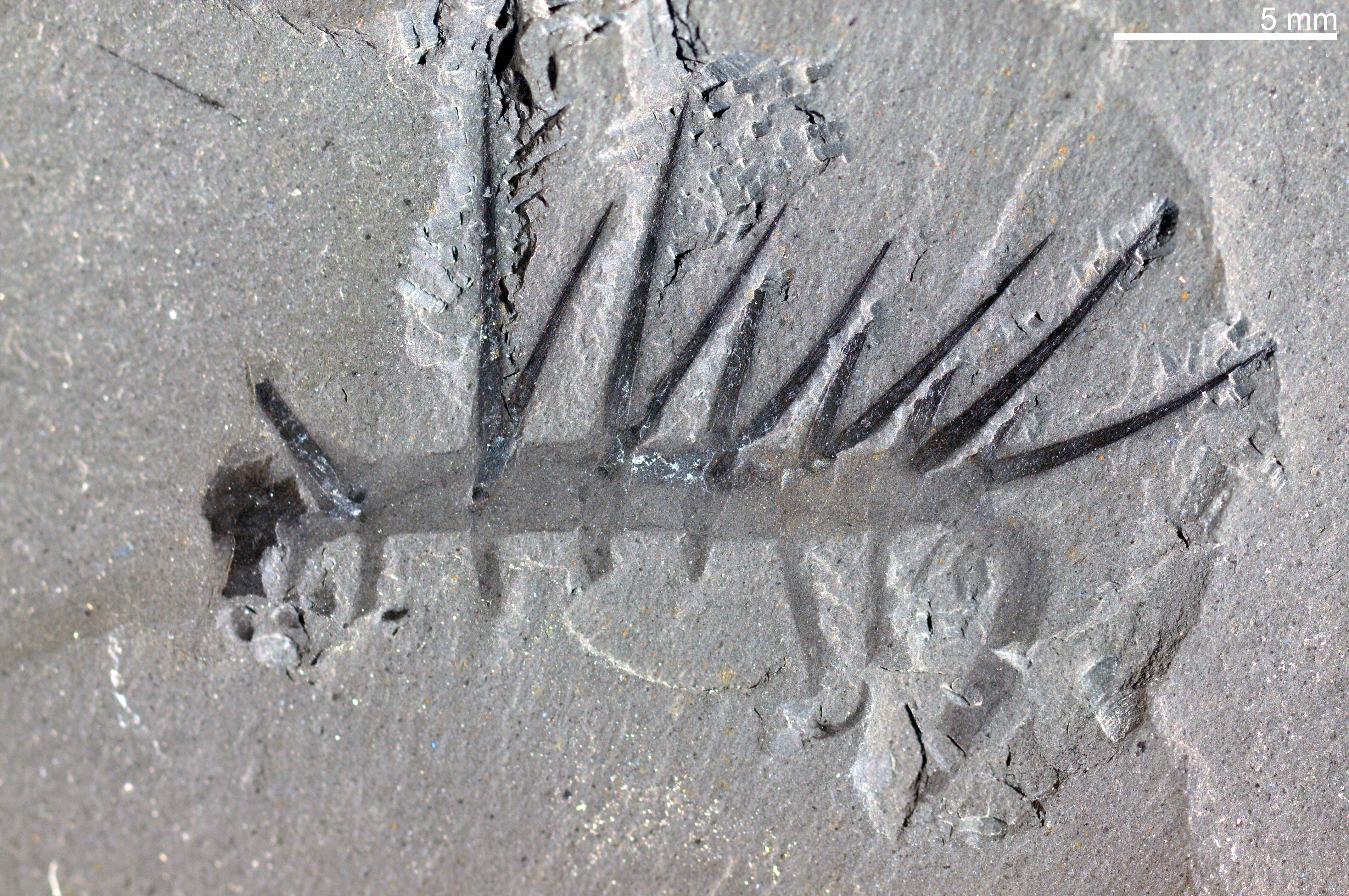
In 1977, paleontologist Simon Conway Morris unveiled one of the strangest animals ever found in the fossil record. It walked on stiff spines, waved tentacles above its back, and had a dark featureless blob where its head should have been. It looked like something from a fever dream. So Conway Morris named it Hallucigenia, after the hallucinations it seemed to evoke. The only problem? He had it completely, spectacularly upside down and backwards.
The real Hallucigenia did not walk on spines at all. Those rigid, dagger-like structures were armor, bristling along its back to ward off predators. The soft, paired appendages Conway Morris had imagined as tentacles were actually legs, tipped with tiny claws. And the blobby "head" was not a head at all, but likely a stain left behind by decay. It took nearly two decades and a treasure trove of Chinese fossils before anyone figured this out.
A Worm That Was Not a Worm
Hallucigenia sparsa was first collected from the Burgess Shale of British Columbia, Canada, in the early 1900s by Charles Doolittle Walcott. At the time, Walcott sorted it into a genus of polychaete worms called Canadia, a reasonable enough guess for a soft-bodied Cambrian fossil that did not look like much of anything. It was not until Conway Morris revisited the material that the animal was recognized as something genuinely new, a creature with no obvious modern relatives.
For years, the upside-down reconstruction persisted. It was accepted with reservations, as Stephen Jay Gould noted in his celebrated book Wonderful Life, because nobody could propose a convincing alternative. How would an animal walk on rigid spines? How would tentacles pass food to a featureless head? The questions piled up, but the fossil record offered few answers.
The Turnaround
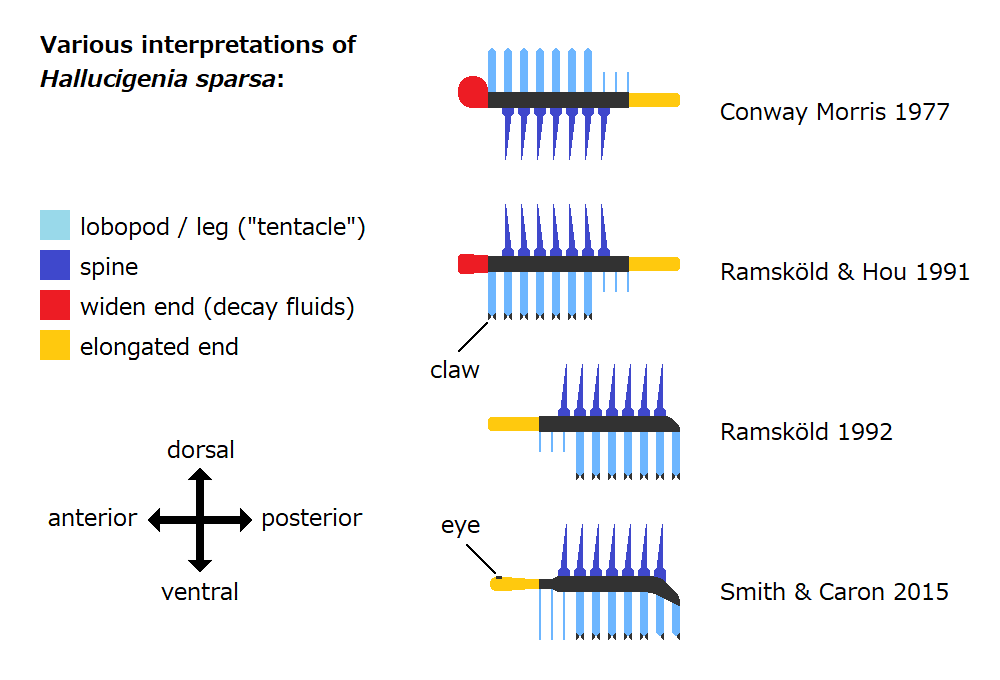
The breakthrough came in 1991, when Swedish paleontologist Lars Ramsköld and Chinese researcher Hou Xianguang published a reinterpretation based on new specimens from the Maotianshan Shales of China. These extraordinary fossils, preserved in exquisite detail, showed the animal from multiple angles. Crucially, they revealed that the supposed single row of tentacles was actually a pair of rows, one on each side of the body, matching the paired spines above. The tentacles were legs. The spines were armor. The whole animal needed to be flipped.
Ramsköld and Hou also demonstrated that the dark blob at one end, long assumed to be a head, was a decomposition stain found consistently across many specimens. It told researchers nothing about the animal's actual anatomy. The real head, it turned out, was hiding in plain sight at the other end of the body.
Eyes, Teeth, and Claws
The final pieces of the puzzle fell into place over the following decade. In 2014, Martin Smith and Javier Ortega-Hernández published a study in Nature showing that Hallucigenia's claws were structurally identical to those of modern velvet worms, the slow-moving tropical predators that trap small invertebrates with adhesive slime. This was the first concrete anatomical link connecting a Cambrian lobopodian to a living animal group.
A year later, Smith and Jean-Bernard Caron redescribed the head region using high-resolution imaging. Hallucigenia, they found, had a pair of simple eyes sitting on a small, elongated head. Its mouth was ringed with a circle of hard, sclerotized plates, and its throat was lined with needle-like teeth arranged in rows. These features, invisible in earlier specimens, placed Hallucigenia squarely within the Ecdysozoa, the broad clade of molting animals that includes insects, crustaceans, roundworms, and their relatives.
Why It Matters
Hallucigenia is small, typically between one and five centimeters long. It was not a predator, not a fast swimmer, not particularly impressive in any obvious way. But its evolutionary significance is enormous. Lobopodians like Hallucigenia sit on the branch of the tree of life that connects velvet worms, tardigrades, and the vast army of arthropods, from trilobites to modern beetles. Understanding their anatomy helps scientists reconstruct what the common ancestor of all these groups might have looked like, and how the segmented, jointed body plans that dominate Earth today first emerged in the warm seas of the Cambrian.
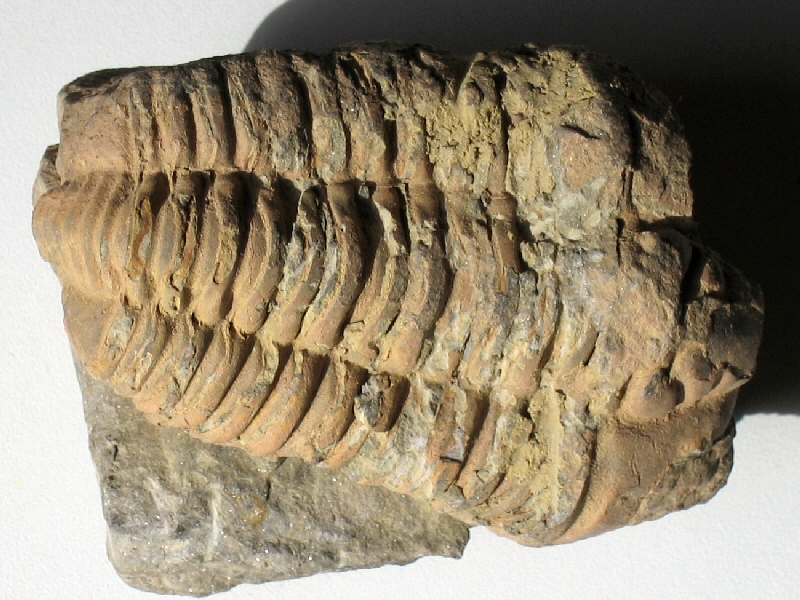
Hallucigenia also illustrates something important about how science works. The first reconstruction was not just slightly wrong, it was backwards in every dimension: up was down, front was back, armor was locomotion. It took new fossils, new imaging technology, and researchers willing to challenge decades of assumption before the animal came into focus. In a field where specimens are flattened, fragmented, and over half a billion years old, getting it right is a slow and humbling process.
A Legacy Etched in Stone
Today, isolated Hallucigenia spines have been found in Cambrian deposits on every continent, suggesting that these tiny, spiny lobopodians were far more widespread than the handful of complete fossils might suggest. Three species are now recognized: H. sparsa from Canada, and H. fortis and H. hongmeia from China. In 2025, a new Hallucigenia-like lobopodian was described from the Czech Republic, extending the group's known range across the ancient supercontinent Gondwana.
Hallucigenia never became a household name like Tyrannosaurus or Triceratops. It is too small, too ancient, too strange. But for paleontologists, it remains one of the most important fossils ever found, a tiny window into the origins of the most successful body plan in animal history. And a reminder that in science, even the drawings can be backwards.