Published October 31, 2026, 18:10 · by the Triops.me Editorial Team · Back to Articles
How Horses Lost Their Toes: 55 Million Years of Horse Evolution
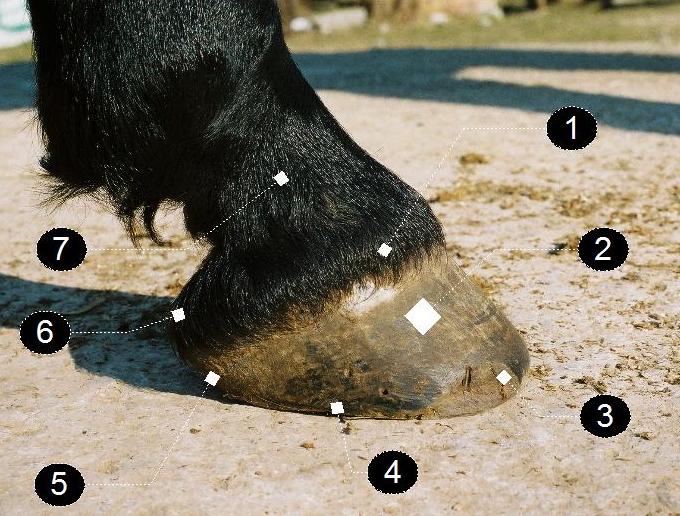
Look at a horse's leg and you are looking at a very strange piece of anatomy. That long, slender limb ends in a single hardened hoof, and that hoof is not a shoe or a claw. It is a giant toenail. A horse, in other words, runs on the tip of one middle toe, and its leg is built like a spring-loaded pogo stick around it.
It was not always this way. The earliest known horses were small enough to sit in your lap, had four toes on each front foot, and crunched leaves in shady forests that no longer exist. The story of how those little browsers turned into today's grazers is one of the best documented evolutionary journeys in the fossil record, stretching across 55 million years and three continents. It is also a story that keeps surprising scientists, because the path was never a straight line.
The Dawn Horse
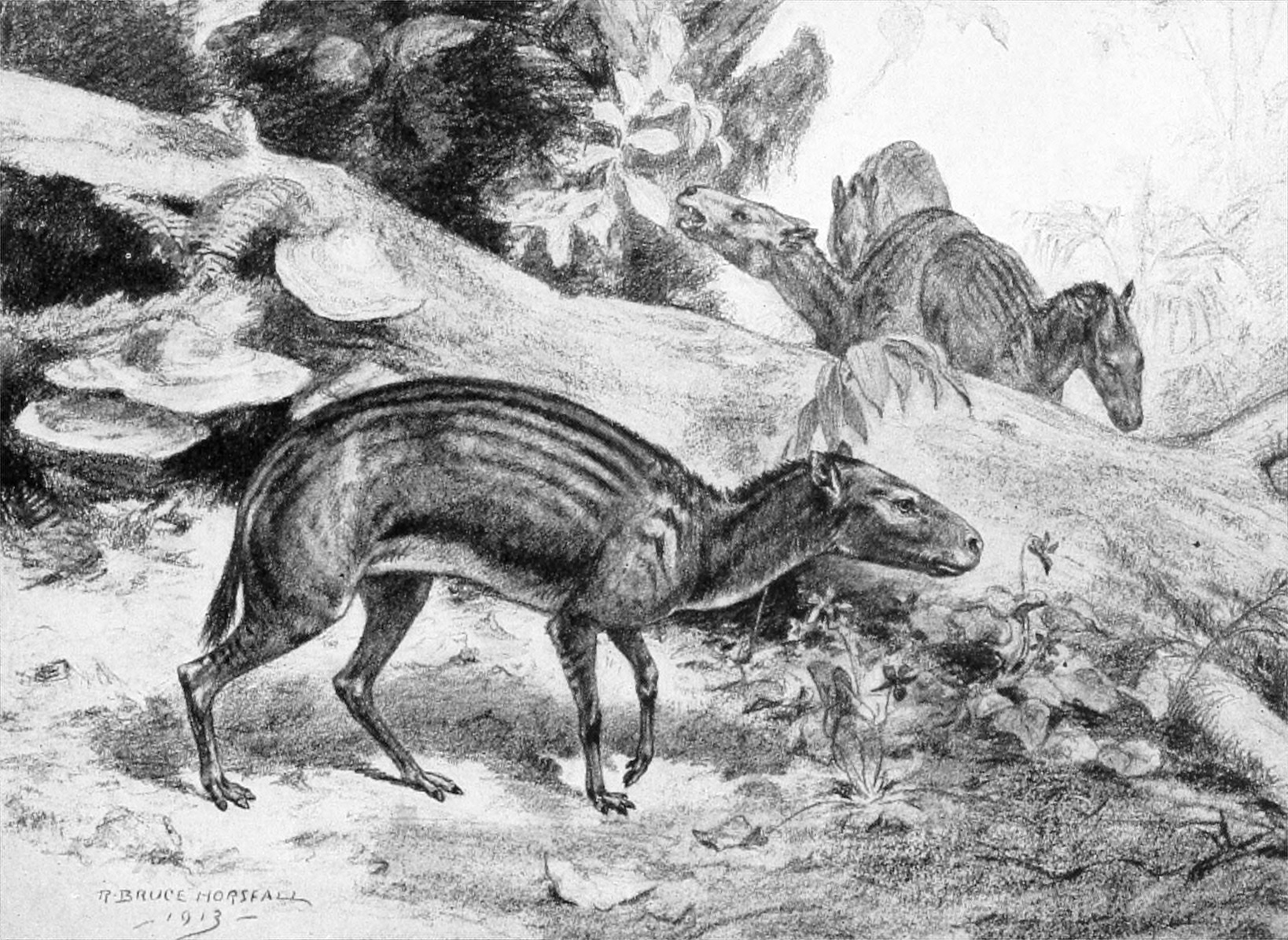
About 55 million years ago, just a few million years after the dinosaurs vanished, the first horse-like animals appeared in the forests of the Northern Hemisphere. The best known of them, first described from fossils found in North America and Europe, went by the scientific name Hyracotherium and later became famous as Eohippus, the dawn horse.
Eohippus stood roughly half a metre tall at the shoulder and weighed about as much as a fox terrier. Its arched back, short snout and big eyes made it look more like a small dog than any horse you would recognize. Its teeth were low-crowned and rounded, built for soft forest foods such as leaves, buds and fruit rather than tough grass. And its feet told a completely different story from its descendants: four toes on each front foot and three on each hind foot, each tipped with a small hooflet, with padded soles like those of a cat.
Through the rest of the Eocene, its successors such as Orohippus and Epihippus gradually refined the recipe. They stayed small and forest-bound, but the outer toes started to fade in importance, and the middle toe on each foot grew stronger. The blueprint of the modern leg was quietly taking shape.
Longer Legs for a Changing World
By the Oligocene, around 40 million years ago, horses like Mesohippus had grown to the size of a large sheepdog, about 60 centimetres tall. The toes on each front foot were down to three, with the middle one noticeably longer and carrying most of the weight. The legs were longer and slimmer, the body more streamlined, and the braincase larger.
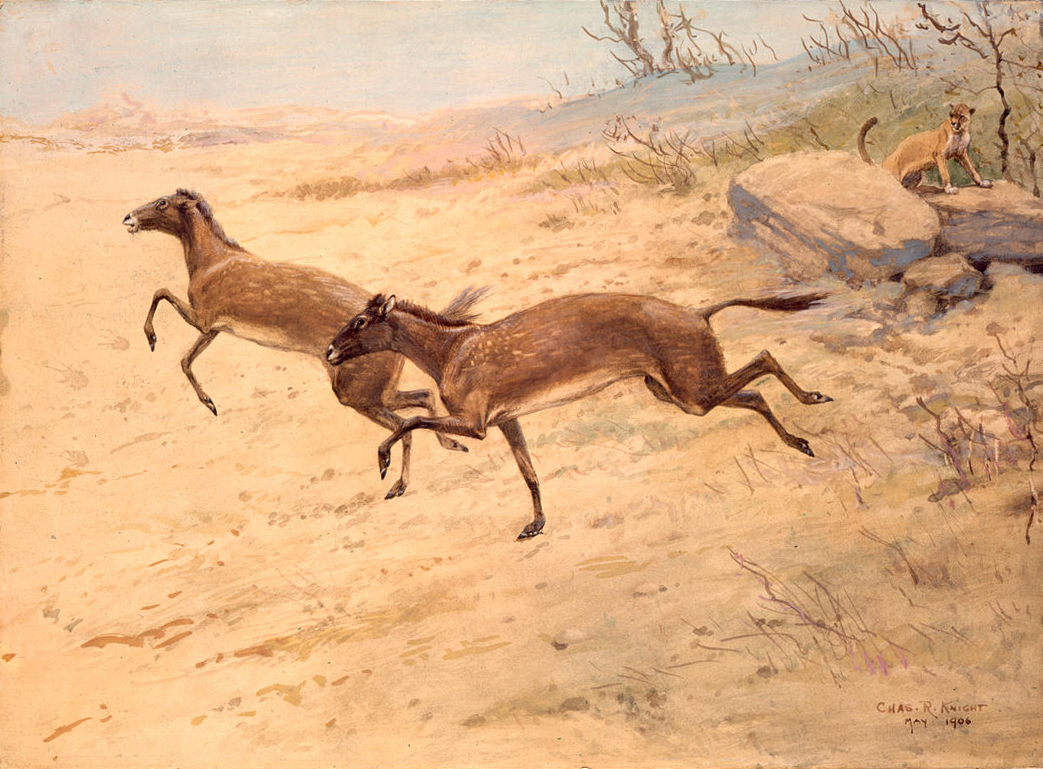
Why the change? The world itself was shifting. Forests thinned and broke into open woodlands and expanding plains, especially in North America, where the whole horse family originated. In more open country, standing taller meant seeing predators sooner, and covering ground quickly meant escaping them. Horses that could run faster survived longer and left more foals, generation after generation.
The Grassland Test
The Miocene, beginning about 23 million years ago, turned up the pressure dramatically. Grasslands spread across vast stretches of the interior of North America. Grass is a terrible food for a tooth built to browse leaves: it wears enamel down with every bite, because grasses carry abrasive silica and pick up grit from the soil.
Horses answered with new teeth. High-crowned teeth, a condition scientists call hypsodonty, extend deep into the jaw and keep erupting for years as the tops wear away, like a pencil pushed up through a sharpener. A horse named Merychippus, living roughly 17 million years ago, was among the first to carry this full grazing toolkit. It stood about a metre tall, held its head down over the grass like a modern grazer, and thrived so well that most later horses trace their ancestry to Merychippus-like stock.
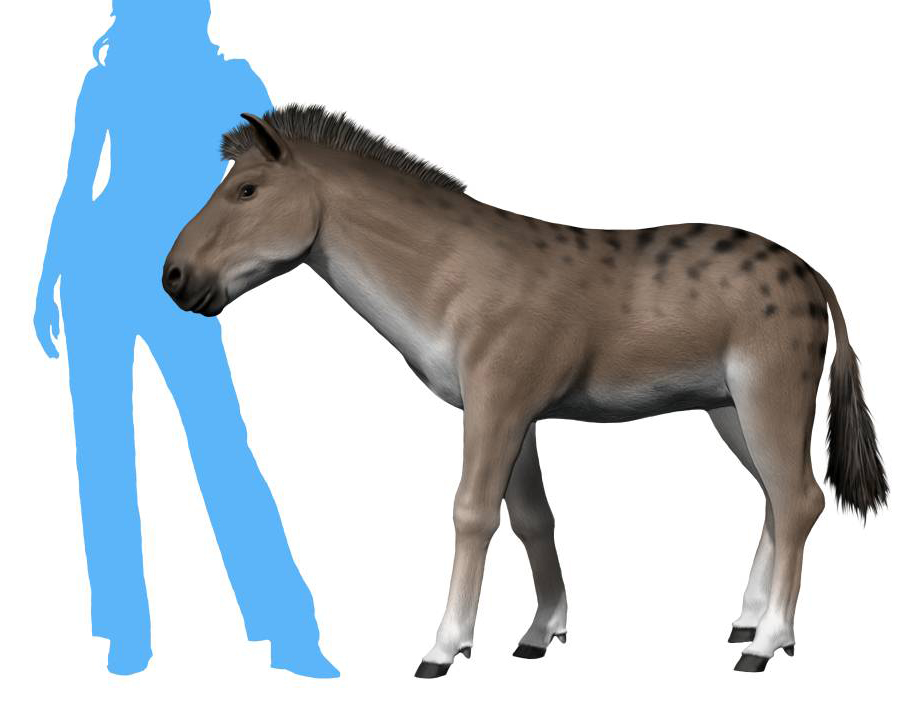
Its feet were still three-toed, but the side toes had shrunk to near-useless nubs. All the real work now fell to the enlarged middle toe.
One Toe to Rule Them All
Over the following millions of years the reduction went further. The two side toes rose off the ground entirely, shrank to thin splint bones lying against the leg, and eventually stopped touching the earth at all. The three long metacarpal bones of the ancestral foot fused into a single strong cannon bone. By the time one-toed horses like Pliohippus appeared, about 12 million years ago, the transformation was essentially complete.
The result is a masterpiece of biological engineering. A modern horse gallops on a single digit, the same one as your middle finger, tipped with a hoof made of the same protein as your fingernail. Fusing the bones removed wobble, and dropping the extra toes stripped away weight at the end of the limb, where extra mass costs the most energy to swing. Every stride became lighter, longer and faster. As a bonus, a single hoof punctures soft ground less than a cluster of small toes, which helps on open terrain.
It is tempting to see the one-toed hoof as a finish line, but evolution is not a race with a podium. Fossil evidence shows three-toed horses like Hipparion galloping across the same plains as one-toed horses for millions of years, and doing just fine. The side toes did not vanish because they were useless, they vanished because in these particular lineages the middle toe had already taken over the job.
A Bush, Not a Ladder
When the first horse fossils were assembled into museum displays in the 1870s, they were famously arranged as a ladder, from tiny Eohippus up to mighty modern Equus. The exhibit helped convince a sceptical public that evolution had happened, and it remains one of the most celebrated fossil sequences in science.
Reality is messier and, frankly, more interesting. Horse history is a dense bush with dozens of branches. Some lineages grew taller; others stayed small for millions of years. Some went back to browsing; others specialised in grazing. Three-toed and one-toed forms coexisted happily, and the branch that leads to living horses is just one twig among many that happened to survive. The famous ladder was a tidy summary, not the map itself.
Horses Left Home and Came Back
Every chapter of this story unfolded in North America, which makes the next twist remarkable: horses died out there. The genus Equus, appearing about 4.5 million years ago, spread across land bridges into Eurasia, Africa and eventually South America. Wild horses became one of the most successful large mammals on Earth, and ice age paintings in European caves show how deeply humans noticed them.
Then, around 10,000 years ago, in the same wave of extinctions that claimed mammoths and sabre-toothed cats, horses disappeared from the Americas. For thousands of years the continent that invented the horse had none. The return came by ship: Spanish colonists brought horses across the Atlantic starting in the late 1400s, and escaped and released animals multiplied so quickly that within a few centuries vast wild herds thundered across the North American plains again. The mustang is, genetically, a homecoming.
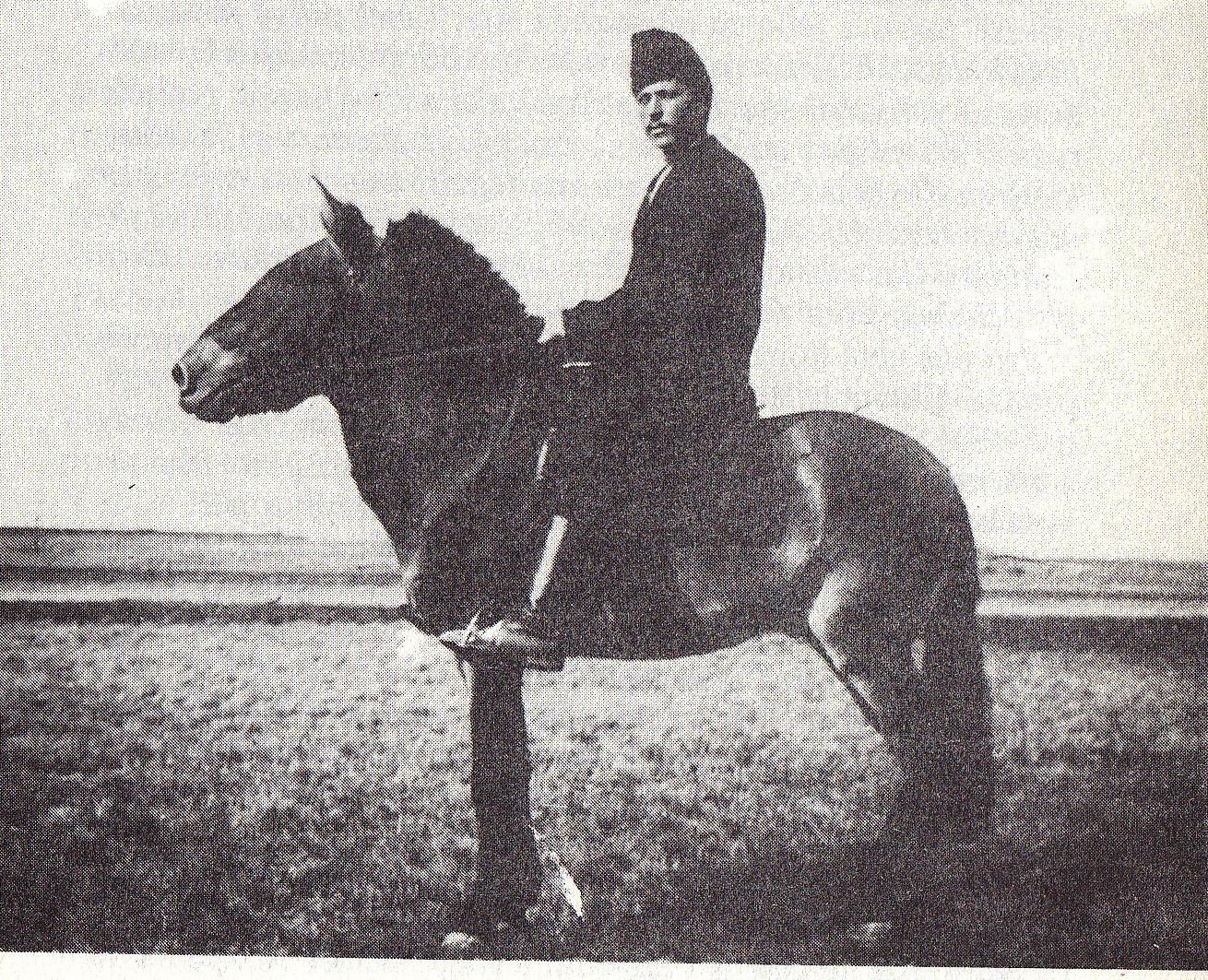
Today the domestic horse has no true counterpart in the wild except one. Przewalski's horse, a stocky, dun-coloured survivor of the Asian steppe, is the closest living wild relative of the domestic horse, and it too nearly vanished. Every one alive descends from a handful of individuals rescued into captive breeding programmes in the twentieth century, a reminder that even the great survivor families can be brought to the edge.
From a padded, four-toed forest scurrier to a single-toed sprinter, the horse lineage spent 55 million years being reshaped by changing plants, changing climates and changing predators. Toes did not fall off by accident; they were traded away, one by one, for speed on the open plain. It is the same bargain the fossil record shows again and again, from whales that traded land for water to triops that traded permanence for drought-proof eggs. Evolution keeps what works, discards what it can afford to lose, and leaves the receipts written in bone.
If you enjoyed this journey, keep exploring: read how whales traded legs for fins, meet the Ice Age giants that vanished alongside American horses, or find out why prehistoric animals grew so big.