Published 2026-10-02 · by the Triops.me Editorial Team · Back to Articles
Iguanodon: The Dinosaur With the Thumb Spike
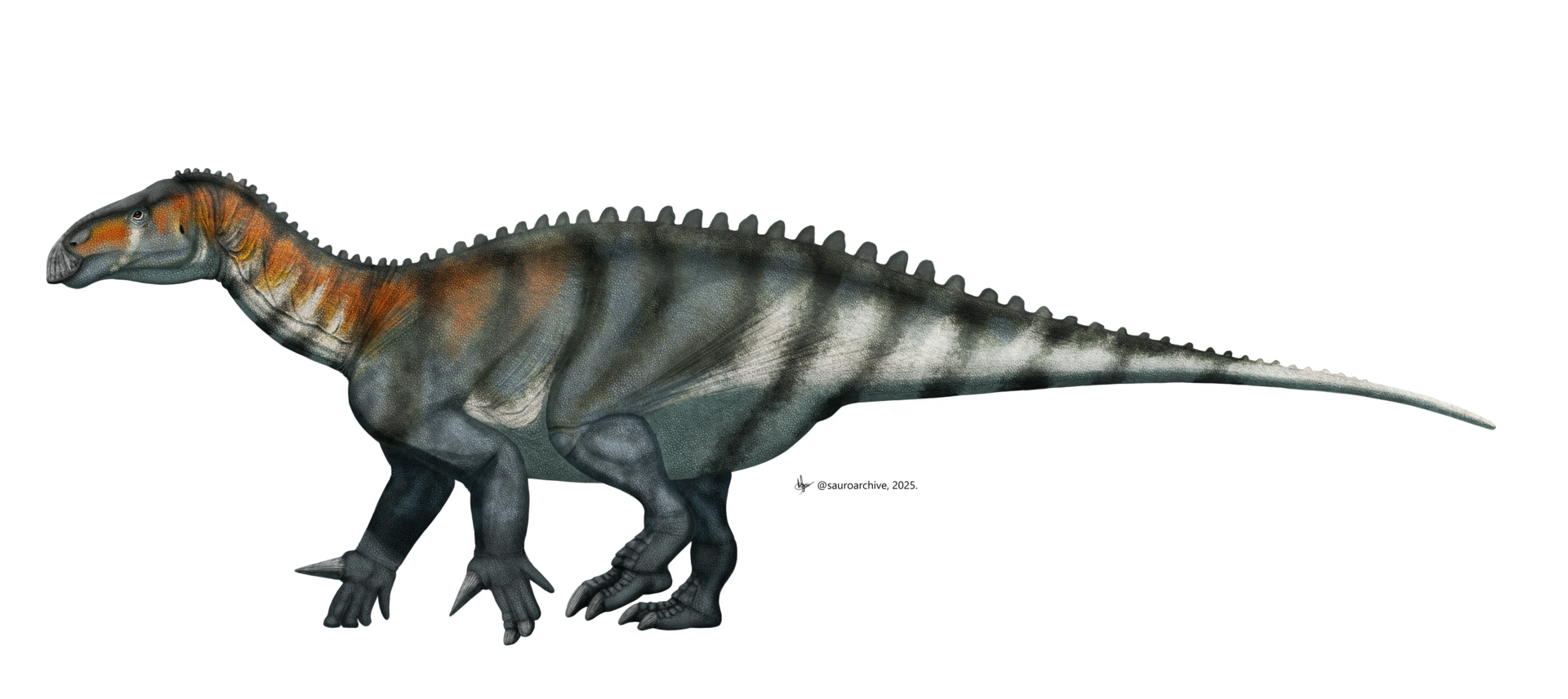
Few fossils have changed the way we picture dinosaurs as dramatically as Iguanodon. It was named in 1825 from a handful of fossil teeth found in a Sussex quarry, it became the star of the first life size dinosaur statues ever built, and for the better part of a century it was the public's default image of what a dinosaur looked like. It also produced one of paleontology's most famous mistakes: a bone that doctors placed on its nose, which turned out to be a thumb.
Iguanodon was a large plant eater of the Early Cretaceous, roaming Europe about 125 million years ago. Adults reached roughly 10 metres long and several tonnes, which is comparable to a modern rhinoceros stretched out to the length of a bus. It chewed tough vegetation with hundreds of teeth, walked on either two legs or four, and carried a sharp conical spike on each hand. That spike, and the century long argument it caused, is what makes this animal so interesting.
A tooth like an iguana's
The story starts with teeth. In the early 1820s, fossil teeth turned up in the rocks around Cuckfield in Sussex, collected by the doctor and fossil hunter Gideon Mantell. What made them special was not their size but their resemblance to something already known: the teeth of a living iguana. Mantell put the fossil side by side with the jaw of a modern iguana, saw the same serrated, leaf shaped cutting edges, and drew the obvious conclusion. Here was a giant herbivorous reptile that fed the way an iguana feeds. In 1825 he named it Iguanodon, literally iguana tooth.
It was a bold piece of reasoning, using a living animal to reconstruct a long vanished one, and it held up. The teeth belonged to a plant processor with a far more sophisticated mouth than any single tooth suggests. Iguanodon grew batteries of hundreds of teeth packed into rows, constantly replaced as they wore down, and the jaw worked with a grinding motion that could shred fibrous plants far tougher than soft leaves. Ferns, conifers and cycads of the Early Cretaceous would have been on the menu.
The horn that was a thumb
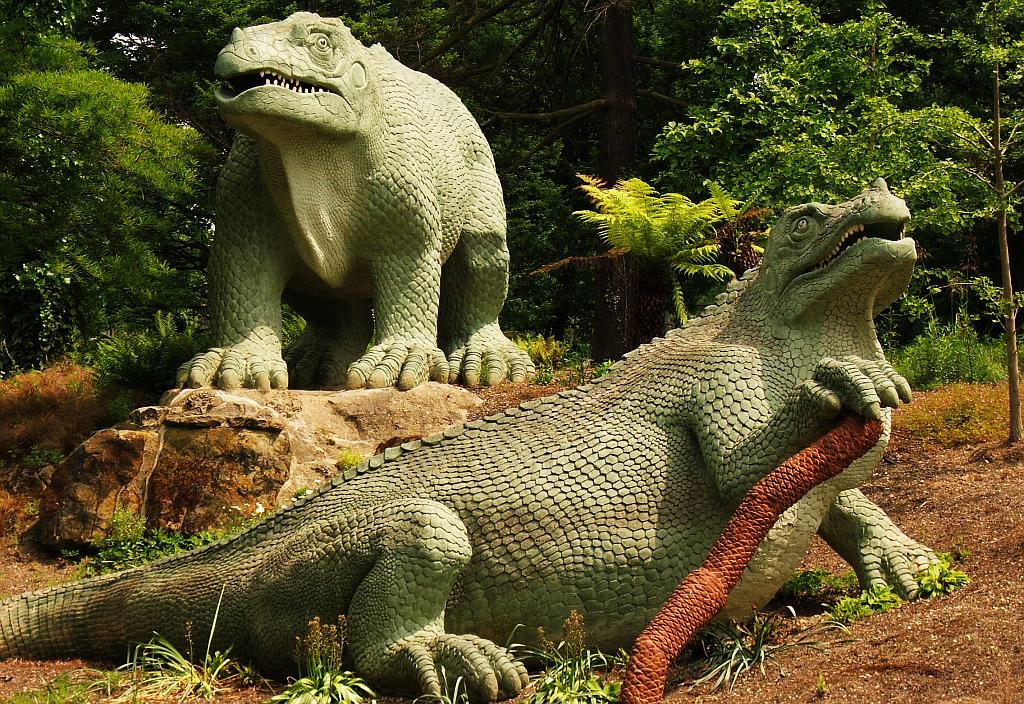
In 1854 that idea became concrete, quite literally. Life size dinosaur sculptures were built for the Crystal Palace Park in London, modelled by the sculptor Benjamin Waterhouse Hawkins, and the Iguanodon that visitors crowded around had a single horn on its nose. The statues were built around scaffolding holding meat for the model animals, which gives you a sense of how little was known about how these creatures actually lived. Mantell never accepted the nasal horn. He had pointed out that the cone matched the thumb of an iguana like lizard, and he was right. The spike sat on the hand, not the head.
Thirty skeletons in a Belgian coal mine
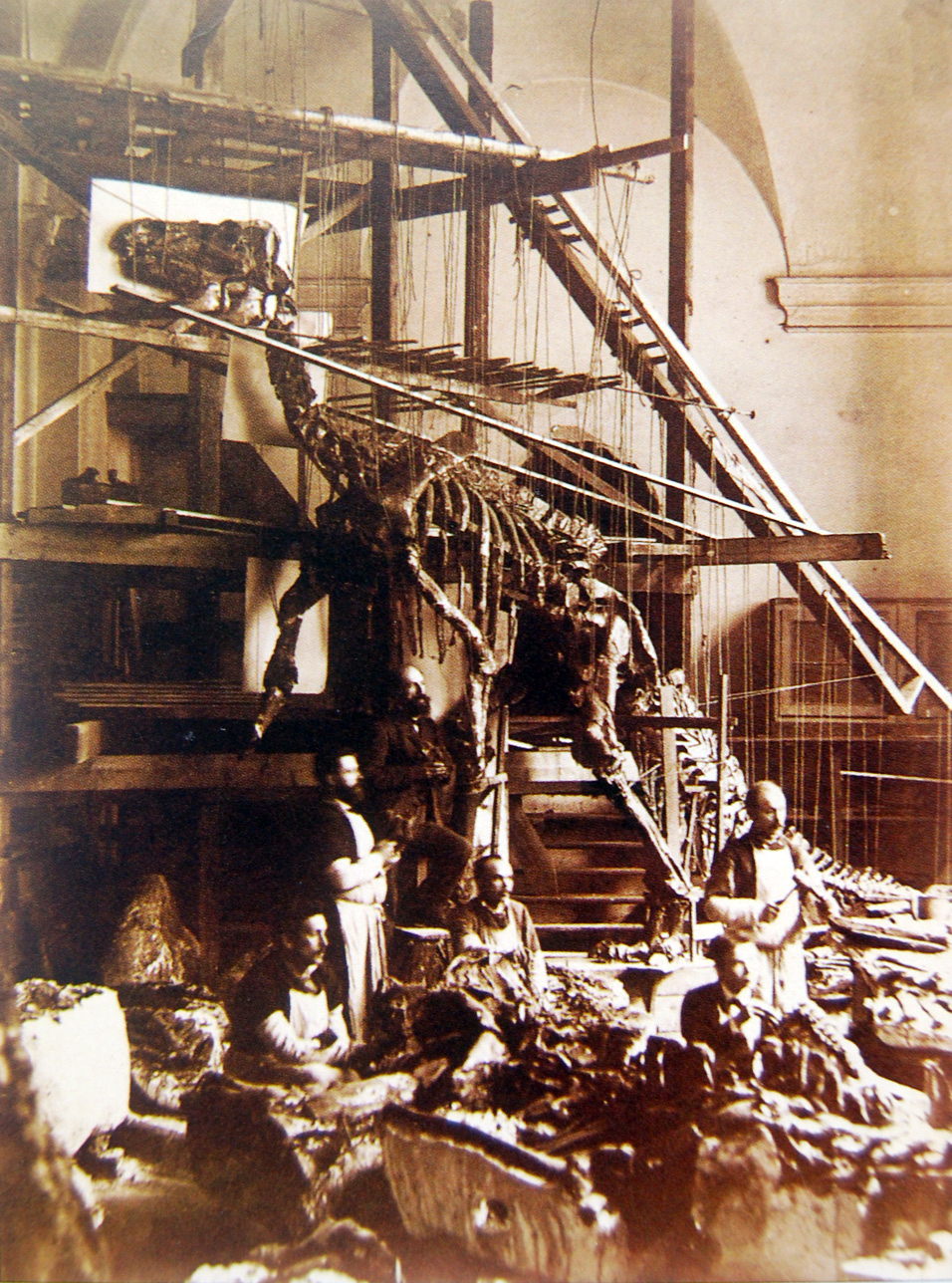
The haul rewrote the animal. The skeletons came from mostly adult animals of similar size, packed into one pocket of rock, which today is best explained as a natural trap. The most likely scenario is that herds of Iguanodon were swept or fell into a flooded hollow or collapsed river channel, drowned, and their carcasses collected in the deep water below. The bones were carefully extracted in plaster jackets, a technique borrowed from mines and archaeology, and shipped to Brussels.
The first mounts, prepared under Louis De Pauw in the 1880s, stood upright with the tail dragging and, of course, a horn on the nose. Early photographs of the preparation show the skeletons half embedded in the clay they came from. More than a century on, the Bernissart Iguanodons are still the centrepiece of the vertebrate gallery at the Royal Belgian Institute of Natural Sciences in Brussels, and they remain one of the largest and most complete collections of a single dinosaur species anywhere.
What the bones say today
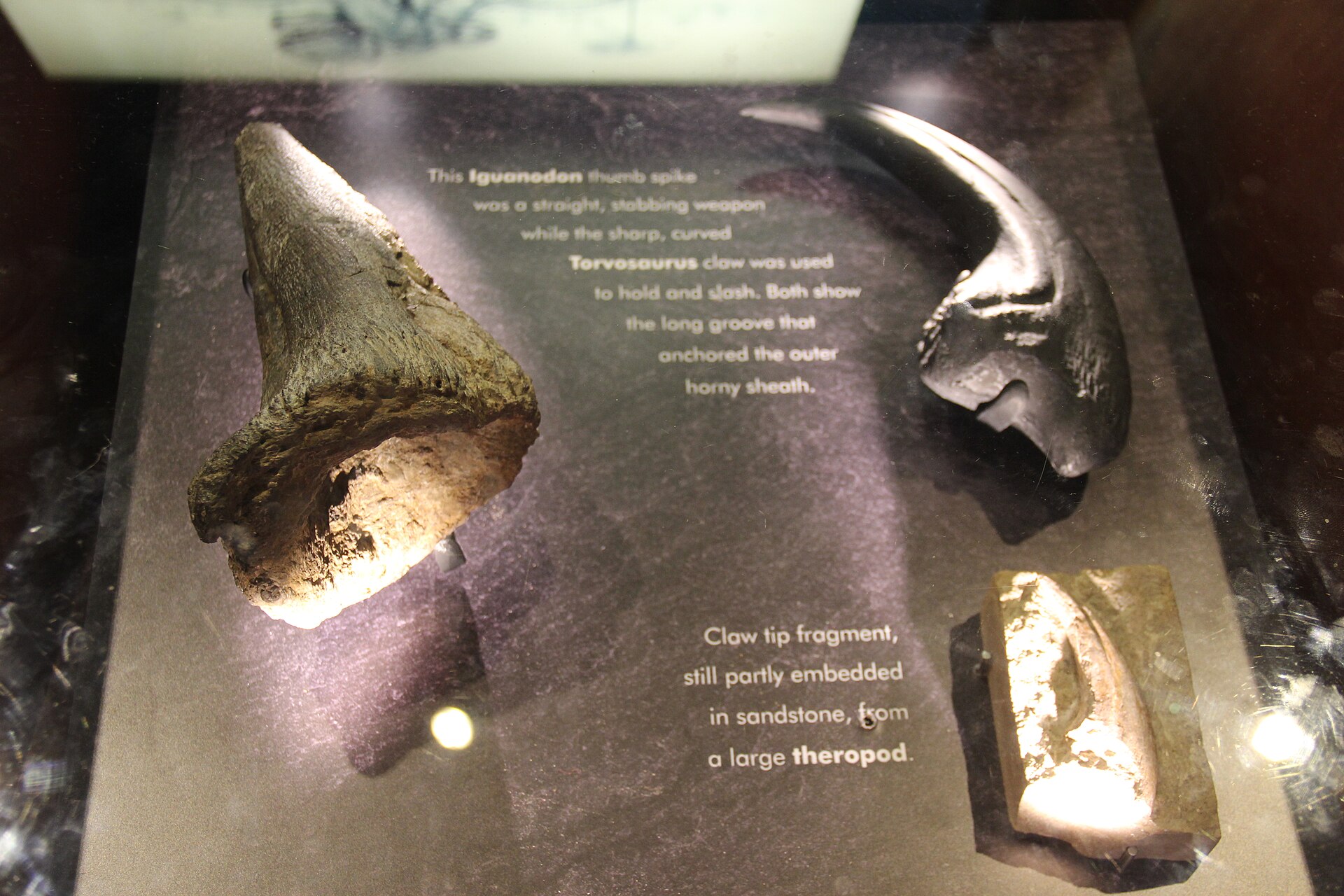
What it was for is still debated, but defence is the strongest candidate. A several tonne animal with a sharp spike on each wrist is a bad target for the large meat eating dinosaurs of Early Cretaceous Europe, and a spike that could be swung by a fast turning forelimb would deter anything that came in from the side. Herding also shows up in the record: trackways from Belgium and England preserve groups of these animals moving together across wet ground.
Why Iguanodon still matters
Iguanodon has a strange double legacy. On one hand it is a textbook case of how wrong the first guess can be: hunched, tail dragging, horn nosed, slow. On the other hand it is the reason dinosaur science exists at all. When Owen assembled his new group Dinosauria, this was one of the three animals he built it from, and the Bernissart find showed that mine shafts and quarries could yield not single bones but whole communities of extinct animals. Every dinosaur discovery since owes something to a few teeth from Sussex and a pocketful of bones from a Belgian coal seam.