Published August 27, 2026 by the Triops.me Editorial Team · Back to Articles
Kronosaurus, the Titan of the Cretaceous Seas
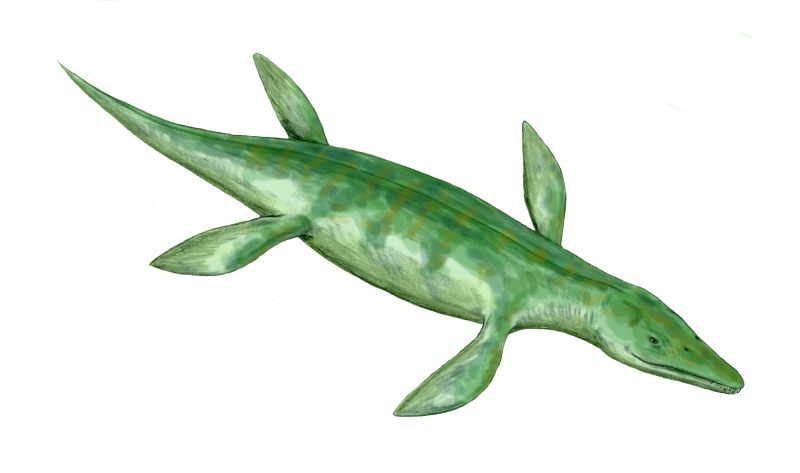
When we think of the most fearsome predators of the Cretaceous Period, dinosaurs like Tyrannosaurus rex usually dominate the picture. But roaming the warm shallow seas that once covered much of what is now Australia was a marine reptile so massive and so powerful that it made even the largest land carnivores look modest by comparison. Its name was Kronosaurus, "the lizard of Kronos," and it ruled its underwater domain with terrifying efficiency for nearly 25 million years.
Kronosaurus queenslandicus was a short-necked pliosaur, a member of the family Pliosauridae, that lived during the Aptian and Albian stages of the Early Cretaceous, roughly 125 to 100.5 million years ago. Unlike its long-necked relatives like Plesiosaurus or Elasmosaurus, which hunted small fish and cephalopods with gentle sweeping motions, Kronosaurus was built for brute force. It had a massive, elongated skull, a short thick neck, and four enormous paddle-like limbs that propelled it through the water with surprising speed for an animal of its size.
A Creature Named for a Titan
The name Kronosaurus was coined in 1924 by Albert Heber Longman, then curator of the Queensland Museum. The first fossil arrived in 1899, a partial jaw fragment bearing six conical teeth, originally misidentified as belonging to an ichthyosaur. It was not until Longman examined the specimen that its true identity emerged: a pliosaur of extraordinary proportions. He chose the name Kronos, after the Titan from Greek mythology who devoured his own children, in reference to the animal's imposing size and likely ferocity.
The species name, queenslandicus, honors the Australian state where the first fossils were discovered near the town of Hughenden. Additional specimens were recovered in 1929, and in 1931 a Harvard expedition to Australia gathered more material that would later be used to reconstruct a complete skeleton, albeit with some exaggerations in its vertebral count that inflated early size estimates.
Size and Power
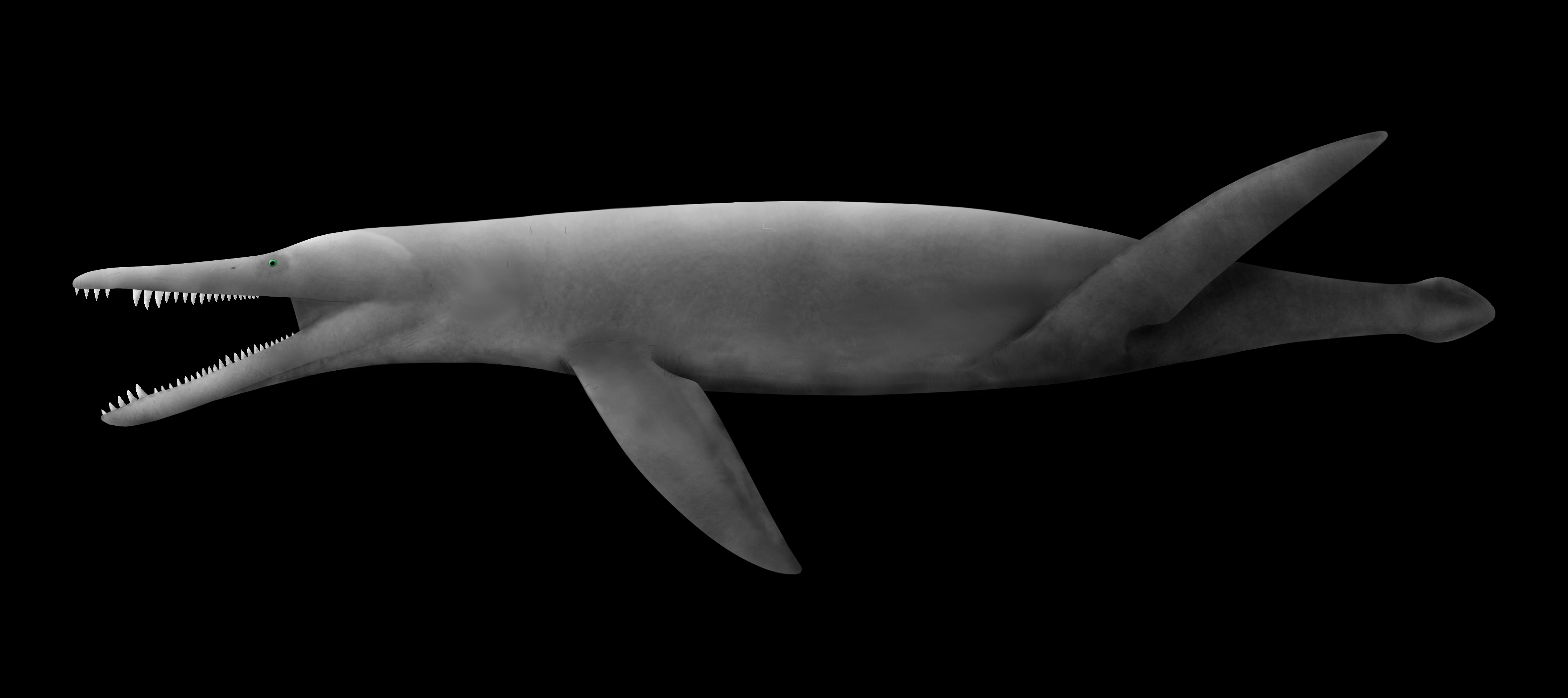
Early estimates placed Kronosaurus at around 13 meters (43 feet) in length, but more recent analyses that corrected the inflated vertebral count from the Harvard specimen have revised this downward. Today, researchers estimate that the largest Kronosaurus individuals reached between 9 and 10 meters (30 to 33 feet) in total length. The skull alone could measure up to 3 meters, dwarfing the head of even the largest theropod dinosaurs.
Its four flippers created a combined wingspan of over 5 meters (16 feet), making Kronosaurus one of the most hydrodynamically efficient predators of its time. The back pair of flippers were larger than the front, and the animal used all four in a powerful rowing motion to ambush prey from below or chase it across the open water. With an estimated bite force between 15,000 and 27,000 newtons, Kronosaurus could crush bone and shell with ease, making it far more dangerous than a modern great white shark.
Hunting in the Eromanga Sea
During the Early Cretaceous, a vast inland body of water called the Eromanga Sea stretched across much of central and eastern Australia, reaching from Queensland down to South Australia. This shallow, warm sea was teeming with life, including fish, squid, sea turtles, and other marine reptiles. Kronosaurus sat firmly at the top of this food chain as the apex predator.
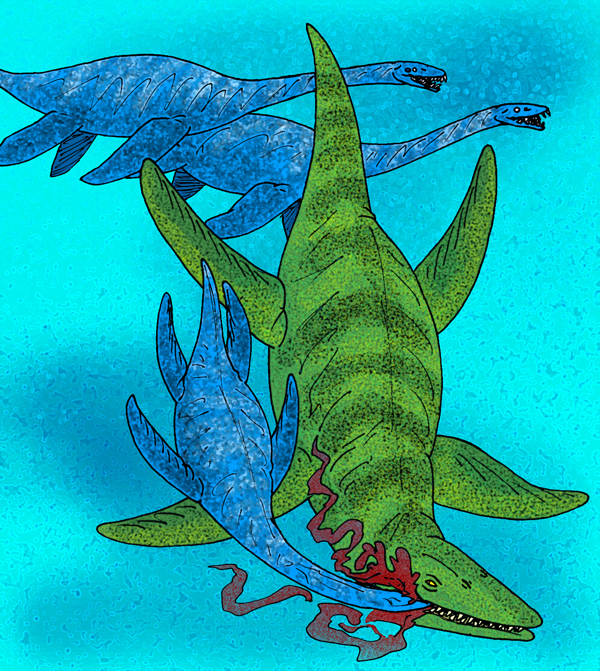
Fossil evidence reveals that Kronosaurus fed heavily on sea turtles, crushing through their shells with its enormous conical teeth. It also hunted other plesiosaurs, competing for food with large sharks like Cretoxyrhina. A juvenile skull specimen found in the Toolebuc Formation shows evidence of attack by a larger individual, pointing to possible cannibalism or intense competition among adults. The Eromanga Sea was not always warm; some evidence suggests that waters at the edges of this inland sea could drop to near-freezing temperatures, making Kronosaurus one of the most cold-tolerant large marine reptiles known.
A Life in the Fossil Record
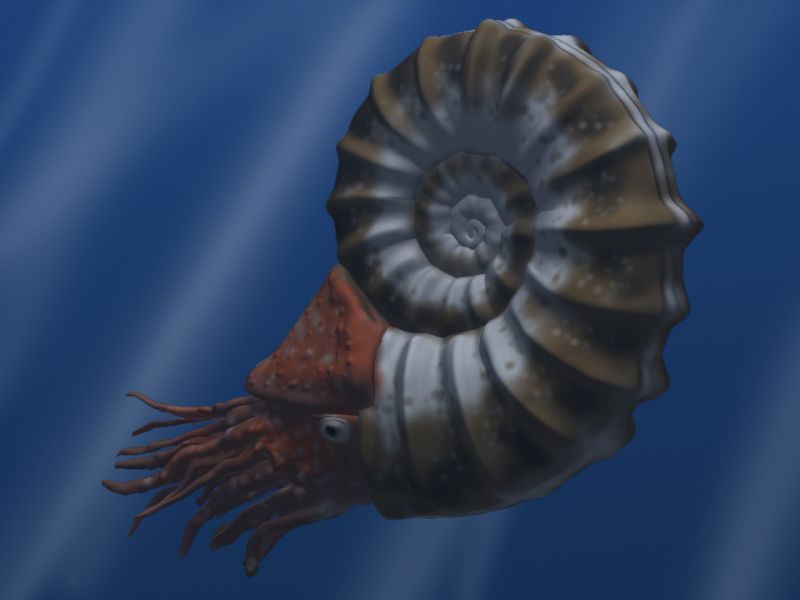
The main source of Kronosaurus fossils is the Toolebuc Formation in western Queensland, a geological unit deposited during the Albian stage of the Early Cretaceous. This formation, now farmland and open bushland, was once a thriving marine ecosystem. The fine-grained limestone preserved not only the bones of large reptiles but also the delicate remains of small fish, ammonites, and even the soft-bodied organisms that settled on the sea floor.
Today, the town of Richmond, Queensland has embraced its prehistoric heritage. The Kronosaurus Korner museum, located in the heart of town, houses some of the finest pliosaur specimens ever recovered from Australian soil. Visitors can see reconstructed Kronosaurus skeletons alongside other marine reptiles that shared the Eromanga Sea, offering a vivid window into an ecosystem that thrived long before the dinosaurs on land reached their peak.
Why Kronosaurus Matters
Kronosaurus represents one of the largest marine predators to have ever existed, and its story is a reminder that the most powerful hunters of the Mesozoic did not always walk on two legs. The pliosaurs, with their paddle-driven locomotion and crushing bites, occupied an ecological niche that has no true modern equivalent. The closest comparison we have today would be a combination of a crocodile's bite force, a whale's size, and a penguin's swimming efficiency, all packed into a single animal that ruled a cold inland sea on a continent that was then part of the southern supercontinent Gondwana.
For those who keep Triops at home, Kronosaurus offers an interesting contrast. Both creatures belong to groups with deep evolutionary roots, and both share an ancient lineage that stretches back to the Paleozoic or early Mesozoic. But while Triops have endured through five mass extinctions by being small, adaptable, and prolific breeders, Kronosaurus took the opposite evolutionary strategy: become so large and specialized that nothing can challenge you. It worked for 25 million years. When the Eromanga Sea finally retreated and the Cretaceous ended, the Titans of the deep fell, leaving behind only their fossilized bones in the red earth of outback Australia.