Published 2026-09-07 · by the Triops.me Editorial Team · Back to Articles
Leedsichthys: The Biggest Bony Fish That Ever Lived
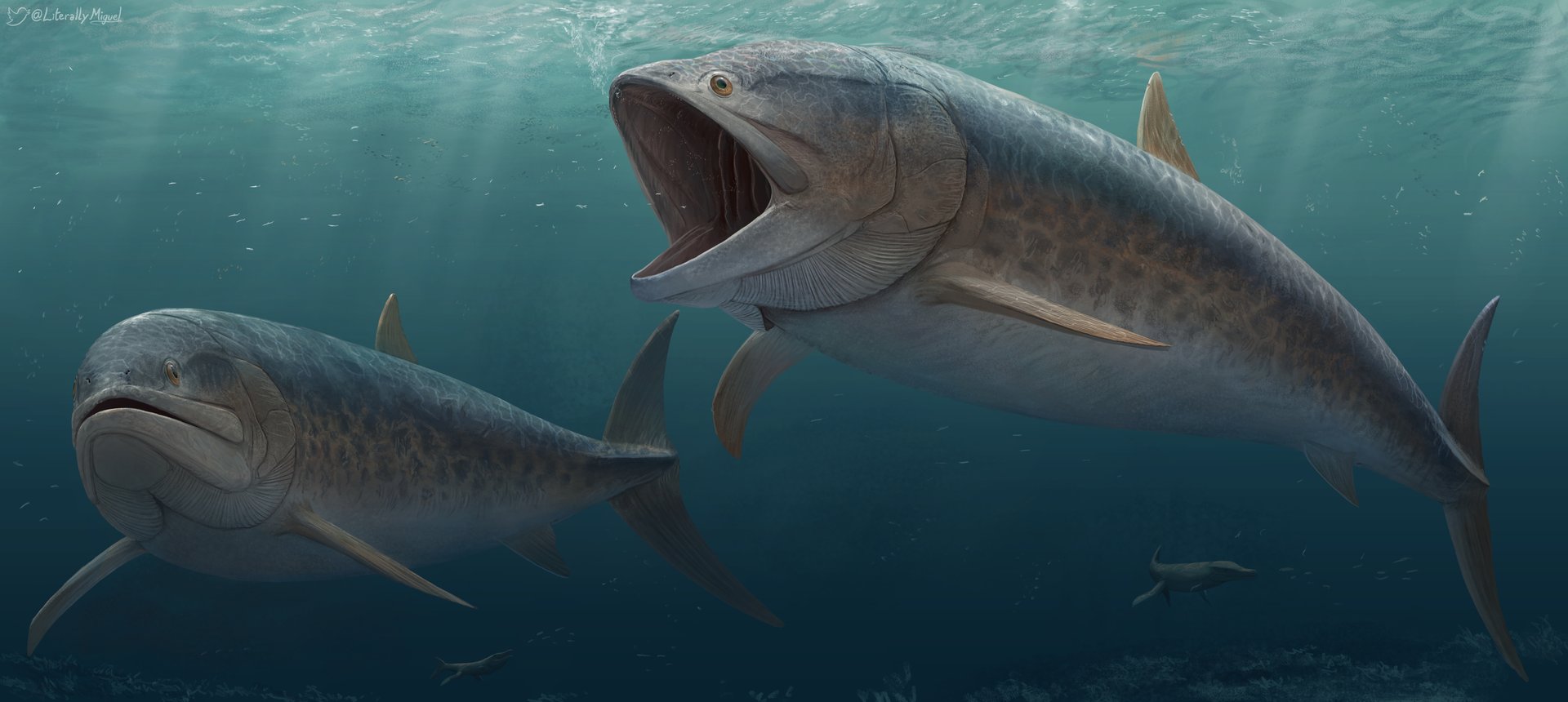
Whales are famous for one strange trick: the blue whale is the largest animal in Earth's history, yet it survives on some of the smallest food in the ocean. Filter feeding, it turns out, is the ocean's most reliable shortcut to gigantic size. But whales were not the first to find that shortcut, and they were not even the biggest fish to try it.
More than 150 million years before the first whale took a breath, a bony fish called Leedsichthys cruised the shallow seas of the Jurassic. It grew up to 16 metres long, roughly the length of a bus, and it did it all on a diet of drifting plankton. No shark, no tuna, no sturgeon has ever come close. It remains the largest bony fish we have ever found, and one of the most difficult fossils anyone has ever tried to put back together.
A fish named after a frustrated collector
Leedsichthys owes its name to Alfred Nicholson Leeds, an English farmer and fossil collector who spent decades hunting fossils in the Oxford Clay of Peterborough. In the 1880s he began uncovering enormous, thin, honeycomb-like bones that belonged to no fish anyone recognized. The bones were so fragile and so jumbled that the first reconstruction, assembled in 1889 by the paleontologist Arthur Smith Woodward, was only part right.
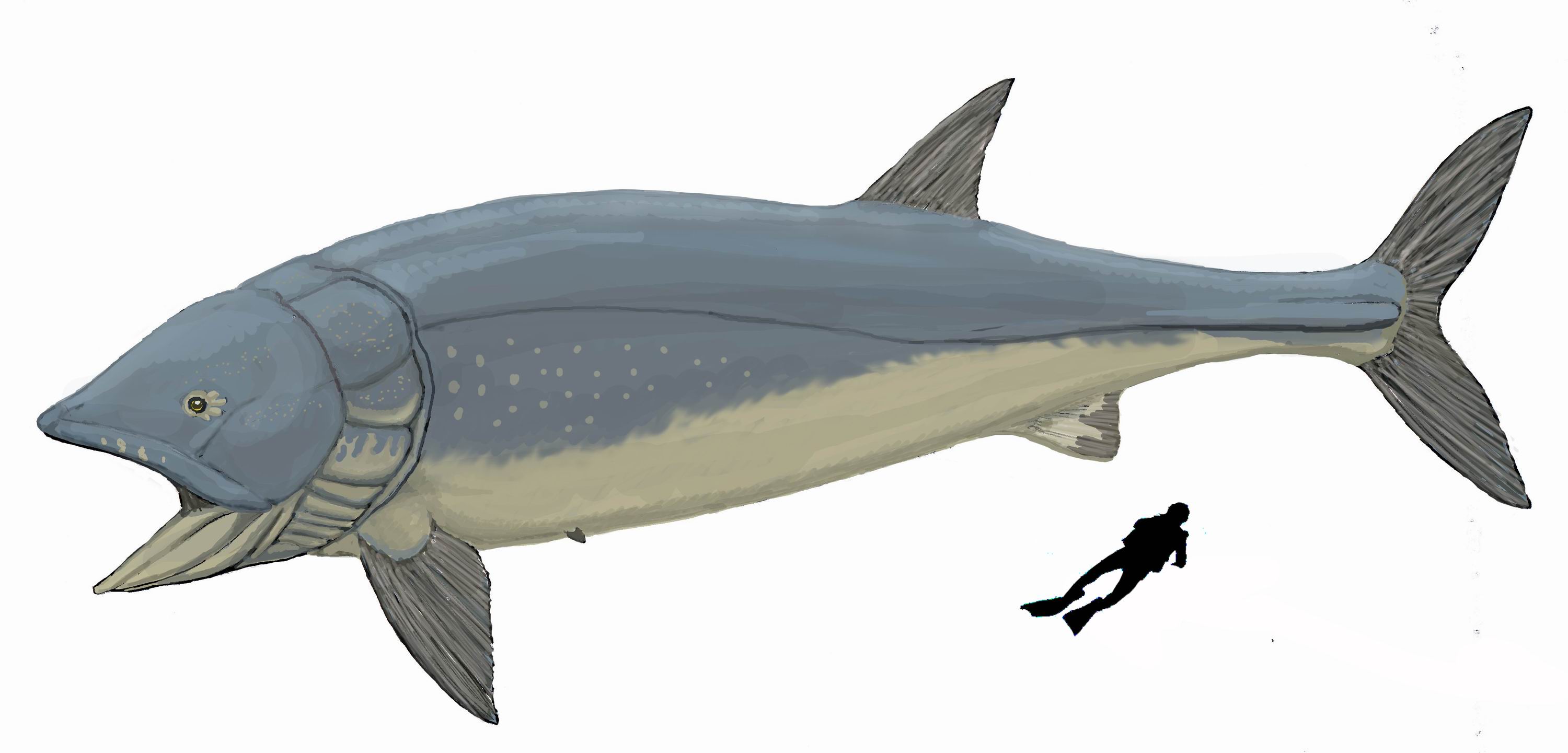
Woodward gave it the species name problematicus, and the problem never really went away. Leedsichthys had a skeleton made mostly of cartilage, like a shark, with only thin sheets of bone running through it. Those bones crushed easily, scattered during burial, and were often mined away before anyone could map them. To this day, no complete skeleton exists. Every size estimate for this fish is an argument waiting to happen, with estimates bouncing between about 9 and 16 metres depending on which fossils and which growth models you trust.
That fragility is one reason Leedsichthys is less famous than the predators that hunted it. Big teeth grab headlines. A giant fish with no teeth and a skeleton like wet cardboard does not preserve well and does not look menacing in a museum. What it did instead was far stranger: it solved the problem of eating by barely chewing at all.
A baleen whale built out of bone
The key to Leedsichthys was the array of giant gill rakers lining its throat. Gill rakers are comb-like structures that most fish use to strain food from water. In Leedsichthys these rakers were enormous, thousands of them arranged in overlapping rows like roof tiles, forming a filter screen finer than anything the sea had seen before.
The fish would swim forward with its huge mouth open, letting water pour across that biological sieve and catching clouds of tiny planktonic animals. Studies of its growth rings suggest it grew fast, reaching enormous size in a couple of decades, exactly the pattern you would expect from an animal running on an endless food supply. In effect, Leedsichthys invented the lifestyle that blue whales, whale sharks and basking sharks would later perfect. It was a baleen whale made of fish, tens of millions of years before whales existed.
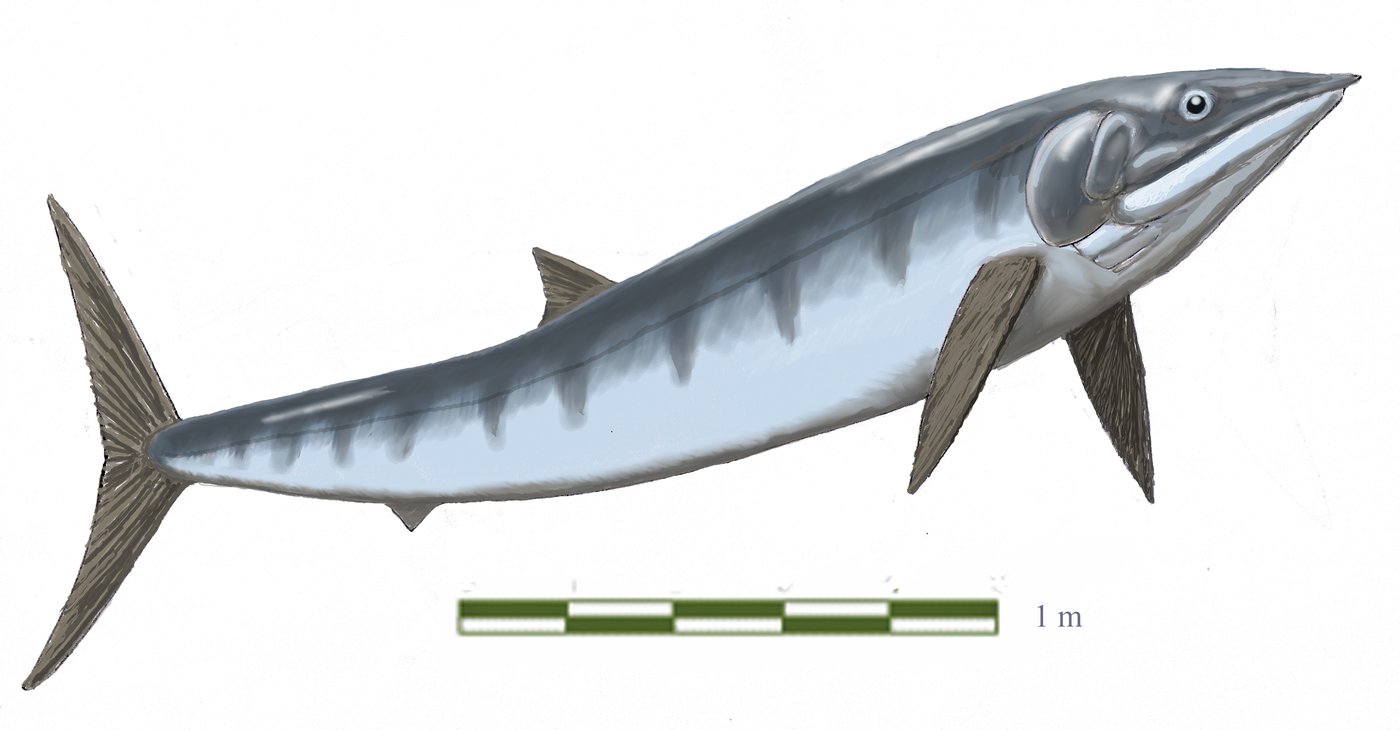
It was not alone, either. Leedsichthys belonged to the Pachycormidae, a family of fast-swimming, thick-chested fish that produced several giants. Its relative Asthenocormus grew nearly as long and filtered food the same way. The family also produced streamlined hunters. For a stretch of the Jurassic and Cretaceous, pachycormids were among the most successful fish in the sea, taking both the giant filter-feeder niche and the pursuit-predator niche at the same time.
Plankton, the superfood that built a giant
Why would evolution build a 16-metre fish out of almost nothing? Because the ocean's smallest life is its most dependable. Plankton blooms in Jurassic seas were vast and predictable, and the animals that could harvest them directly skipped an entire link in the food chain. A predator has to catch its meals one at a time. A filter feeder simply has to keep swimming through food.
The catch is that filter feeding only pays off at large sizes. Small fish burn too much energy sweeping up tiny prey. Big ones, with enormous mouths and relatively low energy needs per kilogram, win the game. That is why the ocean's giants keep converging on the same solution: baleen whales, whale sharks, basking sharks, manta rays, and, first of all, Leedsichthys. The giant plankton eater is not a fluke of evolution. It is a pattern, and Leedsichthys is the oldest big example we know of.
Living in Liopleurodon's shadow
Being enormous is good defense, but Jurassic seas had predators built to test it. The apex hunter of those waters was Liopleurodon, a short-necked pliosaur, a marine reptile with a skull the size of a bathtub and a bite to match. Its teeth are found in the same Oxford Clay deposits as Leedsichthys bones, and bite marks on the fish's fossils show that the two met more than once.
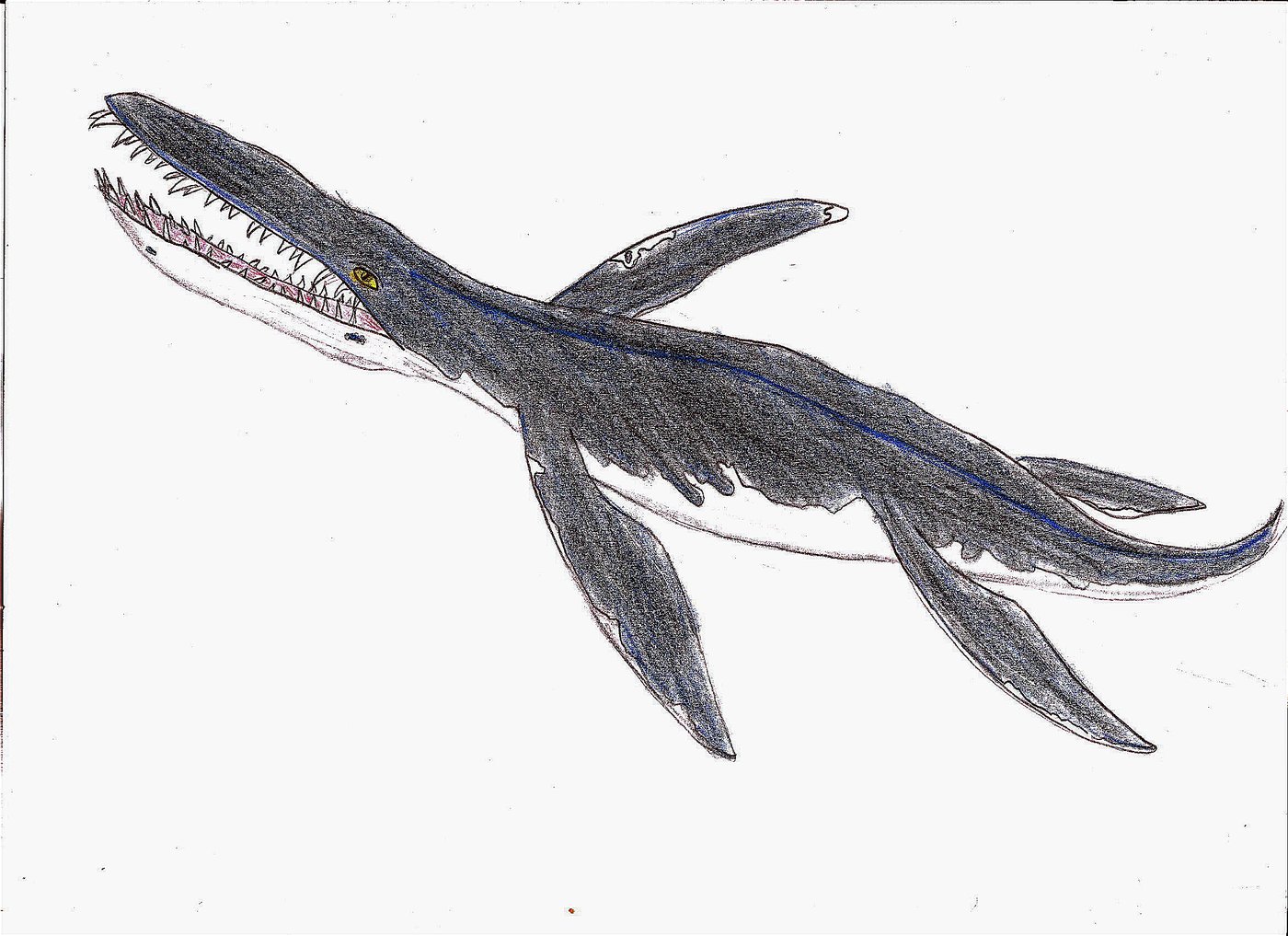
Interestingly, the bite marks suggest Liopleurodon did not swallow Leedsichthys whole. Instead it seems to have attacked the giant fish, bitten off chunks, and moved on, a living feast for scavengers. A Leedsichthys was so large that even a successful predator could only eat part of it. In a strange way, its size made it both the biggest target in the sea and one of the hardest to finish.
Sharks kept their distance for the same reason. Even a giant filter feeder is a mountain of meat, and Liopleurodon dominated the water it swam through. Leedsichthys survived by outgrowing its hunters as fast as possible, a race against teeth that it usually won simply by being too big to bother with.
Where Leedsichthys fits in the story of survival
Leedsichthys swam the seas of the middle to late Jurassic, roughly 165 to 150 million years ago, and then vanished. The giant filter-feeding niche it pioneered did not stay empty for long. Big pachycormids continued through the Cretaceous, and after the asteroid ended that era the niche eventually reopened for sharks, then for whales. Every era of Earth history seems to end with a giant plankton eater patrolling the ocean, built by a different branch of the tree of life.
Triops reads that same story from the opposite end. Where Leedsichthys bet everything on getting enormous, Triops bet everything on being small, fast-breeding, and nearly unkillable in its egg stage. Both strategies work, but only one is still around in its original form. The giant fish lost its place in the sea the moment the world changed. The shrimp in a puddle has outlasted five mass extinctions.
Yet there is something humbling about Leedsichthys that Triops cannot claim. For a few million years it was the biggest animal alive on Earth, holding a title no fish has held since. It did that with no teeth, no claws, and no armor, on a diet invisible to the naked eye. Sometimes the winning move is not to fight harder. Sometimes it is simply to open your mouth and keep swimming.