Published August 24, 2026, 21:06 by the Triops.me Editorial Team · Back to Articles
Lungfish: The Ancient Survivors of Freshwater
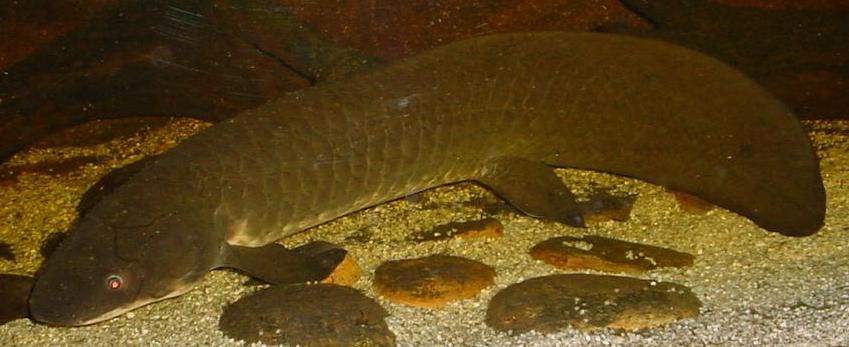
When we talk about living fossils, Triops and horseshoe crabs often get the spotlight. But there is another group of ancient survivors hiding in the rivers and floodplains of the Southern Hemisphere that deserves equal attention: the lungfish. These remarkable fish have existed for roughly 400 million years, predating dinosaurs, trees, and even the Permian-Triassic extinction that wiped out most life on Earth. Today, only six species remain, but their story is one of extraordinary biological resilience.
Lungfish belong to a small subclass called Dipnoi, a name that literally means "two nostrils." Unlike most fish, lungfish possess true lungs connected to their throat, allowing them to breathe atmospheric air. This is not a gimmick or a secondary adaptation; it is one of the oldest air-breathing systems in vertebrates, and it may hold clues to how our own ancestors first crawled out of the water and onto land.
A Living Link Between Water and Land
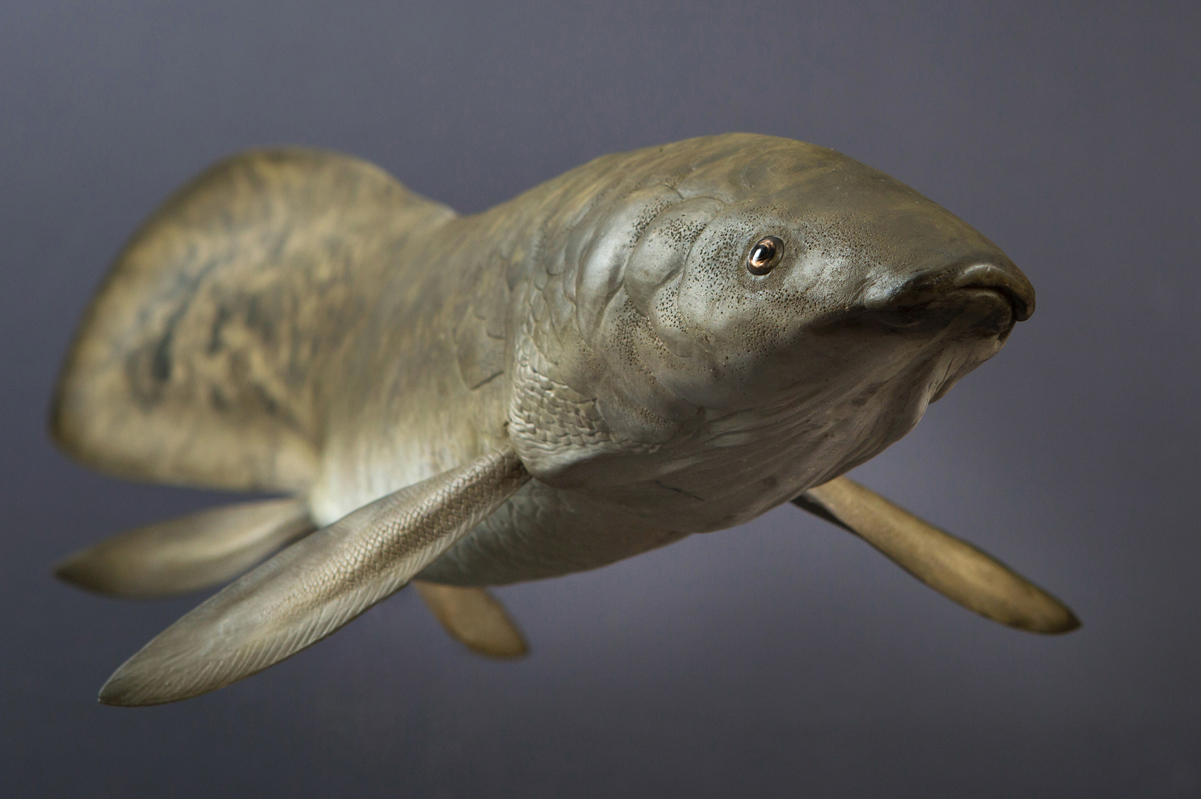
The evolutionary significance of lungfish is difficult to overstate. During the Devonian period, around 420 million years ago, the ancestors of lungfish diverged from the lineage that eventually gave rise to all tetrapods, including amphibians, reptiles, birds, and mammals. In other words, lungfish are more closely related to you than they are to most other fish. Their lobed fins, controlled by bones arranged similarly to a human arm, are a direct anatomical link between swimming and walking.
Fossil lungfish once thrived across every continent, including Europe and North America. The Devonian and Carboniferous periods saw dozens of species occupying rivers, lakes, and coastal waters worldwide. Today, they survive only in Australia, South America, and Africa, three landmasses that were once joined as the supercontinent Gondwana. This fragmented distribution is a living map of deep geological time.
Surviving Drought by Becoming Stone
The most famous adaptation of lungfish is their ability to aestivate, a state of dormancy that allows them to survive when their freshwater habitats dry up completely. The Australian lungfish, Neoceratodus forsteri, is the most primitive of the living species and lacks this ability. It depends on permanent water bodies, which is precisely why it has remained relatively unchanged for over 100 million years. It is the closest thing we have to a Devonian fish still swimming today.
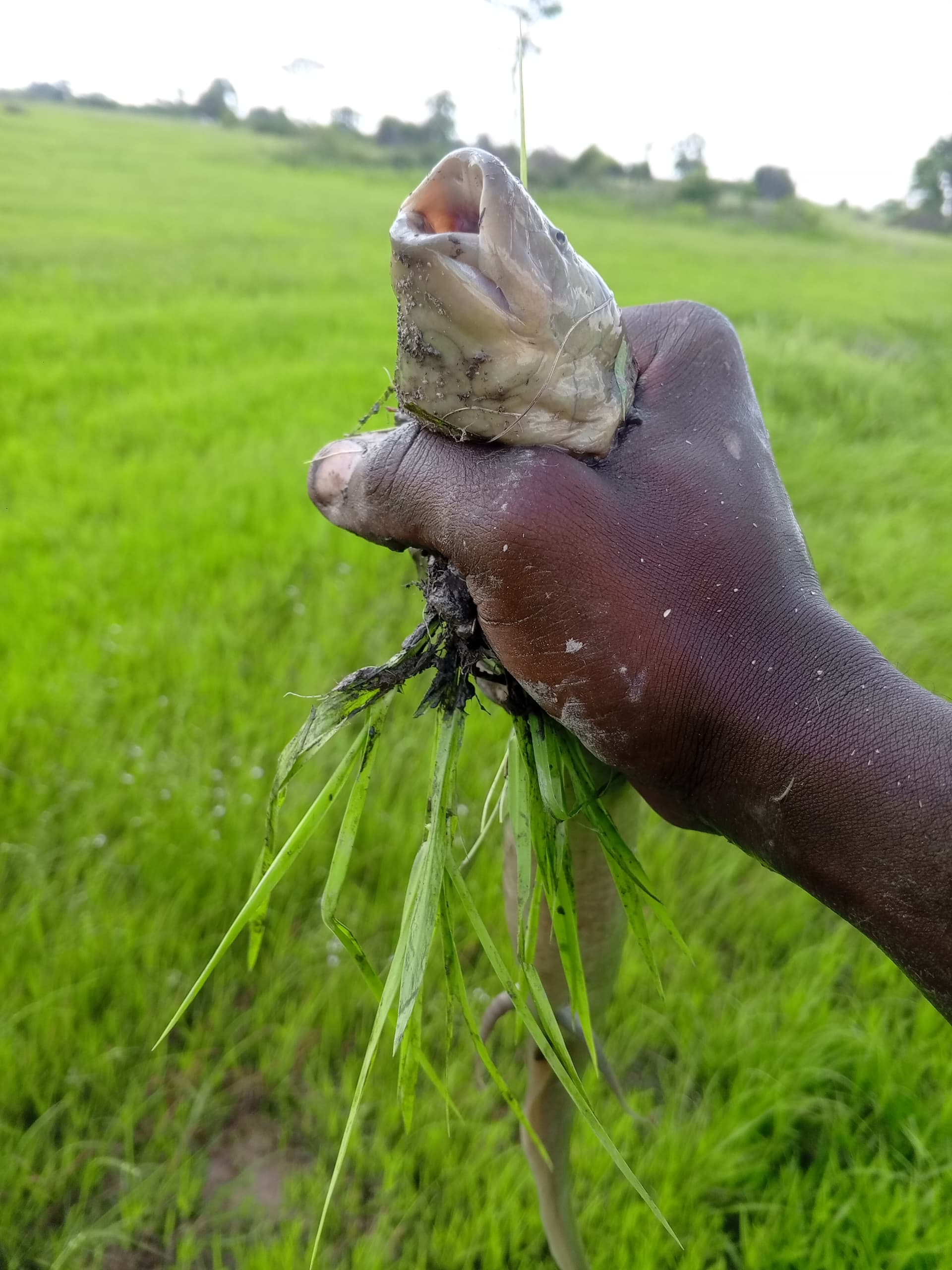
The African and South American species take a different approach entirely. When drought conditions begin, the African Protopterus burrows into the mud, secretes a thick mucus cocoon around its body, and slows its metabolism to a fraction of its normal rate. Some individuals have survived up to four years in this state, waiting for the rains to return. The South American Lepidosiren does the same, burrowing into mudbanks along shrinking river channels. This strategy transforms a deadly drought from a death sentence into a temporary inconvenience.
Why Lungfish Matter
Like Triops, lungfish demonstrate that surviving mass extinctions does not require speed, size, or aggression. It requires biological flexibility. The ability to breathe air when water quality deteriorates, to shut down metabolism when food disappears, and to endure conditions that kill virtually every other fish in the ecosystem, these are the tools that have kept lungfish alive through five mass extinctions and 400 million years of continental drift.
Today, all six surviving species face increasing pressure from habitat loss, pollution, and climate change. The Australian lungfish, found only in a handful of river systems in Queensland, is classified as near-threatened. The African species are less studied but face growing threats from dam construction and agricultural runoff. The irony is that these fish survived the Permian-Triassic extinction, the asteroid that killed the dinosaurs, and countless ice ages, only to face their greatest challenge from modern human activity.
For Triops enthusiasts, lungfish offer a compelling parallel. Both groups represent ancient body plans that have remained fundamentally successful across hundreds of millions of years. Both remind us that evolution does not always reward the newest or most specialized design. Sometimes the oldest blueprint is the most durable one.