Published 2026-09-09 · by the Triops.me Editorial Team · Back to Articles
Mantis Shrimp: The Punch That Predates the Dinosaurs
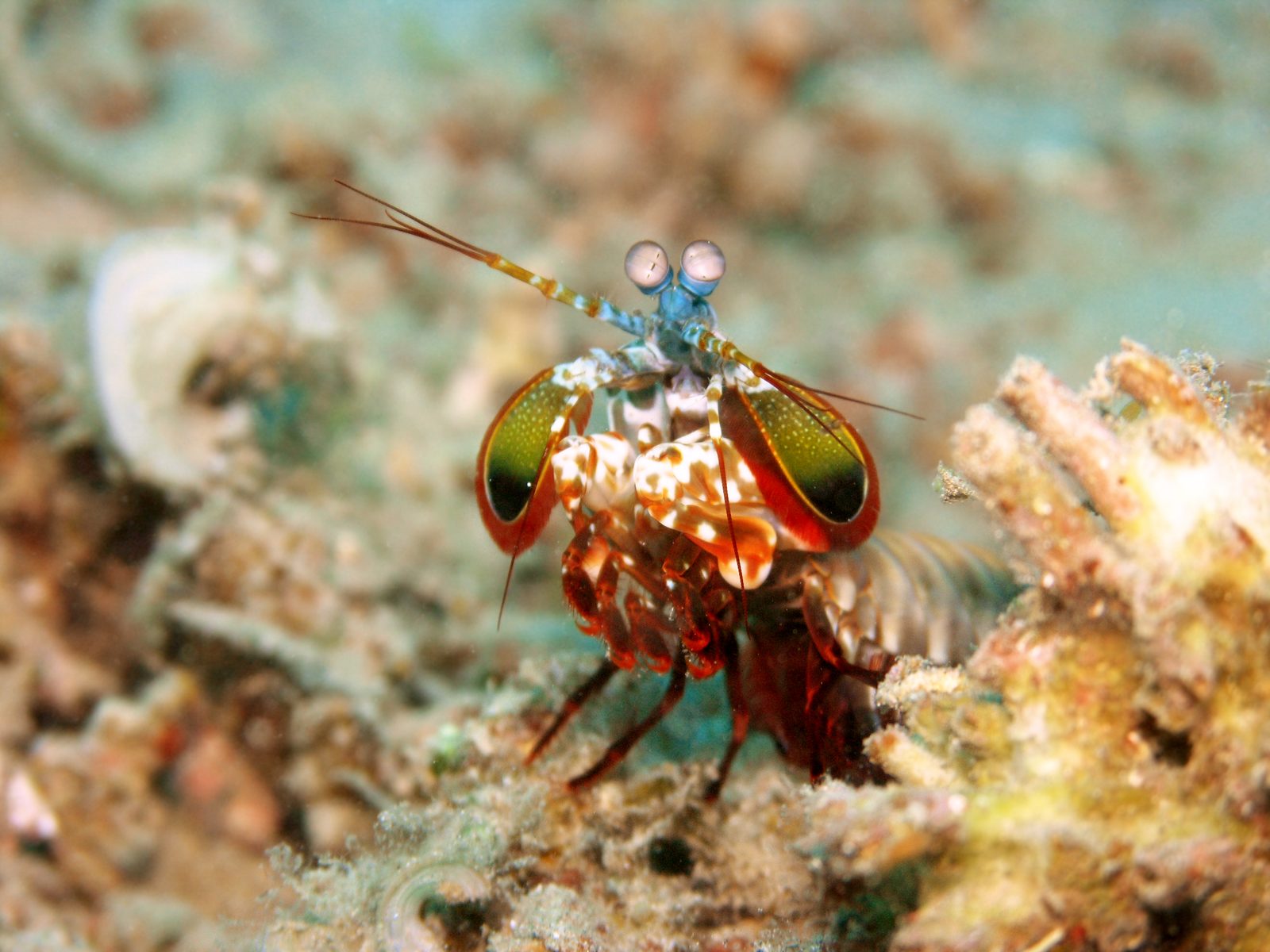
Triops hatches, matures, and lays eggs in a few frantic weeks. The mantis shrimp plays the opposite game. It builds a burrow, holds a territory, and polishes the same hunting strike its ancestors were already using before the first dinosaurs walked the Earth. The family of crustaceans known as stomatopods is at least 400 million years old, which makes their punch older than trees, older than insects, and far older than anything we would recognize as a dinosaur.
We usually celebrate Triops for its speed of living, hatching in a puddle and completing a whole lifetime before the puddle dries. Mantis shrimp are its mirror image: a creature so thoroughly solved by evolution that a weapon from the Devonian would still work perfectly today. Both animals are crustaceans, both survived every mass extinction, and both prove there is more than one way to be immortal.
A killing arm from the Devonian
The mantis shrimp's fame rests on its front pair of limbs, folded under its head like the grasping forelegs of a praying mantis, which is where the name comes from. Those limbs are not simple claws. Each is a spring-loaded club or spear. A latch holds the limb folded while muscles load energy into a stiff saddle-shaped spring, and when the latch releases, the strike explodes outward faster than the animal's own muscles could ever move it. Smasher species hit prey at accelerations exceeding 10,000 times gravity, generating a punch so fast that the surrounding water flash-boils into bubbles that collapse with a second shock.
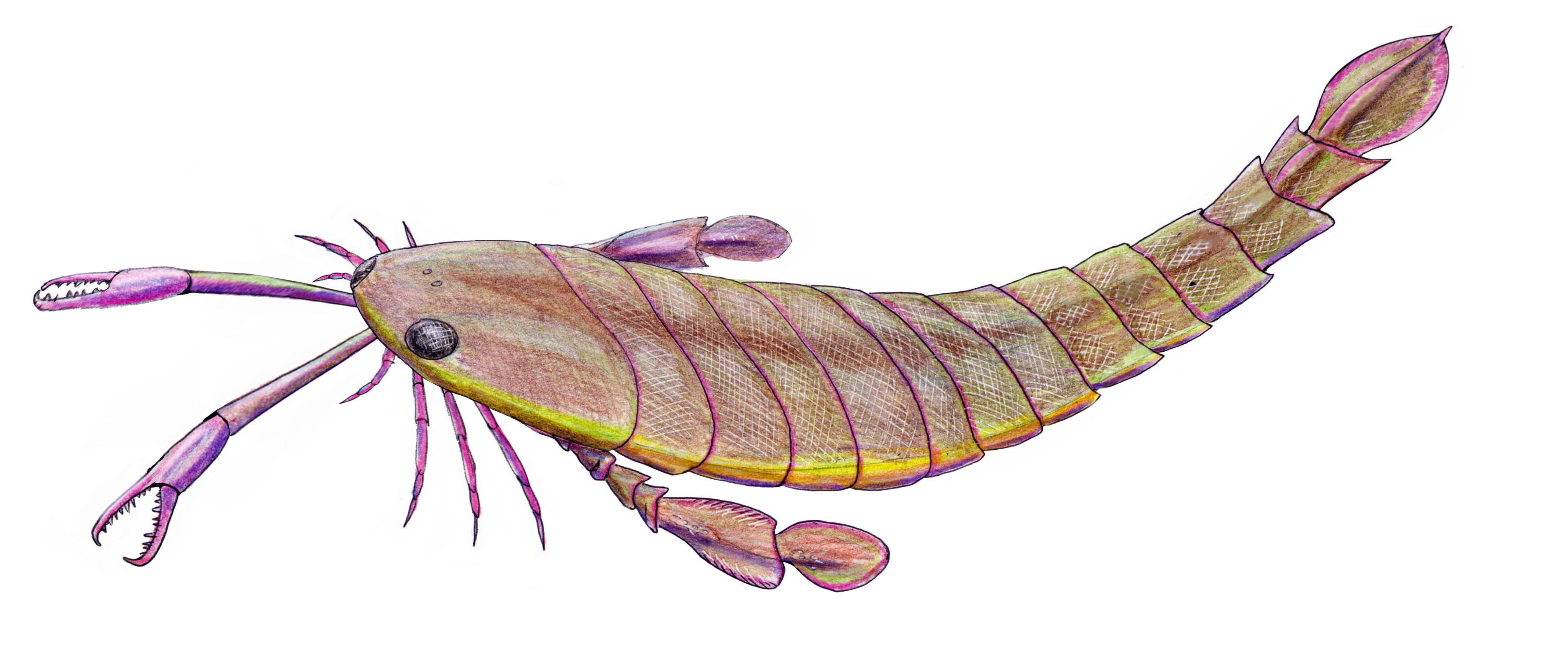
Fossils show this machinery is ancient. Sea scorpions patrolled the same waters, and stomatopod-like crustaceans with raptorial appendages date back hundreds of millions of years. A few key lineages of mantis shrimp are known from fossils around 100 million years old, and the overall body plan, armored head, stalked eyes, folded striking limbs, was already established long before that. The engineering simply worked, so evolution stopped redesigning it.
Spearmen and smashers
Modern mantis shrimp split into two camps that mirror the two tools on their arms. Spearers carry barbed tips and ambush soft-bodied prey like fish, snatching them from open water in a fraction of a second. Smashers carry blunt, heavily calcified clubs and batter hard-shelled prey: crabs, snails, and clams. The smasher's club endures thousands of impacts without cracking, a structure so impressive that materials scientists study it for body armor and aircraft panels. The article image below shows a smasher species, the peacock mantis shrimp, in its full warning colors.
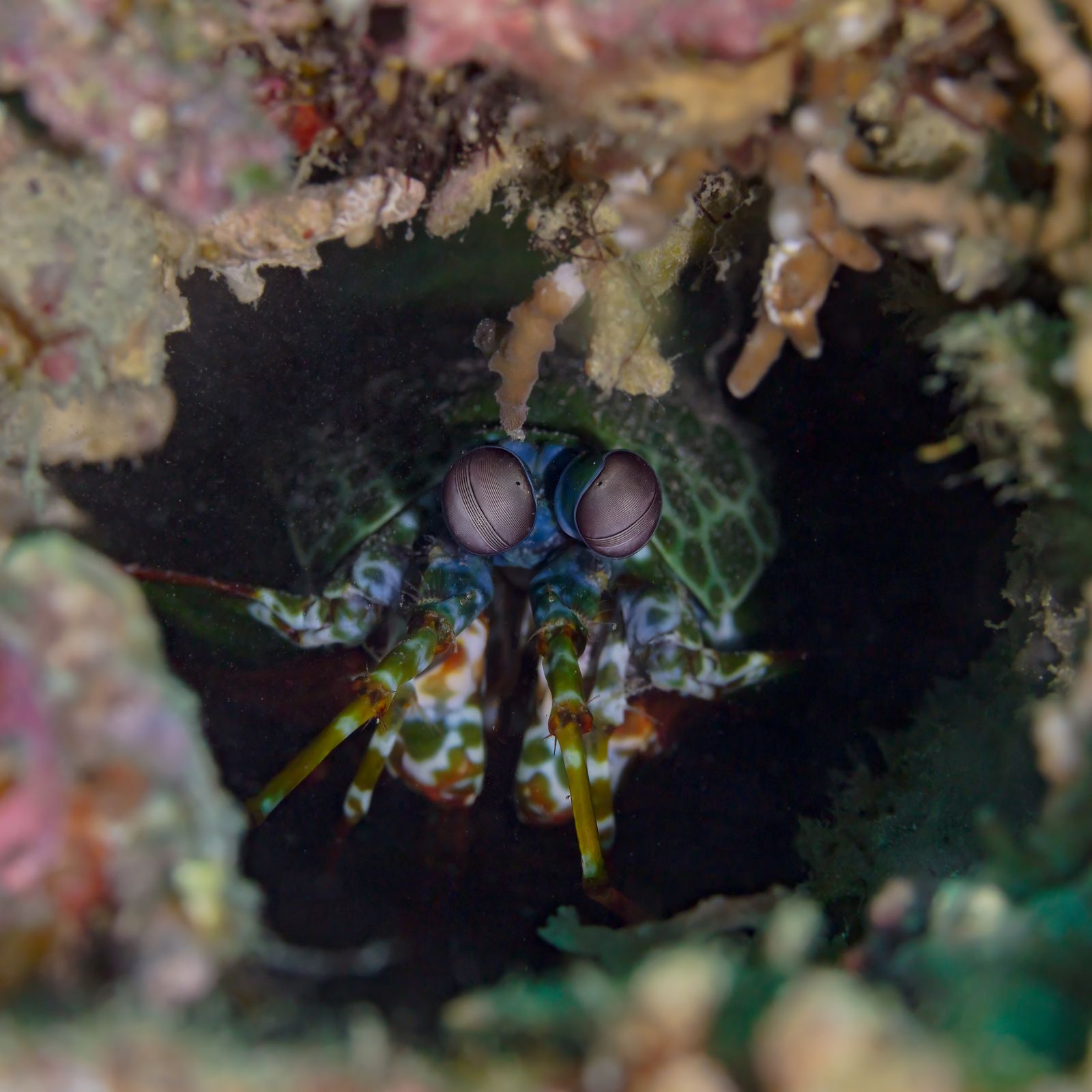
Those eyes are a marvel of their own. Each stalked eye holds thousands of light-sensitive units and moves independently of the other eye. Mantis shrimp detect ultraviolet light and polarized reflections invisible to us, and some species hold one of the most complex color-vision systems ever measured. Where Triops uses its three eyes to find sunlight and food in a muddy puddle, a mantis shrimp uses its two turret eyes to scan a crowded reef for the glint of a snail shell.
Smart enough to hold a grudge
Surviving since the Devonian takes more than a strong arm, and mantis shrimp back their hardware with surprising behavior. They dig burrows and keep them clean, remodel them, and defend the entrance from intruders. They remember the individual rivals they have fought before and settle disputes with ritualized displays instead of fresh, expensive battles. They even give gifts. Some species present food to prospective mates, and one genus is known for forming pairs that share a burrow and raise broods together over multiple seasons.
That kind of long-term strategy is the exact opposite of Triops' boom-and-bust life in a temporary pool, yet both animals are ancient survivors. A mantis shrimp can live for years, molting and re-fitting its armor each time, holding the same patch of reef through generations of would-be invaders. Consistency, not speed, is its survival trick.
Small animal, hard lessons
Mantis shrimp rarely grow longer than 30 centimeters, but their persistence carries real lessons about how life endures. Being ancient does not mean being primitive. The strike mechanism is refined to the point that a redesign offers no advantage, so the lineage keeps it. Specialization carved a niche so deeply that the basic plan has survived four mass extinctions, including the end-Permian catastrophe that killed nine in ten marine species.
That is a useful contrast to draw when you watch Triops dart across a tank. One crustacean wins by burning through a whole life cycle in weeks, leaving behind drought-proof eggs that wait years for the next storm. The other wins by planting itself in one burrow and striking with the same perfect weapon for four hundred million years. Fast strategy, patient strategy, both stamped with the same pedigree: they work.
Next time you hear the internet's favorite crustacean praised for its rainbow colors or its killer punch, remember the quieter part of the story. The mantis shrimp is a living bridge to seas that vanished hundreds of millions of years ago, a reminder that the road to immortality sometimes runs straight through a burrow in the sand, guarded by the oldest punch in the ocean.