Published August 20, 2026 by the Triops.me Editorial Team · Back to Articles
Meganeura: The Giant Dragonfly That Ruled Carboniferous Skies
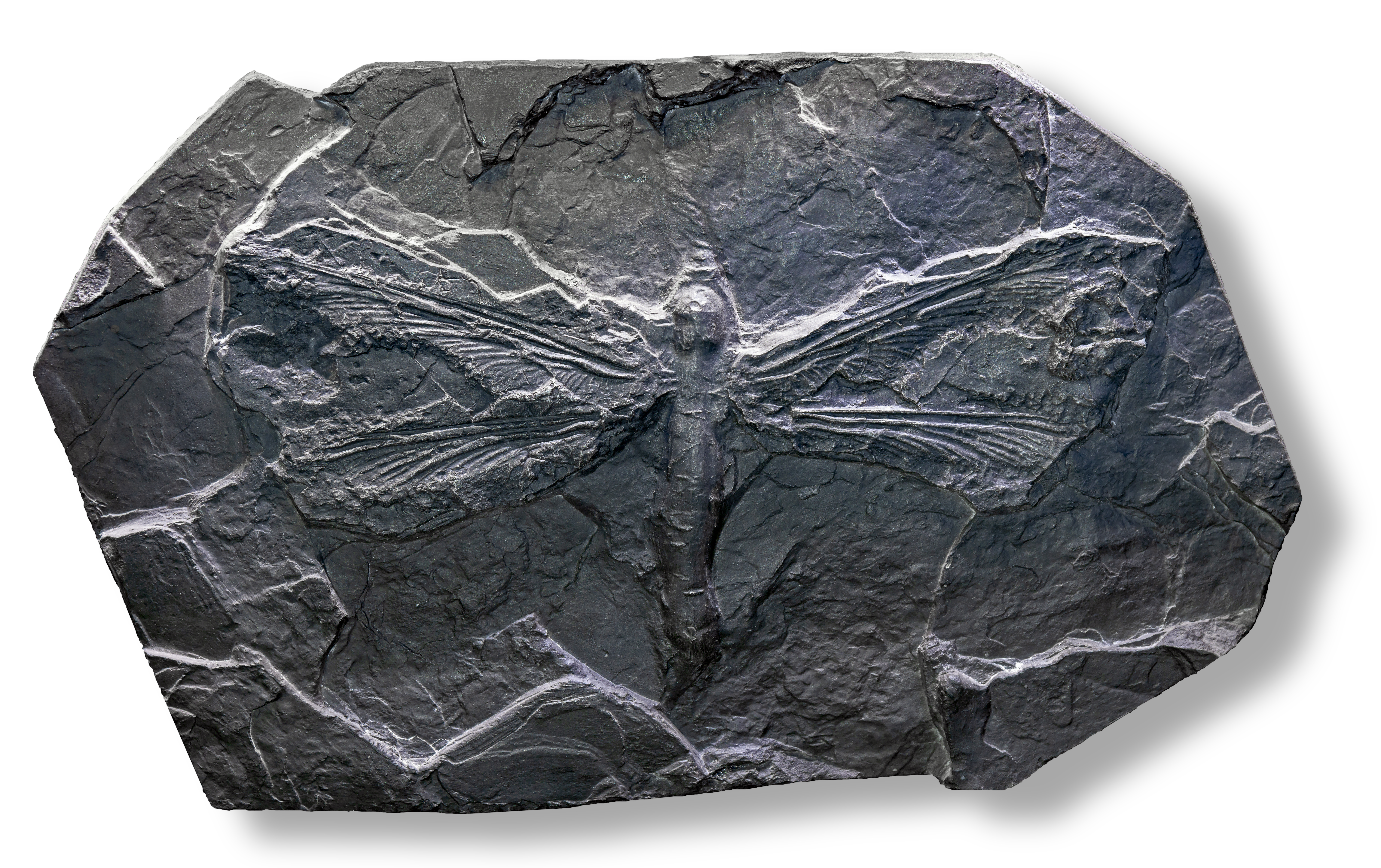
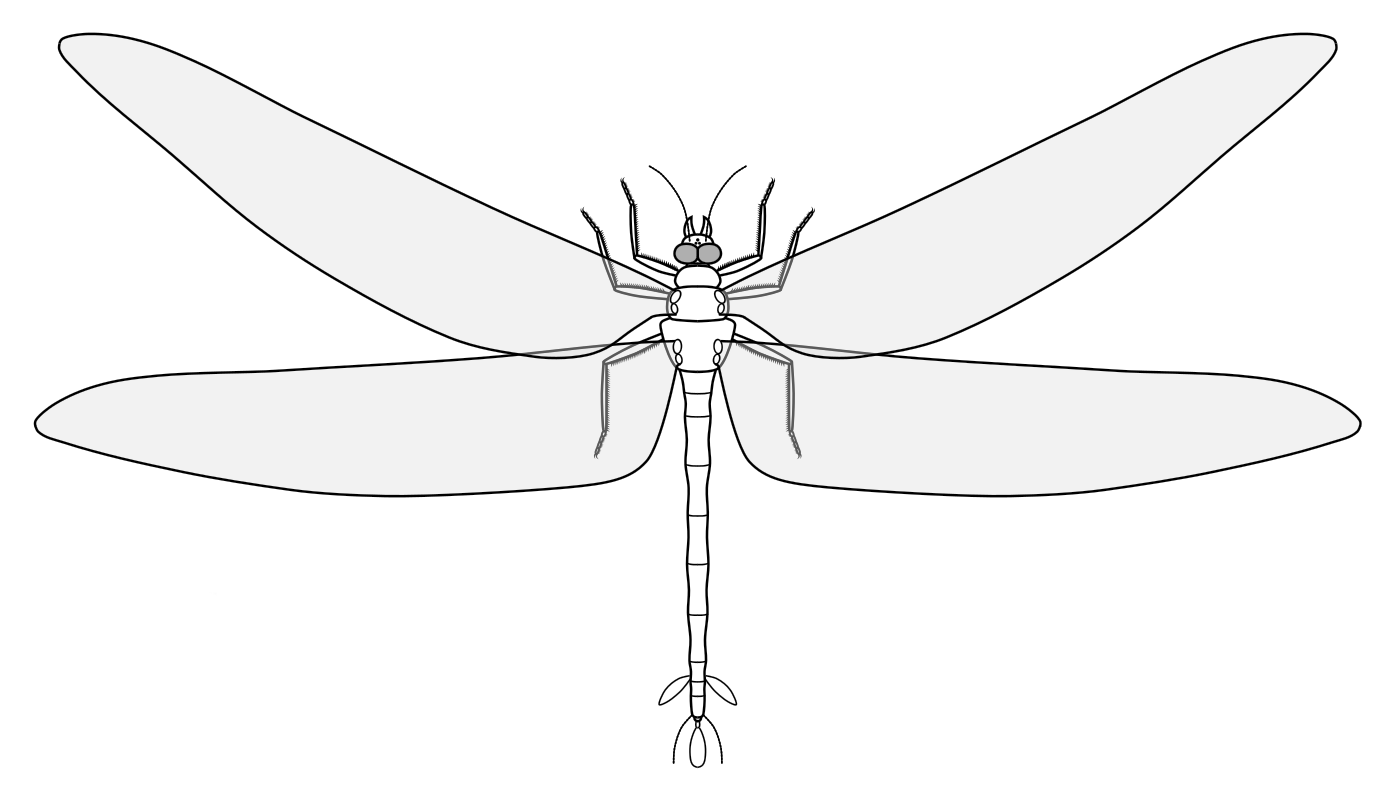
Three hundred million years before the first dinosaur took a step, an insect the size of a hawk patrolled the skies above Earth's tropical coal forests. Meganeura monyi, often called a giant dragonfly, is one of the most spectacular arthropods ever to take flight. With a wingspan stretching up to 75 centimeters, roughly 2.5 feet, it dwarfed every flying insect alive today. Its discovery in the coal mines of 19th-century France rewrote our understanding of insect evolution and raised a question that paleontologists are still debating: how did insects grow so impossibly large?
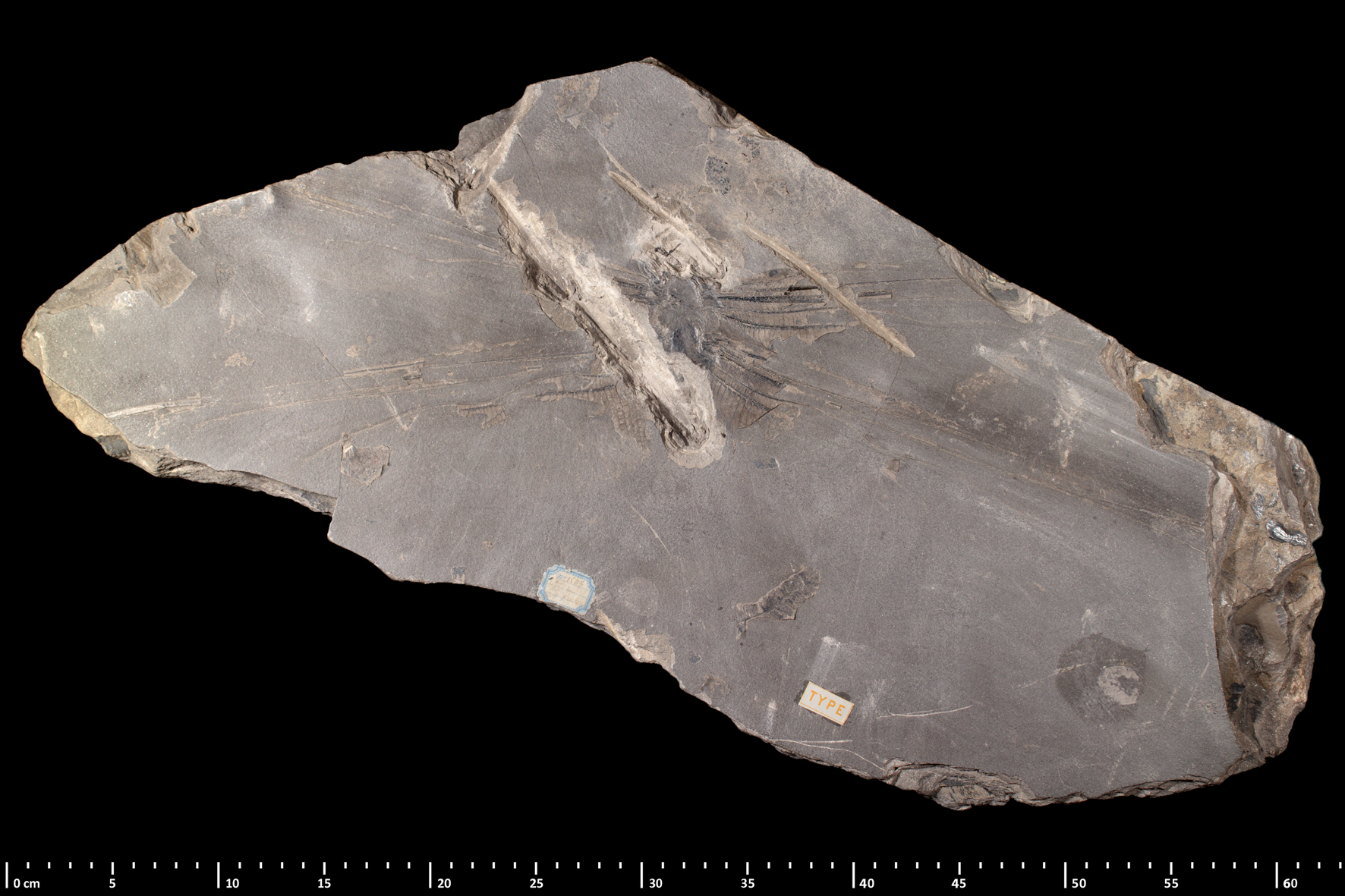
The story of Meganeura begins in 1880, when its fossils were unearthed in the coal measures near Commentry, a town in central France. French paleontologist Charles Brongniart described the type specimen four years later, initially assigning it to the genus Dictyoneura before recognizing it as something far more remarkable. He named it Meganeura, from the Ancient Greek for "large vein," a direct reference to the intricate network of wing veins preserved in the stone. The name stuck, and so did the creature's reputation as the poster child of prehistoric insect gigantism.
A World of Giants
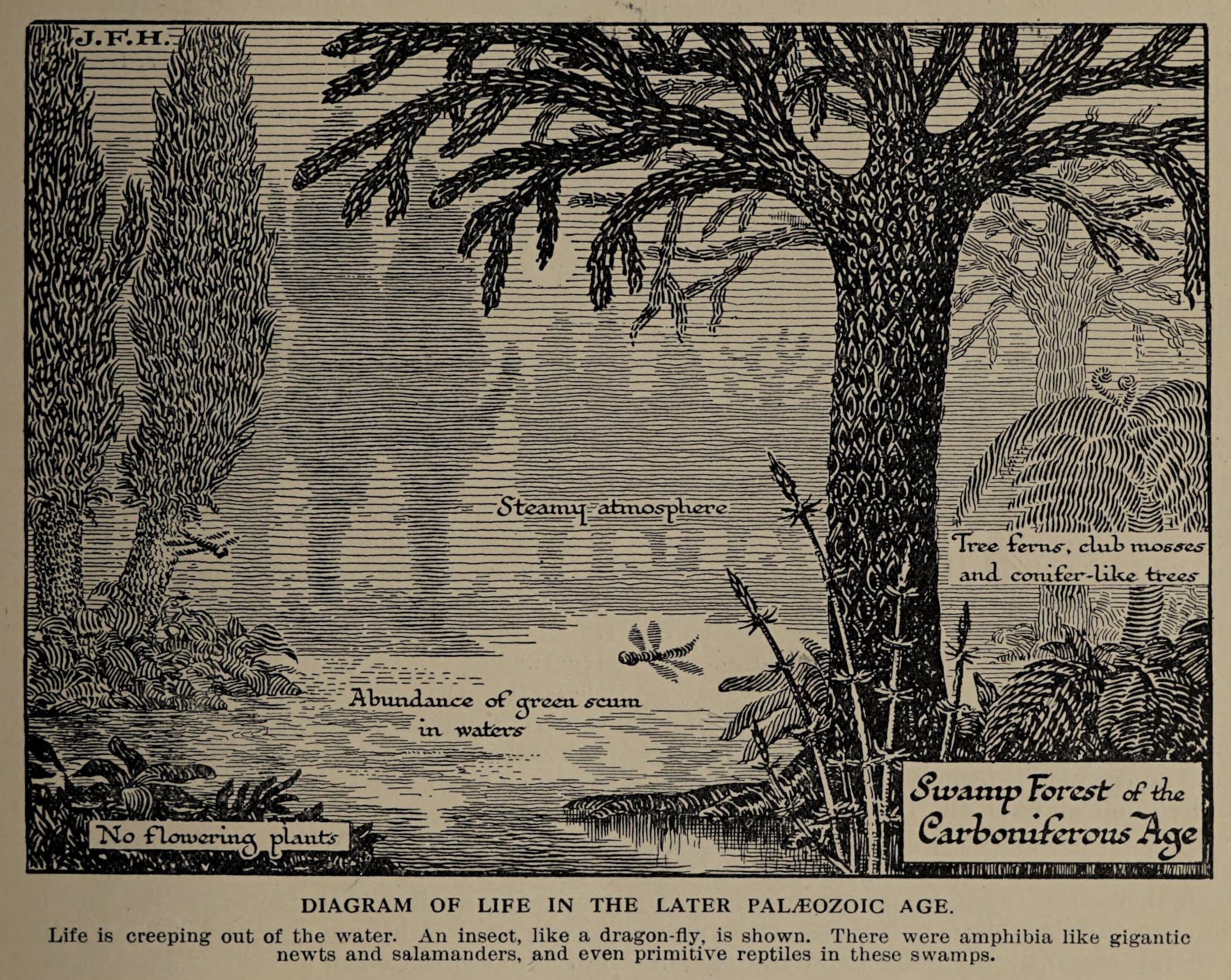
To understand Meganeura, you need to understand its world. The Late Carboniferous, roughly 300 to 310 million years ago, was a planet unrecognizable from today. Vast swamp forests covered the tropical lowlands, dominated by towering lycopsid trees like Lepidodendron and Sigillaria, some reaching heights of 40 meters. The atmosphere was thick with oxygen, concentrations reaching 35 percent compared to today's 21 percent, and the climate was warm and humid from pole to pole.
This oxygen-rich atmosphere was the engine of gigantism. Insects do not breathe through lungs. Instead, they rely on a network of tiny tubes called tracheae that deliver oxygen directly to tissues through passive diffusion. The more oxygen in the air, the deeper it can penetrate these tubes, and the larger an insect can grow without suffocating its own body. The Carboniferous oxygen spike opened a biological door that insects had never walked through before, and Meganeura walked straight through it.
Hunting the Coal Forests
Despite its nickname, Meganeura was not a true dragonfly. It belonged to the extinct order Meganisoptera, sometimes called griffenflies, a sister group to modern dragonflies and damselflies within the broader clade Odonatoptera. The distinction matters. While Meganeura shared the general body plan of its modern relatives, large compound eyes, four outstretched wings, a predatory lifestyle, its wing anatomy was more primitive. The vein patterns were denser and more complex, and the wing hinge structure suggests it lacked the extraordinary aerial agility of modern dragonflies.
This means Meganeura likely hunted differently. Modern dragonflies are ambush predators that intercept prey mid-flight with sudden bursts of speed and razor-sharp turns. Meganeura, constrained by its larger mass and less maneuverable wings, probably relied on a perch-and-strike strategy, similar to how some modern dragonflies hunt. It would have sat on Carboniferous vegetation, scanning for movement with its enormous compound eyes, then launched itself at smaller insects in short, powerful bursts. Its tarsi, the end segments of its legs, bore large spines perfect for snatching prey out of the air.
What did it eat? The Carboniferous skies were teeming with smaller insects, including early cockroaches, mayflies, and the ancestors of modern caddisflies. Some researchers have even speculated that Meganeura could have taken small amphibians that ventured too close to the water's edge, though this remains unproven. At an estimated body mass of 100 to 150 grams, roughly the weight of a small sparrow, it was substantial enough to prey on almost anything smaller than itself.
The Oxygen Debate
The link between high oxygen and insect gigantism has been accepted for decades, but recent research has complicated the picture. A 2018 study published in the Journal of Experimental Biology reexamined the engineering constraints of giant insect flight and reached some surprising conclusions. The researchers calculated that at 35 percent oxygen, a 500-gram insect with a one-meter wingspan could theoretically fly, but the power requirements would have been extreme. The giant insects may have needed to perch frequently to oxygenate their tissues, limiting their active flight time.
Other studies have pointed out that oxygen was not the only factor. The Carboniferous also lacked many of the predators that would later constrain insect size. No birds existed yet. No small, fast-flying reptiles hunted in the canopy. The aerial niche was wide open, and in the absence of competition and predation, natural selection pushed insect body sizes in one direction: up.
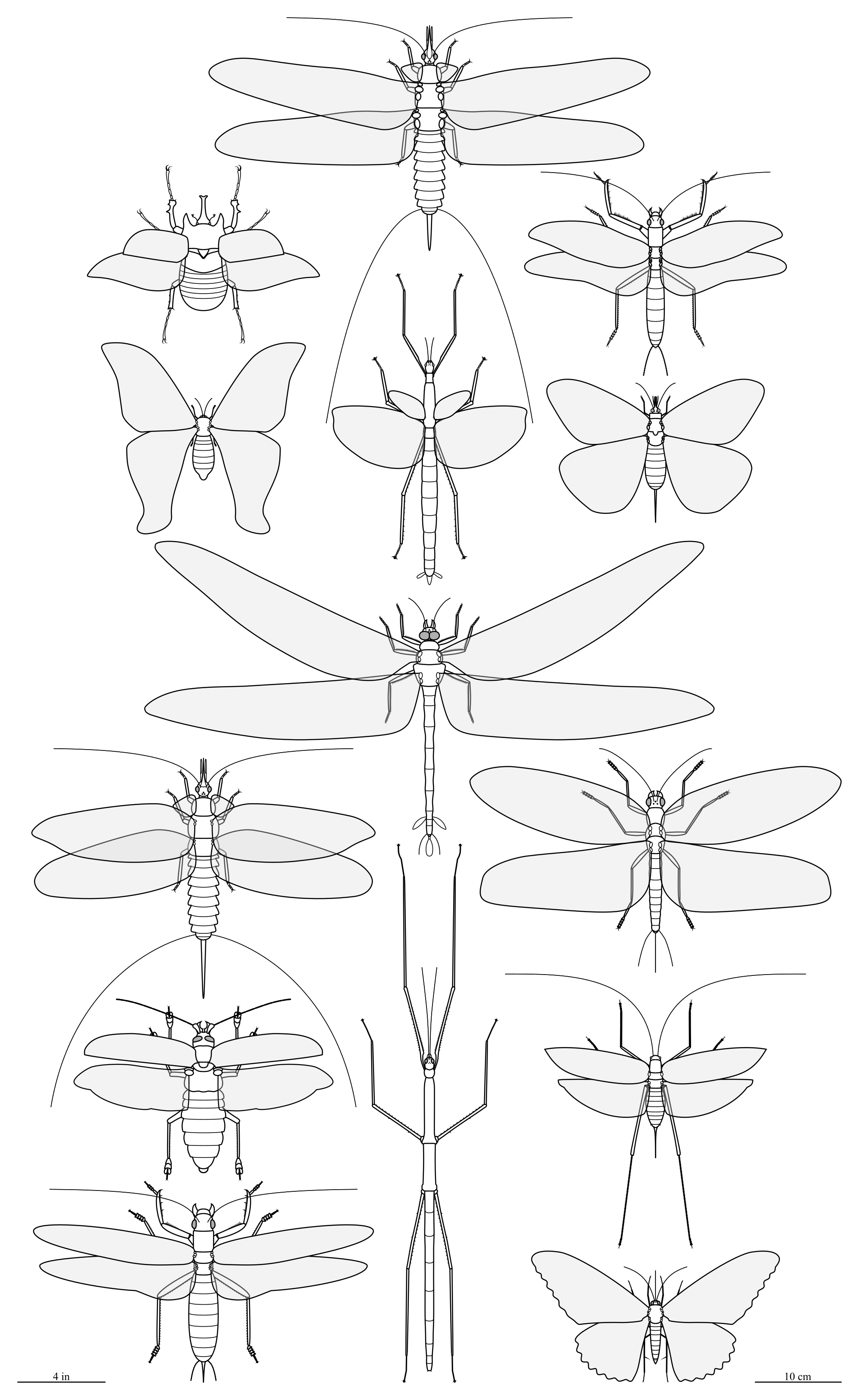
The story of Meganeura is also the story of what happened when conditions changed. By the early Permian, oxygen levels began to decline, and the great coal forests started to give way to drier, more seasonal ecosystems. The age of giant insects was ending. But one genus, Meganeuropsis, pushed even further. Meganeuropsis permiana, from the early Permian of North America, had a wingspan estimated at 71 centimeters, making it the largest known flying insect species of all time. It was the final expression of a body plan that the Carboniferous had made possible and the Permian would soon make impossible.
Legacy in Stone
Fossils of Meganeura are rare and poorly preserved compared to many of its relatives. The most complete specimen, MNHN R51142, is housed at the National Museum of Natural History in Paris, and additional fragments have been found in coal deposits across Europe. Each fossil preserves the delicate impression of wing veins in fine-grained sediment, a ghost of the most impressive flight apparatus evolution ever produced in an insect.
Meganeura reminds us that the rules of nature are not fixed. Today, a dragonfly with a 15-centimeter wingspan is considered large. Three hundred million years ago, the same basic body plan supported an animal five times that size. The Carboniferous was a world where insects were the dominant aerial predators, where a hawk-sized griffenfly could snatch prey from the air above a swamp forest of trees that no longer exist. It was a world made possible by oxygen, competition-free skies, and 300 million years of evolution working without the constraints we take for granted.
Every time you watch a modern dragonfly hover over a pond, you are watching the diminished echo of Meganeura. The wings are smaller. The body is lighter. The sky belongs to birds now. But the fundamental design, four outstretched wings, enormous eyes, and a hunter's precision, is the same design that ruled the Carboniferous. Evolution did not forget. It just adapted to a smaller world.