Published September 01, 2026, 12:04 by the Triops.me Editorial Team · Back to Articles
Megatherium: The Giant Ground Sloth That Stood Taller Than Elephants
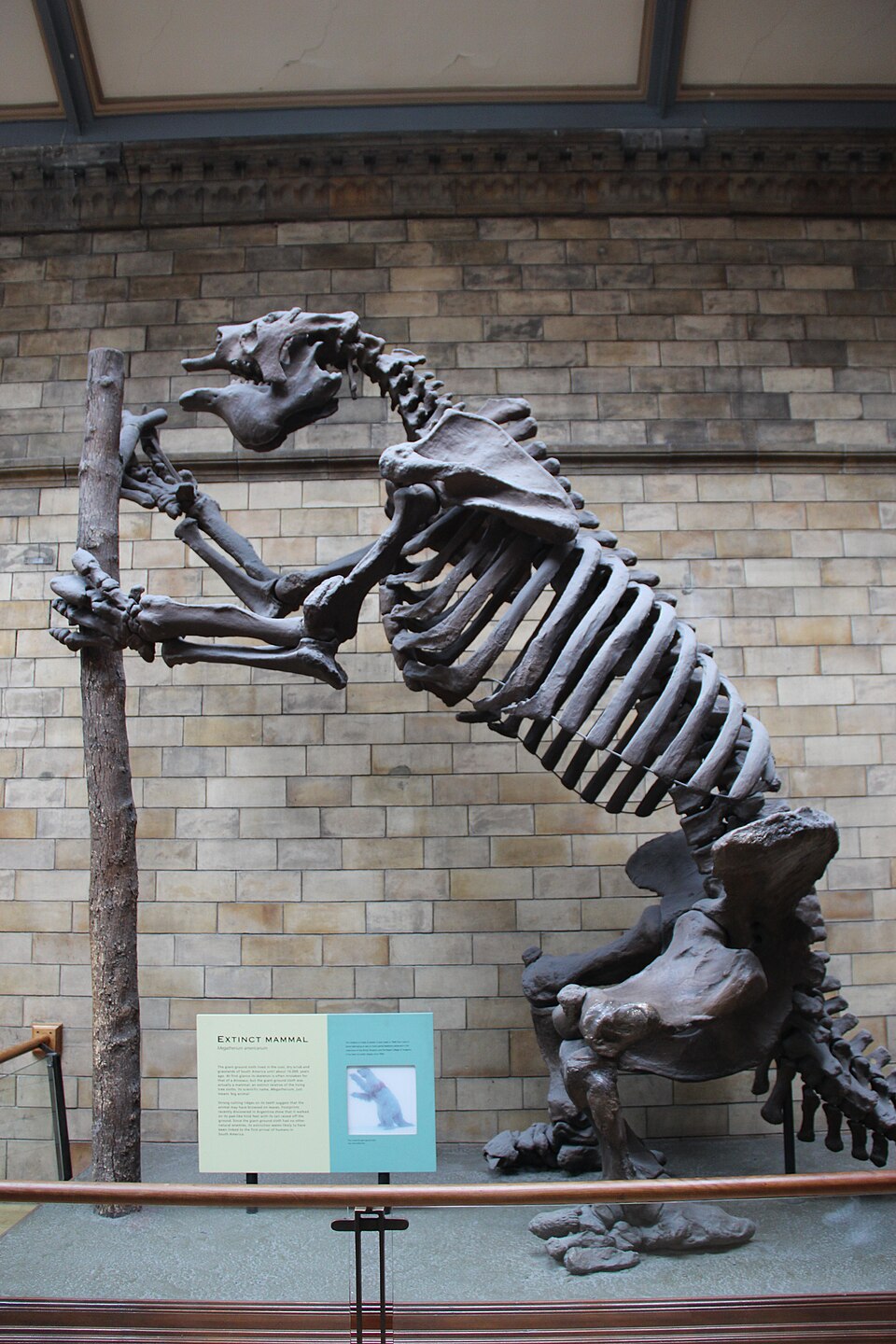
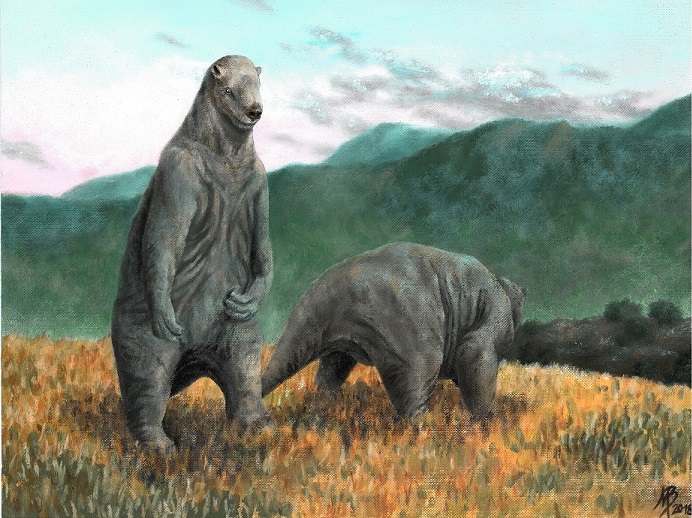
Picture a sloth. Now make it the size of an Asian elephant. Give it claws longer than your forearm and the ability to stand upright on its hind legs, reaching branches six meters above the ground. That is Megatherium, one of the most extraordinary mammals ever to walk the Earth. The name means "great beast" in Greek, and it earns every syllable.
Named in 1796 by the French anatomist Georges Cuvier, Megatherium americanum was one of the very first prehistoric animals to be scientifically described. Its bones were discovered in 1787 on the banks of the Lujan River in what is now northern Argentina. The Dominican friar who found them called them a "wonder and providence of the Lord." When the skeleton reached Madrid, Cuvier studied engravings of it and used comparative anatomy to correctly identify the creature as a giant sloth, entirely extinct and unlike anything alive.
A Body Built for Power
Adult Megatherium americanum measured roughly six meters (20 feet) from nose to tail and weighed between 3,700 and 4,000 kilograms. Despite its enormous body, the head was surprisingly small, with extensive sinus cavities that reduced skull weight. Its teeth were peculiar: only five on each side of the upper jaw, with no enamel, and sharp V-shaped crests that interlocked like self-sharpening shears. These teeth grew continuously throughout life, much like rodent incisors.
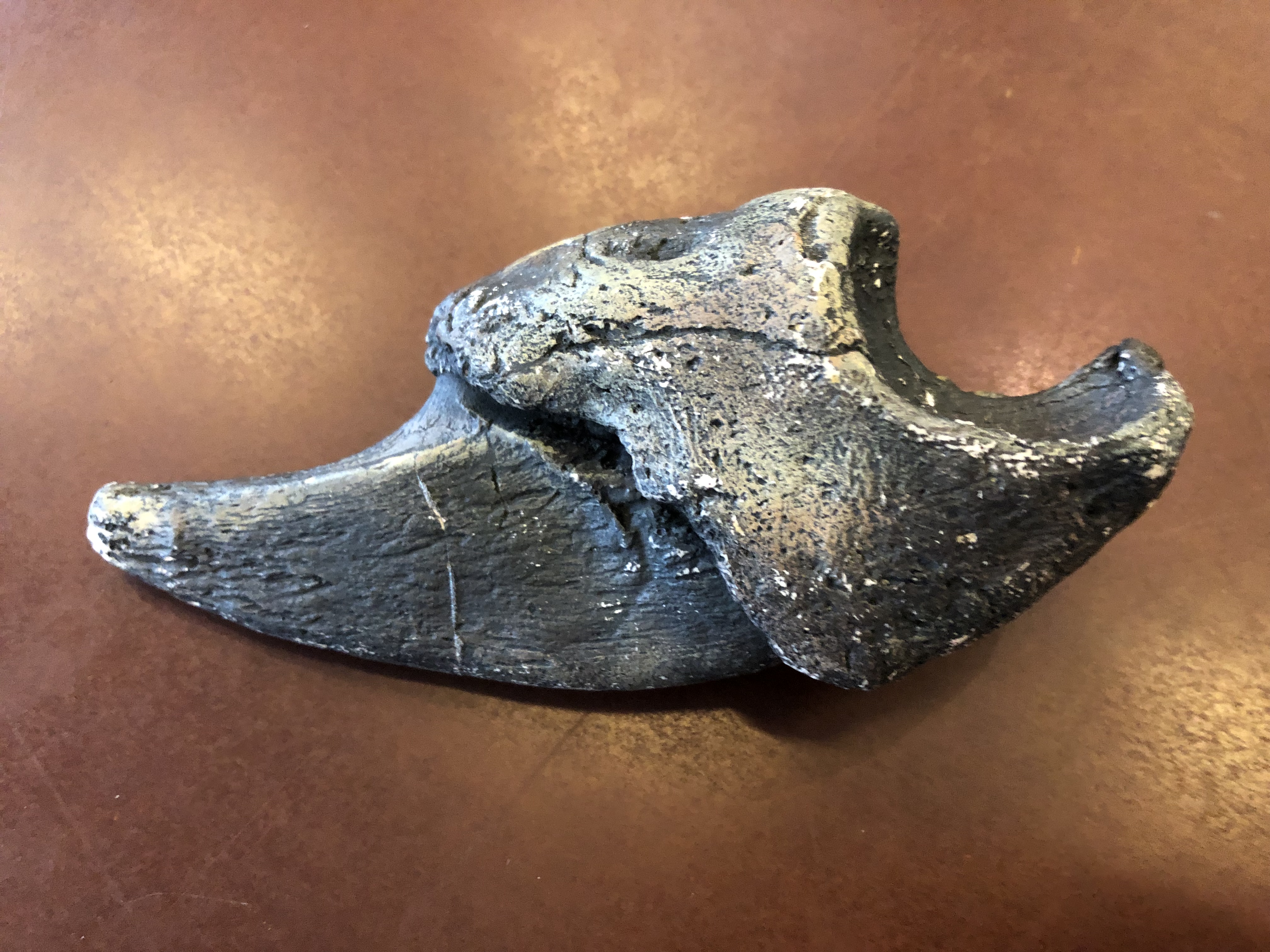
The forelimbs bore four functional fingers, three of them tipped with massive curved claws. The hind feet were bizarre, turned inward and resting on their outer edges. The pelvis was enormous, with a wide, flared structure that anchored the muscles needed for the animal's most remarkable trick.
Standing Tall: The Bipedal Browser
Fossil trackways and anatomical analysis suggest that Megatherium could rear up on its hind legs while bracing against a tree trunk. This deliberate, powerful stance allowed it to reach high canopy foliage, using its forelimbs to grasp and pull down branches within reach of its prehensile upper lip.
For years, artists depicted Megatherium with a long, elephant-like trunk. But studies of the hyoid bones show the tongue was short and could not protrude far. Instead, the animal had a thick, muscular upper lip similar to a modern black rhinoceros, which it used to strip leaves from branches. Combined with its upward-reaching posture, this made Megatherium an extraordinarily effective browser.
Walking speed has been estimated at three to eight kilometers per hour. Not fast, but considerably more agile than today's tree sloths, which manage barely half a kilometer per hour. The clavicles show stress consistent with habitual quadrupedal walking, while the inner ear structure is closer to armadillos than to living sloths.
Life on the Pleistocene Pampas
Megatherium americanum inhabited the Pampas grasslands of South America, from northern Patagonia to southern Bolivia. During the Late Pleistocene, this was a cooler, drier landscape of steppe and scattered woodland. The animal shared its world with an astonishing cast of megafauna: giant glyptodonts (Volkswagen-sized armored relatives of armadillos), the long-necked Macrauchenia, the rhinoceros-like Toxodon, gomphothere elephant relatives, wild horses, and the fearsome Smilodon. Predators like the enormous short-faced bear Arctotherium roamed the same territory, though a healthy adult Megatherium would have had little to fear from them.
Isotopic analysis confirms Megatherium was an entirely herbivorous browser, feeding on foliage, twigs, and fruits. Preserved coprolites reveal it ate plants including Fabiana, Ephedra, and Chuquiraga, shrubs still found in the Pampas today. Its fur coat remains debated: some researchers argue a large animal would have been relatively hairless like an elephant, while others contend a dense three-centimeter coat was necessary to survive the cool Pampas climate.
Extinction and Human Contact
Megatherium disappeared around 12,000 years ago, part of the massive end-Pleistocene extinction that wiped out more than 80 percent of South America's large mammals. This coincided almost exactly with the arrival of humans in the Americas. At the Campo Laborde site in Argentina, archaeologists found a single Megatherium individual slaughtered and butchered at the edge of a swamp around 12,600 years ago, the only confirmed kill site for the species in the Americas. Cut marks on bones from other sites confirm that early hunters were at least opportunistic Megatherium butchers.
Whether hunting pressure alone could have driven the species to extinction, or whether climate change and habitat fragmentation played equal roles, remains one of paleontology's most active debates. What is clear is that this was an animal that stood six meters tall and could deliver devastating slashes with its claws. Taking one down with nothing more than stone-tipped spears would have been a monumental undertaking.
Today, mounted Megatherium skeletons stand in museums from Buenos Aires to London to Madrid. They never fail to stop visitors in their tracks. The contrast between the sleek, fast-moving modern sloth and this hulking, clawed colossus is a reminder that evolution does not follow a straight line. Sometimes it produces something utterly unexpected, lets that creation walk the Earth for millions of years, and then quietly takes it away.