Published 2026-09-26 · by the Triops.me Editorial Team · Back to Articles
Microraptor: The Four-Winged Dinosaur
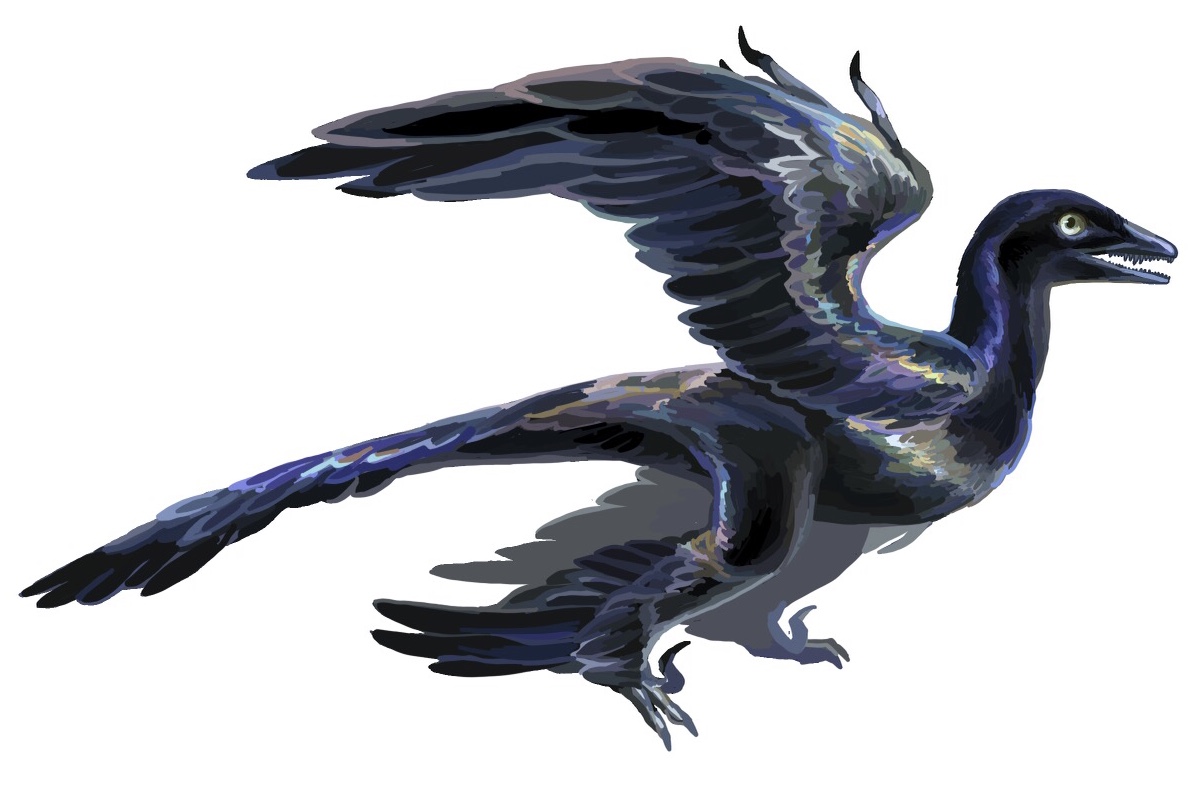
Imagine a dinosaur the size of a crow, covered in glossy black feathers, with a long streaming tail and, instead of two wings, four. That animal really existed. Microraptor gui lived about 125 million years ago in the forests of what is now Liaoning province in northeastern China, and when its fossils began turning up around the turn of the millennium, they rewrote the conversation about how flight began.
It is one of the smallest non-bird dinosaurs ever found: roughly 80 centimetres from snout to tail tip, probably close to a kilogram in life. But its size is not what makes it famous. Microraptor is famous because it grew long, asymmetrical flight feathers on its arms and on its legs, giving it a second pair of wings behind the first. Paleontologists nicknamed the resulting body plan "tetrapteryx", meaning four wings.
A dinosaur with wings on its legs
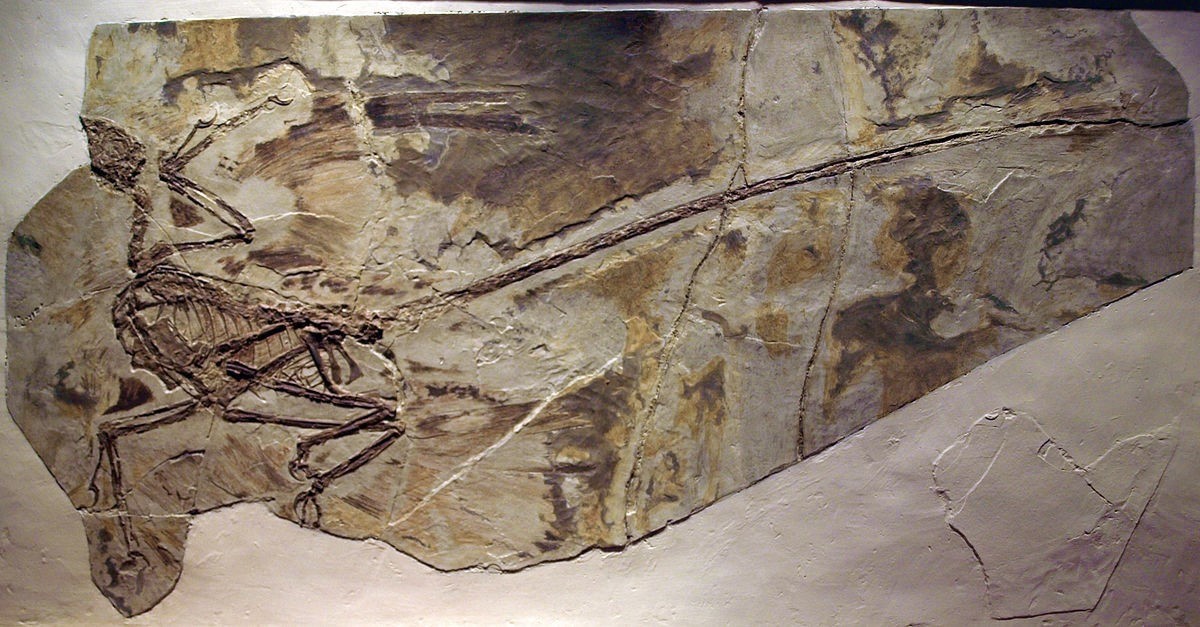
The first Microraptor skeletons were described by Chinese paleontologist Xu Xing and colleagues in 2003. The fossils came from the Jiufotang Formation, a layer of volcanic ash and lake sediment that also gave the world feathered dinosaurs and early birds preserved in extraordinary detail. Burials happened quickly in fine ash, and the result is a fossil record where individual feathers, wing membranes and even stomach contents survive.
On Microraptor, the feathers were not decoration. The long feathers on the forelimbs had the asymmetric shape that in modern birds marks a true aerodynamic surface: a stiff leading edge and a softer trailing edge that generates lift. The hindlimb feathers had the same construction, which is why the four-winged interpretation stuck. A covering of downy fuzz over the body completed the picture of an animal wrapped in plumage from head to toe.
Could it actually fly?
This is where scientists still disagree, and the debate is genuinely fun to follow. The earliest reconstruction showed Microraptor as a kind of biological biplane, with the hind wings held out horizontally beneath the fore wings. Later work argued that the legs could fold and that the rear wings were smaller in active flight, leaving Microraptor looking more like a conventional two-winged bird with extra feathers on its legs that flared out during landing or low-speed glides.
Studies comparing its wing shape and limb proportions with living birds have suggested something bolder: that Microraptor was not merely a passive glider but was capable of flapping, powered flight, at least in short bursts. Others favour a paratrooper lifestyle, launching from tree trunks and steering with the hind wings the way a flying squirrel steers with its skin. The honest summary is that Microraptor could get into the air, control its descent with real precision, and probably flap when it needed to. How much of that counts as "flight" depends on your definition.
What was for dinner?
Fossils from Liaoning preserve the inside of animals as well as the outside, and Microraptor's gut has been read like a grocery list. One specimen contained the bones of a small perching bird, Confuciusornis, still clustered in the body cavity where the stomach sat. Another held scales and bones of fish. Hair from a mammal and fragments of lizards have also been reported.
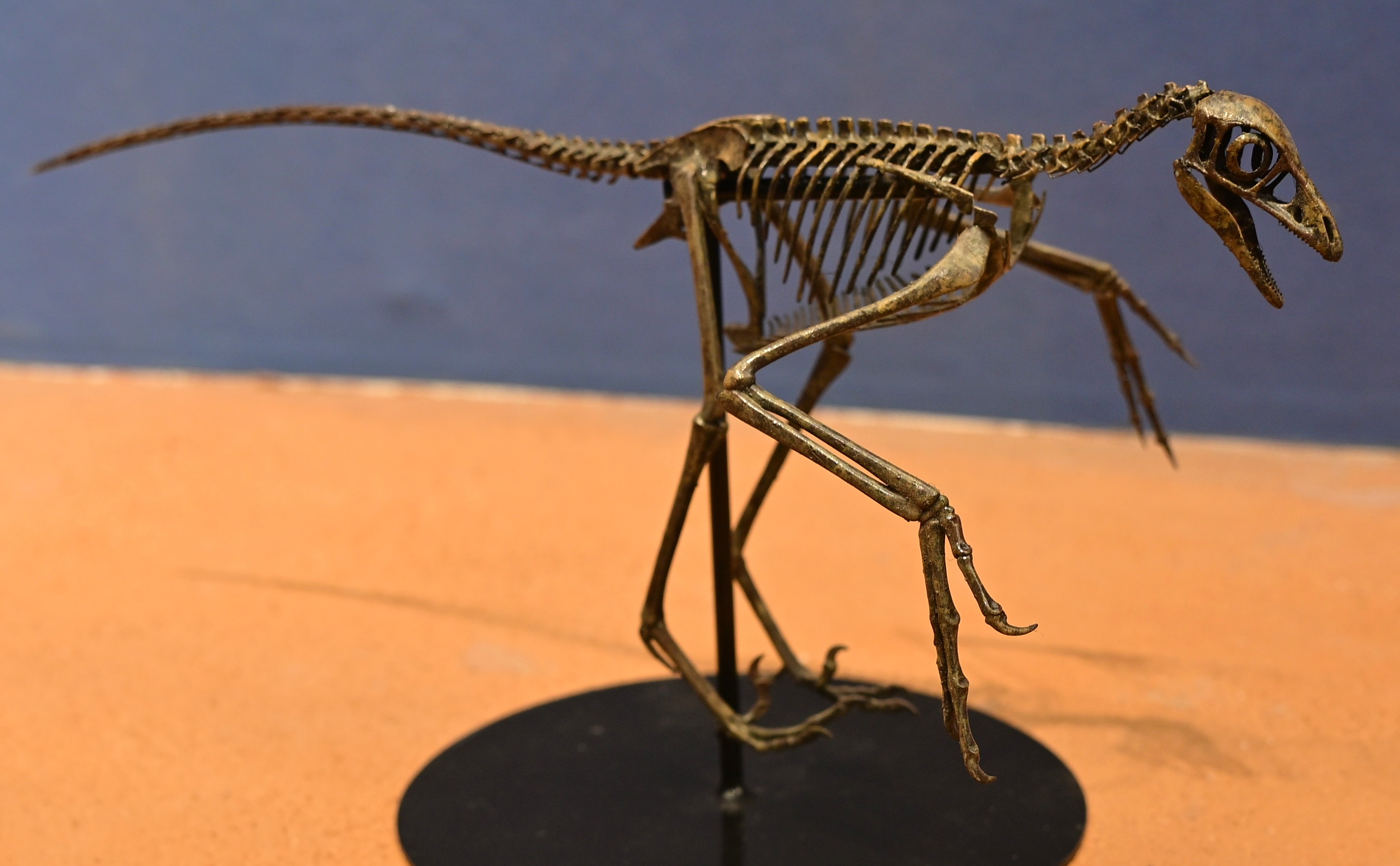
So Microraptor was an opportunistic hunter that took prey from both the air and the water. That fits its skeleton: the hands bear sickle-shaped, strongly curved claws, a dromaeosaurid signature shared with relatives like Deinonychus, and those claws suit an animal that climbs branches and grips struggling prey. Fossils of Microraptor itself have also been found with the remains of other animals in their guts, and it appears to have eaten its own young on occasion, a habit documented in at least one specimen.
It was black, and shiny
Feathers decay, but the melanosomes inside them often do not. These tiny pigment granules survive as microscopic bodies, and their shape encodes the colour they once produced. Analysis of Microraptor's fossil feathers found long, flat melanosomes of the type that create iridescence in living birds such as grackles and hummingbirds. The reconstruction that follows is a crow-black animal that flashed blue-green in sunlight, not the drab grey that older illustrations showed.
A second study went further and suggested the pattern might even hint at sexual display, since modern birds often produce iridescent plumage for courtship. That is speculation, but it is grounded speculation. It means that when we picture a Microraptor, we are picturing something closer to a living bird than to any scaly Hollywood dinosaur.
Not our ancestor, but a neighbour
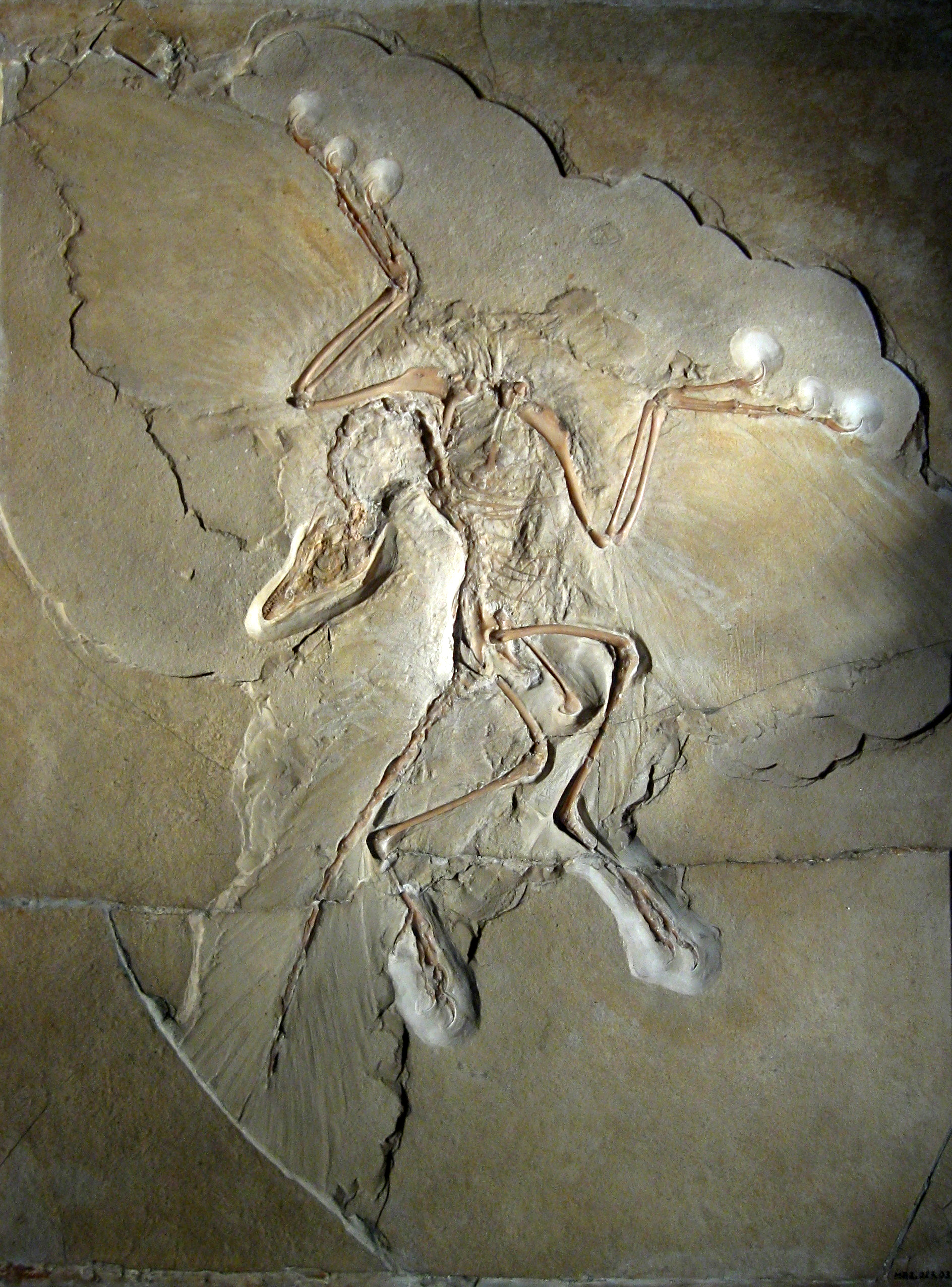
Microraptor was a dromaeosaurid, a member of the same family as the raptors, and it sits close to the branch that produced birds. It is a cousin of the lineage that led to living birds, not an ancestor on the direct line. That distinction matters: the Cretaceous sky was crowded with separate experiments in aerial living. In Germany, Archaeopteryx was trying something similar with two wings and a feathered tail, while other feathered dinosaurs never left the ground at all.
The four-winged stage may have been a stepping stone that evolution tried more than once before settling on the modern layout of fore wings only. Fossils of other paravians show hindwing feathers too, so Microraptor belongs to a whole cohort of animals that were halfway between running and flying, testing body plans that no living bird uses today.
Today, mounted skeletons of Microraptor can be seen in Chinese museums, posed mid-glide with its hind wings splayed. The next time you watch a crow hop between rooftops, remember that 125 million years ago, something very like it, but with an extra set of wings and a shine of beetle-green on its feathers, was making the same journey through a forest that has long since turned to stone.