Published August 22, 2026 by the Triops.me Editorial Team · Back to Articles
The Nautilus: Ammonite's Last Living Cousin
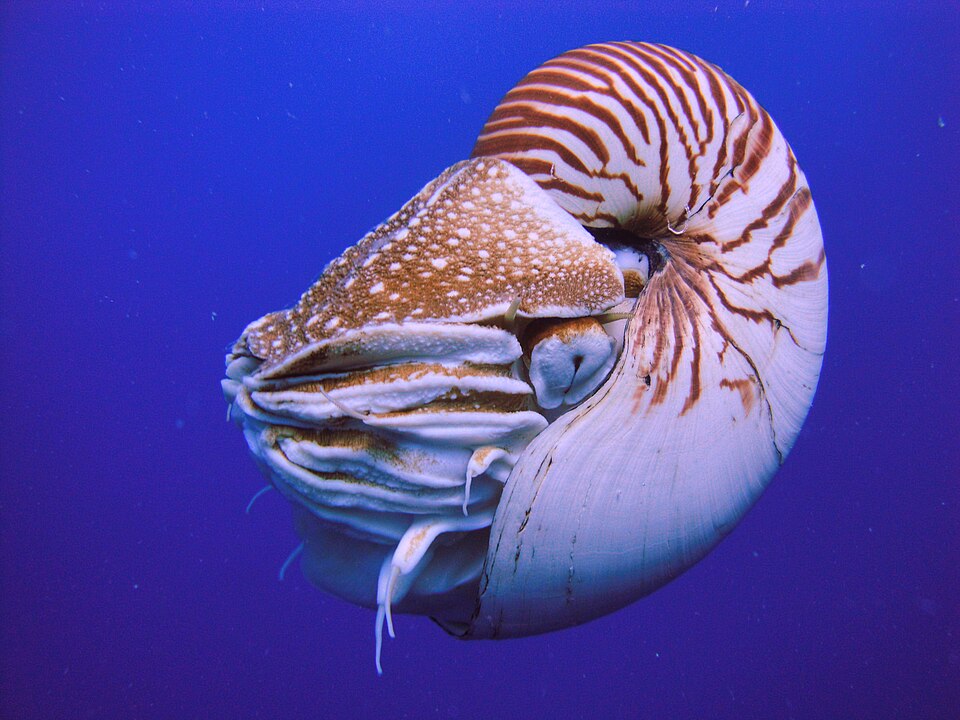
When the great dinosaurs roamed the land and the ammonites spiraled through ancient seas, another cephalopod was already ancient. The nautilus, with its perfectly coiled shell and ghostly white body, had already been swimming the oceans for hundreds of millions of years before T. rex ever took a bite. Today, just a handful of species remain, making the nautilus the last living link to one of the most successful groups of marine animals ever to exist.
The nautilus belongs to the subclass Nautiloidea, a group that first appeared in the late Cambrian, roughly 500 million years ago. These early nautiloids were straight-shelled creatures called orthoceratids, looking more like floating cigars than the elegant spirals we know today. Over geological time, the lineage experimented with every shell shape imaginable: tightly coiled, loosely coiled, and everything in between. The genus Nautilus itself dates to the Triassic period, around 230 million years ago, making it roughly as old as the earliest dinosaurs.
A Shell Full of Air
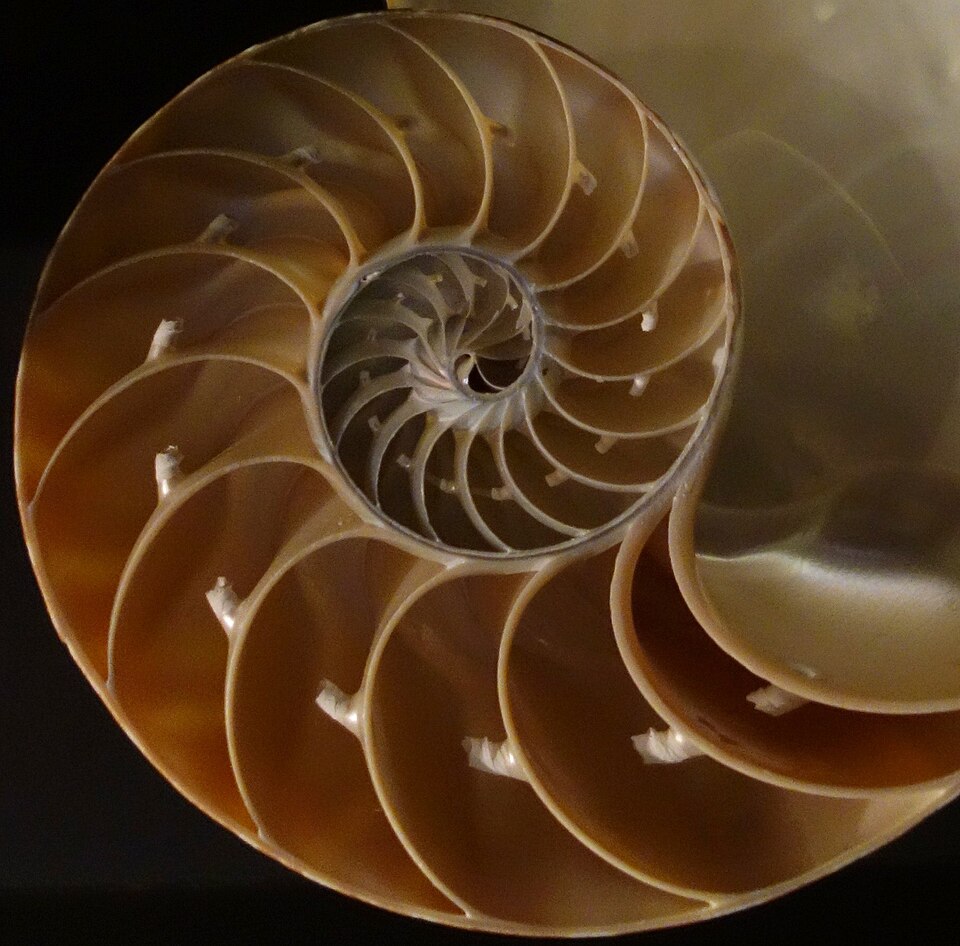
The nautilus shell is one of nature's most elegant engineering feats. Cut one open and you will find a series of gas-filled chambers arranged in a logarithmic spiral. The animal itself occupies only the outermost chamber, the largest and most recent. As the nautilus grows, it seals off its old living quarters behind it, creating a partitioned tower of empty rooms.
Running through every chamber is a thin tube called the siphuncle, which connects the nautilus to its entire shell. By adjusting the fluid and gas levels inside each chamber through this tube, the animal controls its buoyancy with remarkable precision. It can rise toward the surface or sink to the deep, all without expending energy. This is the same basic principle that powers a submarine's ballast tanks, except the nautilus invented it half a billion years before humans figured it out.
The shell's outer surface displays a striking pattern of reddish-brown stripes against a cream background. This countershading, with the darker side facing up and the lighter side facing down, helps the nautilus blend into the dim waters of the deep reef slopes where it lives. When cut open, the shell's interior reveals a lustrous layer of nacre, also known as mother-of-pearl, which has been prized by humans for thousands of years.
More Tentacles Than You Would Expect
Unlike its cousins the octopus (eight arms) and the squid (ten arms), the nautilus possesses between 50 and 90 short, suckerless tentacles called cirri. These thin, retractable appendages fold neatly beneath a leathery hood that can seal the shell opening when the animal retreats inside for protection. When hunting or scavenging, the nautilus extends its tentacles to grasp prey and pull it toward its parrot-like beak.
The nautilus has the most primitive brain of any living cephalopod. Its eyes, which lack a true lens, work more like pinhole cameras, producing blurry images that are adequate for life in the twilight zone. It navigates the deep reef slopes of the Indo-Pacific at depths between 100 and 700 meters, emerging from the depths at night to feed on crustaceans, small fish, and carrion.
Survivor of Five Mass Extinctions
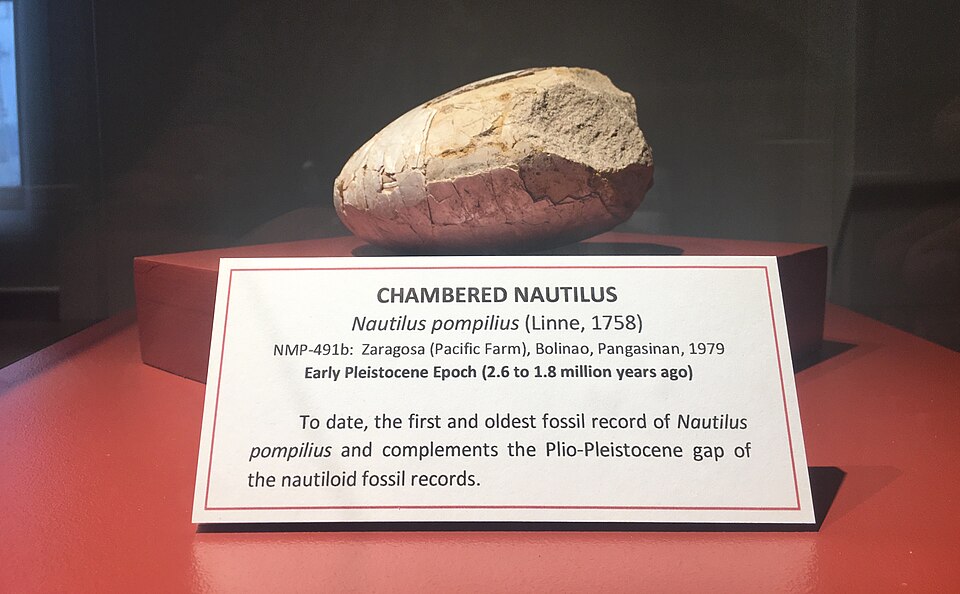
The nautiloid lineage has survived every single mass extinction event in Earth's history. The Late Ordovician extinction, the Devonian extinction, the devastating Permian-Triassic extinction that killed 90% of all marine species, the Triassic-Jurassic extinction, and the Cretaceous-Paleogene event that wiped out the dinosaurs and the ammonites, the nautilus endured them all.
The ammonites, which were far more diverse and abundant for most of the Mesozoic, perished 66 million years ago. Why the nautilus survived when its relatives did not remains one of paleontology's open questions. Some researchers point to the nautilus's preference for deep water, which may have buffered it from the worst effects of surface ocean disruptions. Others note its slower metabolism, broader diet, and lower reproductive demands compared to the fast-reproducing ammonites. Whatever the reason, the nautilus stands today as the sole surviving representative of a once-vast dynasty.
This same resilience echoes in another ancient creature: the triops. Like the nautilus, triops have survived multiple mass extinctions with minimal morphological change, their fossil record stretching back over 200 million years. Both organisms demonstrate that sometimes the best survival strategy is not to dominate an ecosystem, but to quietly persist on its margins.
A Living Fossil Under Threat
Despite surviving half a billion years of geological upheaval, the nautilus now faces a threat unlike any it has encountered before: humans. The beauty of the nautilus shell has made it a prized souvenir and collectible, and decades of overharvesting have decimated populations across the Indo-Pacific. Nautiluses are exceptionally vulnerable to overfishing because they grow slowly, mature late, and produce very few offspring compared to other cephalopods.
In 2016, all nautilus species were listed under CITES Appendix II, restricting international trade in their shells. Researchers continue to push for stronger protections, noting that some populations have declined by more than 80% in heavily fished areas. The nautilus has survived asteroid impacts, supervolcanic eruptions, and ocean acidification events spanning millions of years, but it may not survive the pace of modern shell collecting without sustained conservation effort.
The nine living species of nautilus represent the final chapter of a story that began in the ancient oceans of the Cambrian. They are the last of the nautiloids, the final echoes of a lineage that once numbered thousands of species across every ocean on Earth. To encounter a nautilus today is to meet a creature that predates the dinosaurs, the forests, and the evolution of land vertebrates. It is, in every sense, a living fossil swimming through our modern world.