Published August 30, 2026 by the Triops.me Editorial Team · Back to Articles
Neanderthals: Our Closest Cousins and Their Hidden Legacy
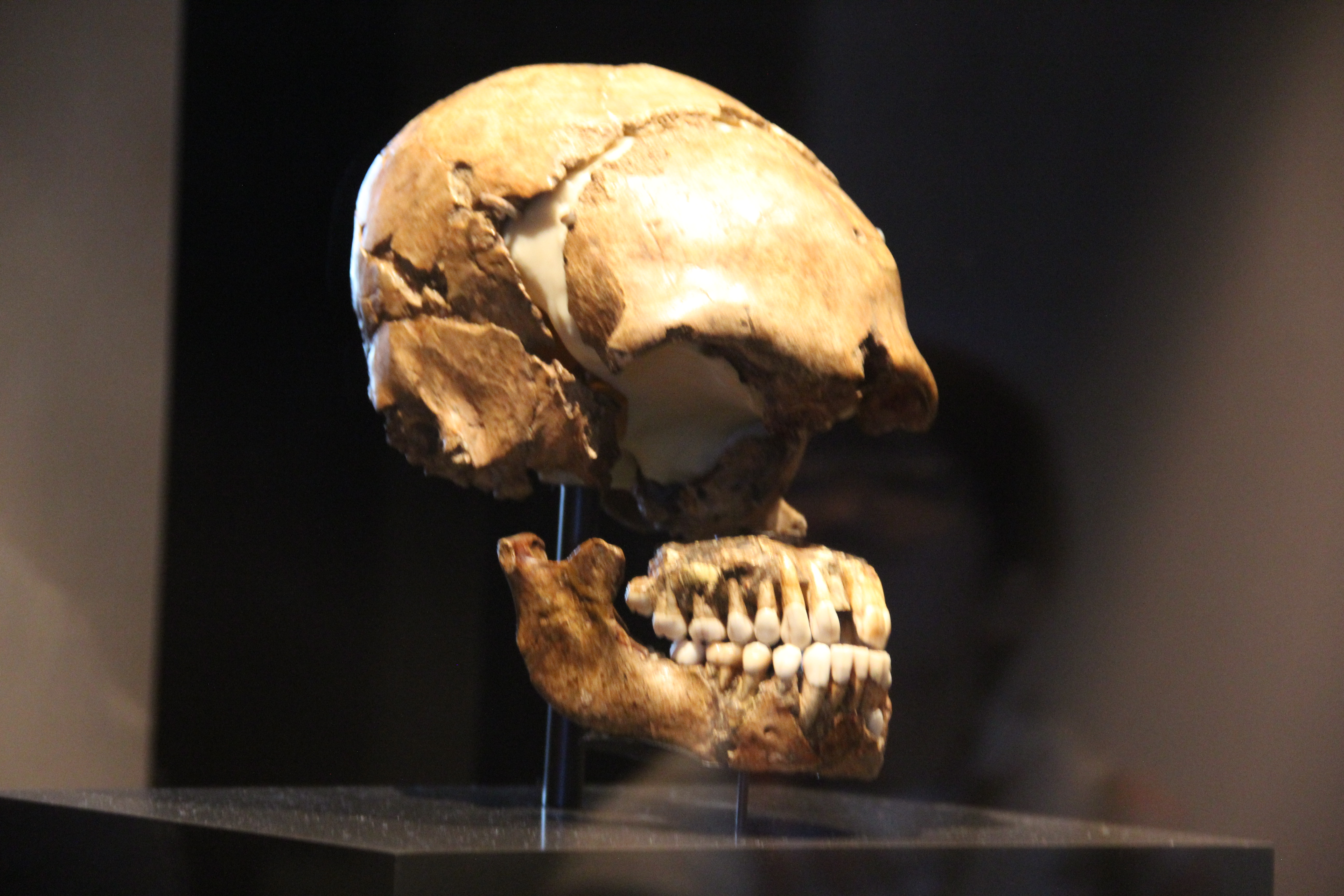
For over a century, Neanderthals have been cast as brutish, dim-witted cave dwellers, a failed experiment in human evolution overshadowed by the triumph of Homo sapiens. The reality, uncovered by decades of excavations, DNA analysis, and new archaeological finds, is far more interesting. Neanderthals were intelligent, culturally sophisticated, and so closely related to us that we could, and did, have children together. Their story is not one of failure, but of a parallel human lineage that thrived for over 300,000 years before disappearing around 40,000 years ago.
The first Neanderthal remains were discovered in 1856 in the Neander Valley near Dusseldorf, Germany. At the time, scientists debated whether the thick brow ridges and robust skeleton represented a new species or simply an ill European peasant. By the early 1900s, the consensus was clear: this was a distinct type of human. Today, we know that Neanderthals (Homo neanderthalensis) diverged from the modern human lineage roughly 500,000 to 800,000 years ago, making them our closest extinct relatives.
Built for Cold: The Neanderthal Body
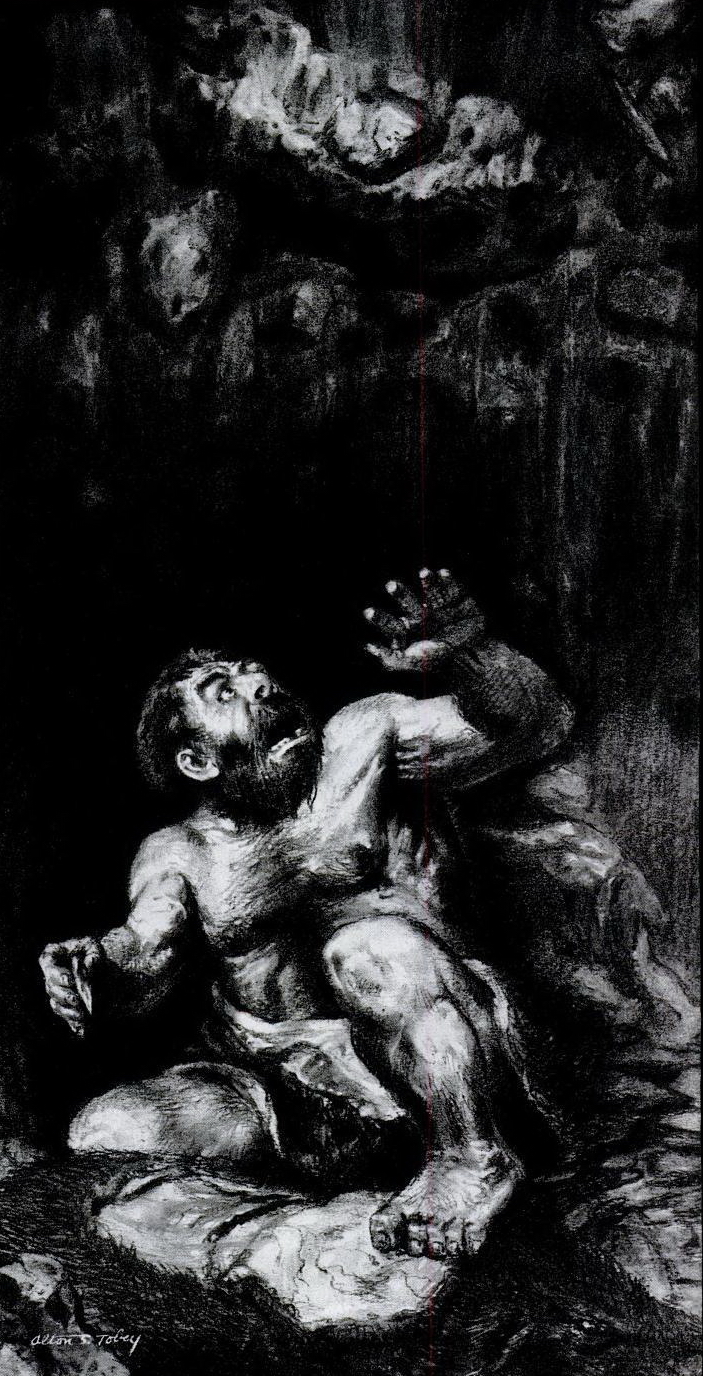
Neanderthals evolved during the Ice Ages of Europe and western Asia, and their bodies reflected that environment. Standing roughly 1.5 to 1.7 meters tall, they were shorter and stockier than modern humans, with barrel-shaped chests, wide pelvises, and shorter lower legs. Their skulls featured a distinctive long, low shape with a prominent brow ridge, a sloping forehead, and a projecting mid-face. These features are not signs of primitiveness but of cold adaptation. A compact body with short extremities reduces the surface-area-to-volume ratio, conserving heat in freezing winters, exactly the principle behind Bergmann's and Allen's rules in biology.
Neanderthal bones are among the densest of any human species. Their limb bones are thick, suggesting powerful musculature and a physically demanding lifestyle. CT scans of Neanderthal inner ears reveal they may have had enhanced sensitivity to low-frequency sounds, potentially useful for communicating across open tundra or detecting predators at a distance. Their brains were, on average, slightly larger than those of modern humans, though organized differently, with larger occipital lobes suggesting a greater reliance on visual processing.
Culture and Cognition
The image of Neanderthals as unsophisticated brutes has crumbled under the weight of archaeological evidence. At Shanidar Cave in Iraqi Kurdistan, archaeologist Ralph Solecki uncovered remains of at least ten Neanderthals in the 1950s and 1960s. One burial, known as Shanidar 4, was found surrounded by clumps of pollen from at least eight different plant species, including yarrow, cornflower, and ragwort. While the "flower burial" hypothesis has been debated, recent reanalysis suggests the pollen may have been introduced by burrowing rodents rather than intentional placement. Even so, other Shanidar burials show clear signs of intentional interment, with bodies carefully positioned in fetal or extended postures.
In Gibraltar, researchers discovered that Neanderthals used eagle talons as personal ornaments, drilling holes in them to string them together, evidence of symbolic thinking and personal adornment. At a site in Bruniquel, France, broken stalagmites were arranged in two large circular structures deep inside a cave 336 meters from the entrance, dating to roughly 176,500 years ago. These "Neanderthal ring" structures, deliberately constructed far from daylight, suggest planning, social organization, and perhaps ritual behavior that predates any known Homo sapiens art by over 100,000 years.
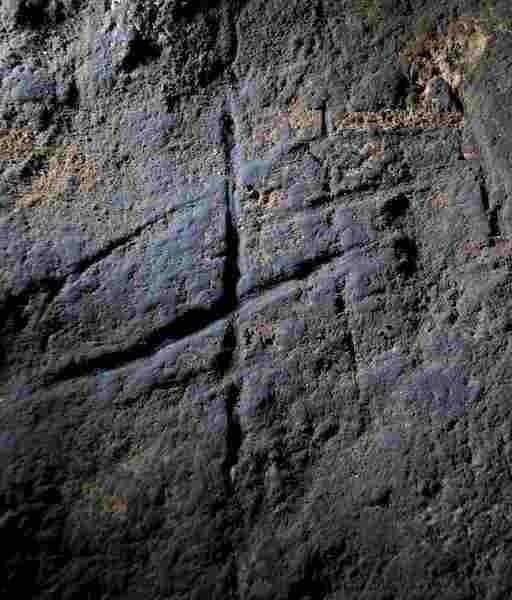
At Gorham's Cave in Gibraltar, archaeologists found a series of cross-hatched lines scratched into the cave floor, interpreted as deliberate engravings dating to around 39,000 years ago. While not figurative art like the cave paintings of Lascaux or Chauvet, these engravings represent some of the oldest known examples of abstract human mark-making.
Tools, Diet, and Survival
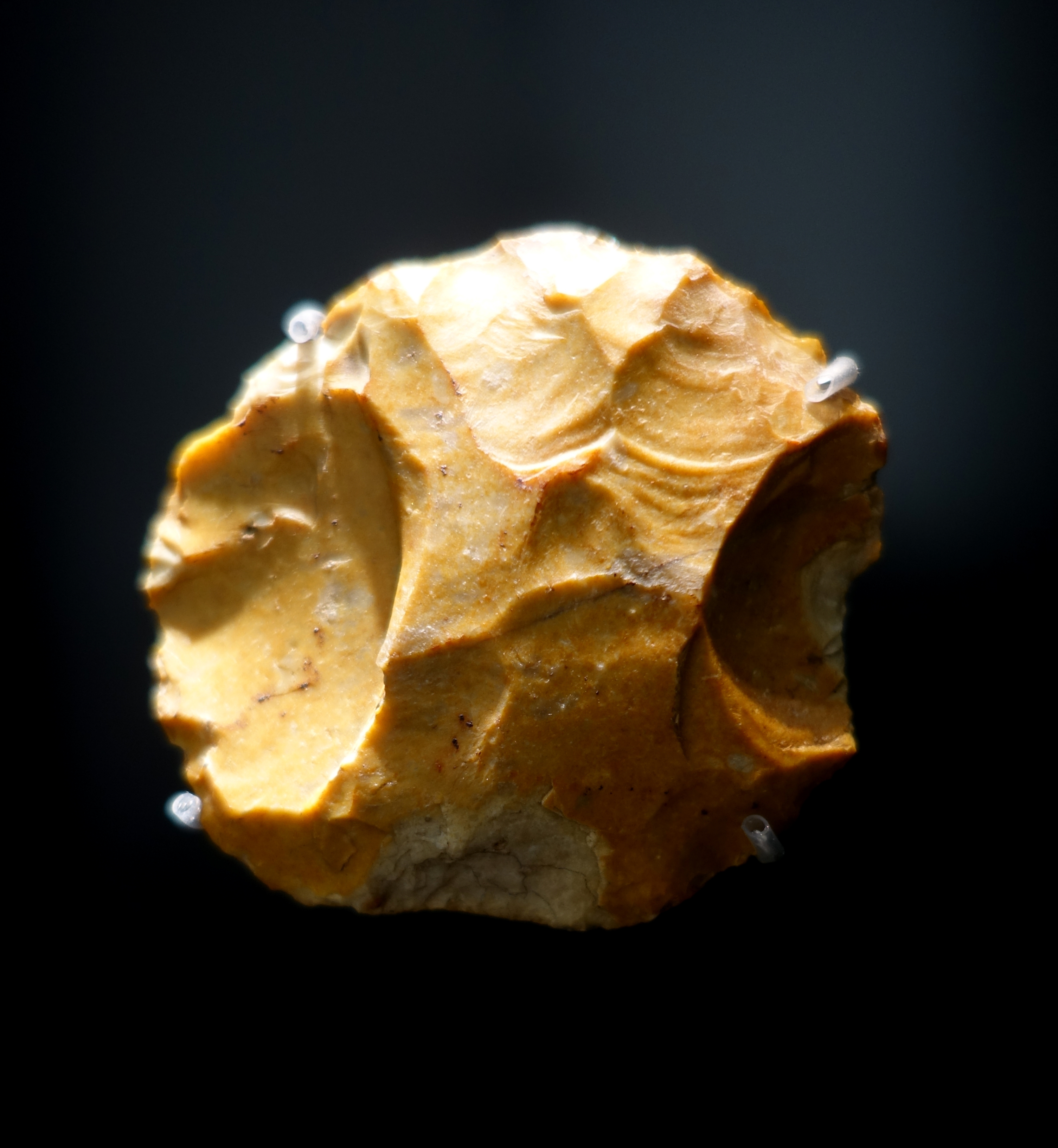
Neanderthals are associated with the Mousterian tool tradition, a sophisticated toolkit produced using the Levallois technique, a method of preparing a stone core to remove precisely shaped flakes. This technique required considerable planning and skill, involving multiple stages of preparation before the final tool was struck. Mousterian tools include scrapers for processing hides, points for hafting onto spears, and small flakes used for delicate cutting tasks.
Contrary to earlier assumptions, Neanderthals were not exclusively big-game hunters relying on mammoth and bison. Chemical analysis of their bones and dental calculus reveals a diverse diet that included marine resources, shellfish, mushrooms, pine nuts, and medicinal plants. At caves along the Mediterranean coast, researchers found evidence that Neanderthals harvested mussels, crabs, and seals, demonstrating dietary flexibility comparable to early Homo sapiens.
Interbreeding: The Neanderthal Legacy in Our DNA
Perhaps the most revolutionary discovery of the past two decades is that Neanderthals are not entirely extinct. In 2010, the Neanderthal Genome Project announced that modern non-African humans carry approximately 1 to 4 percent Neanderthal DNA. This genetic inheritance came from interbreeding events that occurred between 50,000 and 60,000 years ago, when small groups of Homo sapiens migrating out of Africa encountered resident Neanderthal populations in the Near East and Europe.
The implications are profound. Neanderthal genes found in modern humans affect a wide range of traits, from skin pigmentation and hair thickness to immune system function and susceptibility to certain diseases. Some Neanderthal gene variants in modern humans are associated with type 2 diabetes, Crohn's disease, lupus, and depression. Others, however, appear to have been beneficial, conferring resistance to pathogens that Homo sapiens had never encountered outside Africa. This suggests that interbreeding was not a random event but one that provided adaptive advantages to early modern humans navigating new environments.
The Vanishing
Why Neanderthals disappeared remains one of paleoanthropology's most debated questions. Several factors likely converged. Climate fluctuations at the end of the last Ice Age disrupted the ecosystems Neanderthals depended on. Competition from incoming Homo sapiens, who may have had more advanced projectile weapons and larger social networks, added pressure. Genetic analysis of late Neanderthal populations reveals inbreeding and declining genetic diversity, hallmarks of populations under stress.
It is also possible that Neanderthals were simply absorbed into the expanding Homo sapiens population through interbreeding, their distinctiveness gradually diluted over thousands of years. Rather than a dramatic extinction, their end may have been a slow fading, a merging rather than a replacement.
What Neanderthals Teach Us
Studying Neanderthals forces us to reconsider what it means to be human. They buried their dead, made tools, controlled fire, cared for the sick and elderly, created art, and interbred with us. They were not a less successful version of ourselves but a parallel human experiment, shaped by different pressures in a different world. Their DNA lives on in billions of people today, a quiet reminder that the line between "us" and "them" has always been thinner than we imagined.
The story of the Neanderthals echoes a theme found throughout the history of life on Earth: survival is never guaranteed, even for the most capable species. From Triops enduring five mass extinctions to Neanderthals vanishing after 300,000 years of success, the fossil record reminds us that adaptation, luck, and circumstance are always at play. The Neanderthals are gone, but their legacy, written in our very genome, is anything but extinct.