Published August 25, 2026 by the Triops.me Editorial Team · Back to Articles
Plateosaurus: The First Giant Dinosaur
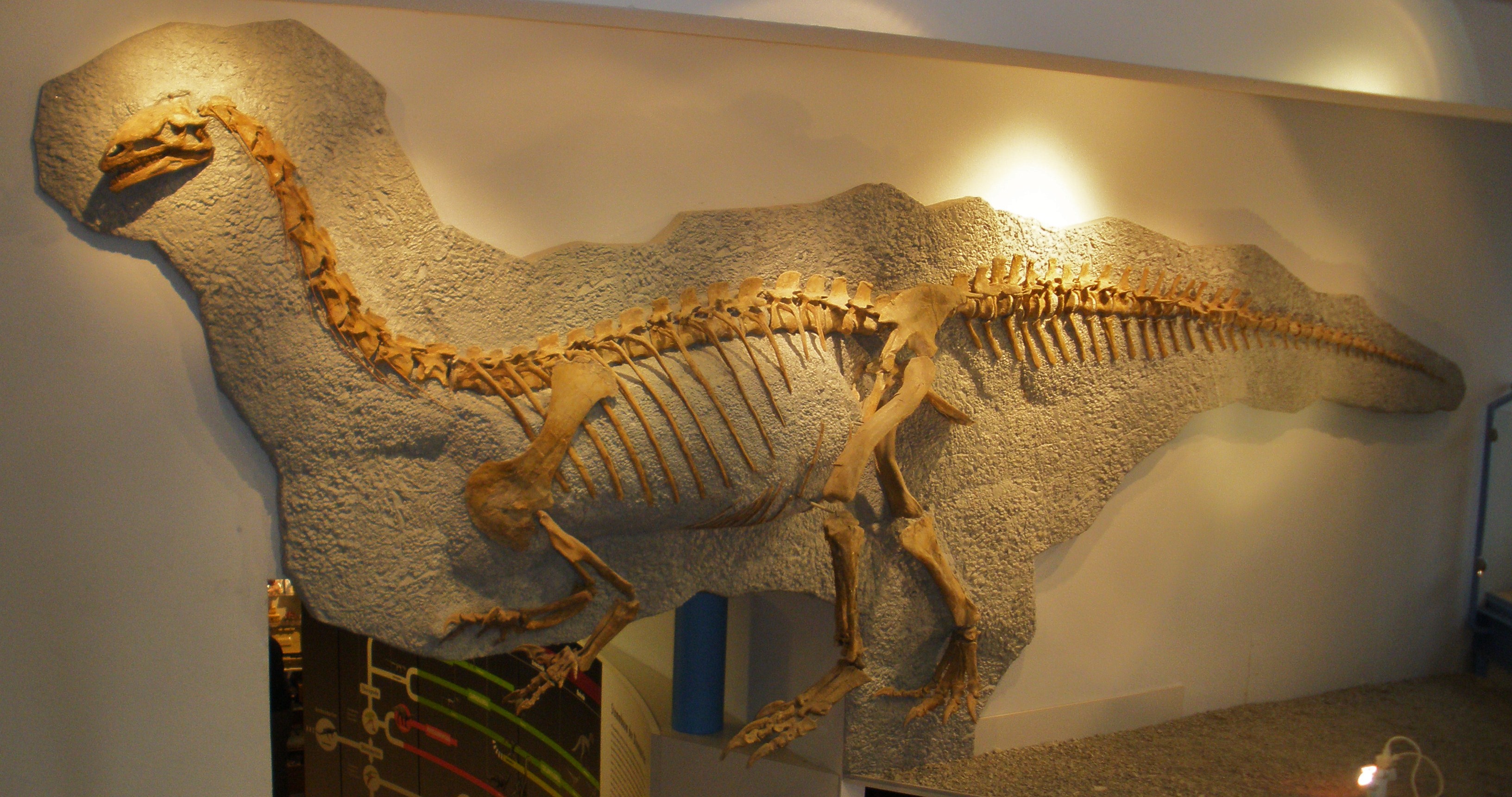
Long before Brachiosaurus stretched its neck toward the treetops, and millions of years before Diplodocus shook the ground with its thunderous footsteps, a quieter revolution was underway in Late Triassic Europe. Around 210 million years ago, a dinosaur called Plateosaurus was rewriting the rules of body size. It was the first herbivorous dinosaur to grow truly large, and in doing so, it proved that giant plant-eaters were not just possible but successful.
For paleontologists, Plateosaurus is a puzzle wrapped in a paradox. It is one of the most completely known early dinosaurs, with hundreds of specimens excavated across central Europe, yet it remains surprisingly underappreciated in popular culture. While Tyrannosaurus and Triceratops dominate museum gift shops, Plateosaurus quietly holds the distinction of being the animal that first demonstrated dinosaurs could become giants.
A Giant Before Giants
Plateosaurus engelhardti, the type species, was named in 1837 by the German paleontologist Hermann von Meyer, making it one of the earliest dinosaurs formally described. The name means "broad lizard," a reference to its unusually wide skull and robust build compared to other early dinosaurs. Adults could reach lengths of 6 to 10 meters (20 to 33 feet) and weigh between 4 and 6 metric tonnes, making them roughly the size of a modern African elephant.
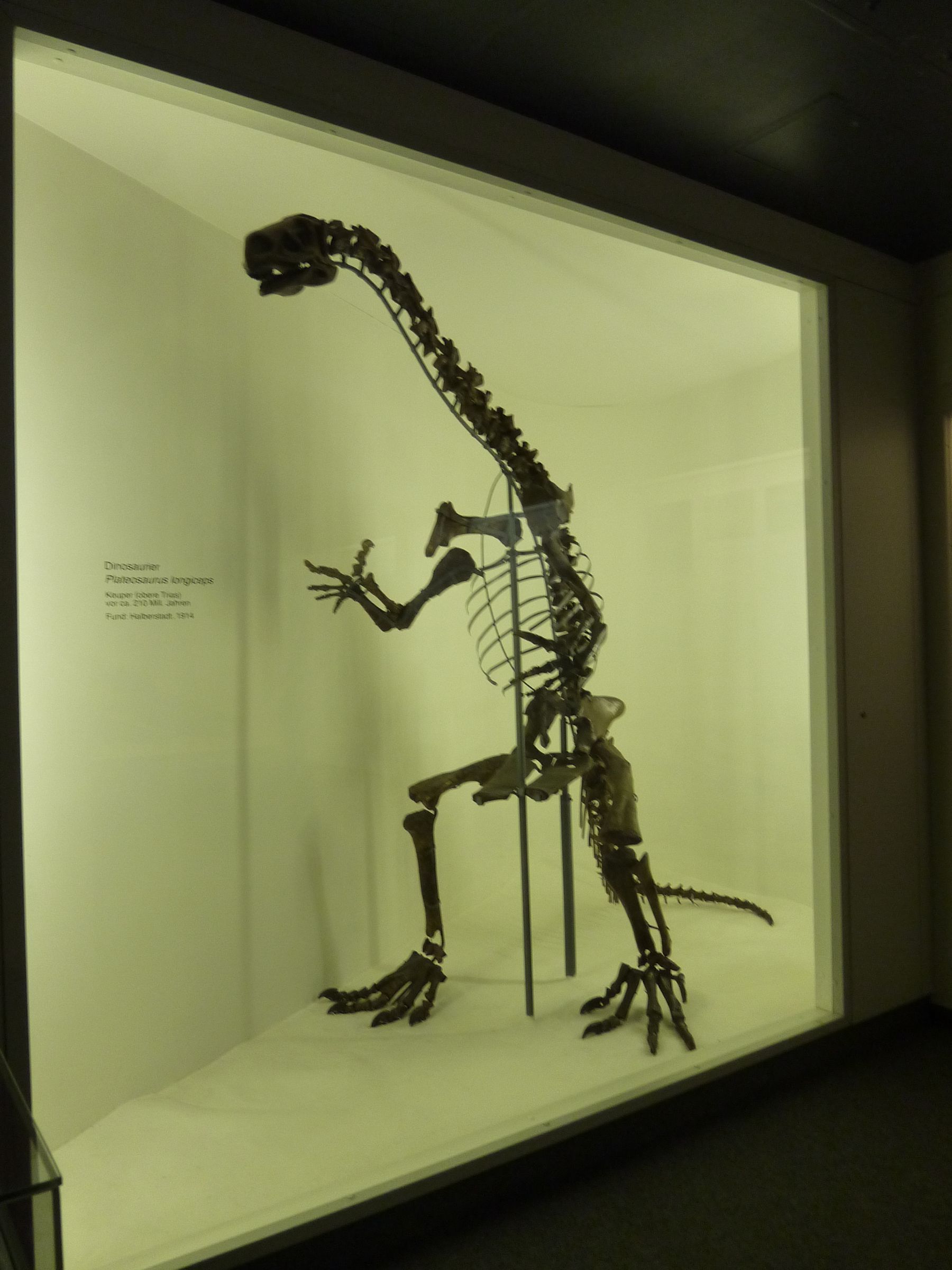
What made Plateosaurus remarkable was not just its size but when it achieved it. During the Late Triassic, most dinosaurs were still small, bipedal predators no larger than a large dog. The sauropods, the group that would later produce the largest land animals ever, were only just beginning to evolve. Plateosaurus was ahead of its time, demonstrating that herbivorous body plans could scale up to enormous sizes millions of years before the age of sauropod dominance.
Built for Browsing
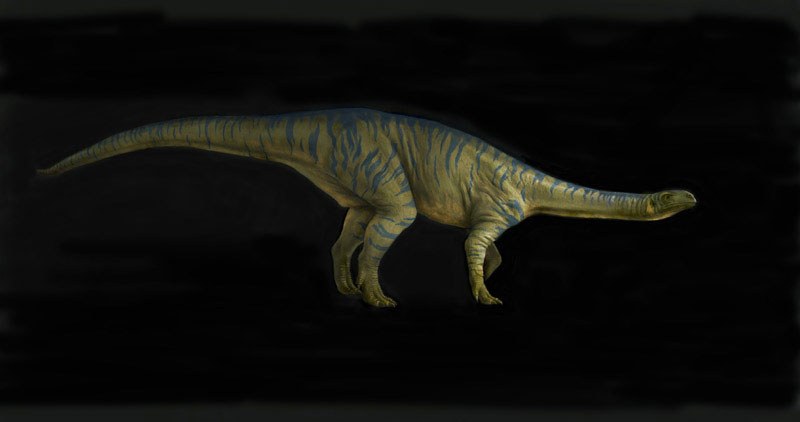
Plateosaurus was a prosauropod, a group of early dinosaurs that are considered ancestral to the true sauropods. Its body was a blend of primitive and advanced features. It walked primarily on two legs but could drop to all fours when needed, a kind of facultative quadrupedalism that allowed it to browse at different heights depending on the vegetation available.
Its neck was long and flexible, tipped with a small, wedge-shaped head lined with leaf-shaped teeth. These teeth were ideal for cropping soft vegetation, ferns, cycads, and conifers that carpeted the Late Triassic floodplains. Unlike the later sauropods, which evolved peg-like teeth for stripping branches, Plateosaurus still retained more generalized chewing mechanics, suggesting it was an experimental stage in the evolution of giant herbivory.
Its hands were equipped with a large, curved thumb claw, a feature shared with many early dinosaurs. The exact function of this claw has been debated for decades. Some researchers have proposed it was used for digging up roots or stripping bark, while others suggest it served a defensive purpose against the small but aggressive predators of its environment. In either case, it is a reminder that even the first giant dinosaurs were not passive giants but active, resourceful animals.
The Trossingen Bone Bed
One of the most extraordinary discoveries related to Plateosaurus is the Trossingen bone bed in southwestern Germany. Excavated over more than a century, this site has yielded the remains of at least 70 to 80 individual Plateosaurus specimens, making it one of the densest concentrations of early dinosaur fossils ever found.
The bone bed has fueled a long-running debate about Plateosaurus behavior. The sheer number of individuals preserved together has led some researchers to argue that Plateosaurus was a herd animal, living and moving in groups for protection and social bonding. Others point out that the bones show signs of death in a muddy, waterlogged environment, suggesting a catastrophic flood event that trapped and killed a gathering of animals rather than evidence of social grouping.
More recent studies using bone histology, the microscopic analysis of bone growth patterns, have added nuance to the picture. Analysis of growth rings in Plateosaurus bones suggests that these animals grew rapidly during their early years and then slowed dramatically once they reached adult size, a pattern seen in many modern reptiles. This indeterminate growth strategy may have allowed Plateosaurus to survive in environments with fluctuating food availability, growing quickly when times were good and pausing when resources were scarce.
A European Success Story
While many famous dinosaurs are associated with North America or Asia, Plateosaurus was a thoroughly European animal. Fossils have been found in Germany, France, Switzerland, and Poland, mapping onto the ancient supercontinent of Pangaea when central Europe was a vast, semi-arid landscape crossed by rivers and dotted with conifer forests.
This geographic range is significant because it tells us something about the ecology of the Late Triassic. Plateosaurus was not a rare, localized animal but a widespread, successful genus that thrived across a broad swath of the ancient world. Its fossils are found in what are now sandstone deposits, suggesting it lived in environments with seasonal flooding, much like the ephemeral pools where modern Triops survive today.
Paving the Way for Sauropods
The story of Plateosaurus is ultimately a story about evolutionary possibility. By proving that herbivorous dinosaurs could grow to massive sizes, it opened an ecological door that the sauropods would walk through just 15 million years later. The first true sauropods, like Vulcanodon and Tazoudasaurus, appeared in the Early Jurassic, and within another 50 million years, their descendants would include the largest land animals in Earth's history.
Without Plateosaurus, the age of sauropods might never have happened. The experiment had to be tried first, the ecological niche had to be proven viable, and the body plan had to be tested against real-world conditions. Plateosaurus did all of this, and it did it while the Triassic world was still recovering from the Permian-Triassic extinction, the worst mass extinction in Earth's history.
An Underrated Pioneer
Today, Plateosaurus stands as one of paleontology's most important but underappreciated animals. It was not the first dinosaur, nor the largest, nor the most fearsome. But it was the first to prove that dinosaurs could become giants, and in doing so, it set the stage for 150 million years of sauropod dominance. Every time you stand beneath the towering skeleton of a Brachiosaurus in a museum, you are looking at the legacy of an animal that first dared to grow large in a world that was still figuring out what dinosaurs could become.
The next time you find yourself marveling at a dinosaur exhibit, spare a thought for the quiet pioneer of the Triassic. Plateosaurus may never make it onto a movie poster, but it changed the rules of the game for every dinosaur that came after it.