Published 2026-09-12 · by the Triops.me Editorial Team · Back to Articles
The Platypus: The Mammal That Never Gave Up Eggs
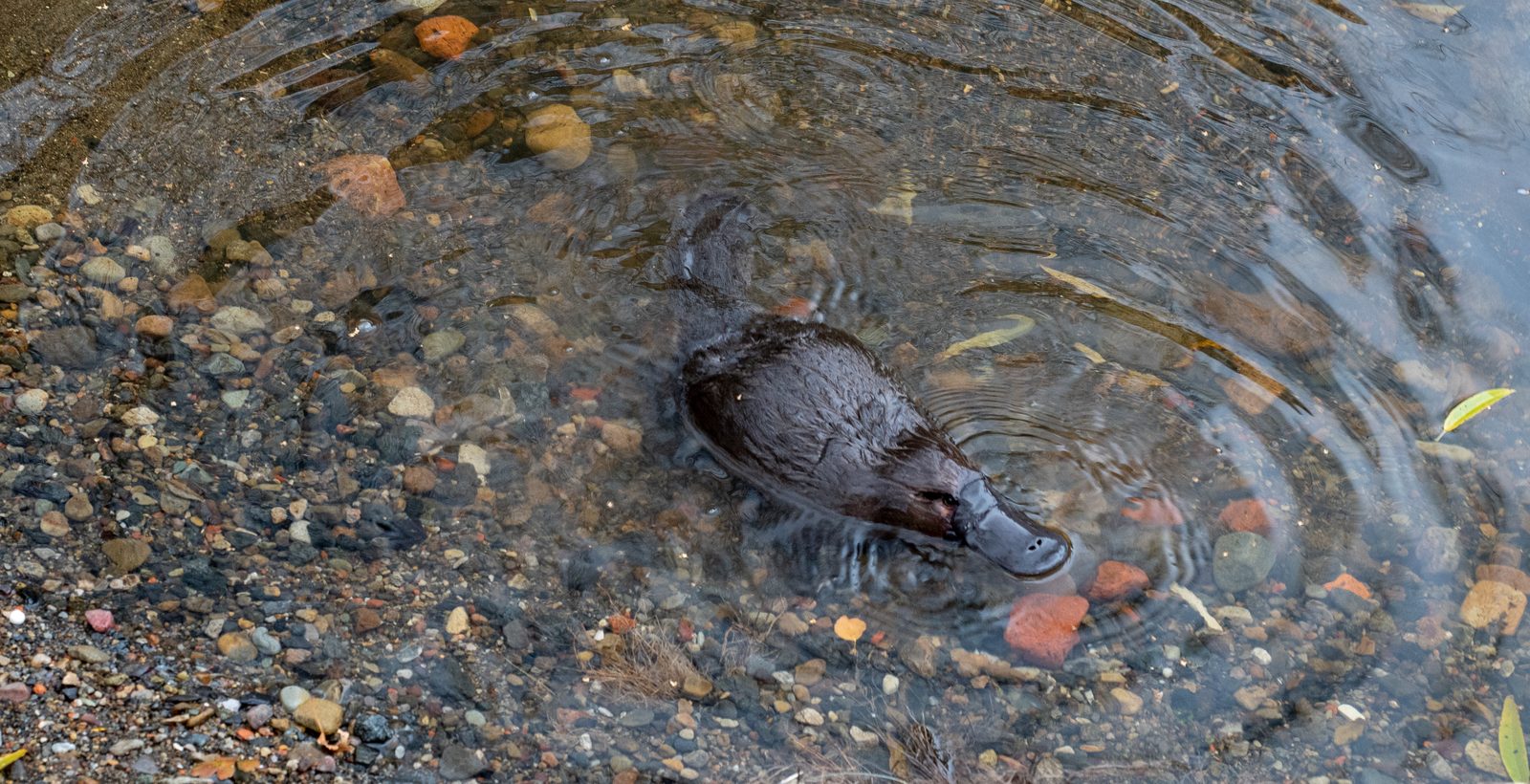
When the first platypus specimen reached Europe in 1799, the scientist who examined it genuinely suspected a fraud. George Shaw, assistant keeper of natural history at the British Museum, picked apart the dried pelt with his fingers, looking for stitches. A duck's bill stitched onto the body of an otter seemed like exactly the kind of joke a colonial prankster would send home from New Holland. He found no seams. The animal was real, and it went on to become one of the most inconvenient creatures in the history of biology.
We celebrate animals on this site that solved survival the way Triops does: hard, fast, and in huge numbers. The platypus solved survival the opposite way. It is a mammal, one of the most adaptable groups ever to walk the Earth, and yet it held onto features that mammals abandoned more than 150 million years ago. It lays eggs. It kept them, and thrived.
A Mammal, by Every Test Except the Obvious One
By the late 1800s, biologists faced a problem. The platypus had fur, produced milk, and was warm-blooded, all the hallmarks of a mammal. But rumors from Australian settlers insisted it laid eggs. That claim struck science as absurd. Then in 1884, the Scottish zoologist William Caldwell, working in Queensland with a small army of Indigenous egg collectors, shot a platypus that was about to lay an egg, and another that had just laid one. He famously telegraphed his finding back to the British Association meeting in Montreal in four words: "Monotremes oviparous, ovum meroblastic."
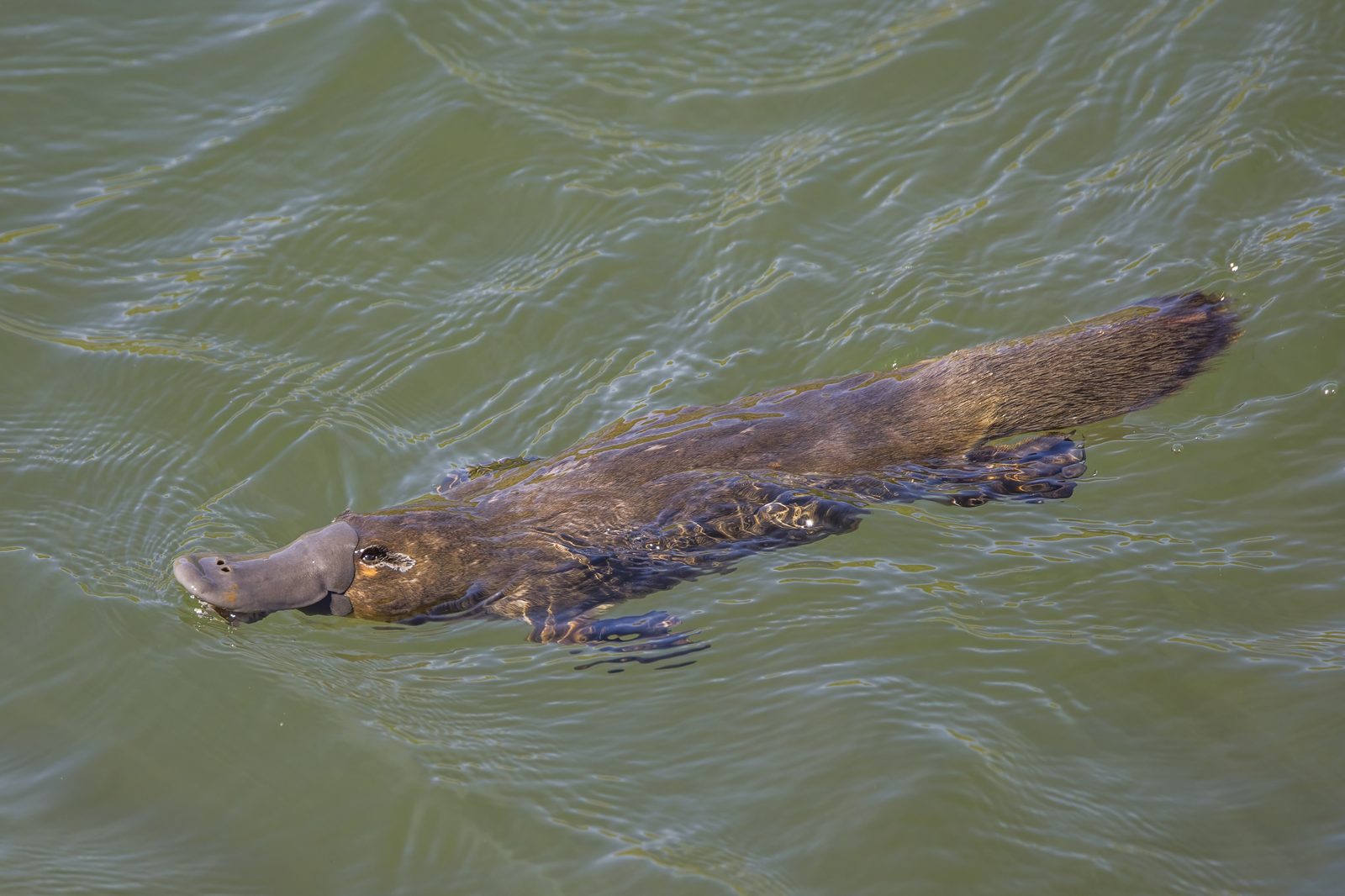
Translated, this meant platypuses are egg-layers, and their eggs resemble reptile eggs more than bird eggs. The platypus was a mammal that had simply never given up its ancestor's reproductive strategy. Its lineage, the monotremes, split from the ancestors of placental mammals and marsupials somewhere between 160 and 190 million years ago, in the Jurassic. Today the entire group survives in just five species: the platypus and four echidnas, all confined to Australia and New Guinea.
That makes the platypus roughly as distant from humans as mammals can be while still being mammals. Its genome, fully sequenced in 2008 and refined since, confirmed what the body already suggested: a strange mosaic of reptile, bird, and mammal genes, many of them ancient holdovers.
A Body Assembled From Spare Parts
The egg is only the beginning of the oddity. Consider the full inventory. Males carry venomous spurs on their hind legs, making the platypus one of the very few venomous mammals on Earth. The sting will not kill a human, but it is said to cause pain that morphine does not touch. The bill, often compared to a duck's, is actually a soft, flexible sensory organ covered in electroreceptors. The platypus hunts with its eyes, ears, and nostrils sealed shut underwater, detecting the tiny electrical pulses generated by the muscle contractions of shrimp and insect larvae. No other mammal can do this.
Then there is the milk. Platypuses have no nipples. Milk oozes through the skin of the mother's belly, where the young lap it up from grooves in her fur. The milk itself contains a protein with antimicrobial properties so unusual that researchers have studied it as a possible weapon against antibiotic-resistant bacteria. And if that were not enough, a 2020 study revealed that platypus fur glows green-blue under ultraviolet light, a trait shared so far with only a handful of other mammals, and nobody is entirely sure why.
Reproduction, the Old Way
In spring, the female digs a nesting burrow up to 20 meters long, plugs the entrance to keep it dark and humid, and lays one to three leathery-shelled eggs, each about the size of a marble. She curls around them and incubates them for about ten days. The hatchlings emerge blind, hairless, and tiny, more like a reptile hatchling than anything you would expect from a mammal. She then nurses them in the burrow for three to four months before they venture out.
It is worth pausing on how strange this is in context. Mammals conquered the egg problem in stages. Early relatives laid eggs. Some evolved the amniotic shell, the evolutionary breakthrough we covered in our article on the shelled egg. Therian mammals, our branch, later took development entirely inside the body, and the shell was lost. The platypus represents a living snapshot of the road not taken, a mammal that stopped evolving reproduction right around the time the earliest mammals were still sorting out the basics.
What the Fossils Say
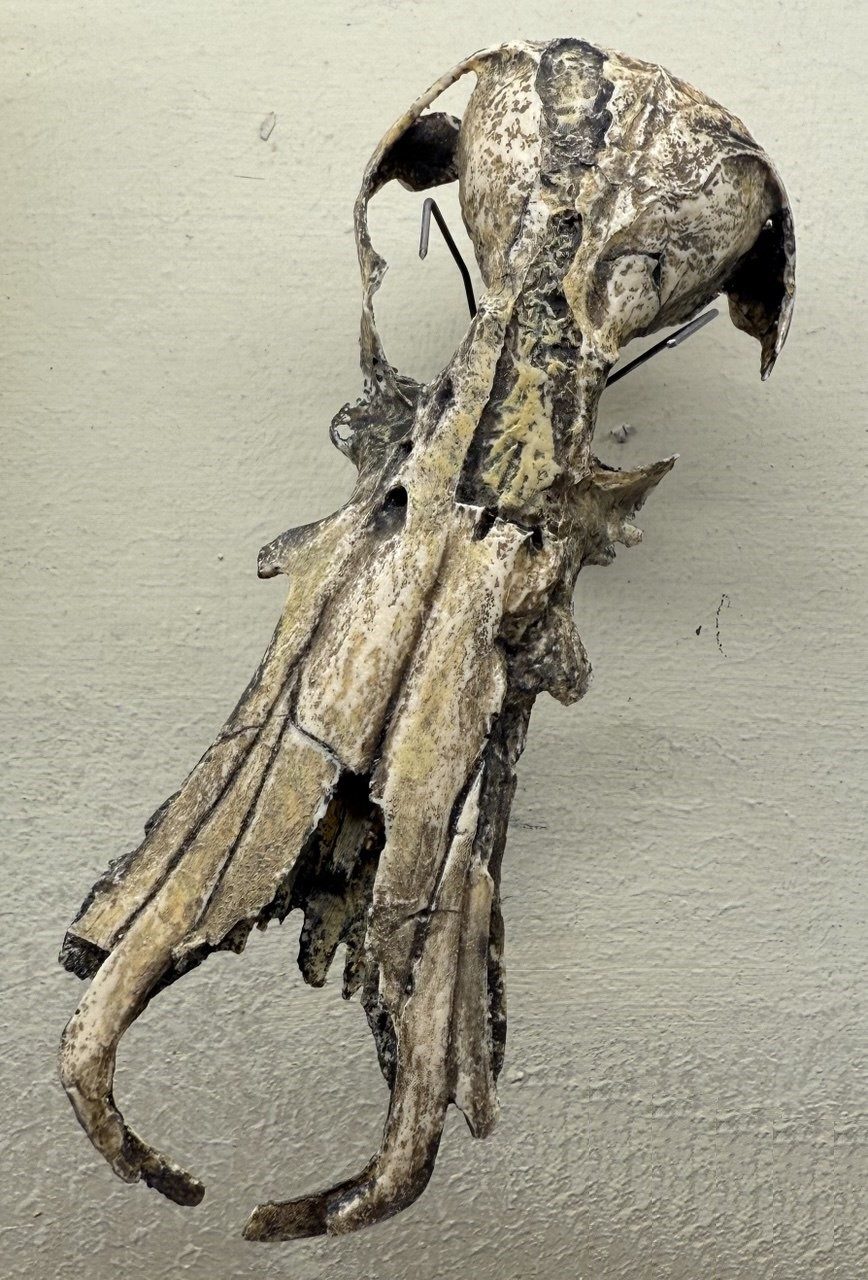
The fossil record of monotremes is thin, because their delicate bones fossilize poorly and they lived in environments that destroy them. But what we do have is tantalizing. Obdurodon, an extinct relative from the Miocene of Australia, grew to perhaps 60 centimeters, substantially larger than a modern platypus, and still had teeth. Its skull, complete with the same electroreceptive bill channels, shows that the platypus body plan is at least 15 million years old, and probably far older. In 2024, a jaw fragment called Opalios splendens, found in opal fields in New South Wales, pushed known monotreme diversity back to the early Cretaceous, over 100 million years ago, and revealed that several distinct monotreme lineages once coexisted.
Compare that to Triops, whose body plan has been recognizable for around 200 million years. The platypus is roughly half as old as a fossil form, but for a mammal, that is astonishing. Most modern mammal families are measured in the low millions of years. The platypus has kept the same general shape since the age of the dinosaurs.
Why Did It Survive When Its Cousins Did Not?
The answer is likely geography. For most of the last 100 million years, Australia has been an island drifting away from the rest of the world. Placental mammals arrived late and never achieved the diversity they reached on other continents. That isolation gave monotremes a long, quiet stretch of evolutionary breathing room, free from the competitive pressure that may have pushed egg-laying mammals to extinction elsewhere. When the climate turned drier and colder, monotremes retreated to rivers, streams, and forests where food remained steady year-round.
There is also the animal itself. The platypus is an aquatic predator with few natural enemies, an efficient hunter in a niche that changes slowly. Rivers and streams do not flash in and out of existence the way a Triops pool does. Where Triops wins by being flexible and fast, the platypus wins by finding a stable corner of the world and refusing to leave it. Both strategies work. Both are still working today.
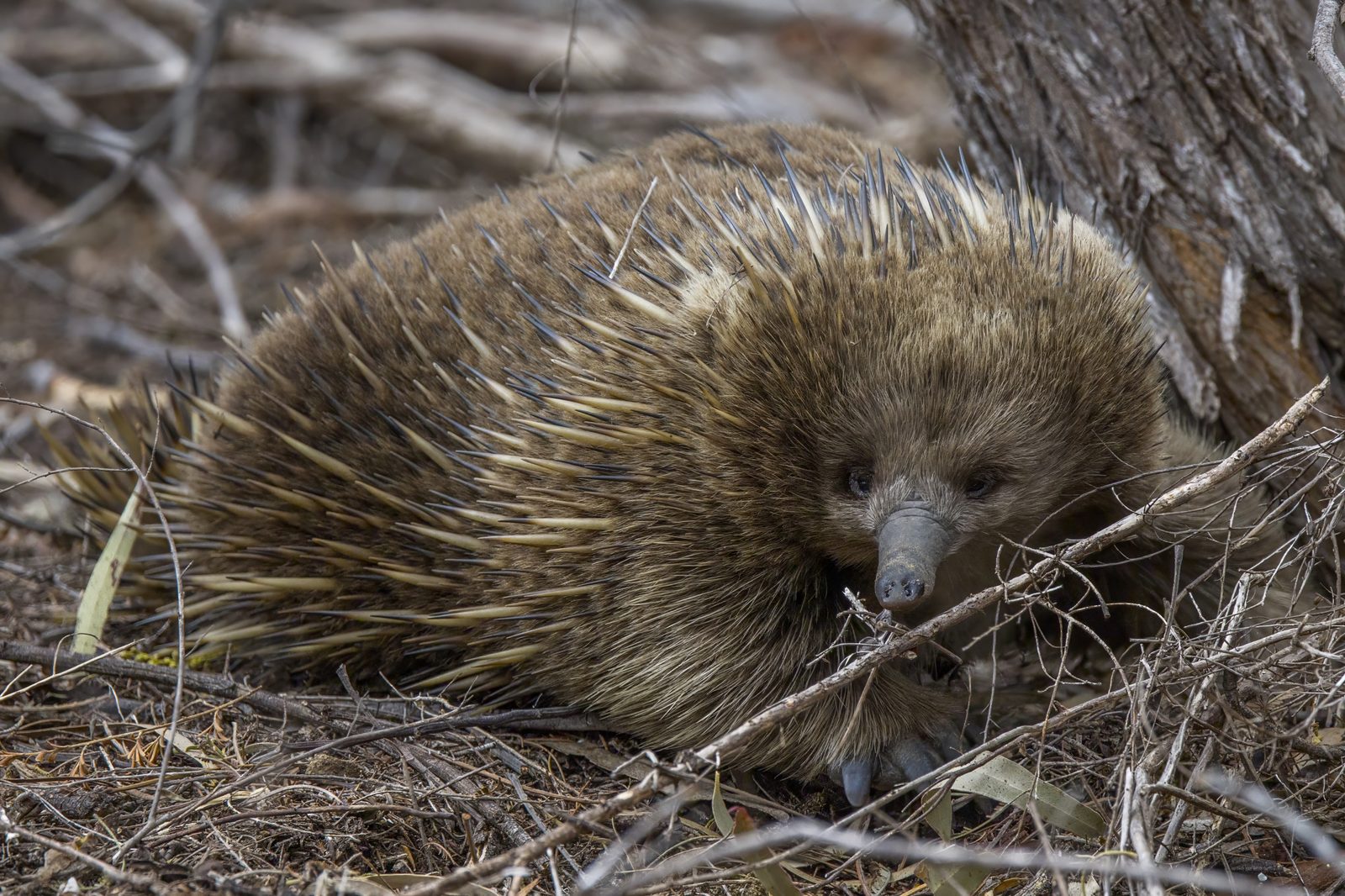
The platypus's only living relatives, the echidnas, took a different path again. They left the water, developed spines, and inverted some of the platypus's biology entirely. Their pouch is temporary, formed only during breeding season. Their young, called puggles, hatch from eggs but then live like marsupial joeys. Between the platypus and the echidna, the monotremes cover an astonishing range of solutions to the problem of being a mammal that still lays eggs.
A Survivor Worth Protecting
The platypus is not a relic in danger of vanishing, but it is no longer entirely safe either. Habitat loss, river regulation, droughts made worse by climate change, and historically extensive hunting for its fur have all taken their toll. Some populations in eastern Australia have already disappeared, and researchers warn the species could slip into vulnerability over the coming decades without active protection. It survived the extinction that killed the dinosaurs, the arrival of humans, and 200 years of scientific bewilderment. Whether it survives us at the pace we are now changing rivers is a different question.
For a site devoted to creatures that outlast the odds, the platypus earns its place easily. It is proof that survival is not always about speed or numbers or armor. Sometimes it is simply about refusing to abandon what already works, for 160 million years and counting.