Published 2026-10-07 · by the Triops.me Editorial Team · Back to Articles
Priapulid Worms: The Cambrian's Ambush Predators
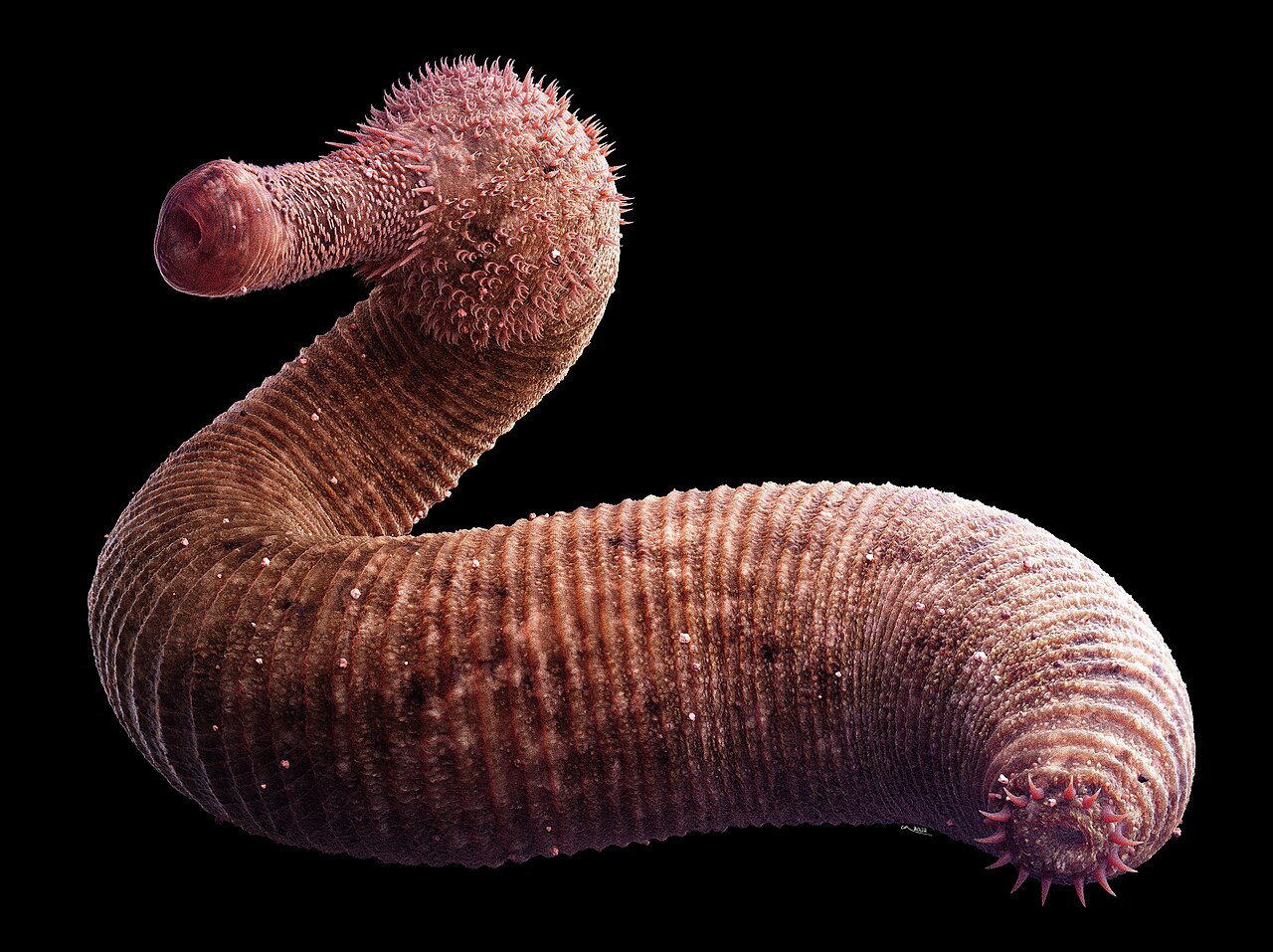
Poke around in the mud of a cold seabed today and you may strike it rich: a pale, fat worm with no segments at all, lying in a burrow it dug for itself. Disturb it and its front end turns inside out, blooming into a spiny crown that snaps shut on whatever it can reach. This is a priapulid, and it has been hunting this way for more than 500 million years.
Priapulida is a phylum of unsegmented marine worms, named after Priapus, the Greek god of fertility, because the body shape and the extensible proboscis left little to the imagination of the taxonomist who named them. In the Cambrian they were the worms in charge of the sea floor. Now 22 species survive, most of them buried in mud so deep or so cold that hardly anyone sees them. Their story is a good lesson in what it means to be a living fossil: not a creature frozen in time, but a way of eating that never needed fixing.
A Body Built for Ambush
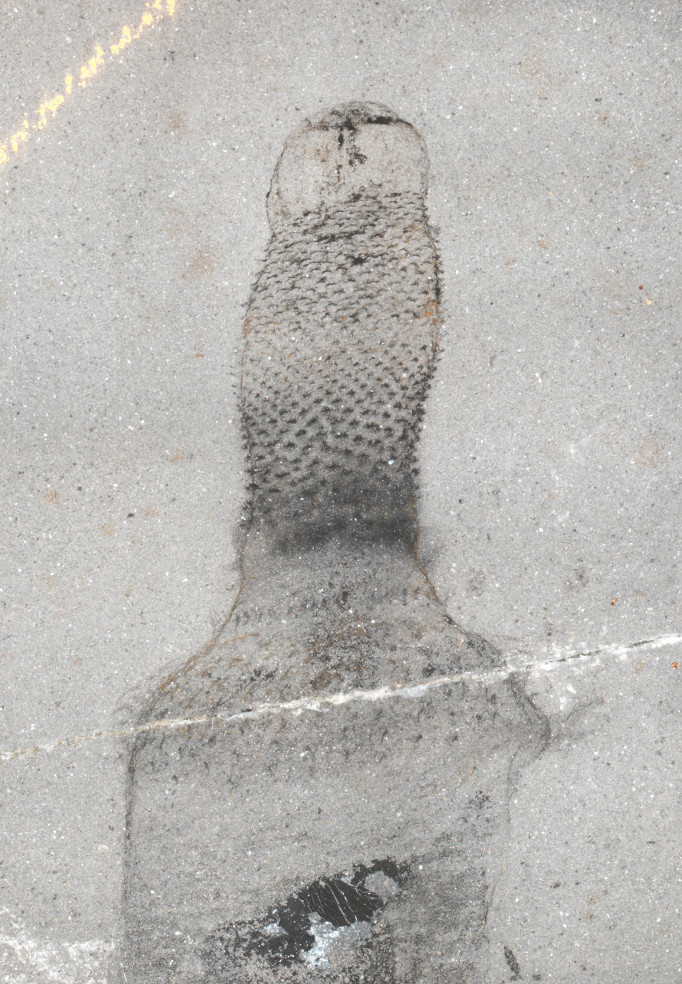
Priapulids are cylindrical, unsegmented tubes of muscle, anywhere from about 0.2 centimetres to 39 centimetres long. The body comes in two parts. At the front is the introvert, a section that can be thrust forward and turned completely inside out. At its tip sits the mouth, ringed with teeth, and behind the mouth sit rows of hard spines called scalids. Pull the introvert back in and it becomes a retracted pocket. Shove it out and it is a grasping tool armed like a harpoon.
Behind the introvert runs the trunk, marked by ring-like folds and, near the rear, a set of hooks that anchor the animal while it pulls prey loose. Food is swallowed into a muscular gizzard that crushes shells before digestion. Nothing here is delicate. This is a machine for grabbing slow animals out of the mud and hauling them into a hole.
Like all ecdysozoans, priapulids grow by shedding their cuticle. That single fact places them in the same great superphylum as insects, crabs, nematodes and Triops, the animals that molt their skin to get bigger. Their closest living relatives are probably the kinorhynchs and loricifers, and together the three form the Scalidophora, a group named after the spines on that introvert. Even the mouth design looks ancestral: the stem arthropod Pambdelurion had a mouth identical to a priapulid's, which suggests both lines inherited it from one common ancestor that lived before arthropods and worms went their separate ways.
Ottoia, the Hunter Under the Burgess Shale
The best evidence of what these worms could do is Ottoia prolifica, from the Burgess Shale of British Columbia, buried 508 million years ago. Average specimens reach about 8 centimetres, and they are common: more than a thousand sit in a single museum collection, and 677 of them were counted in one fossil bed, about 1.3 percent of that whole community. Soft-bodied animals rarely fossilise at all, so a worm this abundant is a rare gift.
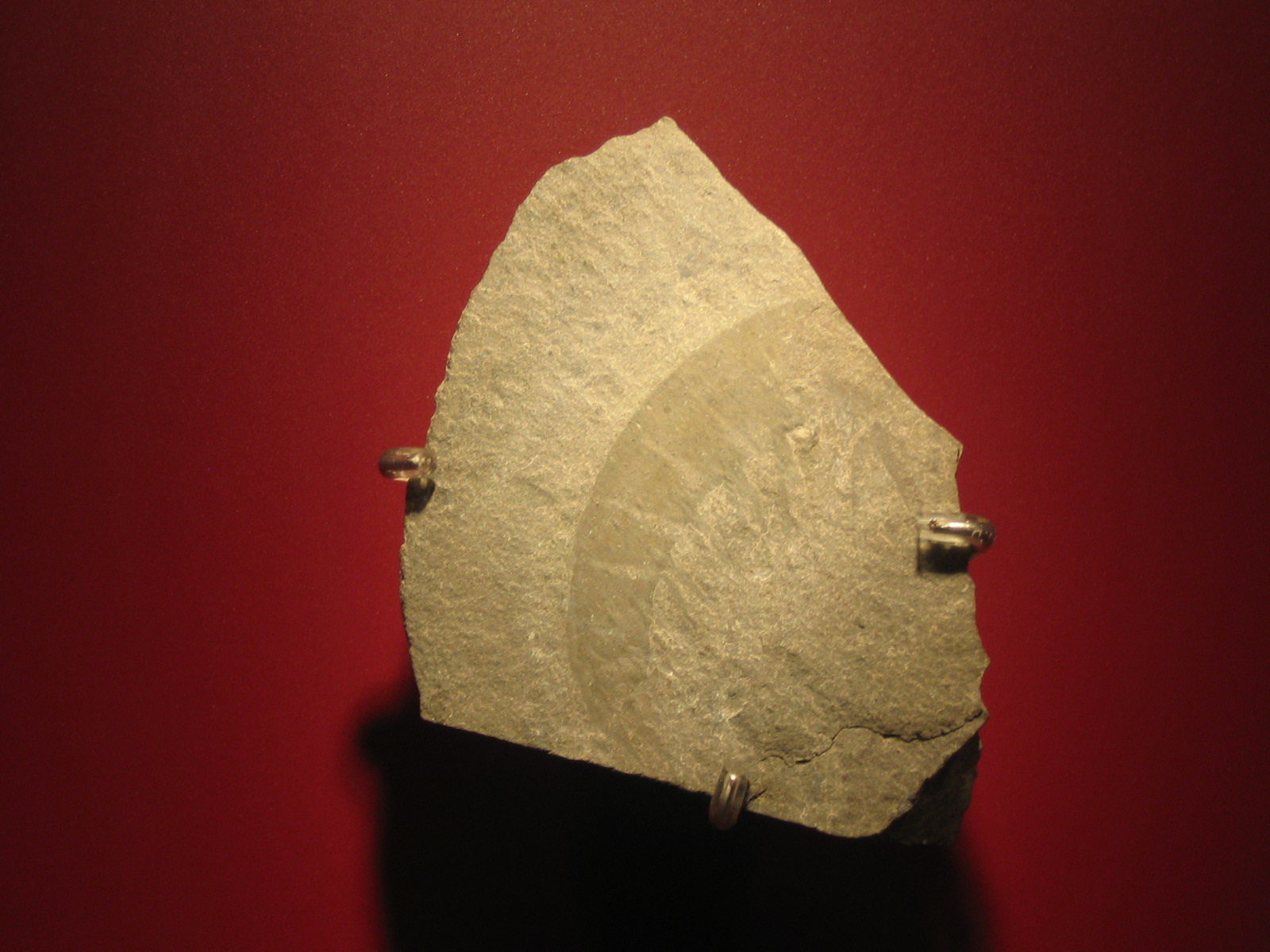
Ottoia lived in a U-shaped burrow beneath the sediment. From that shelter it could extend its proboscis into the water above and feel around for food, then retract with the meal in tow. Its gut tells us what worked: swallowed hyolithids, shelled animals vaguely like molluscs, taken head-first, plus traces of other worms. Cannibalism shows up too, which fits modern priapulids, where eating your own kind is routine. It also scavenged, with remains of dead arthropods such as Sidneyia found in the same gut contents. Alongside it in the mud lived the giant Anomalocaris and the trilobites, but Ottoia hunted one level down, in the dark, where armour mattered less than reach.
The Burrow That Starts the Cambrian
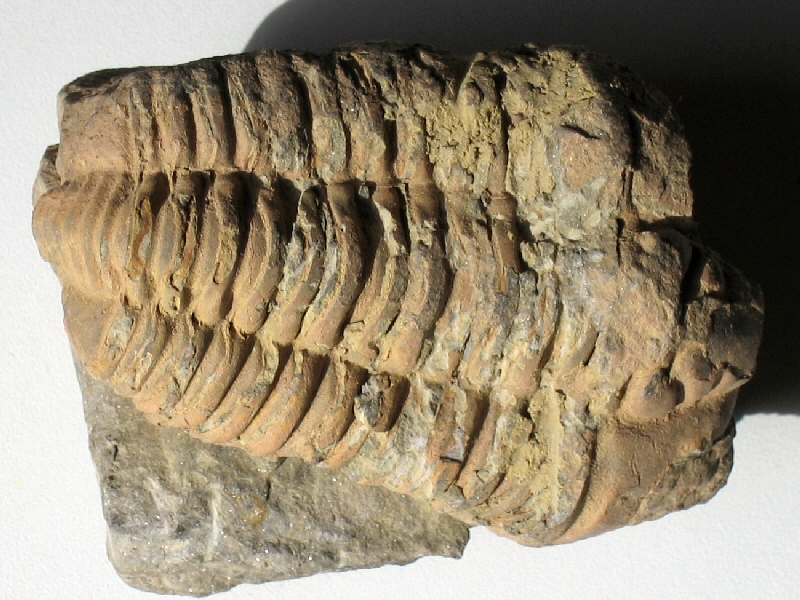
Here is the detail that elevates priapulids from curiosity to landmark. The official line marking the base of the Cambrian period, the boundary drawn in rock all around the world, is the first appearance of a trace fossil called Treptichnus pedum. Those burrows are morphologically almost identical to the burrows of modern priapulids. The start of the age of trilobites is, in effect, drawn with a worm's trail.
The teeth help too. Priapulid spines are made of durable material that survives as tiny carbonaceous microfossils scattered through Cambrian sediments, even when the animal itself vanished. Researchers can track the group, and sometimes individual species, across entire ancient oceans by counting mouthparts. The worms are soft; their bite marks are not.
From Sea-Floor Boss to Deep-Sea Rarity
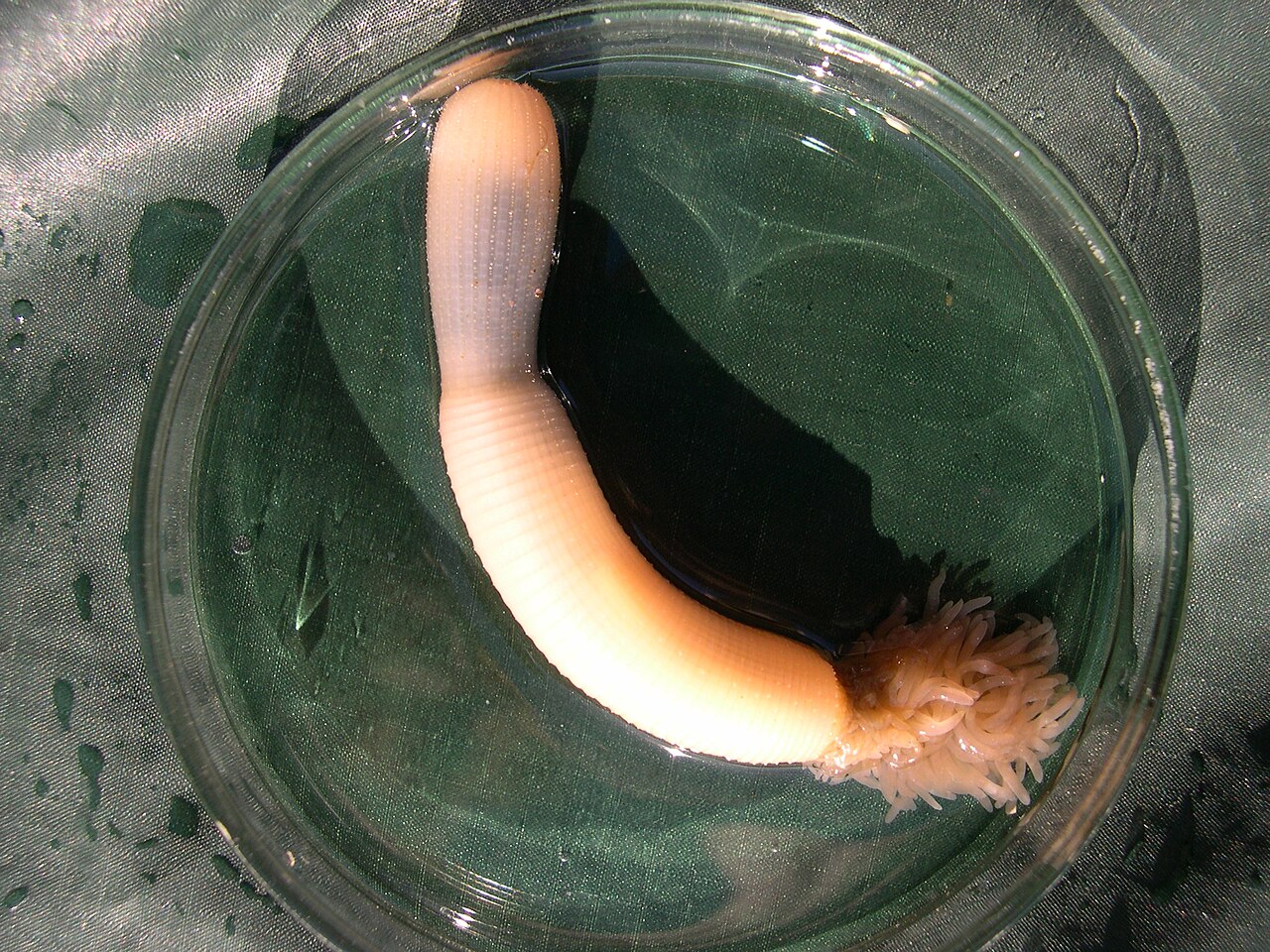
The Cambrian was the high-water mark. After it, priapulid diversity slid as arthropods, and later fish, filled the seas. Recognisable modern priapulids only show up in the fossil record from the Carboniferous onward, and the phylum never recovered its old empire. What is left is a quiet, successful minority: 22 known species today, about half of them meiobenthic, meaning sand-grain sized animals living between sediment grains.
They still cover a surprising range. Halicryptus spinulosus prefers shallow brackish water and tolerates conditions most animals cannot: no oxygen, hydrogen sulfide, and swings in salinity. Priapulus abyssorum has been collected at depths of 3,000 to 8,000 metres. Where they like a place, they pile up: in one Alaskan bay, 85 adult Priapulus caudatus per square metre were recorded, with larvae reaching 58,000 per square metre. Against that, their development is painfully slow. The first cell division starts about 15 hours after fertilisation, and larvae hatch 15 to 20 days later. They eat slow-moving invertebrates such as polychaete worms, and they eat each other.
Why Triops Fans Should Care
Triops and priapulids are cousins in the loose but meaningful sense: both belong to Ecdysozoa, the molting animals. Both grow by shedding a cuticle, both are built around an ancient blueprint of muscles, gut and armor that predates the dinosaurs by hundreds of millions of years. One branch became the armored, three-eyed tank of the temporary pond. The other stayed a worm in the mud, because the mud strategy kept working.
That is the real lesson of the priapulid. There is no prize for changing. A body plan that grips, pulls and burrows was good enough to outlast the Cambrian explosion, the fall of the trilobites, and every mass extinction since. The next time you hatch a jar of Triops eggs, remember that somewhere under the Arctic a priapulid is still turning its face inside out to catch dinner, exactly as its ancestors did half a billion years ago.