Published 2026-08-30 by the Triops.me Editorial Team · Back to Articles
Proganochelys: The First Turtle
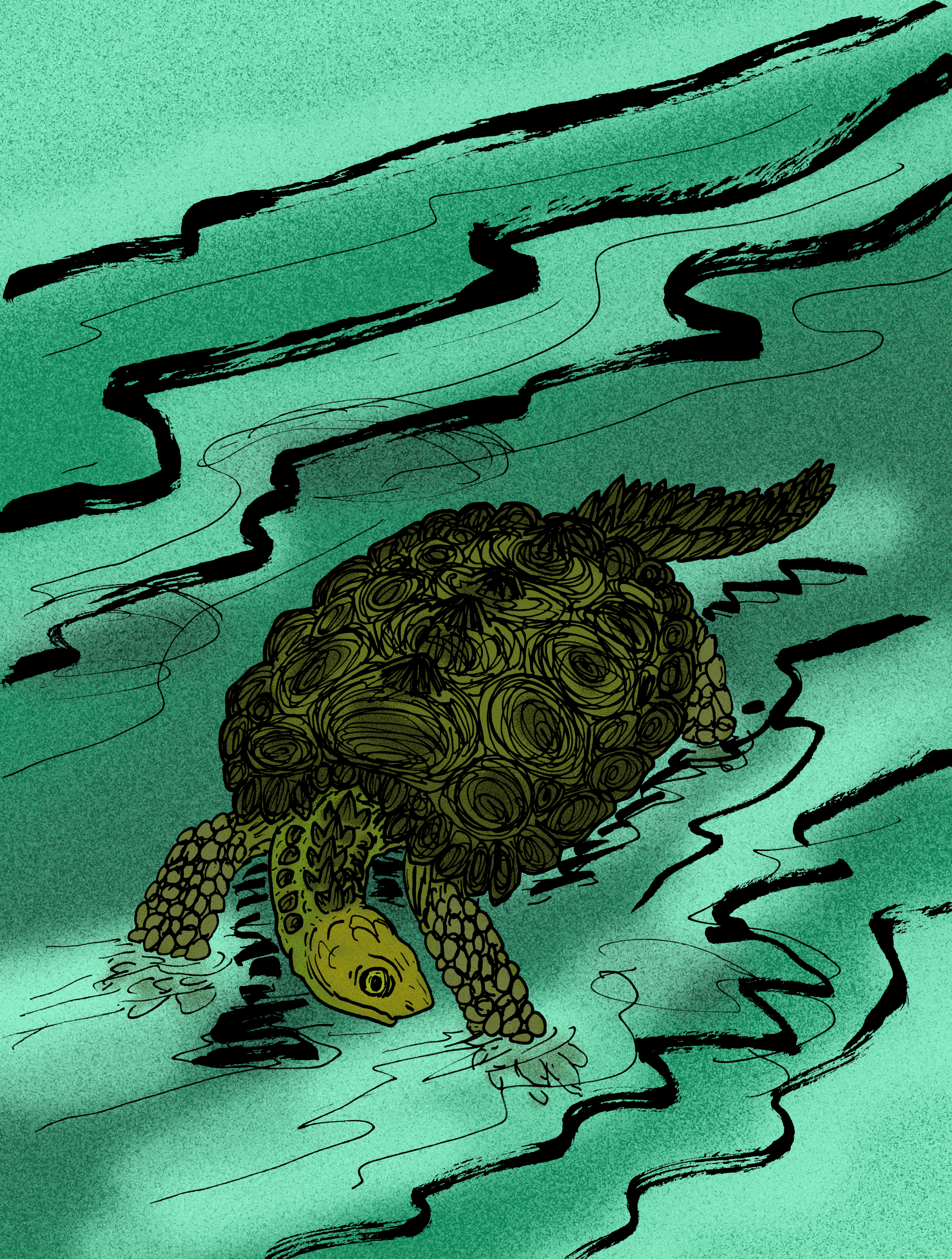
Imagine a creature that looks almost exactly like a modern turtle, but with teeth in its jaws and a spiky tail it could not pull inside its shell. That creature was Proganochelys quenstedtii, the oldest known turtle in the fossil record, and it lived roughly 210 million years ago during the Late Triassic period. While Triops had already been wandering shallow pools for tens of millions of years by then, Proganochelys was just beginning the turtle lineage that would eventually produce more than 350 living species today.
The first fossils of Proganochelys were discovered in 1887 near Stuttgart in what is now southwestern Germany. The name, coined by German paleontologist Hermann von Meyer, translates roughly to "before" or "earlier turtle" (from the Greek pro meaning before, and ganos meaning joy or brightness, referring to the shell). More complete specimens were unearthed at the Kupferzell site in the 1980s and 1990s, giving paleontologists a remarkably detailed picture of what this animal actually looked like.
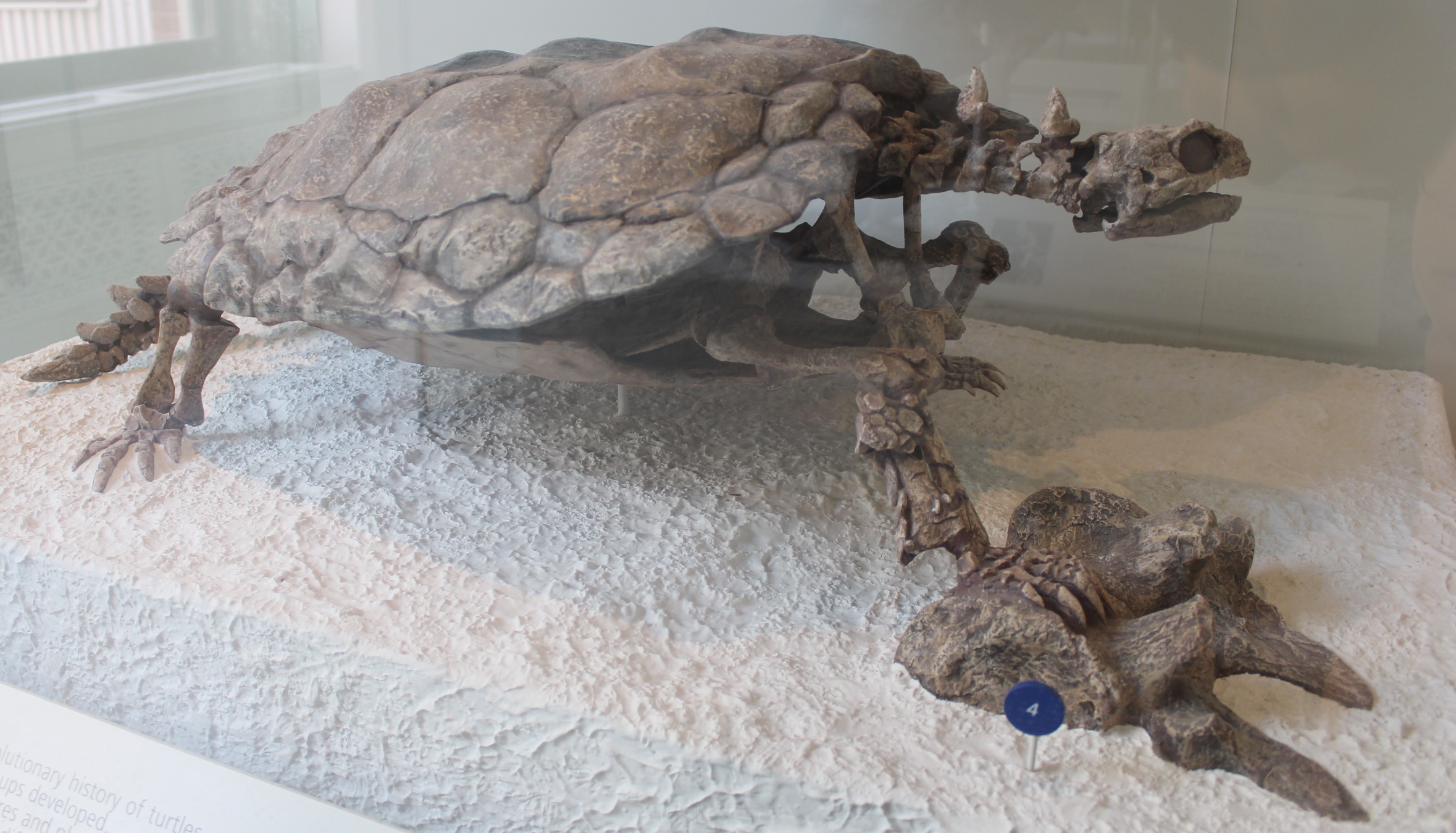
At around 30 centimeters (roughly one foot) in length, Proganochelys was modest in size, about comparable to a large modern box turtle. Its shell, or carapace, was already a fully formed structure made of the same types of bony plates you see in living turtles. The plastron (the ventral shell) was also well developed. In fact, if you handed a fossilized Proganochelys shell to someone unfamiliar with paleontology, they would almost certainly identify it as a turtle shell. The fundamental body plan was established from the very beginning.
But Proganochelys had several features that no living turtle retains. Most strikingly, it had small teeth on the palate (the roof of its mouth) and along the lower jaw. Modern turtles have completely lost their teeth, replacing them with a sharp, keratinous beak. The presence of these teeth in the earliest known turtle suggests that the turtle beak evolved from a toothed ancestor, not the other way around.
Another key difference: Proganochelys could not retract its head into its shell. Every child knows that turtles can pull their heads and limbs inside their armor for protection, but the earliest turtle had no such ability. Its neck was too large and rigid to fit within the shell opening. Instead, it relied on a different defense strategy. The tail was armed with large, backward-pointing spikes, and the animal likely hunkered down against the ground, presenting a dome of bone to any predator foolish enough to bite.
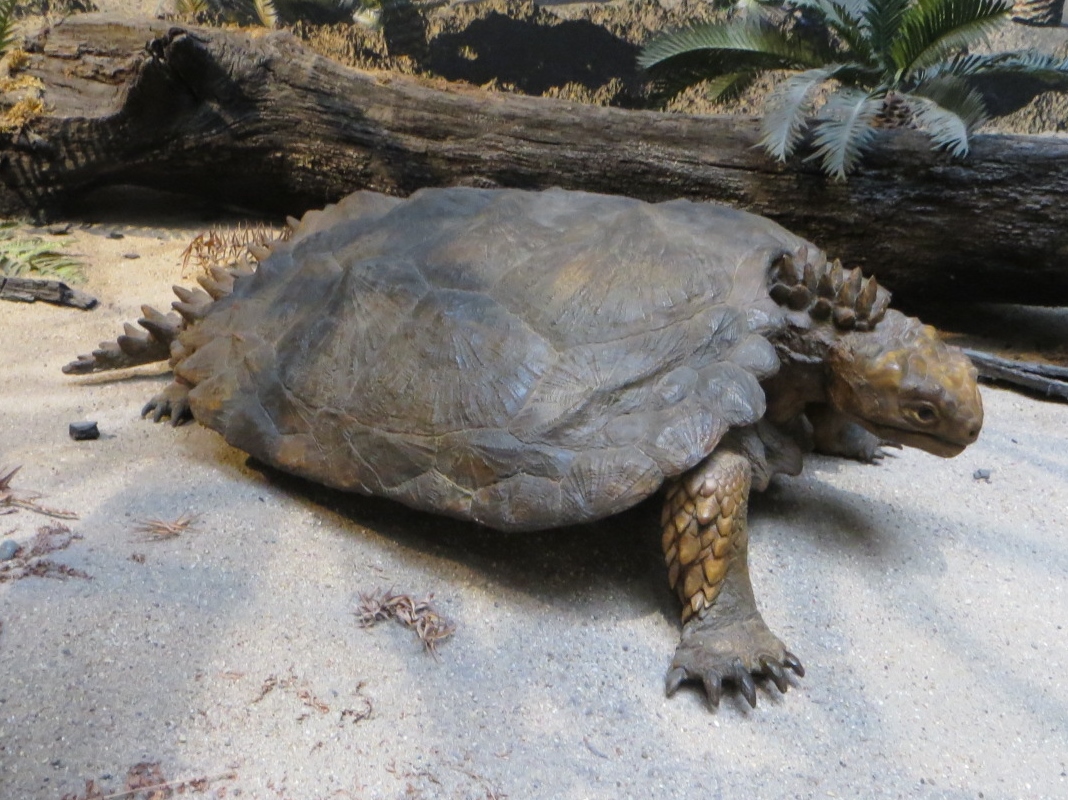
Where did Proganochelys live? Fossils have been found in both Germany and Thailand, which tells us that this early turtle had a surprisingly wide distribution across the supercontinent of Pangaea. During the Late Triassic, what is now Europe and Southeast Asia were connected by vast river systems and floodplains. Proganochelys was semi-aquatic, spending time in and around freshwater environments, which is where the best preservation occurs. Its lifestyle was probably similar to that of modern freshwater turtles like snapping turtles, ambushing prey near the water's edge.
The Triassic world that Proganochelys inhabited was a very different place. The climate was predominantly warm and seasonal, with monsoon-driven rainfall patterns across Pangaea. The vegetation consisted of conifers, ferns, cycads, and ginkgoes. Dinosaurs were just beginning to diversify, and the dominant land animals were still a mix of early reptiles and their relatives. In the shallow pools and seasonal waterways, Triops was already thriving, and both animals would have shared the same ecosystems.
This overlap raises a fascinating question: could early turtles and Triops have encountered each other? Given that both lived in shallow freshwater habitats during the Late Triassic, it is almost certain they did. Small Triops would have been far too insignificant for a turtle to bother with, but their eggs might occasionally have been eaten by a foraging Proganochelys. It is a poetic image, two lineages that both survived to the present day, crossing paths in a Triassic floodplain 210 million years ago.
The evolutionary significance of Proganochelys cannot be overstated. It is our best window into the origins of the turtle body plan, one of the most successful and enduring designs in vertebrate history. Turtles have survived every mass extinction since the Triassic, outlasting the dinosaurs, the pterosaurs, and the marine reptiles. Their armored strategy, first perfected by Proganochelys, has proven to be one of evolution's greatest achievements.
Modern turtle diversity is staggering. From the leatherback sea turtle, which can dive to depths of over 1,200 meters, to the Galapagos giant tortoise, which can live past 150 years, the descendants of Proganochelys have filled nearly every niche on Earth. And all of them trace their ancestry back to that modest, toothed, spike-tailed creature paddling through Triassic rivers.
The next time you see a turtle basking on a log or trundling across a road, remember that you are looking at a body plan that has been refined, but never replaced, for over 200 million years. And somewhere in the same ancient waters, Triops was watching it all begin.