Published TODAY by the Triops.me Editorial Team · Back to Articles
Pterosaurs: Earth's First Flying Reptiles
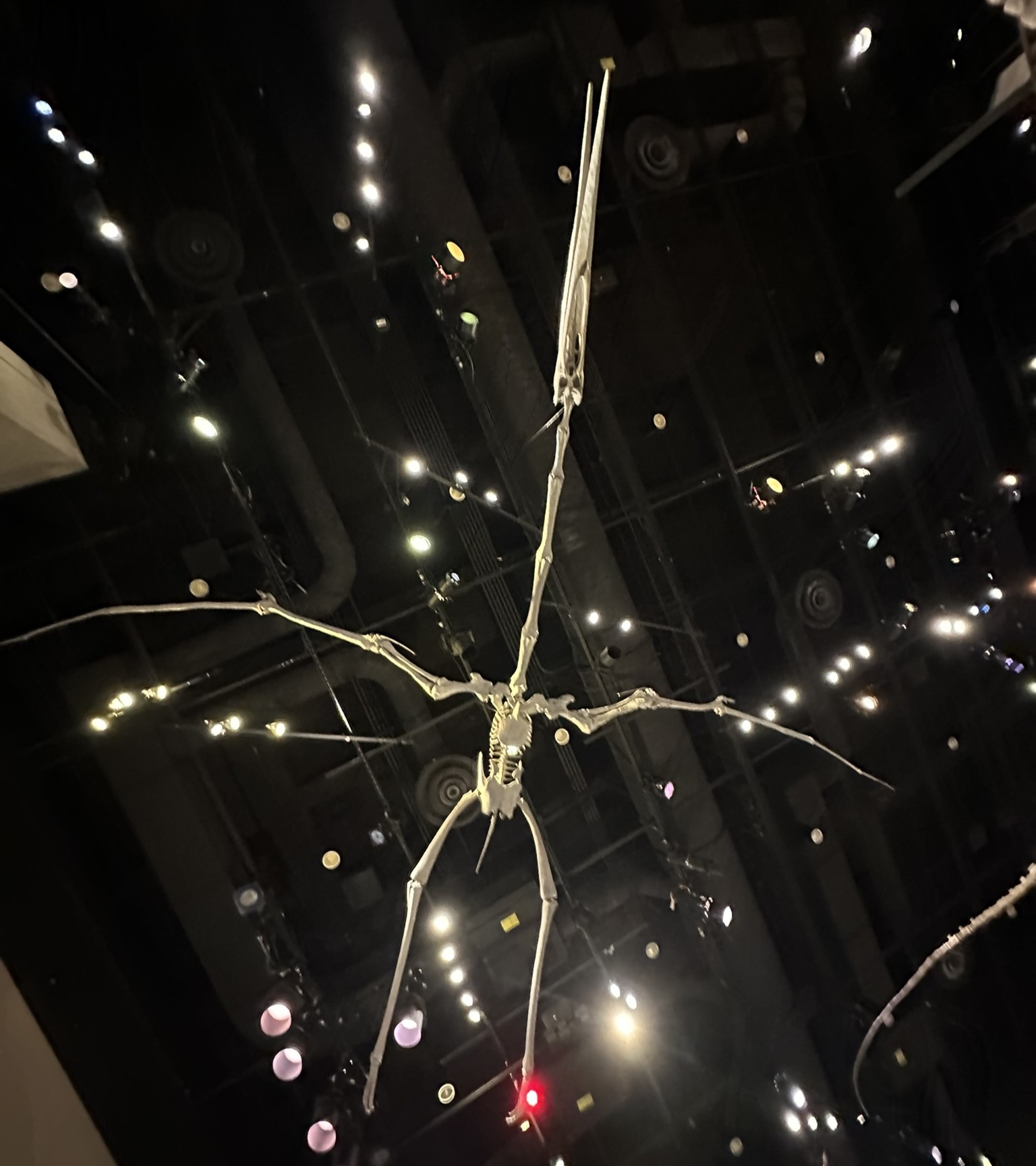
Long before birds took to the skies, another group of animals had already conquered the air. Pterosaurs, the first vertebrates to achieve true powered flight, dominated Earth's skies for roughly 160 million years, from the Late Triassic through the end of the Cretaceous. They were not dinosaurs, though they lived alongside them. They were not birds, though they share the distinction of flight. Pterosaurs were their own lineage of flying reptiles, and their story is one of evolutionary experimentation at its most daring.
The name "pterosaur" means "wing lizard," from the Greek pteron (wing) and sauros (lizard). The group was first recognized in the early 19th century, when scientists found fragments of wing bones in Bavarian limestone. For decades, the identity of these creatures was debated. Some naturalists thought they were bat-like mammals, others guessed they were aquatic swimmers. It took the discovery of complete skeletons, including the famous Pterodactylus from the Solnhofen limestone of Germany, to reveal the truth: these were reptiles that had evolved an entirely new way of moving through the world.
Anatomy of a Flyer
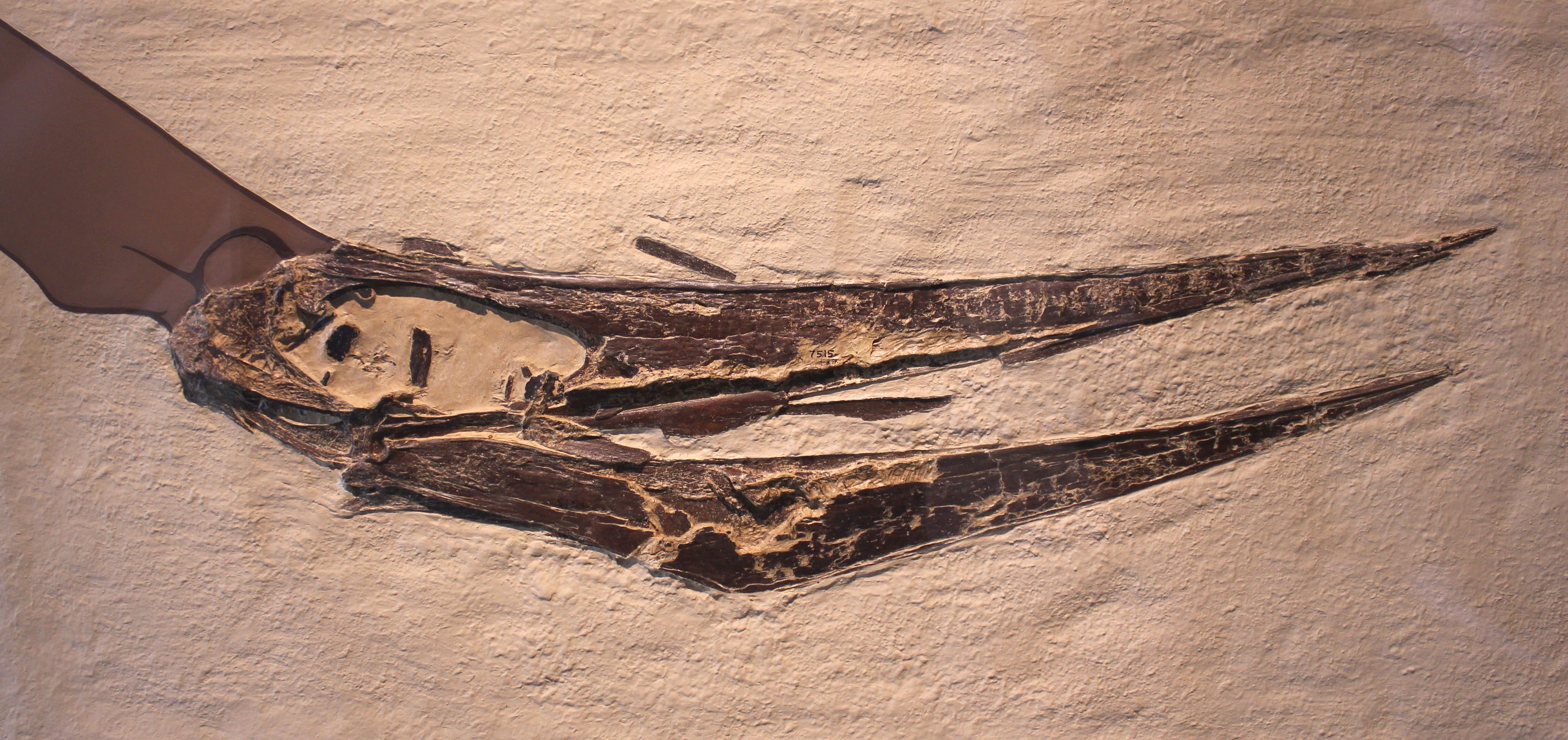
The key to pterosaur flight was their wing membrane, called the patagium. Unlike birds, which fly with feathers, or bats, which fly with skin stretched across four fingers, pterosaurs had a wing membrane supported primarily by a single enormously elongated fourth finger. This structure was both strong and flexible, allowing them to adjust wing shape during flight. Fossil impressions of wing membranes preserved in exceptional detail show a complex internal structure of stiffening fibers called actinofibrils, which helped prevent the membrane from fluttering in the wind.
Pterosaur bones were hollow, similar to modern birds, making their skeletons remarkably light for their size. Some of the largest species, such as Quetzalcoatlus, had wingspans exceeding 10 meters, yet their bones were thin-walled and filled with air sacs connected to their respiratory system. This pneumatic bone structure was an evolutionary solution to the fundamental challenge of flight: how to stay light enough to fly while remaining strong enough to support body weight and resist the forces of takeoff, landing, and maneuvering.
Recent fossil discoveries have also revealed that many pterosaurs were covered in a fuzzy, hair-like integument called pycnofibers. These structures were once thought to be simple filaments, but microscopic analysis suggests they may have been similar to feathers in some respects, raising fascinating questions about the shared evolutionary origins of insulation in flying reptiles, dinosaurs, and birds.
A World of Pterosaurs
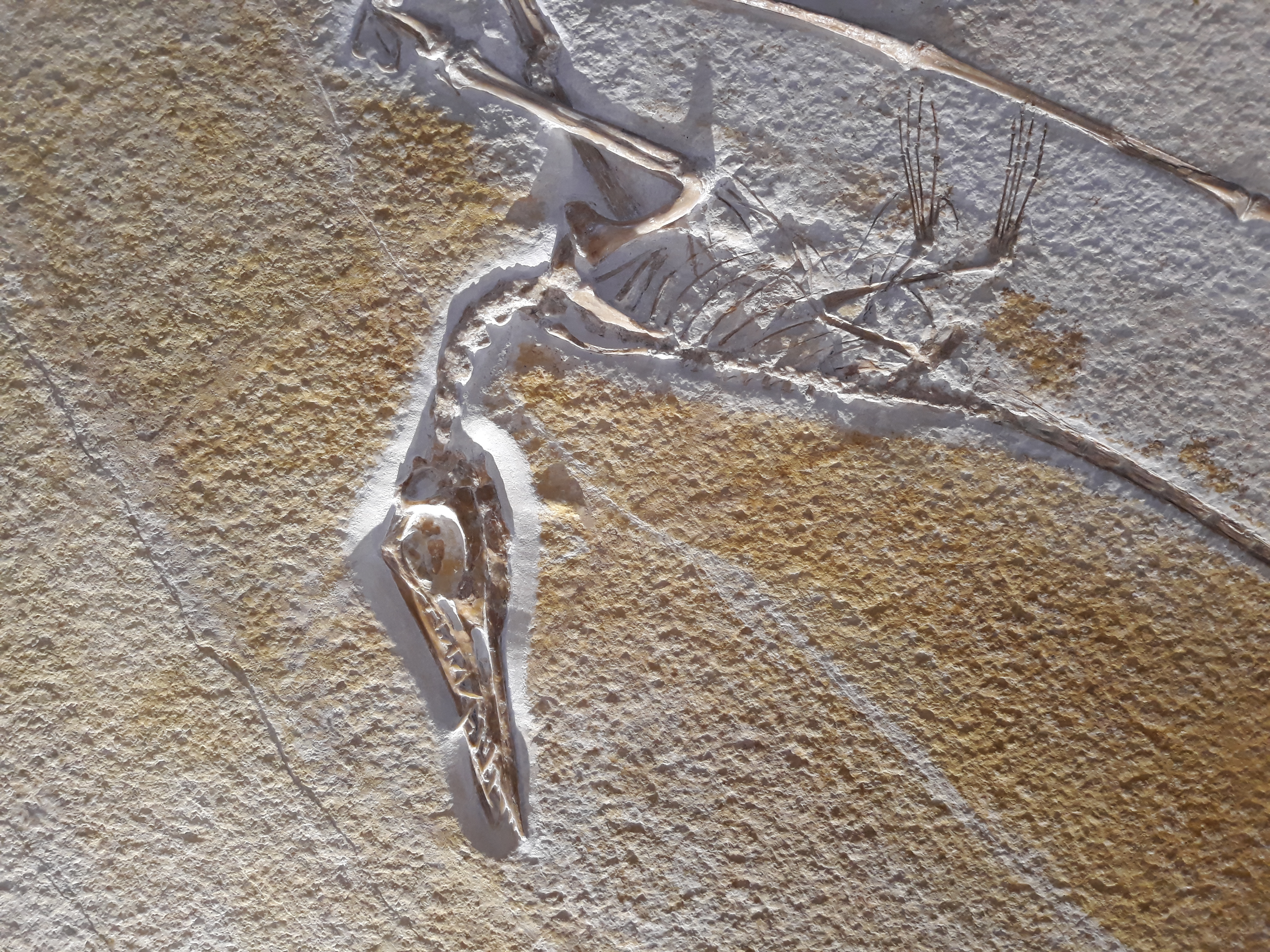
During the Late Jurassic, around 150 million years ago, one of the most successful pterosaurs was Rhamphorhynchus. This long-tailed flyer, roughly the size of a crow, had a wingspan of about 1.5 meters and a distinctive toothed beak that pointed forward. Fossils of Rhamphorhynchus are found in the Solnhofen limestone of Germany, the same formation that produced the earliest bird, Archaeopteryx. The fact that both creatures shared the same habitat suggests the skies above Jurassic lagoons were a competitive arena for flying vertebrates.
The more familiar Pteranodon, with its dramatic head crest and toothless beak, dominated the shallow seas of Late Cretaceous North America around 85 million years ago. Pteranodon had a wingspan of roughly 6 to 7 meters and likely spent most of its life soaring over open water, much like modern albatrosses. Its head crest remains one of the most debated features in paleontology. Some researchers propose it functioned as a rudder during flight, others suggest it played a role in mating displays or species recognition.
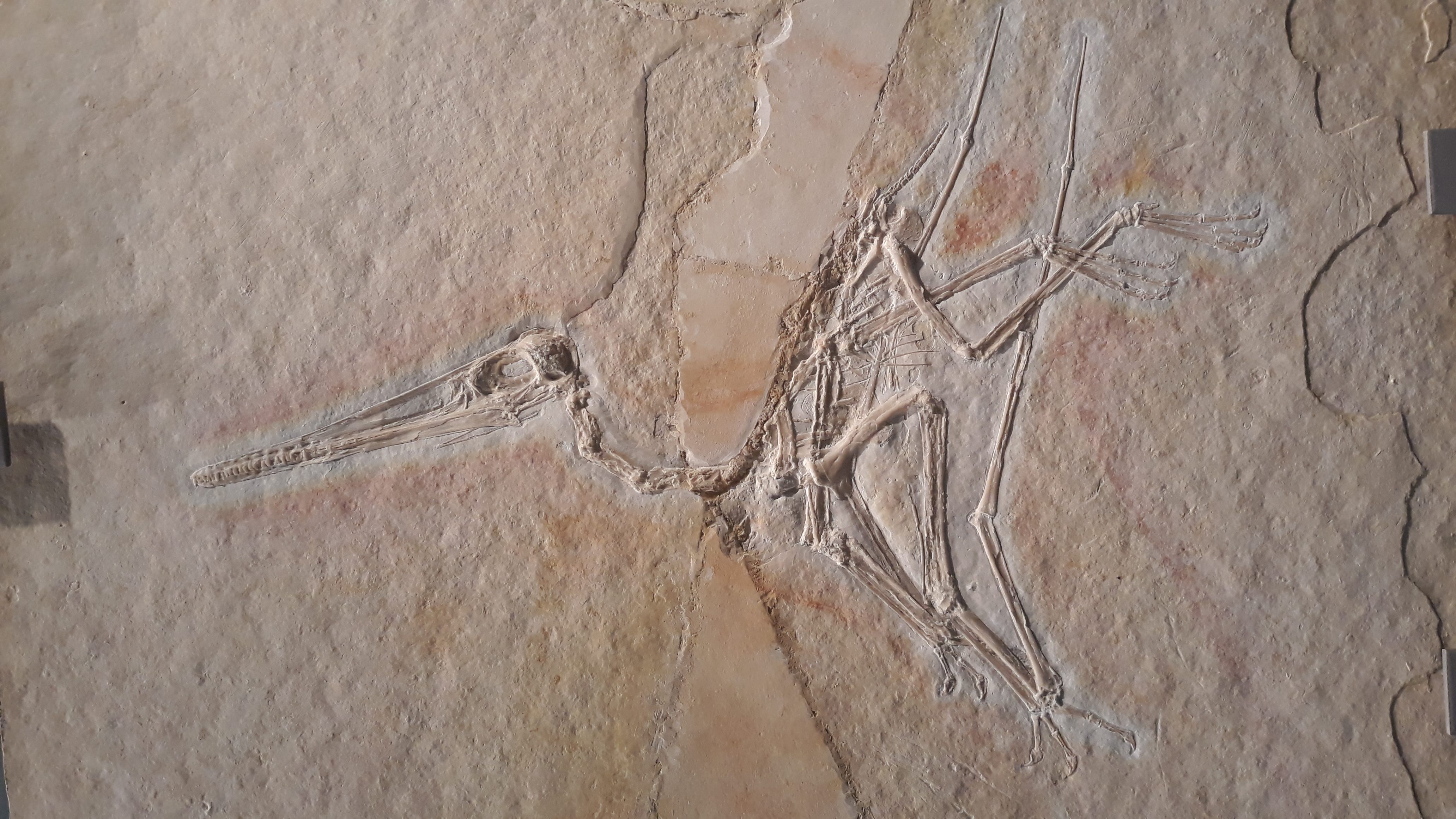
Earlier in the Mesozoic, smaller pterosaurs like Dimorphodon filled different ecological niches. This Late Jurassic pterosaur from England had a proportionally large head, a toothed jaw, and a stocky build. Its short wings suggest it was not a long-distance soarer but rather a agile, maneuverable flyer that may have hunted insects in forested environments.
At the other extreme, the Late Cretaceous Quetzalcoatlus was one of the largest flying animals ever to exist. With a wingspan of up to 11 meters and a standing height comparable to a giraffe, it pushed the limits of vertebrate flight. Its enormous size suggests it may have spent significant time on the ground, perhaps striding on all fours like a modern stork, before launching itself into the air with powerful wing beats.
Life, Death, and Legacy
Pterosaurs survived multiple mass extinction events, including the end-Triassic extinction that wiped out many of their early relatives. They diversified throughout the Jurassic and reached their peak diversity in the Early Cretaceous, when species ranged from sparrow-sized insectivores to giraffe-sized giants. Their dominance was challenged by the evolution of birds in the Late Jurassic, but the two groups coexisted for tens of millions of years, likely occupying different ecological niches.
The end of the Cretaceous extinction 66 million years ago brought the pterosaur story to a close, along with the non-avian dinosaurs. No pterosaur fossils have been found in rocks younger than this boundary. Their extinction left the skies open for birds, which radiated into the vacated ecological niches in the early Cenozoic.
Today, pterosaurs live on only as fossils, but their legacy is profound. They demonstrated that vertebrate flight was not a one-time evolutionary fluke, but a solution that nature arrived at independently in multiple lineages. Their hollow bones, air-filled respiratory systems, and lightweight skeletons parallel the adaptations seen in modern birds, suggesting that the physics of flight imposes strict constraints on the bodies of flying animals, regardless of their evolutionary origin.
For creatures that vanished 66 million years ago, pterosaurs remain startlingly relevant. Their fossils continue to reshape our understanding of flight, evolution, and the boundaries of vertebrate biology. And every time we look up at a bird in flight, we are seeing a distant echo of the reptiles that first dared to leave the ground.