Published August 20, 2026, 21:27 by the Triops.me Editorial Team · Back to Articles
Quetzalcoatlus: The Largest Flying Animal Ever to Exist
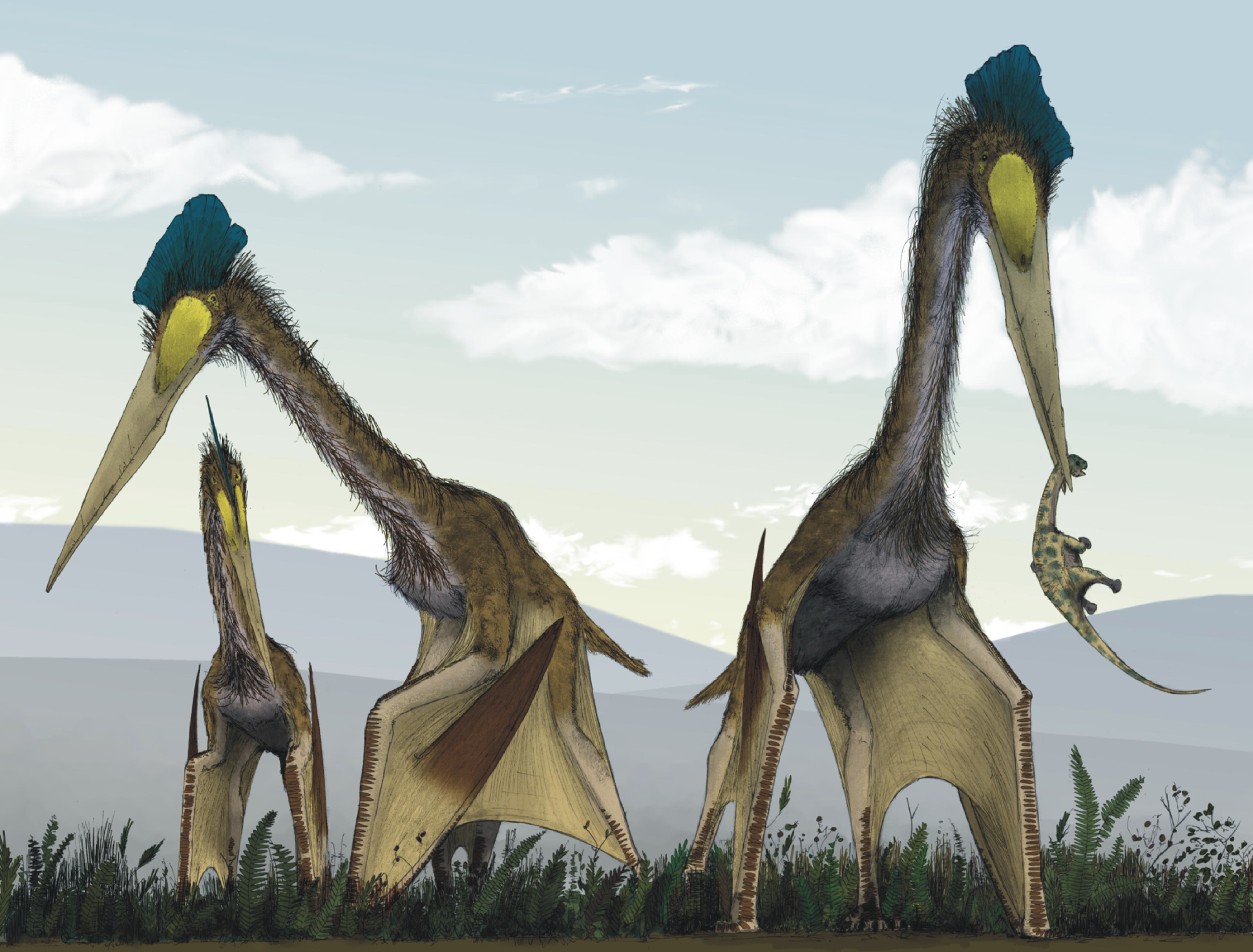
Imagine a creature so large that its wingspan matches a small airplane, its standing height rivals a giraffe, and it shared the landscape with Tyrannosaurus rex. This is not a fantasy. This is Quetzalcoatlus, the largest flying animal that has ever existed on Earth.
For nearly half a century, this pterosaur has defied our assumptions about the limits of flight. With wings stretching up to 11 meters from tip to tip, it was larger than any bird, any bat, and any flying insect that has ever lived.
A Discovery in the Texas Badlands
The story begins in 1971, when Douglas A. Lawson, a geology graduate student from the University of Texas, was exploring the rugged canyons of Big Bend National Park. Among the eroded sediments of the Javelina Formation, he spotted something extraordinary: a partial wing bone of a pterosaur that dwarfed anything previously known. Over the following years, Lawson uncovered three smaller fragmentary skeletons alongside the giant specimen.
When he formally described the species in 1975, he named it Quetzalcoatlus northropi. The genus honors Quetzalcoatl, the feathered serpent deity of Aztec mythology, while the species name pays tribute to Jack Northrop, the aviation pioneer whose flying wing designs echoed the pterosaur's own shape. It was a fitting double tribute, linking ancient mythology with modern engineering.
A Wingspan to Match a Cessna
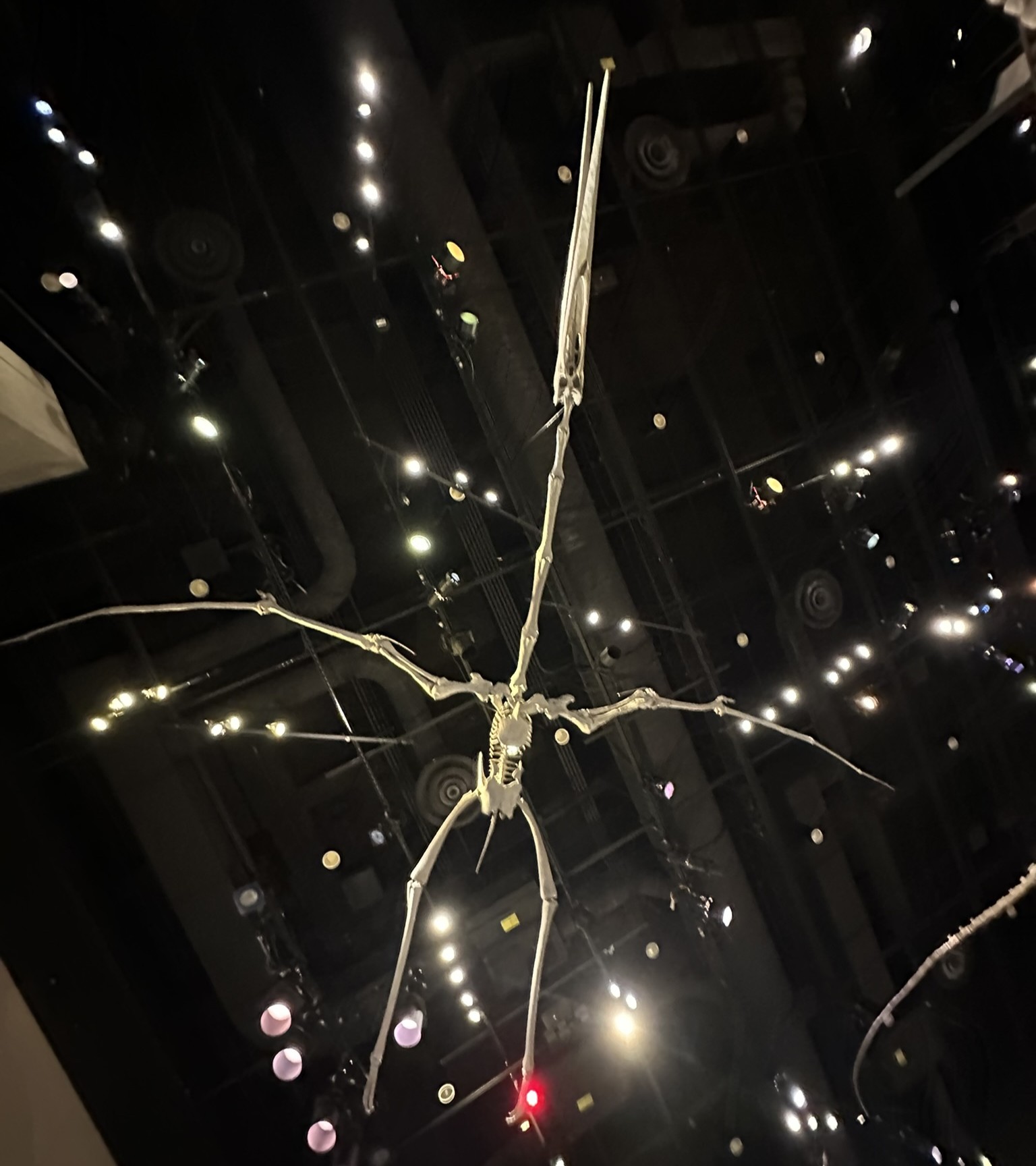
Estimating the size of Quetzalcoatlus has been challenging because the holotype material preserves only wing elements, with no skull. Early estimates ranged from 5.2 to an extraordinary 25.8 meters. Modern biomechanical modeling has settled the range at approximately 10 to 11 meters (33 to 36 feet). That matches a Cessna 172, one of the most common small aircraft in the world.
When standing on all four limbs, its head rose to about 5 to 6 meters, roughly the height of a modern giraffe. Its estimated body mass falls between 200 and 250 kilograms, heavy enough to make powered flight a genuine biomechanical puzzle.
Not a Dinosaur, But Something Just as Remarkable
A common misconception is that Quetzalcoatlus was a dinosaur. It was not. It was a pterosaur, belonging to the order Pterosauria, which is entirely separate from Dinosauria. Both groups are archosaurs sharing a common ancestor, but they diverged early in the Mesozoic. Birds are theropod dinosaurs that evolved flight independently. Pterosaurs have no living descendants.

Quetzalcoatlus belonged to the family Azhdarchidae, a group of long-necked, toothless pterosaurs that dominated the Late Cretaceous skies. A close relative, Hatzegopteryx from Romania, rivaled it in size and may have had a more robust skull built for tackling larger prey. The two species, Q. northropi and the smaller Q. lawsoni (formally described in 2021), coexisted in the same formation, suggesting the genus occupied multiple size classes within one ecosystem.
Taking Flight Without a Running Start
How does an animal the size of a light aircraft get airborne? The answer, according to biomechanical modeling, is a quadrupedal vault. Rather than running to build speed, Quetzalcoatlus would have planted all four limbs and launched skyward in a single powerful push. Its forelimbs, which bore the wing membrane, were more robust than the hindlimbs, consistent with this explosive launch.
Once airborne, Quetzalcoatlus was likely a highly efficient glider, exploiting thermal currents the way modern albatrosses and condors do. Flight speed estimates range from 100 to 130 kilometers per hour. Its hollow bones, shared with birds, kept its body light enough for sustained flight despite its enormous size.
A Terrestrial Stalker, Not an Aerial Fisherman
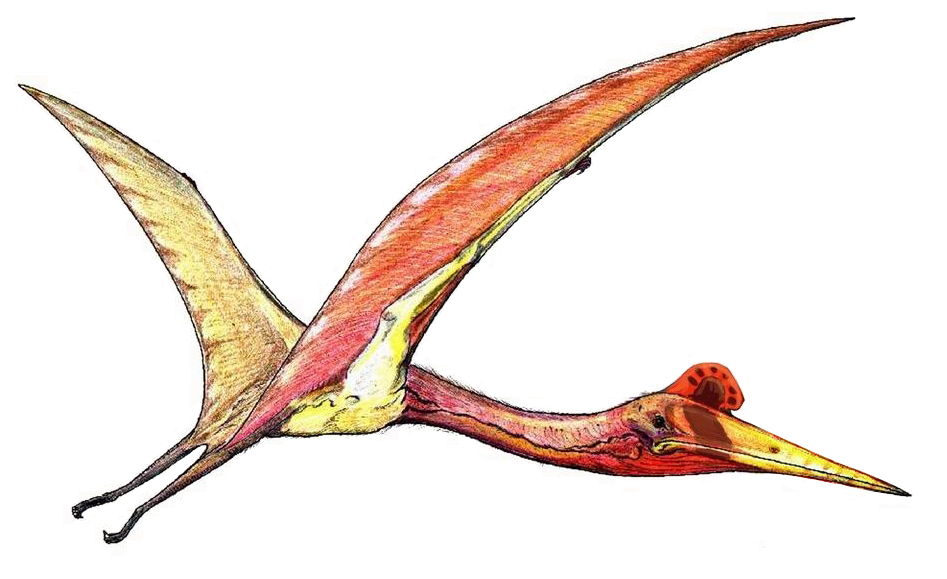
Early reconstructions depicted Quetzalcoatlus as an aerial fish-catcher, soaring over seas and snatching prey like a giant pelican. But the fossil evidence tells a different story. Its fossils are found in inland fluvial deposits, not coastal environments, and its beak morphology does not support a fish-eating lifestyle.
Paleontologists now believe Quetzalcoatlus was a terrestrial stalker. Its long, toothless beak and tall, upright stance suggest it hunted on foot, striding across Cretaceous floodplains and snatching lizards, small mammals, invertebrates, and possibly hatchling dinosaurs. Modern analogues include the marabou stork and the secretary bird, large terrestrial predators that rely on size and reach rather than flight to secure their meals.
Vanishing at the End of the World
Quetzalcoatlus lived during the final two million years of the Cretaceous, from roughly 68 to 66 million years ago. It vanished along with the non-avian dinosaurs at the end-Cretaceous mass extinction triggered by the Chicxulub asteroid impact.
The extinction of pterosaurs was total. Unlike dinosaurs, which left behind the bird lineage, pterosaurs disappeared completely from the fossil record. No bird has ever approached the size of Quetzalcoatlus, and the question of why flight seems to have an upper size limit remains one of paleontology's open puzzles.
Why It Matters
Quetzalcoatlus challenges everything we think we know about the physics of flight. It pushes the boundaries of biological engineering, demonstrating that evolution can produce flying animals of extraordinary scale. Its terrestrial lifestyle reminds us that pterosaurs were far more ecologically diverse than the popular seagull-like image suggests.
Most importantly, it connects us to a world utterly alien compared to our own, a Late Cretaceous Texas where flying reptiles the size of fighter jets strode across floodplains alongside the most famous dinosaurs in history. Earth's past was not just stranger than we imagine, but stranger than we can imagine.