Published September 01, 2026, 16:41 · by the Triops.me Editorial Team · Back to Articles
Rhizodonts: Giants of the Carboniferous Rivers
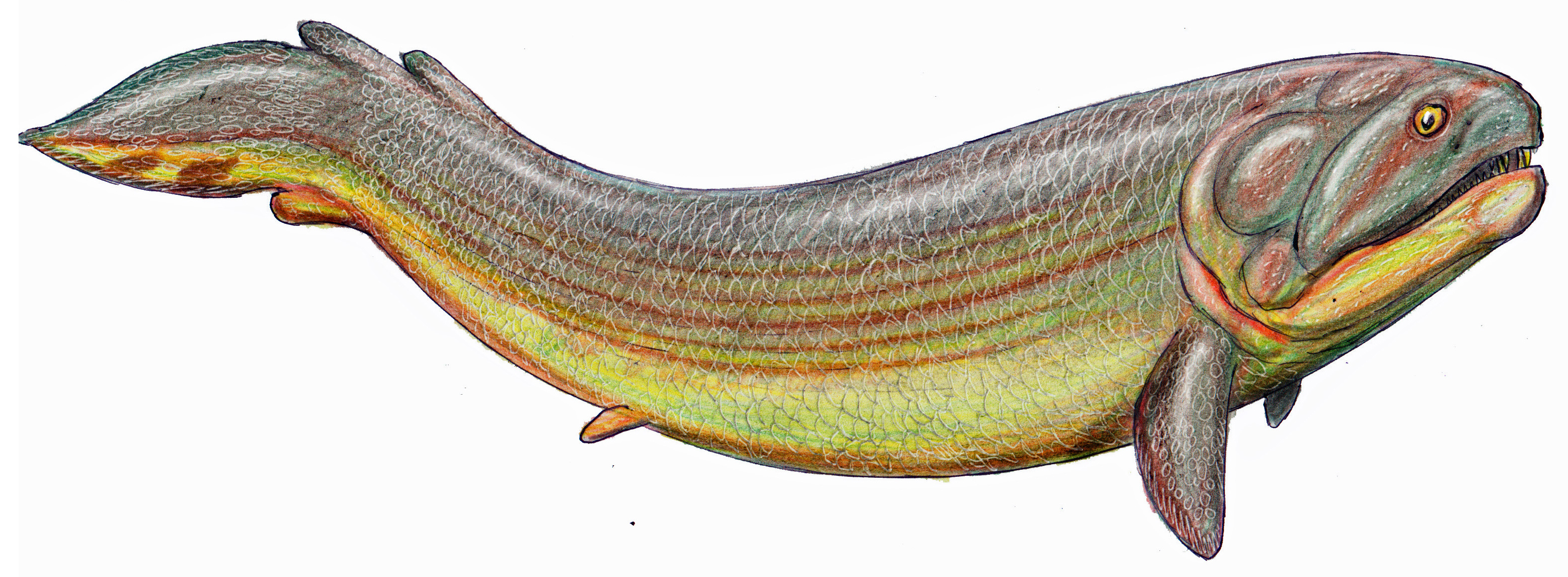
Imagine a river, 340 million years ago, winding through a vast tropical forest of towering clubmosses and horsetails. The water is warm and murky, choked with plant debris and alive with insects, lungfish, and early amphibians. Beneath the surface, something enormous glides through the shadows. It is not a dinosaur, not a crocodile, not even a shark. It is a rhizodont, and it is the largest freshwater predator Earth has ever produced.
Rhizodonts were a group of predatory lobe-finned fish belonging to the order Rhizodontida, a clade within the tetrapodomorphs. They ranged from the Middle Devonian to the late Pennsylvanian, roughly 377 to 310 million years ago, giving them a tenure of nearly 70 million years across some of the most transformative periods in Earth's history. While their name, meaning "root tooth," might sound modest, there was nothing modest about these animals. The type genus, Rhizodus, is estimated to have reached seven meters in length, making it the largest freshwater fish ever discovered. To put that in perspective, a full-grown Rhizodus would have dwarfed a modern saltwater crocodile and rivaled the size of a large killer whale.
Anatomy of a River Monster
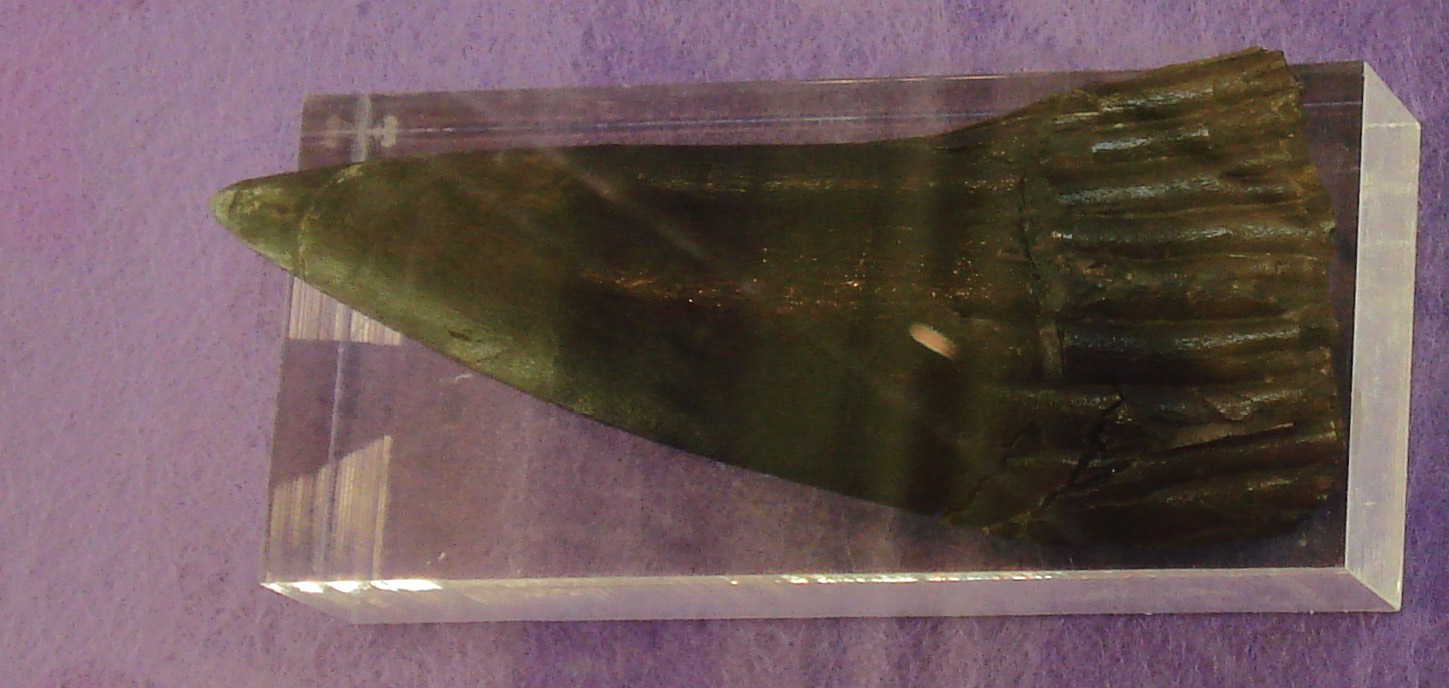
The rhizodonts' name comes from their most distinctive anatomical feature: their teeth. Unlike the superficial teeth of most fish, rhizodont teeth were deeply rooted into the jawbone, giving them extraordinary gripping power. Some teeth measured up to 22 centimeters in length, curving inward like grappling hooks. These were not designed for slicing or grinding, they were built for seizing and holding. Once a rhizodont clamped down on prey, escape was virtually impossible.
Beyond their fearsome dentition, rhizodonts possessed the robust, muscular bodies characteristic of lobe-finned fish. Their pectoral fins were supported by a heavy internal skeleton of bone, unlike the delicate rays of most modern fish. This skeletal structure gave them powerful, sweeping fin movements, allowing them to maneuver through tangled vegetation and strike with sudden bursts of speed. Their body shape was torpedo-like, broadest near the head and tapering toward the tail, a design optimized for ambush predation in confined freshwater environments.
A World of Giant Freshwater Predators
The Carboniferous period is often remembered for its oxygen-rich atmosphere and the gigantism it produced in insects, but freshwater ecosystems were equally spectacular. Rivers and lakes of this era were dominated by a succession of large predatory fish. Rhizodonts held the top predator role during the early to middle Carboniferous, outcompeting or outlasting other formidable groups like the tristichopterids and the rhizodiforms.
Their prey likely included large lungfish, smaller lobe-finned fish, sharks that occasionally entered freshwater, and even early tetrapods. During this era, all tetrapods still needed water to reproduce, meaning that amphibians and their relatives were constantly exposed to aquatic predators. A juvenile amphibian venturing into a rhizodont-infested river would have been at serious risk. In this sense, rhizodonts played a similar ecological role to modern crocodilians, sitting at the apex of the freshwater food web and exerting top-down pressure on every other species in their habitat.
The Rise and Fall of a Dynasty
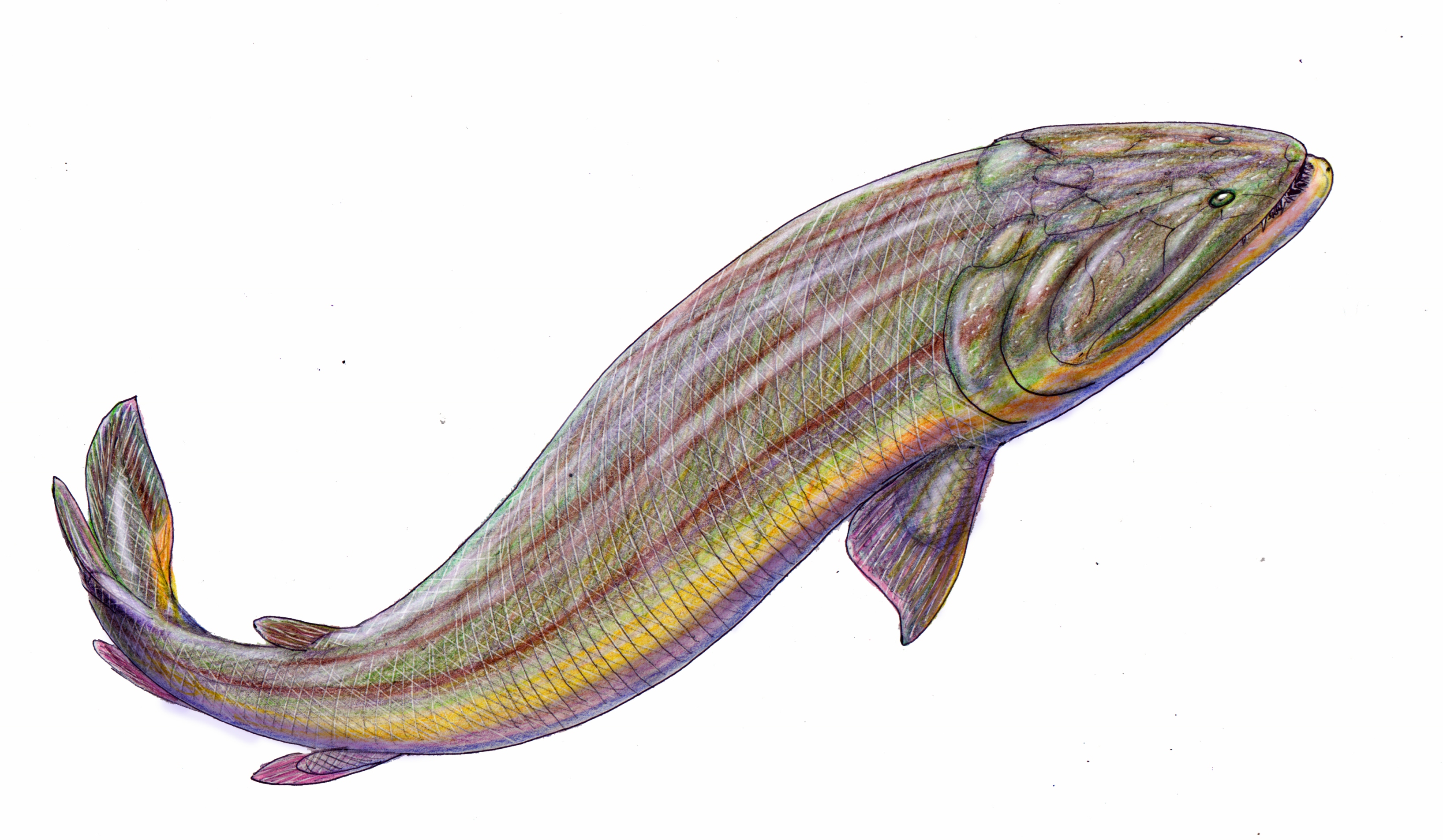
The earliest known rhizodonts appear in the Middle Devonian, around 377 million years ago. One of the best-studied early forms is Gooloogongia loomesi, discovered in the Canowindra fossil beds of New South Wales, Australia. Despite being found in what is now a dry inland region, Gooloogongia lived in a lush tropical river system when Australia sat near the equator as part of the supercontinent Gondwana. This species measured about one meter long, far smaller than its later relatives, but already displayed the characteristic deep-rooted teeth and robust fin structure that would define the group.
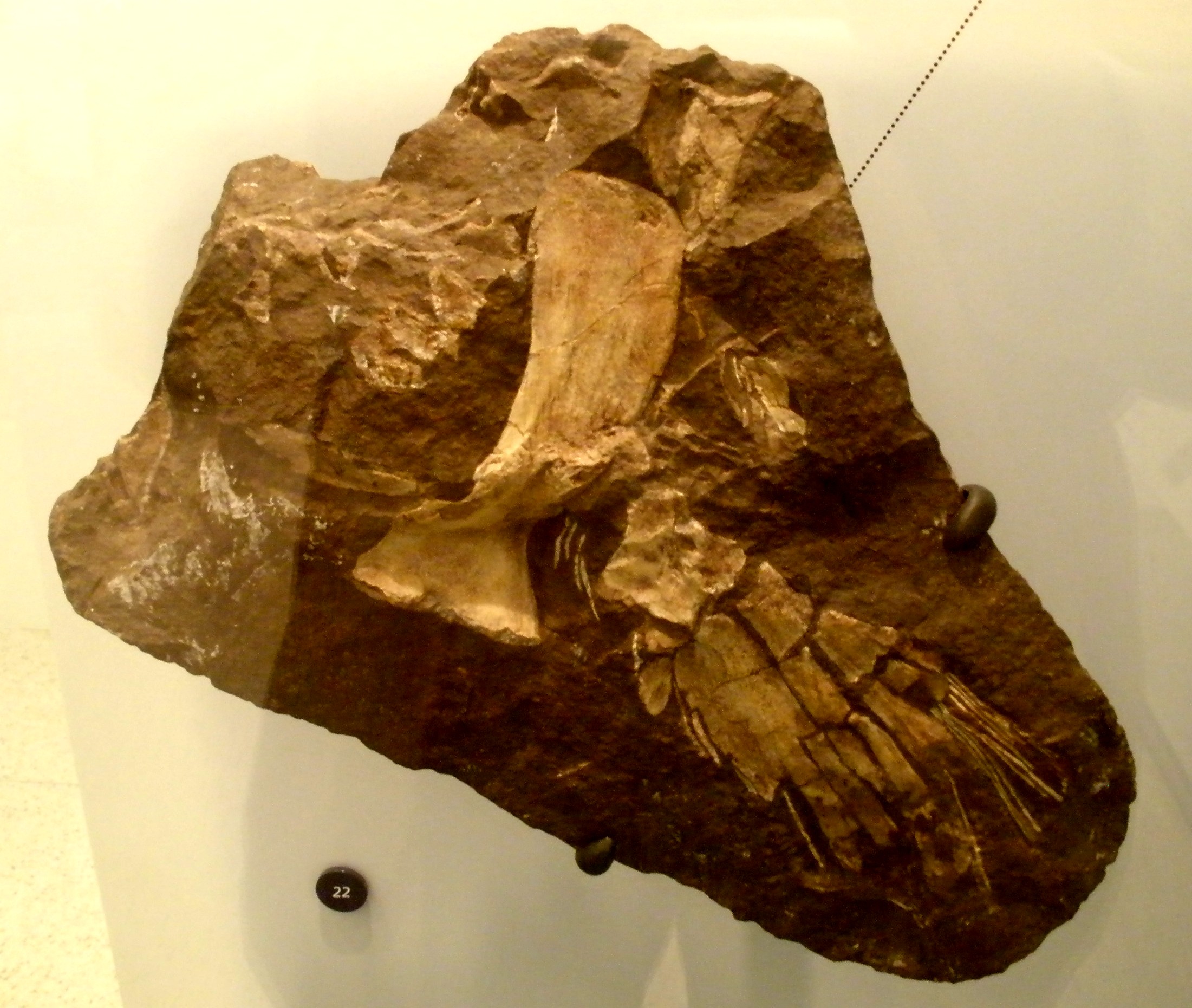
Another notable genus, Sauripterus, is known from impressive fossil specimens showing well-preserved fin bones. These fossils revealed the complex internal skeleton of rhizodont fins, with bones homologous to the humerus, radius, and ulna found in the limbs of all tetrapods. This is not a coincidence. Rhizodonts belonged to the tetrapodomorph clade, the broader group that includes all animals with four limbs. While rhizodonts themselves never walked on land, their fin anatomy represents one of the many evolutionary experiments in limb-like structures that eventually led to the first land vertebrates.
By the late Carboniferous, rhizodonts began to decline. The reasons are not fully understood, but shifting climate patterns, changing river systems, and competition from newer predatory fish groups all likely played a role. By the end of the Pennsylvanian subperiod, around 310 million years ago, the rhizodonts had disappeared entirely. Their ecological niche in freshwater systems was eventually filled by other large predators, including early reptiles and, millions of years later, the large amphibians of the Permian.
Why Rhizodonts Matter
Rhizodonts are often overlooked, overshadowed by dinosaurs, pterosaurs, and marine reptiles. But they represent a critical chapter in vertebrate evolution. As tetrapodomorphs, they are part of the lineage that gave rise to all land-dwelling vertebrates. Their fin bones map directly onto the limb bones of humans, dogs, birds, and frogs. Studying rhizodont anatomy helps paleontologists understand how the transition from water to land unfolded, what structural preadaptations made it possible, and which evolutionary paths were explored and abandoned along the way.
They also remind us that the age of giants did not begin with dinosaurs. Long before Tyrannosaurus stalked the Cretaceous, and long before marine reptiles like Mosasaurus patrolled the oceans, seven-meter fish were terrorizing the rivers of the Carboniferous. The first giants on Earth were not reptiles or mammals, they were fish. And for 70 million years, the rhizodonts proved that fresh water could produce predators every bit as fearsome as anything in the sea.
Today, rhizodont fossils are scattered across museums in Europe, North America, and Australia. The largest specimens, massive teeth and jaw fragments from the Scottish Carboniferous, remain some of the most impressive vertebrate fossils ever found. They are a window into a world of warm, oxygen-rich rivers over 300 million years ago, where the ultimate predator was a fish with teeth like roots, gripping forever into the mud of deep time.