Published September 24, 2026 · by the Triops.me Editorial Team · Back to Articles
Sacabambaspis: The Goofy Face of the Ordovician Seas
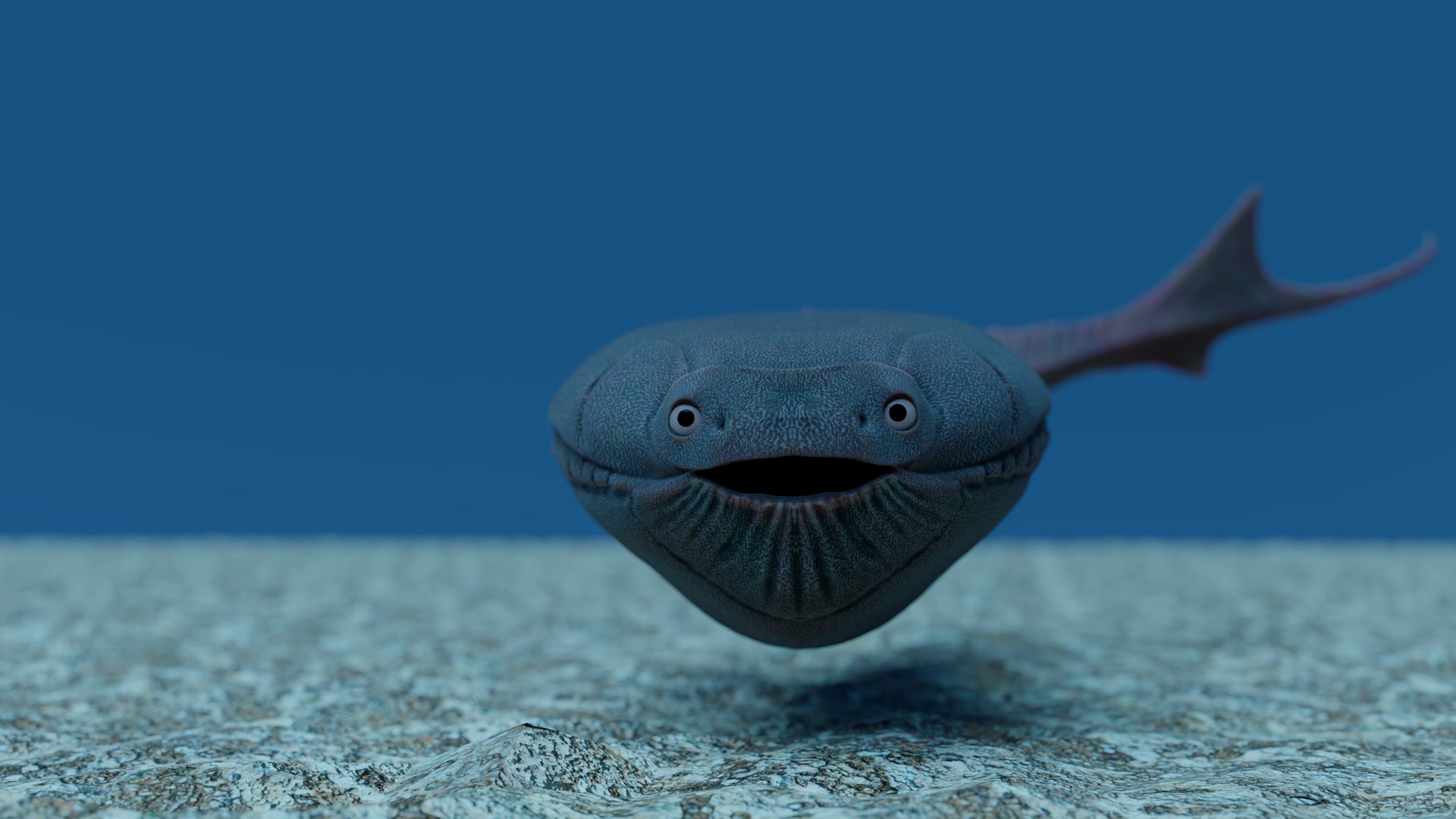
In 2023, a modest museum model in Helsinki went viral. Visitors at the Natural History Museum snapped photos of a strange fish with a rigid armor-plated head, a tiny open mouth, and two eyes frozen in permanent, slightly confused surprise. Within days, Sacabambaspis had fan art, plush toys, and millions of shares. The internet had adopted a fish that died out more than 440 million years ago.
Beneath the meme, though, sits one of the most important early vertebrates ever found. Sacabambaspis is one of the best understood of the very first armored fish, a creature that swam in the shallow seas at the edge of the supercontinent Gondwana when our ancestors were still soft, jawless, and small. Its goofy face is actually a snapshot of what the vertebrate body plan looked like long before sharks, dinosaurs, or humans existed.
A Fish Named After a Bolivian Village
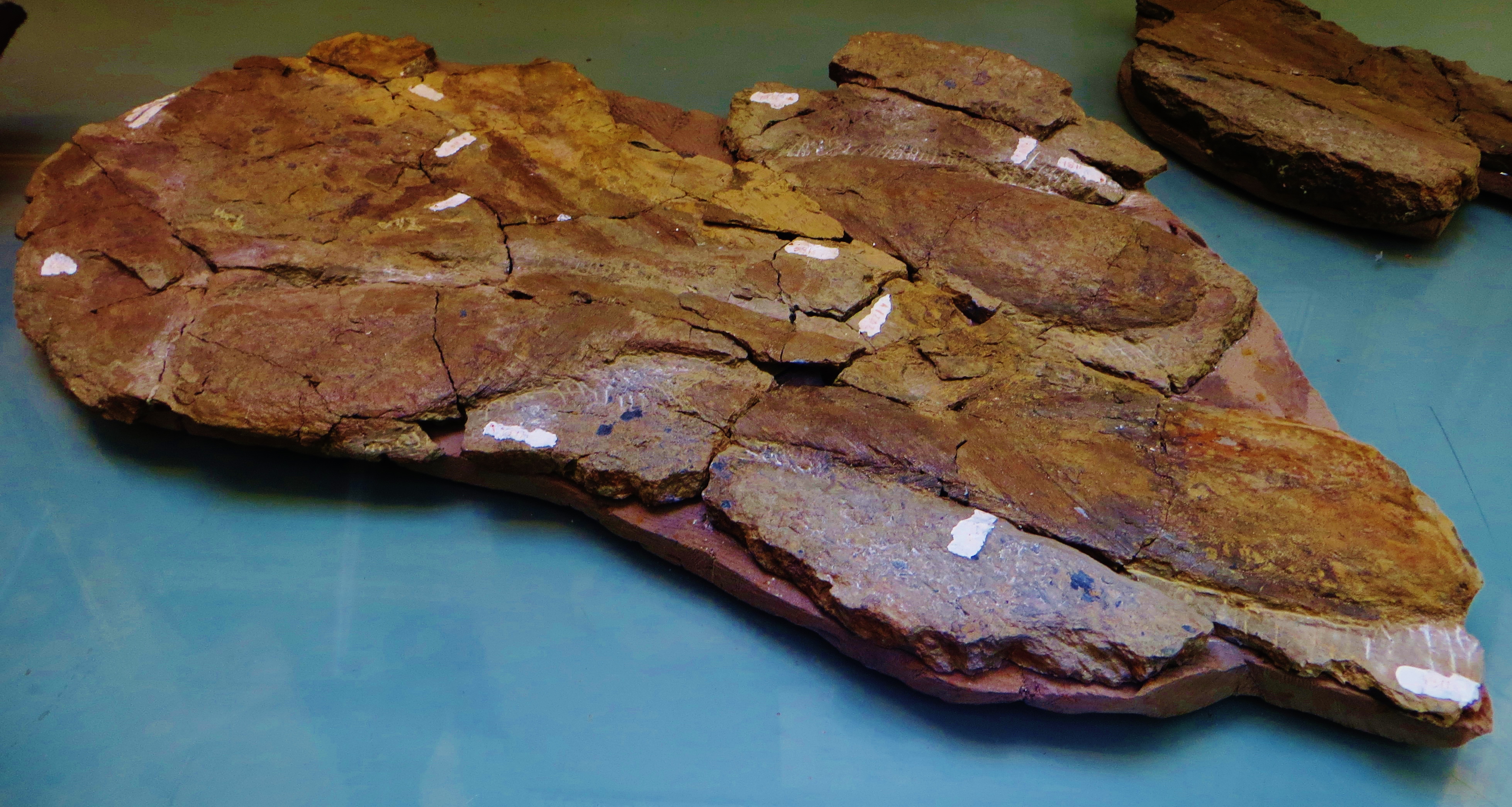
Sacabambaspis janvieri takes its name from the village of Sacabamba in the Cochabamba region of Bolivia, where its fossils were pulled from 460-million-year-old Ordovician rocks, combined with the Greek word aspis, meaning shield. The species was described in the mid-1990s, and since then Bolivia has produced something remarkable: dozens of complete, articulated specimens, not just scattered fragments. For a fossil group where most early fish are known from isolated plates and scales, this is almost miraculous.
The abundance of whole animals tells its own story. These fish apparently lived in groups, and a sudden event, most likely a storm that smothered the seafloor with sediment, buried entire schools at once. What was a catastrophe 460 million years ago became a fossil treasure for paleontologists today, in much the same way that sudden drying can lock entire generations of Triops eggs into mud, waiting for the right moment to come back to life.
Built Like a Tank, Swam Like a Wallop
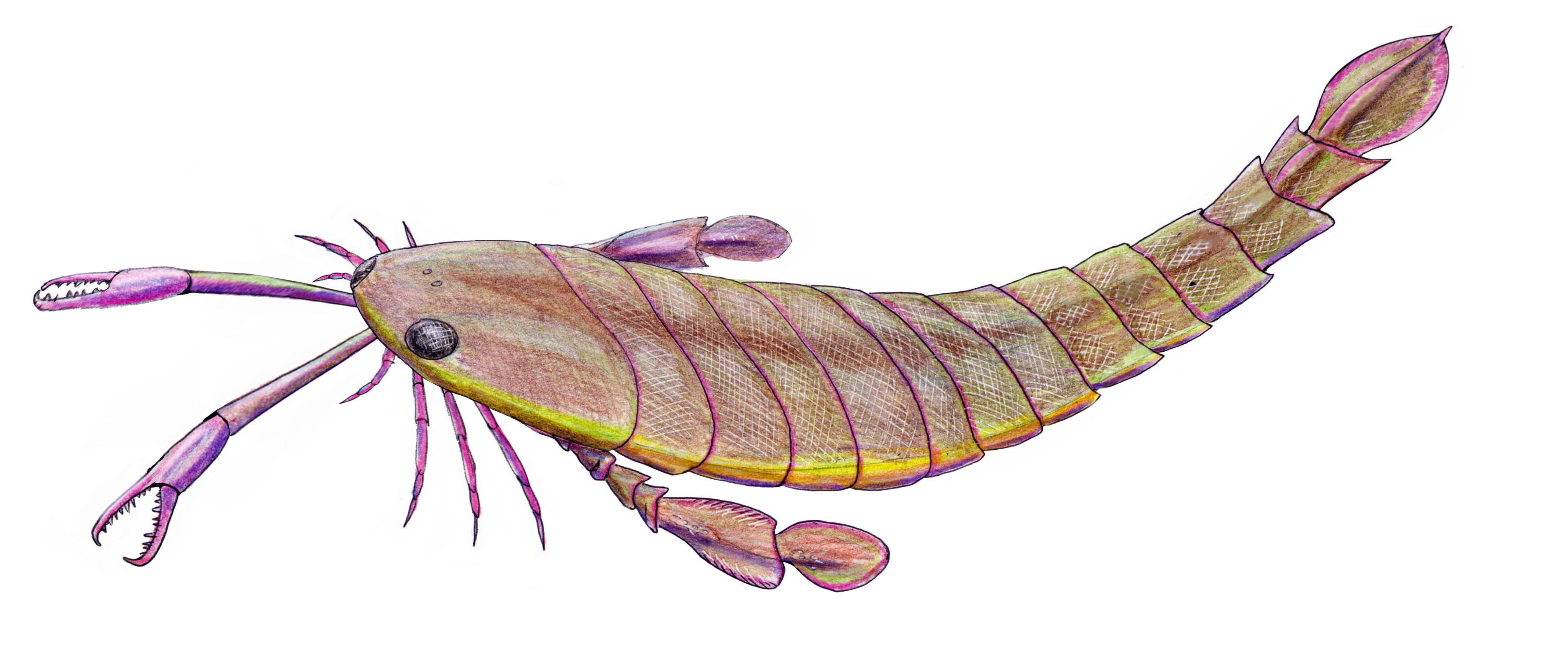
Sacabambaspis was small, roughly 25 centimeters long, but it was heavily armored where it counted. The front half of its body was wrapped in large plates of bone, one big dorsal plate on top, another on the underside, and smaller branchial plates covering the gill openings on each side. The rest of the body wore a coat of thousands of rod-shaped scales. This armor was not just decoration. In a sea patrolled by giant predatory sea scorpions and other invertebrate hunters, a bone shell was the best defense a fish could buy.
Its face, however, was where the meme was born. The two eyes sat right at the front of the head shield, side by side, each ringed by a plate of armor, with a small pineal organ between them. Below them gaped a terminal mouth lined with tiny oral plates that may have helped the fish scrape and gulp food. There were no jaws, no teeth, and no paired fins. The tail was bilobed and down-turned, which means Sacabambaspis probably swam in a slightly clumsy, head-bobbing wriggle. It was, by any modern standard, an endearing disaster of engineering.
How the Original Nerd Fish Made a Living
With no jaws to bite, Sacabambaspis fed like a vacuum cleaner. Scientists think it hovered just above the seafloor of a shallow, sunlit shelf sea, sucking up soft food: detritus, tiny invertebrates, and organic particles stirred out of the mud. Its forward-facing eyes may have helped it spot trouble approaching from above, even if the fixed stare gave it no way to look directly at what was in front of its mouth.
Its head shield also carried rows of small openings connected to sensory canals. These were primitive sense organs that detected water movement, an early version of the systems that modern fish still use to feel currents and prey. Sacabambaspis was essentially blind-mapping its world through vibrations, like a living sonar dish wearing armor.
Why This Little Fish Matters
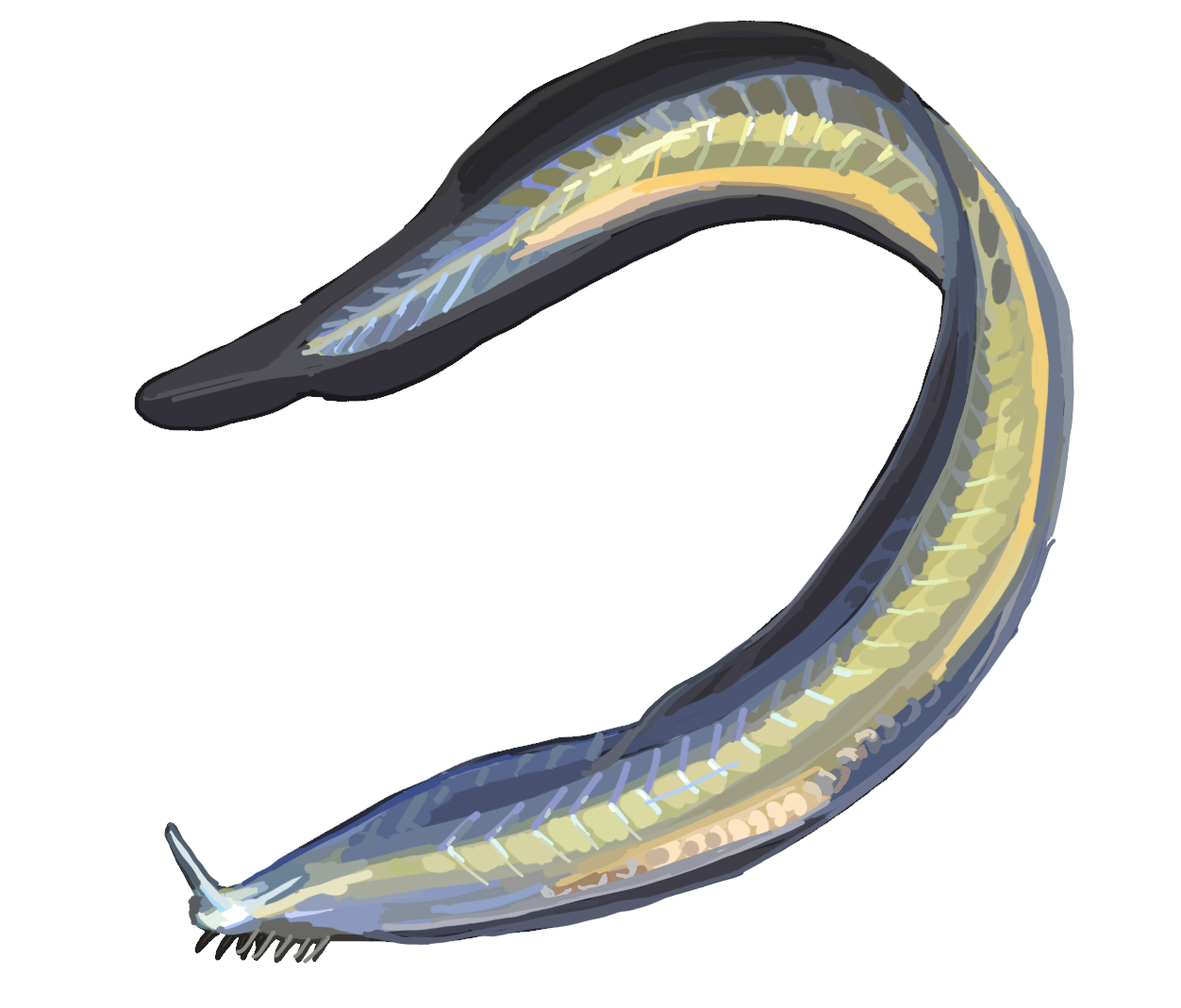
In the grand story of vertebrates, Sacabambaspis sits at a pivotal chapter. The first chordates like Pikaia were soft and unarmored, and the earliest true fish were barely more than finned tubes. By the Ordovician, vertebrates had evolved bone, and they used it as external armor first. Sacabambaspis belongs to the heterostracomorphs, a group of jawless armored fish that flourished for tens of millions of years before jaws even existed.
Jaws came later, in the Silurian, and when they did they changed everything, setting the stage for the armored monsters of the Devonian age of fishes like Dunkleosteus. Understanding creatures like Sacabambaspis shows what the starting point looked like: a small, jawless, bottom-hugging filter feeder that nevertheless carried the full vertebrate toolkit of bone, eyes, and a sensory system. Strip away the armor and shrink it down, and you are looking at a very distant cousin of every animal with a backbone, including us.
Its relatives did not last. The jawless armored fish were eventually squeezed out by better-armed, better-swimming jawed fish, and the lineage left no direct descendants among today's fish. Modern survivors of the jawless crowd, like lampreys and hagfish, belong to entirely different branches, as covered in our look at living jawless fish. Sacabambaspis itself is a dead end, but a beautifully preserved one.
The Survival Story Continues
There is a certain kinship between Sacabambaspis and the animals we celebrate on this site. Like Triops, which has been restarting its life cycle in temporary pools for hundreds of millions of years, Sacabambaspis was a modest creature that lived simply and left an outsized legacy. It did not rule its world. It survived in it, got buried in it, and waited half a billion years for its moment of fame.
The plush toys and the memes will fade, but the fossils remain. Somewhere in Bolivia, in gray Ordovician shale, entire schools of this wide-eyed pioneer still lie exactly where a storm put them down, two eyes and all, unimpressed by their sudden celebrity.